Tasmania to Tokyo – Bangkok / Siem Reap – Day 42 can be found here.
For anyone curious as to what’s happening on the Silver Moon in our absence, today’s Chronicles can be found here.
I’m having the strangest dream. I’m on a cruise ship, and I see polar bears roaming across an Arctic hillside. I know I’m going to get some great photos, but first I need to go inside and get the rest of the family so they can see this too.
And as I turn to head back inside the ship, I wake – and I am briefly disappointed because I am ‘only’ going to see the Angkor Wat sunrise instead of polar bears.
Dreams can be funny like that.
And if I wait to see polar bears in Angkor Wat, I will be waiting a very long time – so nothing for it but to force myself from my cool-on-the-outside, warm-on-the-inside comfy, comfy bed and head out into the dark, dark night to try and take a photo.
I manage to turn off my alarm before it goes – always a major victory (or so I thought – my wife apparently had to turn off my alarm a few minutes later) – and dress, sunscreen and even caffeinate myself heading to the lobby for 4:45 am.
We depart more-or-less on time – the photography group has grown from 5 to 11 over the span of a single day – and board our tuk-tuks for our foray out to Angkor Wat.
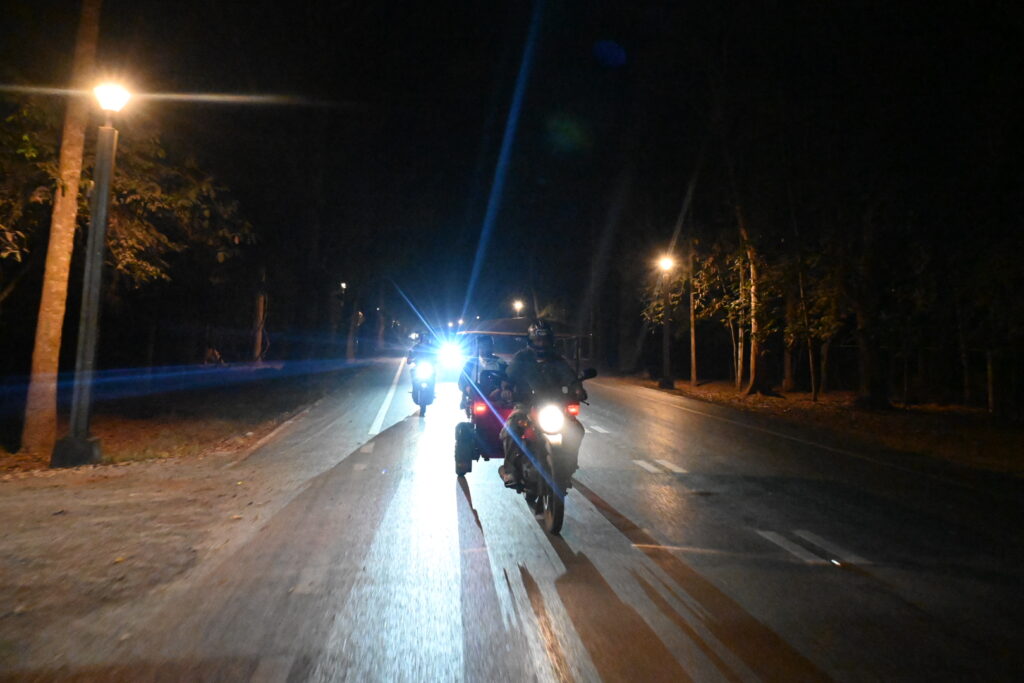
The first stop – the government office to pick up our permits. Each permit is good for five days, and your photo is printed on the permit to prevent people from re-using or re-selling it. Fair enough. There isn’t any line to speak of, and we’re out of there within ten minutes.
On to Angkor itself. There’s a hushed anticipation as the crowds build in the darkness, flashlights dancing over asphalt as we coalesce and move into position. Our guide ushers us to a spot on the left side of the bridge, which should place Angkor Wat directly between us and the sunrise.
We’re in location shortly before 5:30 am. Ideally, we would have been five minutes earlier for an even better spot – where we are, we can’t quite get perspective on all four of the minor towers. I’m picking nits here, just something to keep in mind for those who want their photo to be just so.
(And really – if you want your photo to be just so – you really should be setting aside a week’s worth of wake-ups to go through this process time and time again.)
I start playing around with long exposures and other shots. Meanwhile, people are already streaming inside the temple – wisely making the most of the cooler early-morning temperatures.
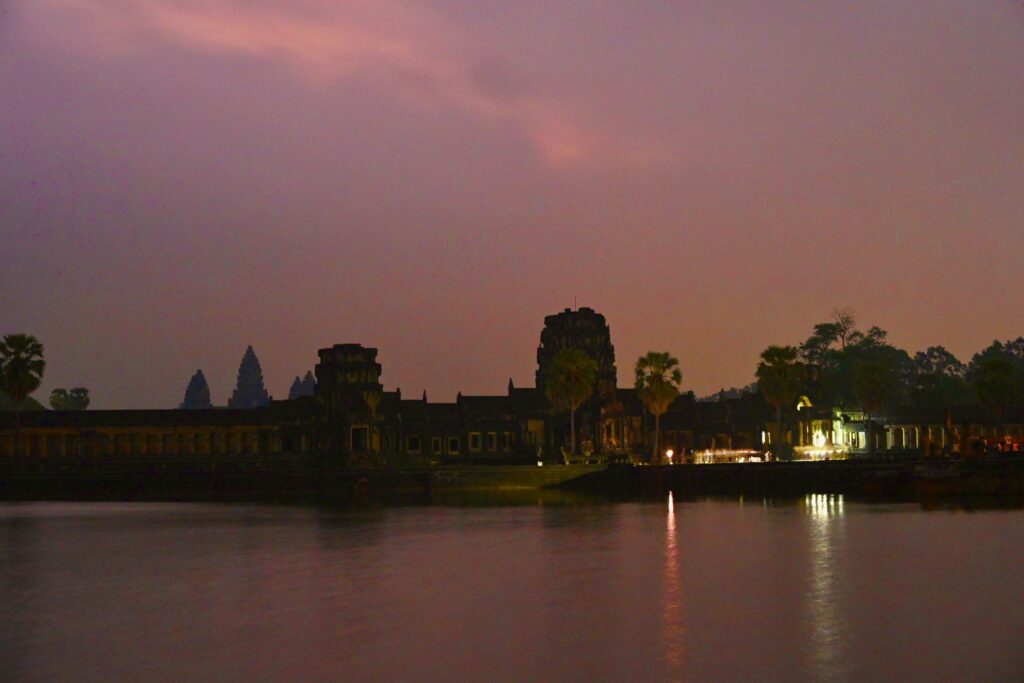
Even at this point, it seems unlikely that we will get truly exceptional photos – the wind is blowing across the water, rippling the reflective surface. There are clouds on the horizon. I can’t get my camera on a level surface. And so on.
But it’s still incredible to be part of all this – the waiting, the anticipation, and the sense of specialness of being at Angkor Wat of all places.
At almost 6 am on the dot the cicadas come to life. Soon, the first tendrils of dawn appear on the horizon. There’s a frantic series of photos – what should I focus on? Do I shoot landscape or vertical? Do I take a long exposure, or use exposure bracketing? It’s frantic, but a worth challenge. It’s like being on safari for the first time.
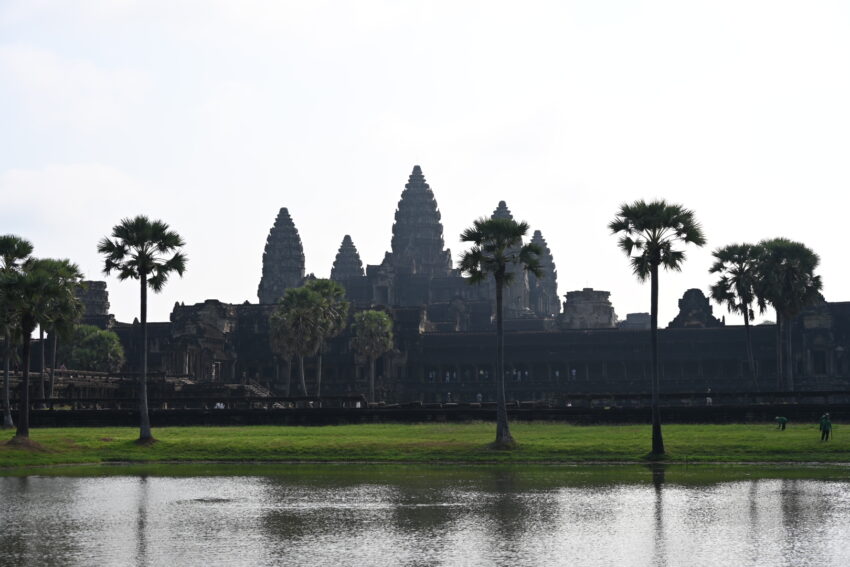
The sunrise doesn’t materialize in the way we’re expecting. We don’t see the sun between the spires, though we do get a purple glow suffusing the clouds overhead.
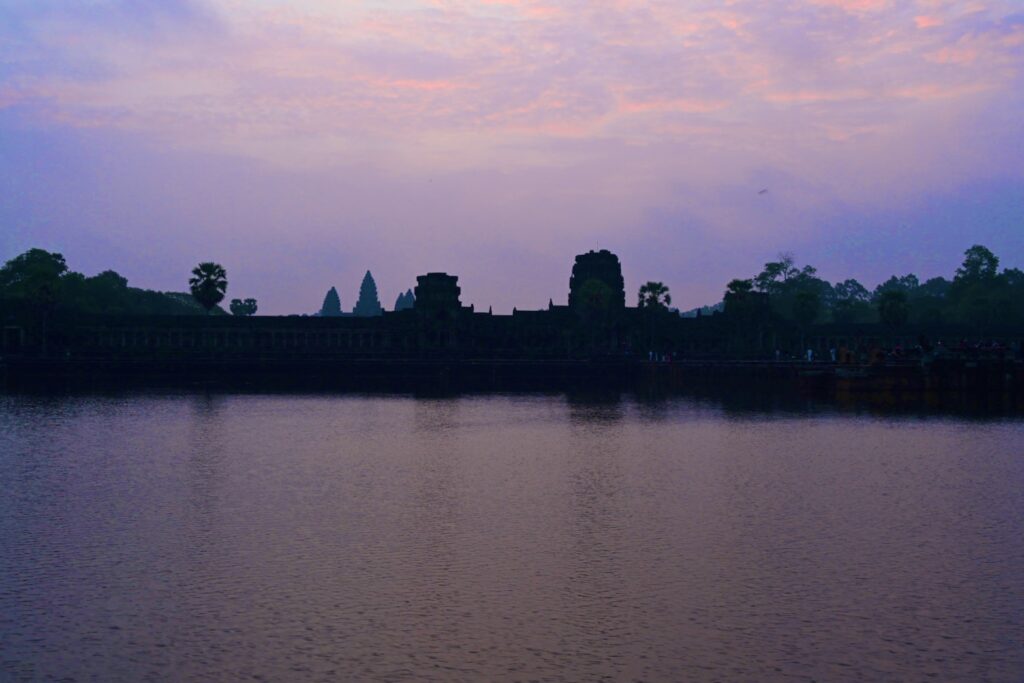
Some of our fellow guests seem disappointed. But I’m very glad I came. I would have regretted not being here. So let me say ‘thank you’ to all who suggested it.
And I like what I’m seeing in my early, low-res proofs:
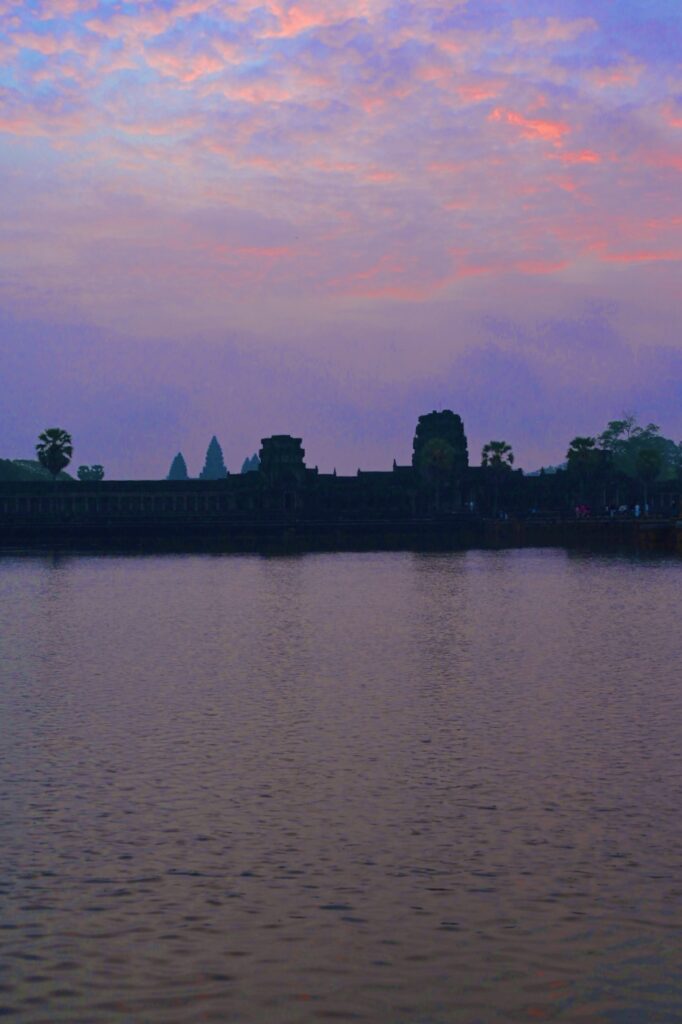
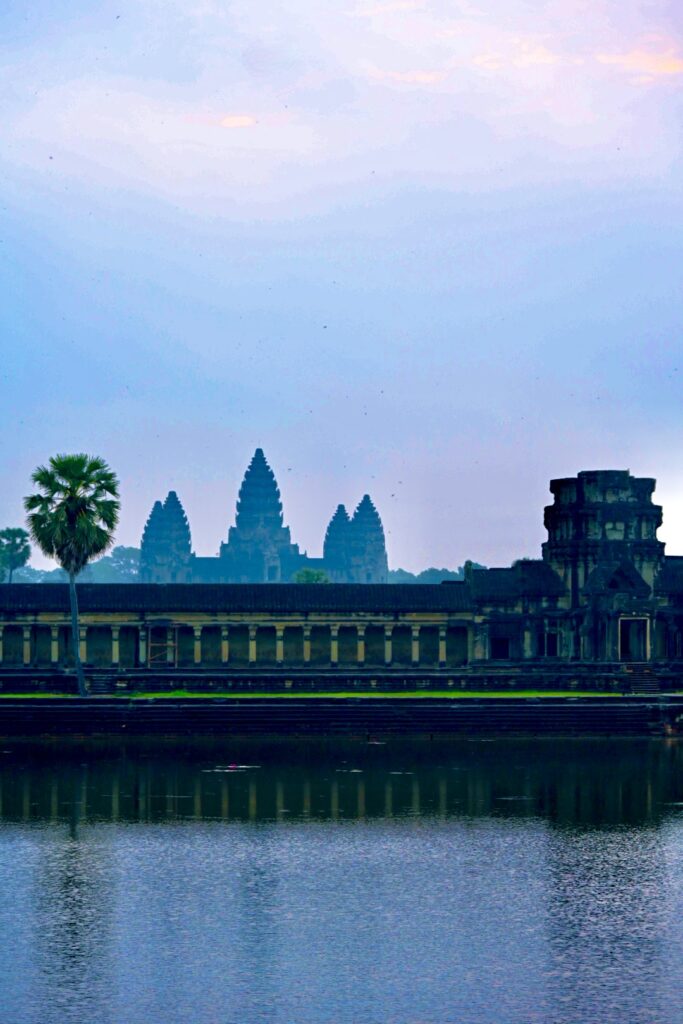
But I’ll need to get into the editing software – Lightroom, for starters – if I hope to put together a proper picture. More to follow! (And among the photo editors in the group, please let me know if you have any tips – any words of advice, @fletcher?)
We re-board our tuk-tuks and return to the Sokha, where I meet my wife and kids for breakfast. And what a breakfast it is:
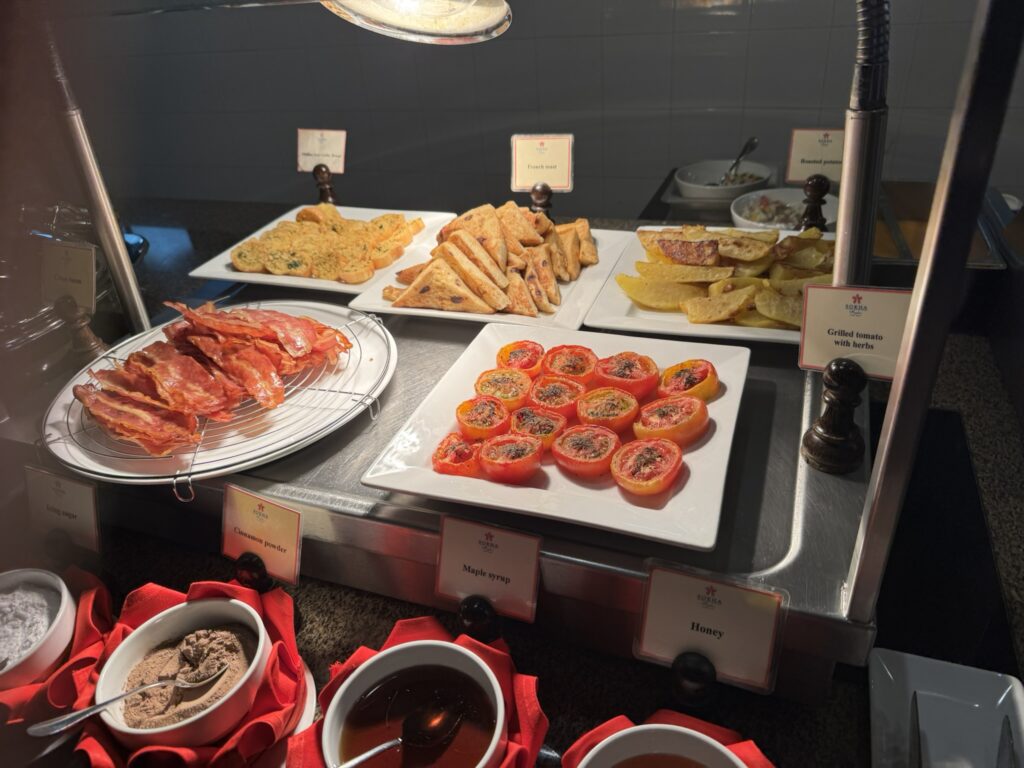
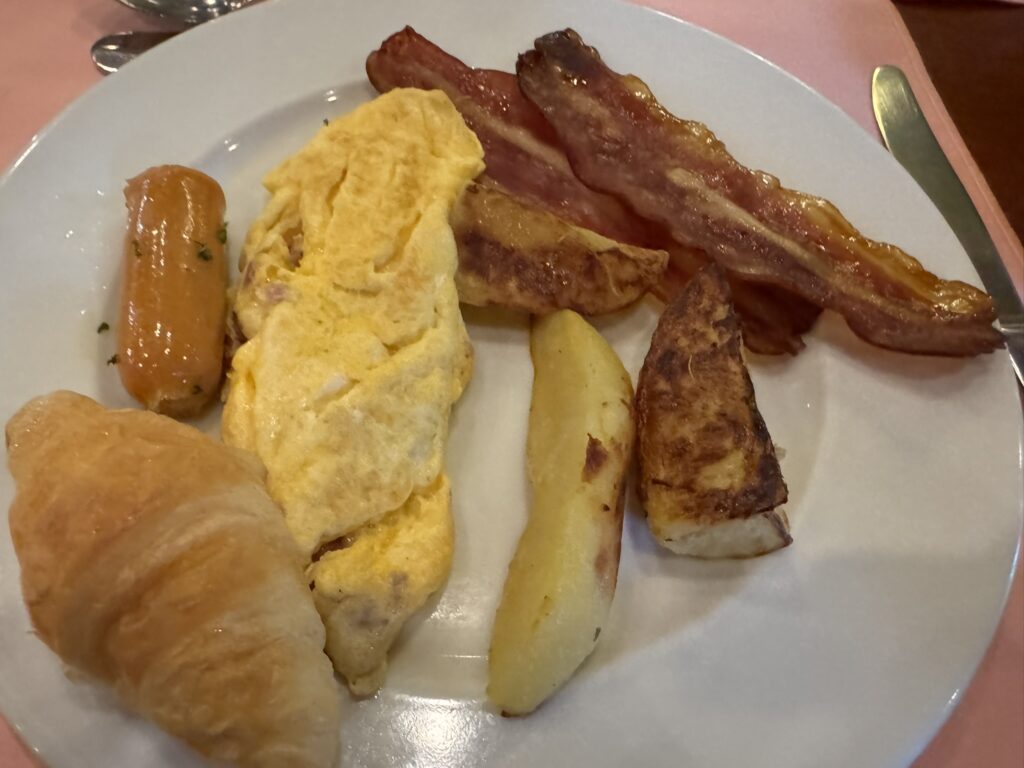
The omelettes are particularly delicious. And there is an absolute ton of food.
Before we depart, I change US$40 to Cambodian Rial for tips, and end up with an absolute stack of 5,000 Rial notes – which I expect I will use for tips over the course of the next two days.
Back onto Bus Two! D takes us over to Angkor Wat, and it’s time for the tour to officially begin.
I will again rely on better minds than mine to recall the history of Angkor Wat, namely Encyclopedia Brittanica:
“Angkor Wat, temple complex at Angkor, near Siem Reap, Cambodia, was built in the 12th century by King Suryavarman II (reigned 1113–c. 1150) of the Khmer empire. The vast religious complex of Angkor Wat comprises more than a thousand buildings, and it is one of the great cultural wonders of the world. Angkor Wat is the world’s largest religious structure, covering some 400 acres (160 hectares), and marks the high point of Khmer architecture.
“The city of Angkor served as the royal center from which a dynasty of Khmer kings ruled one of the largest, most prosperous, and most sophisticated kingdoms in the history of Southeast Asia. From the end of the 9th century until early in the 13th century, numerous construction projects were undertaken, the most notable of which was Angkor Wat. It was built by Suryavarman II as a vast funerary temple within which his remains were to be deposited. Construction is believed to have spanned some three decades.
“All of the original religious motifs derived from Hinduism, and the temple was dedicated to the god Vishnu. The five central towers of Angkor Wat symbolize the peaks of Mount Meru, which according to Hindu mythology is the dwelling place of the gods. The mountain is said to be surrounded by an ocean, and the complex’s enormous moat suggests the oceans at the edge of the world. A 617-foot (188-meter) bridge allows access to the site. The temple is reached by passing through three galleries, each separated by a paved walkway. The temple walls are covered with bas-relief sculptures of very high quality representing Hindu gods and ancient Khmer scenes as well as scenes from the Mahabharata and the Ramayana.“
Our guide D further notes that Angkor Wat took approximately 35 years to build, and required a labour force numbering in the hundreds of thousands as well as more than five thousand elephants.
We start by entering through the ‘people’s entrance’, as opposed to the ‘royal entrance’.
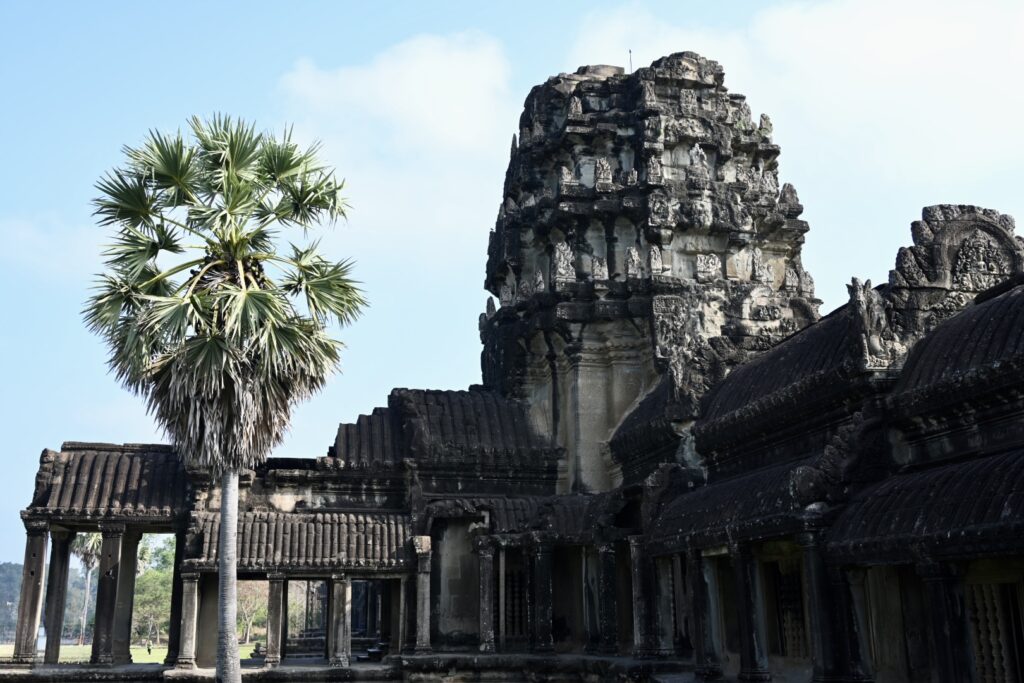
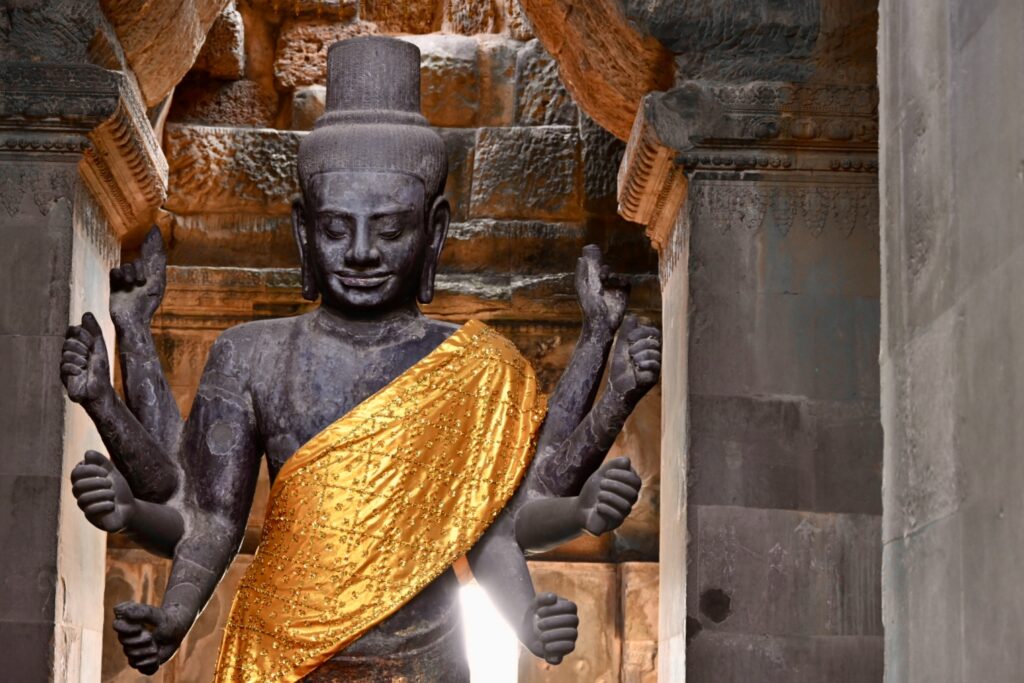
We then enter the temple’s grounds.
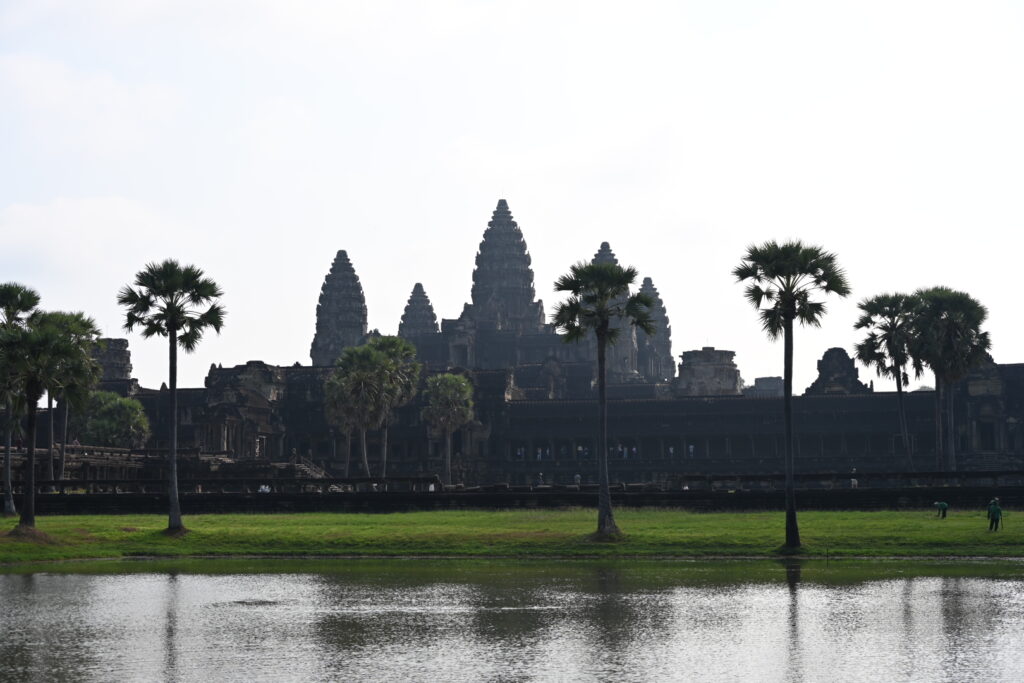
There are couples everywhere who have dressed up for engagement photoshoots. It appears to be a stressful proposition – from what little we observe of said couples, it seems like if you can survive the photoshoot you’ve got a good shot of surviving the marriage.
Why, you ask? Well, I expect there are differing creative views as to whether to pose with the parasol in your left hand or your right but it is also immensely hot.
Thankfully our sojourn to the Singapore Zoo prepared us for this, and I have brought not one but three water bottles. (The kids each have two – one of which includes some pre-mixed Gatorade, which soon becomes known as GatorWater.)
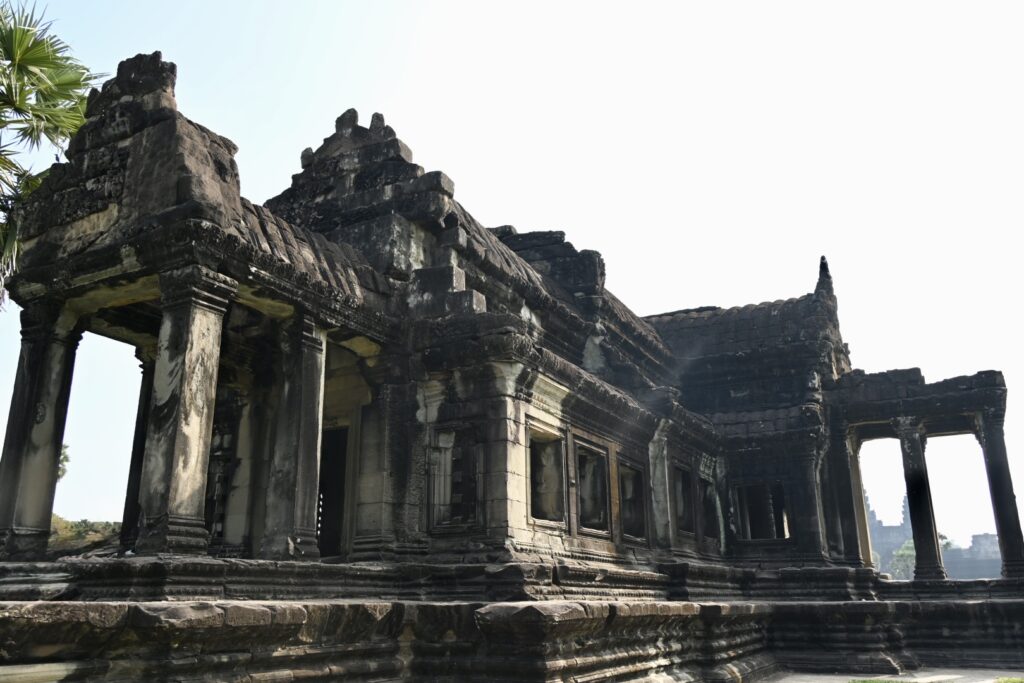
There is also some semblance of a breeze wafting along the grounds and through the occasional corridor. It is fleeting, but very much appreciated.
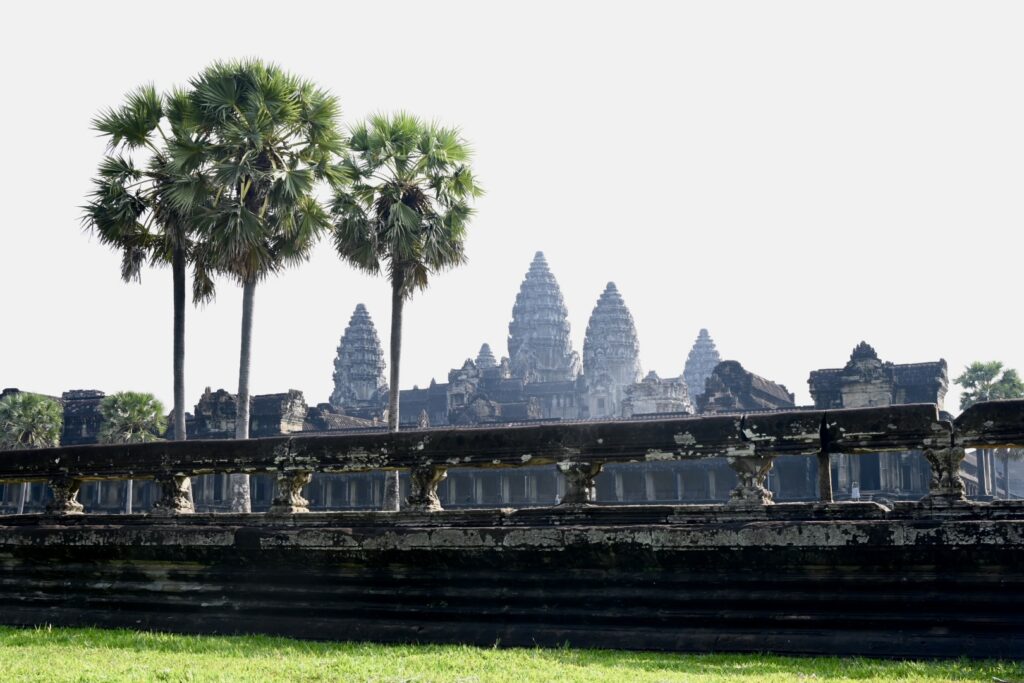
We carry on to the second level:
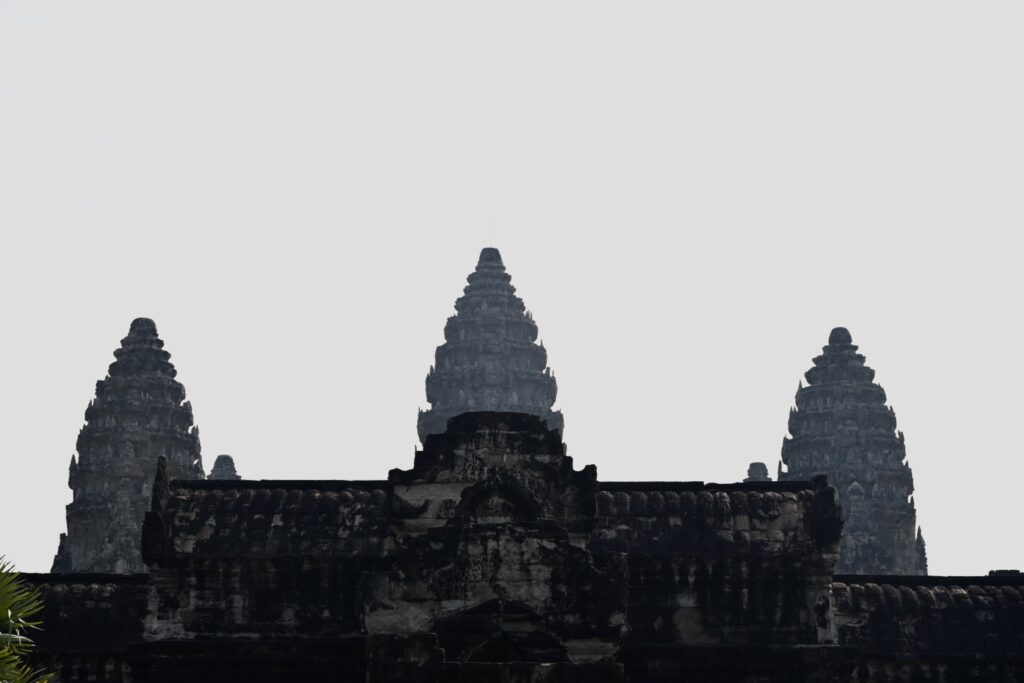
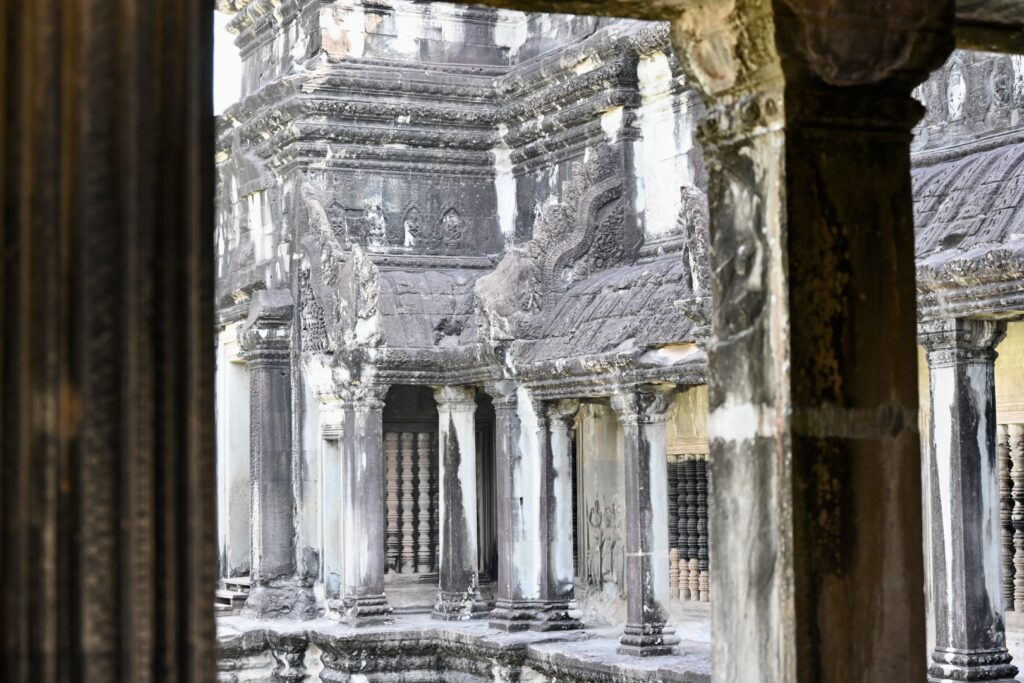
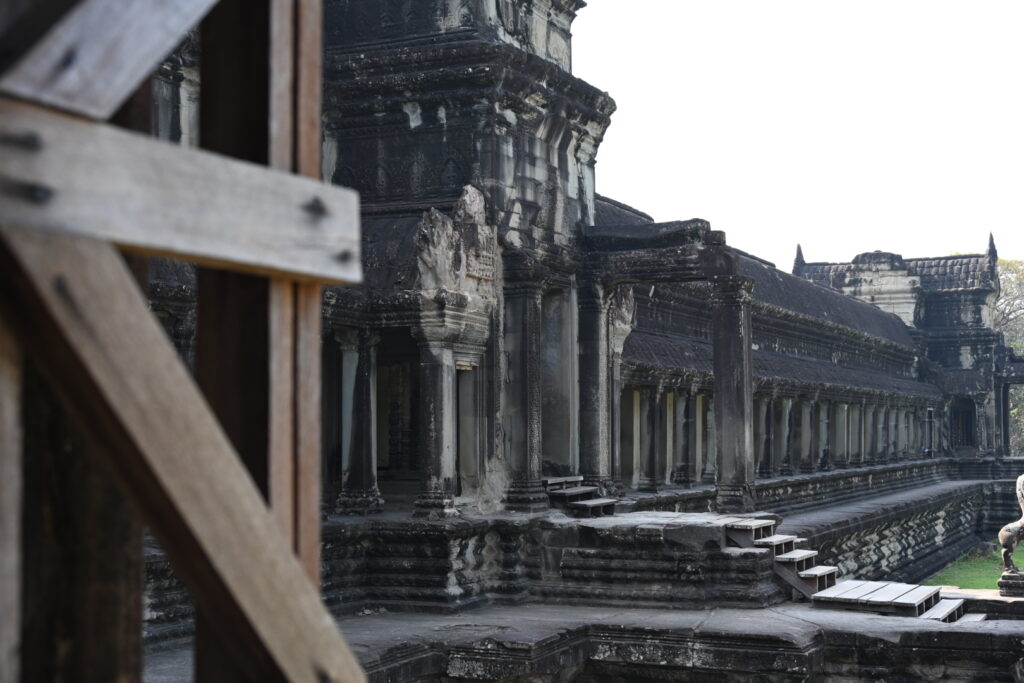
And to the ceremonial pools:
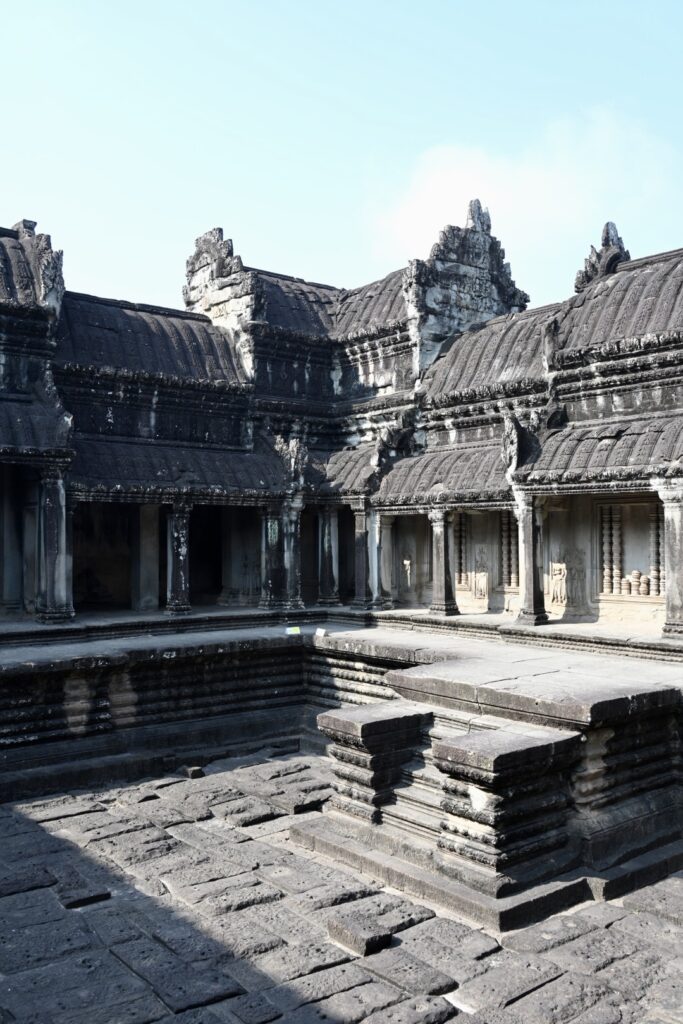
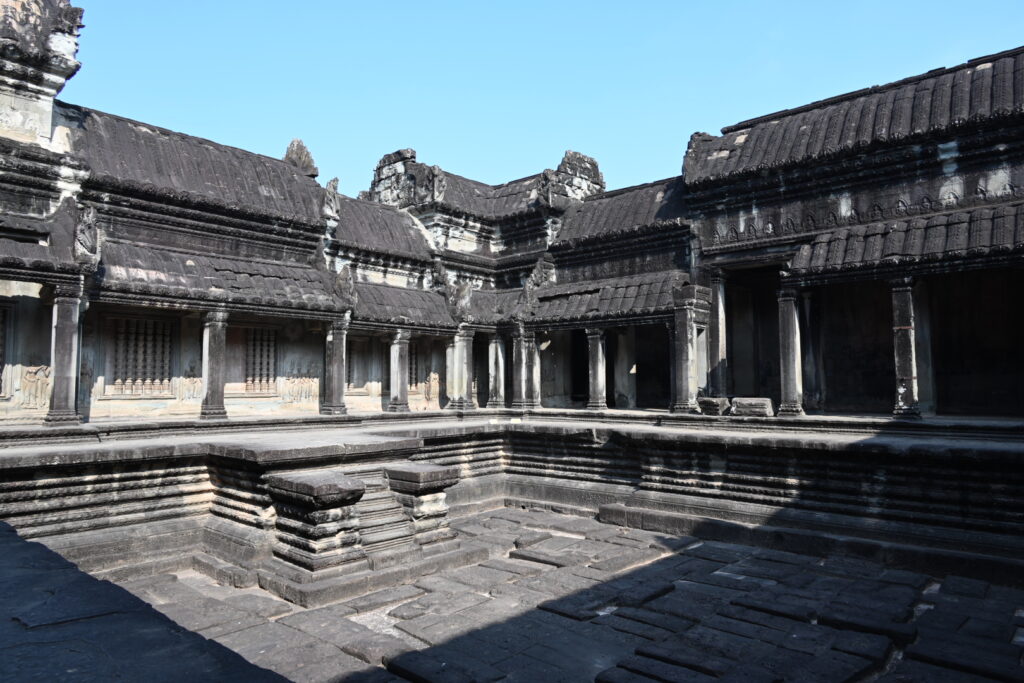
As Angkor was originally a Hindu temple, these pools were used for ritual bathing, a practice representing both physical and spiritual purification.
The decorations on the walls are stunning:
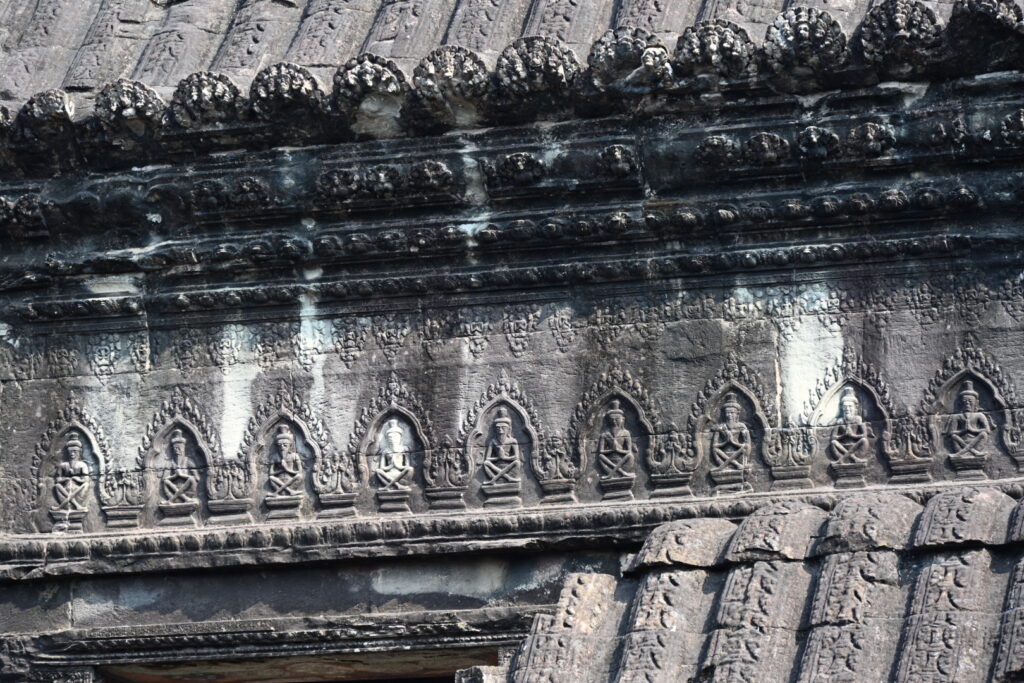
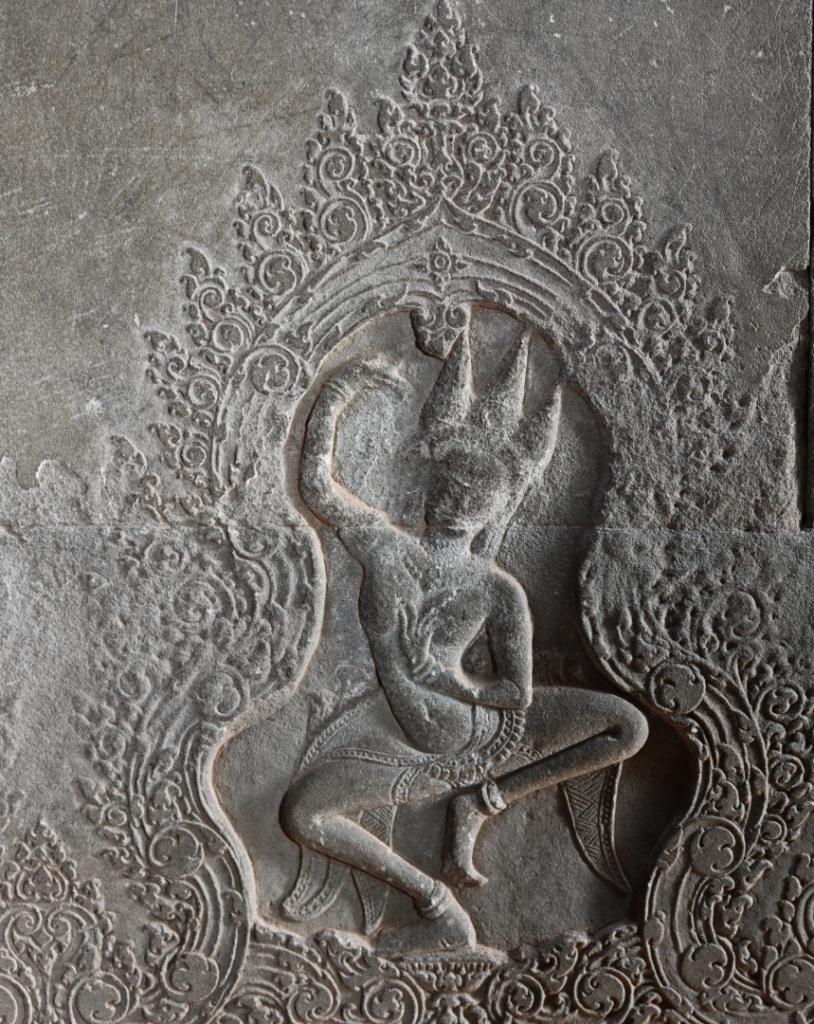
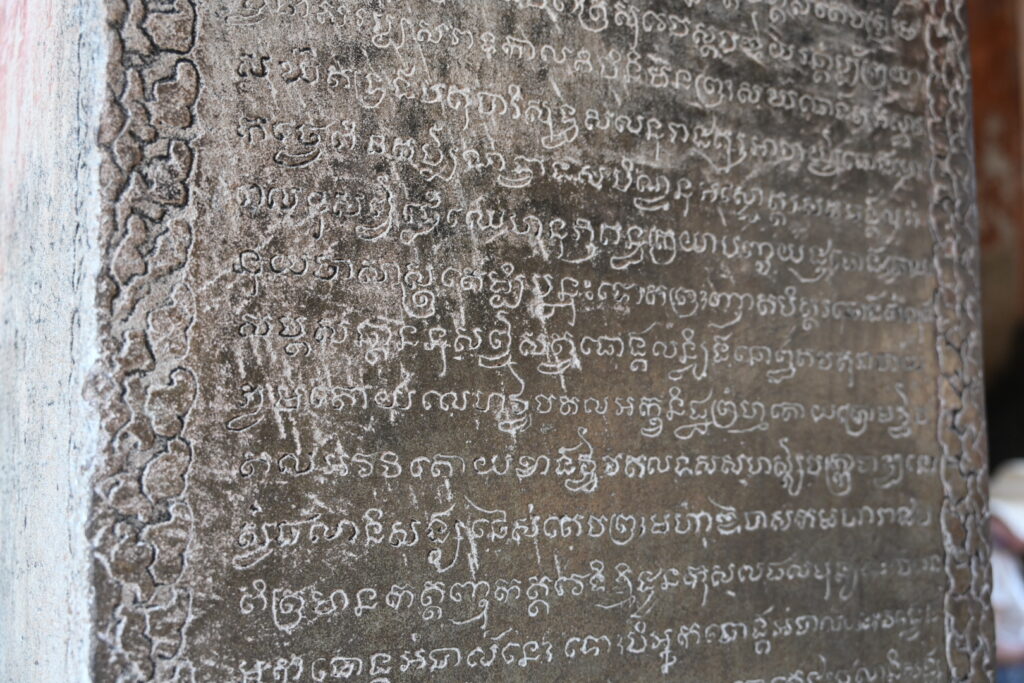
As are the inscriptions:
We also pass through the 1,000 Buddha gallery – most statues have had their heads removed, likely in antiquity by looters. And other statues have been moved to the Angkor Museum, where they can be better protected.
We carry on to another level:
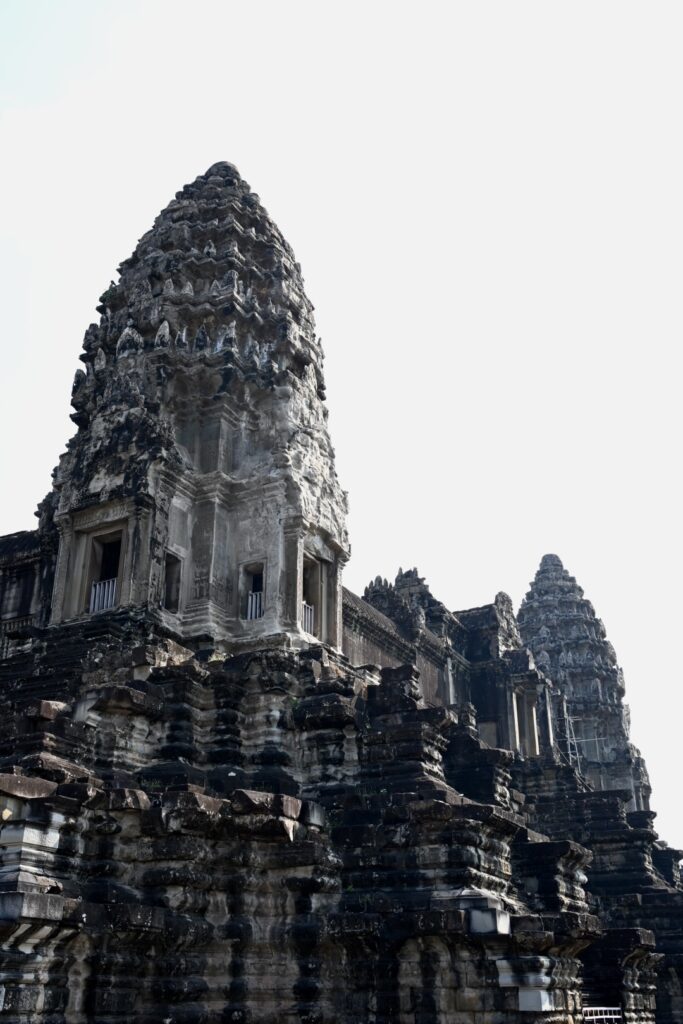
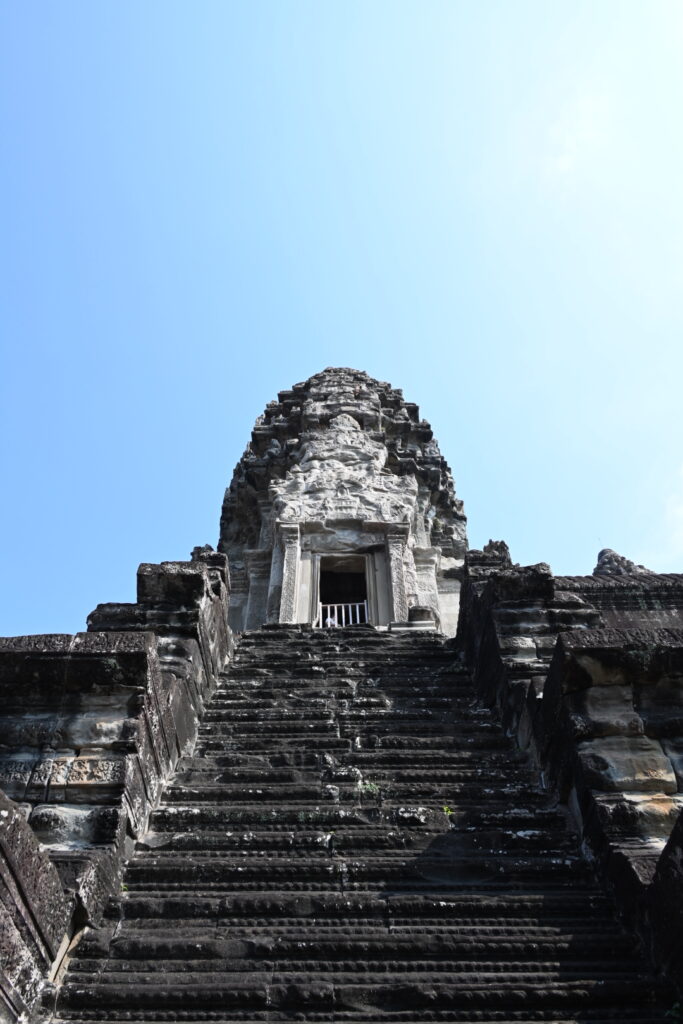
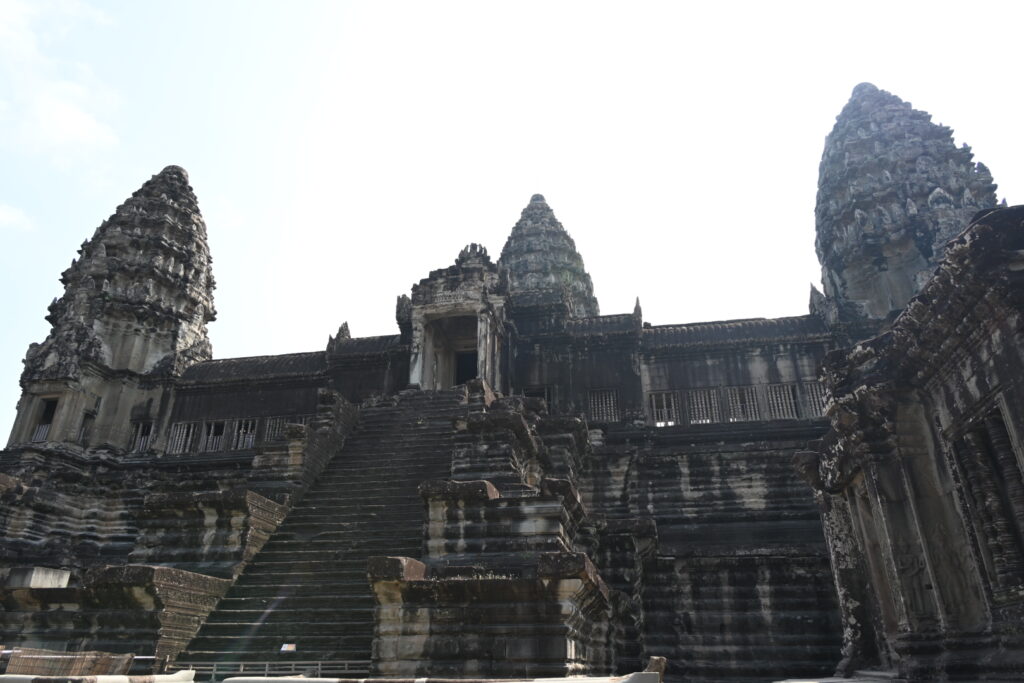
Here we come across our first disappointment. Unfortunately, our daughter is too young to climb the steep steps up to the final level. You must have an adult ticket which is available for those either 12 or 13 years old, depending on which piece of official signage you read.
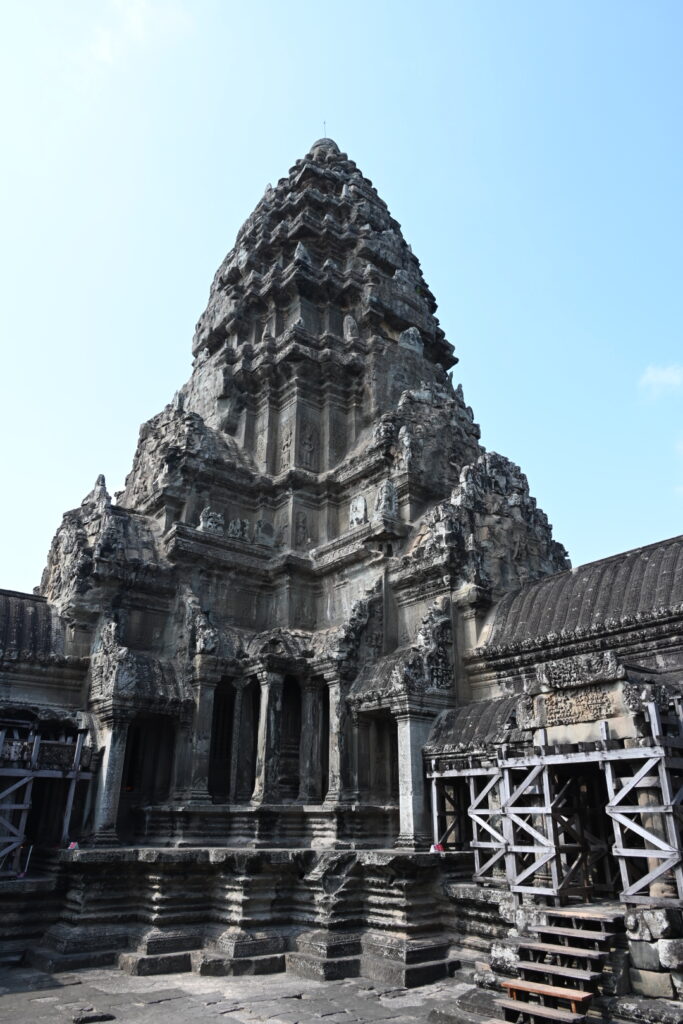
My son and I do head up and I get a few shots of the Bakan, the highest area that was only accessible to high priests and royalty:
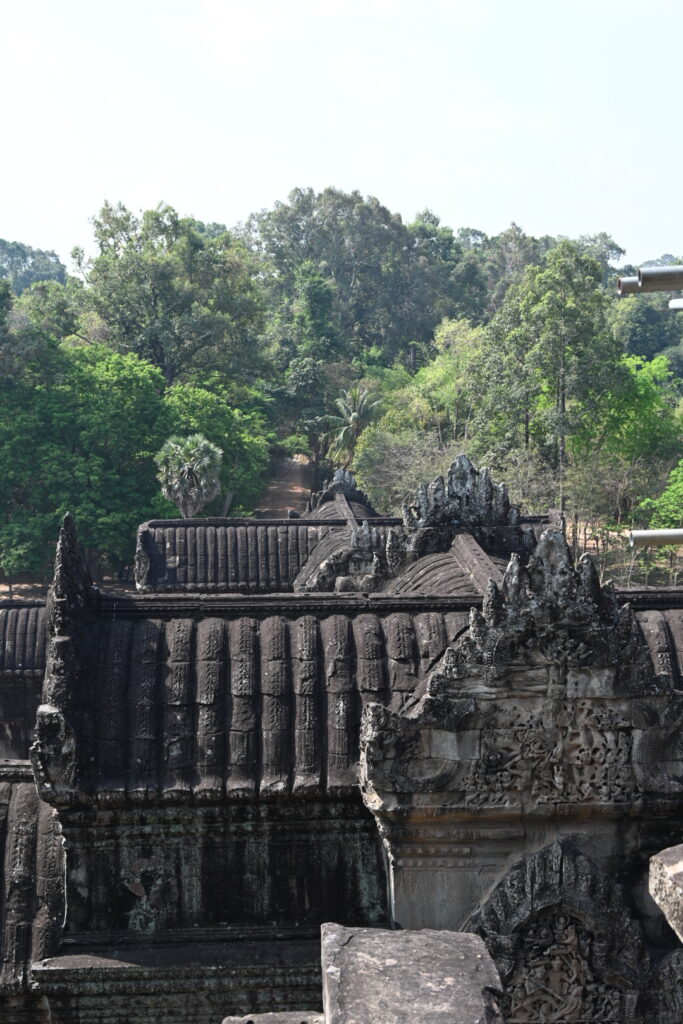
I understand the rationale behind not letting younger kids up here, but we’re all still a bit disappointed.
Ah, well. Perhaps this gives us a reason to come back one of these days?
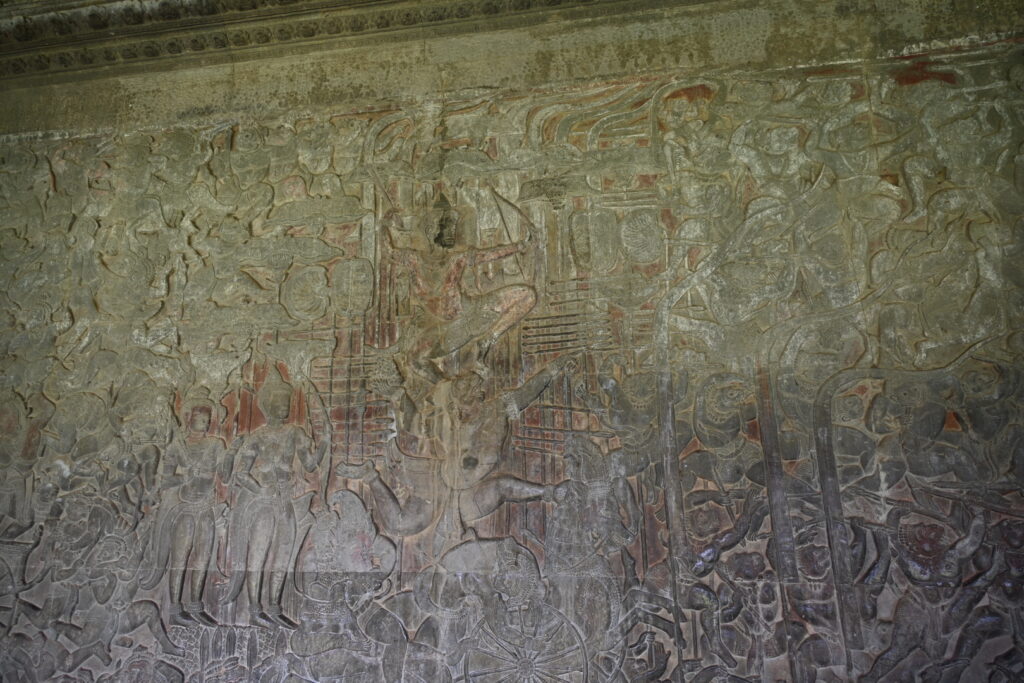
We have perhaps 30 minutes to explore, so we wander through the temple – coming across an immense stone relief of The Churning of the Ocean of Milk:
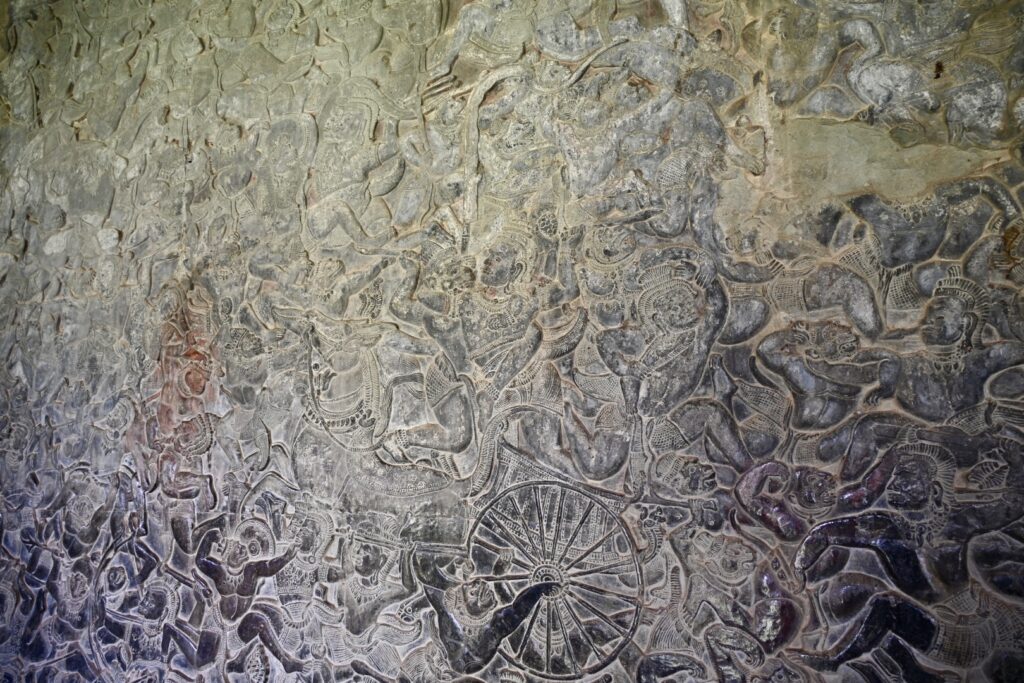
Again, I defer to greater minds – the World Monuments Fund notes:
“Located in the temple complex of Angkor Wat, the Churning of the Ocean of Milk Gallery displays a spectacular 49-meter bas-relief that is part of a larger ensemble of scenes from the Battle of Kuruksetra, the Ramayana, the 37 Heavens and the 32 Hells, and Angkor Wat’s patron, Suryavarman II (1113–ca. 1150) going into battle.
“In the eyes of Khmer people, the most significant bas-relief located in the Churning of the Ocean of Milk Gallery portrays devas and asuras in a dramatically rendered tug of war, representing the eternal struggle of good and evil that churns amrit, the elixir of everlasting life, from the primordial ocean.”
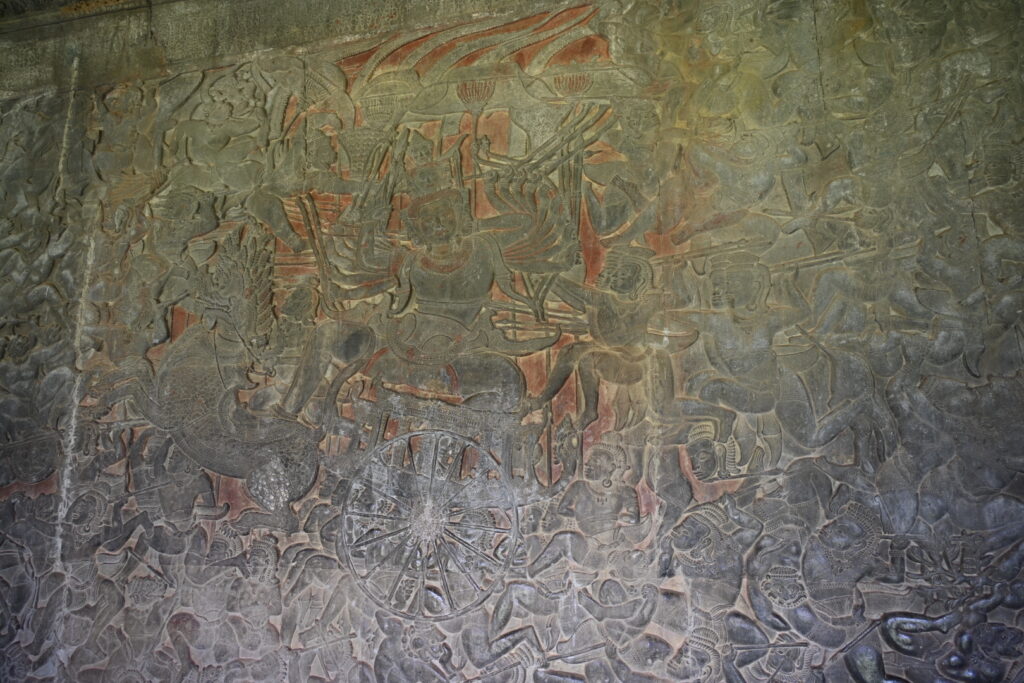
It’s stunning – our son particularly enjoys taking in all the different elements along the 49-metre-long relief, picking out Prince Rama atop Hanuman.
But it’s soon time to return to the meeting point.
There’s perhaps a five minute delay as the last straggler finds their way, and then we are off to the Angkor Museum:
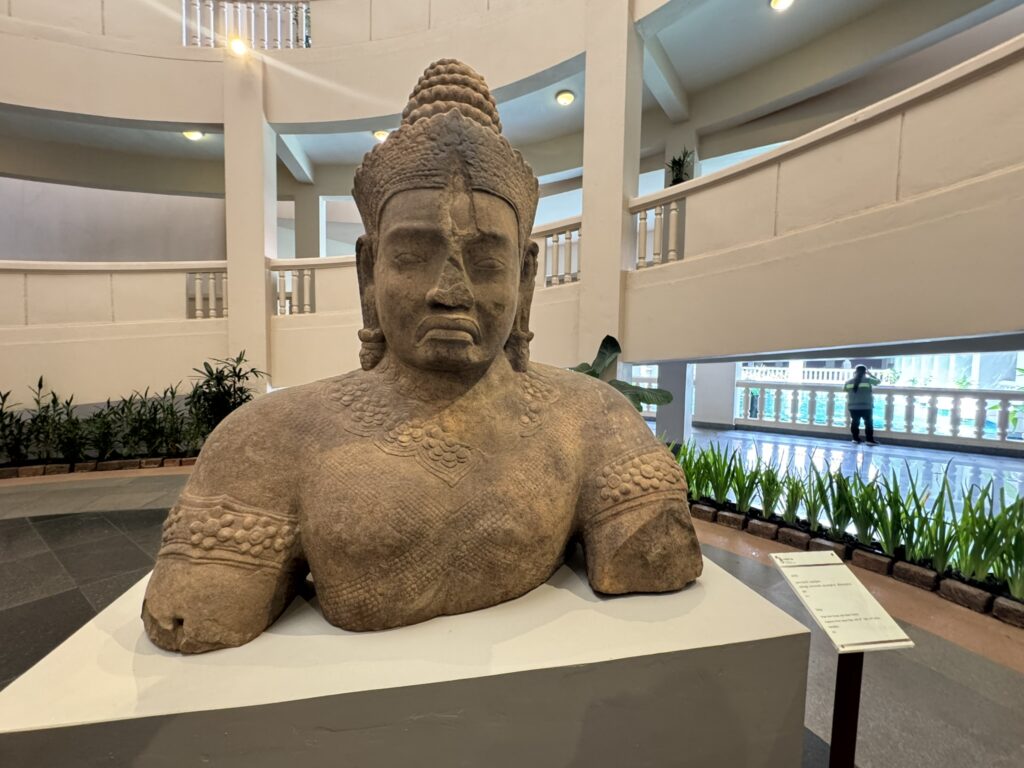
It’s quite a striking exhibit, with more than eight different galleries. We start with an orientation video, and then head to the Buddha gallery.
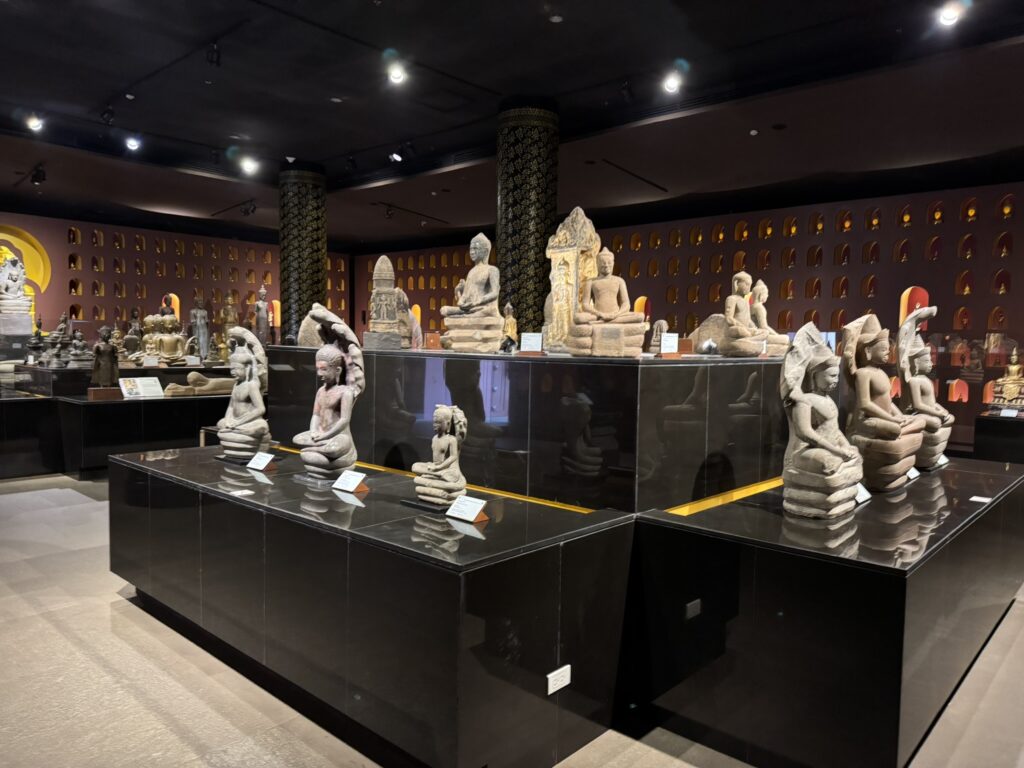
It’s also air conditioned, which I expect played a factor in it becoming our mid-day destination
Here we learn that the different hand positions of the Buddha have different meanings. One hand means teaching, two hands means reassurance or giving compassion, no hands and seated means meditating, and one hand pointing at the ground means calling the earth as a witness.
We also enjoy visiting the sections on pre-Ankor, Ankor and post-Ankor history. It’s interesting to see that the statues of Vishnu change from one period to the next.
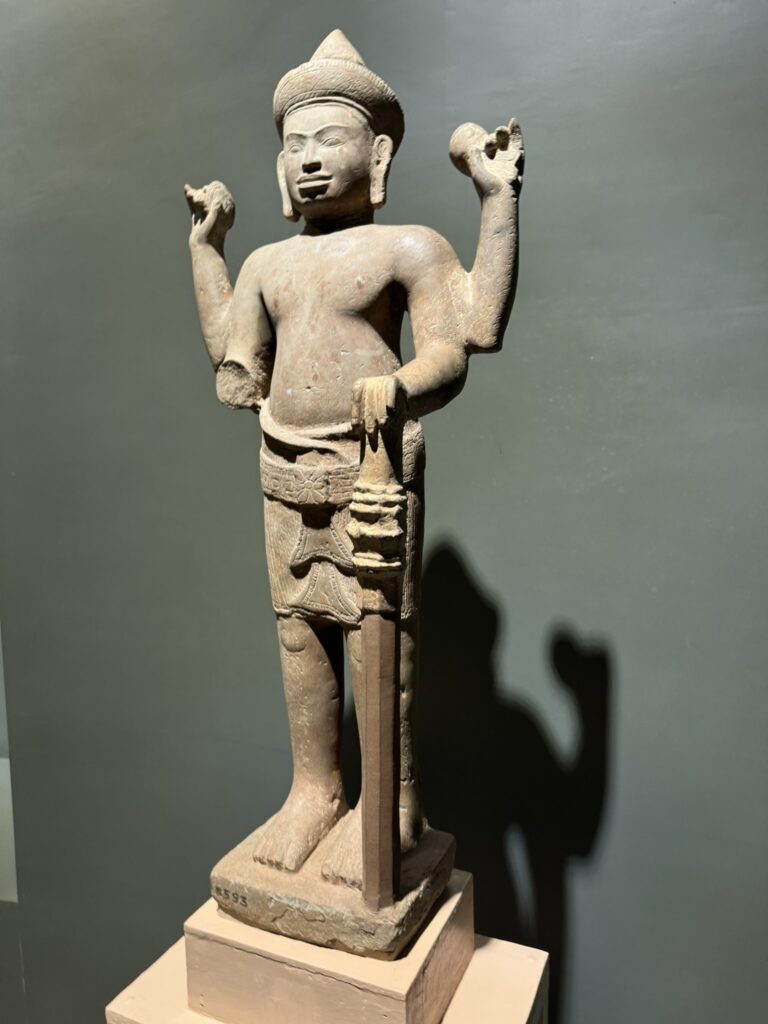
While one can determine the Hindu god by considering which animal they are riding.
For example:
“Goddess Saraswati’s vehicle, the graceful and beautiful peacock, represents her status as the controller of the pursuit of performing arts.
“Vishnu sits on the primal serpent, which represents the desire for consciousness in humankind.
“Shiva rides the Nandi bull, which stands for brute and blind power, as well as the unbridled sexual energy in man—the qualities only he can help us control.
“Shiva’s consort, Parvati, Durga, or Kali, rides on a lion that symbolizes mercilessness, anger, and pride—vices she can help her devotees check.
“Ganesha’s carrier, a mouse represents the timidity and nervousness that overwhelm us at the onset of any new venture—feelings that can be overcome by the blessings of Ganesha.”
– Source: Learn Religions
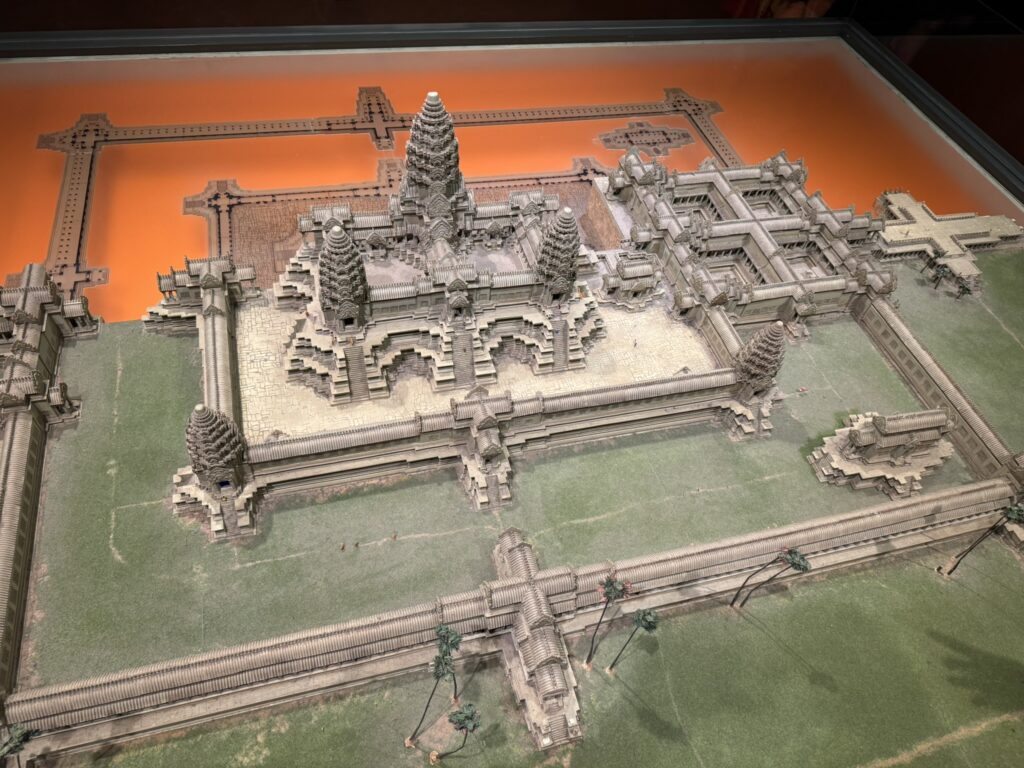
They also have an intricate model of the Angkor Wat temple complex:
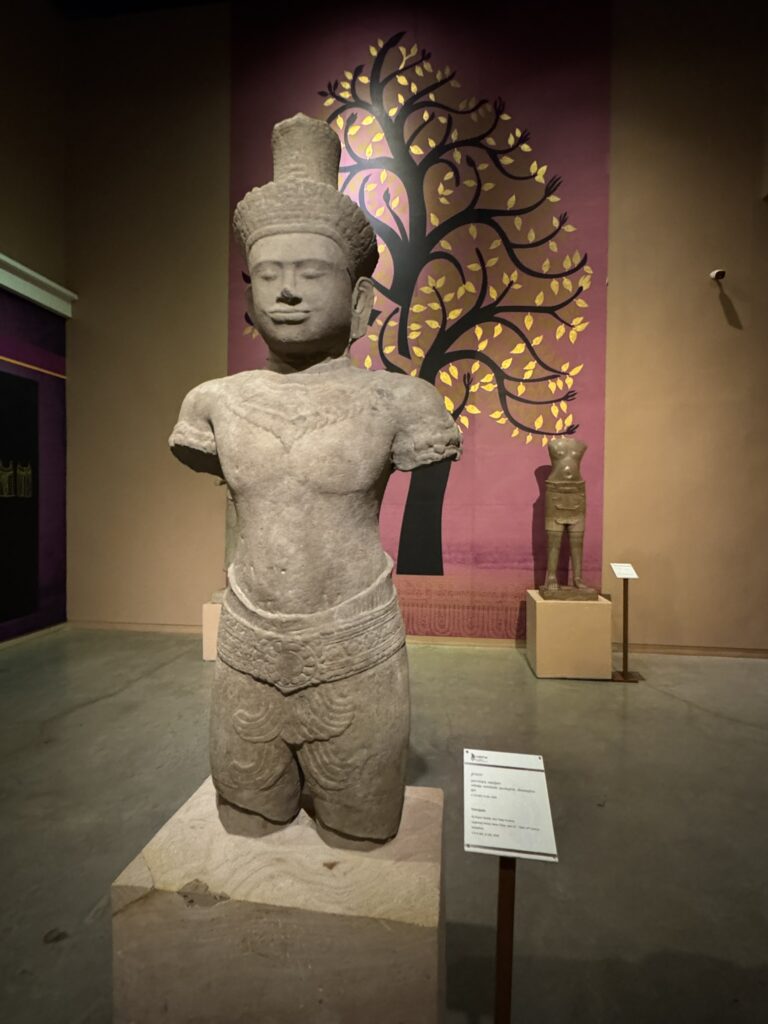
I also quite enjoy the exhibit showing how Khmer dress has evolved over time:
And the exhibit on writing and royal decrees:
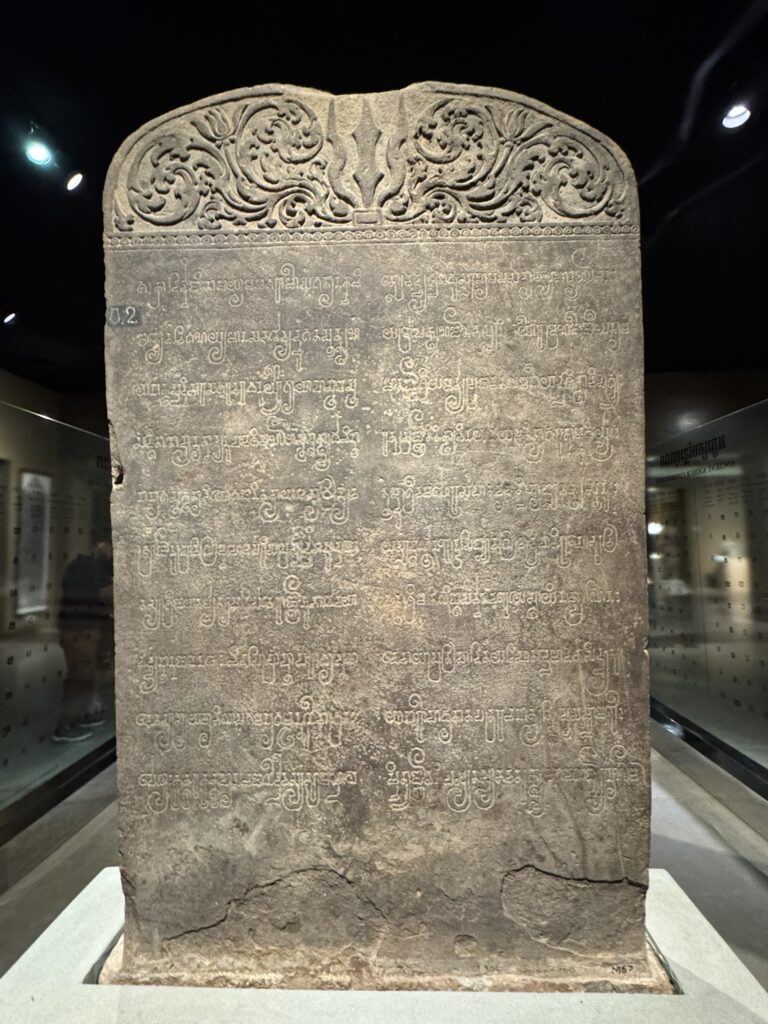
Among other restrictions, this decree forbits riding chariots, using umbrellas, waving ornate fans, keeping dogs or raising roosters within the sacred area. (To be fair, it’s really easy to lose an eye from a wayward umbrella in a crowded place.)
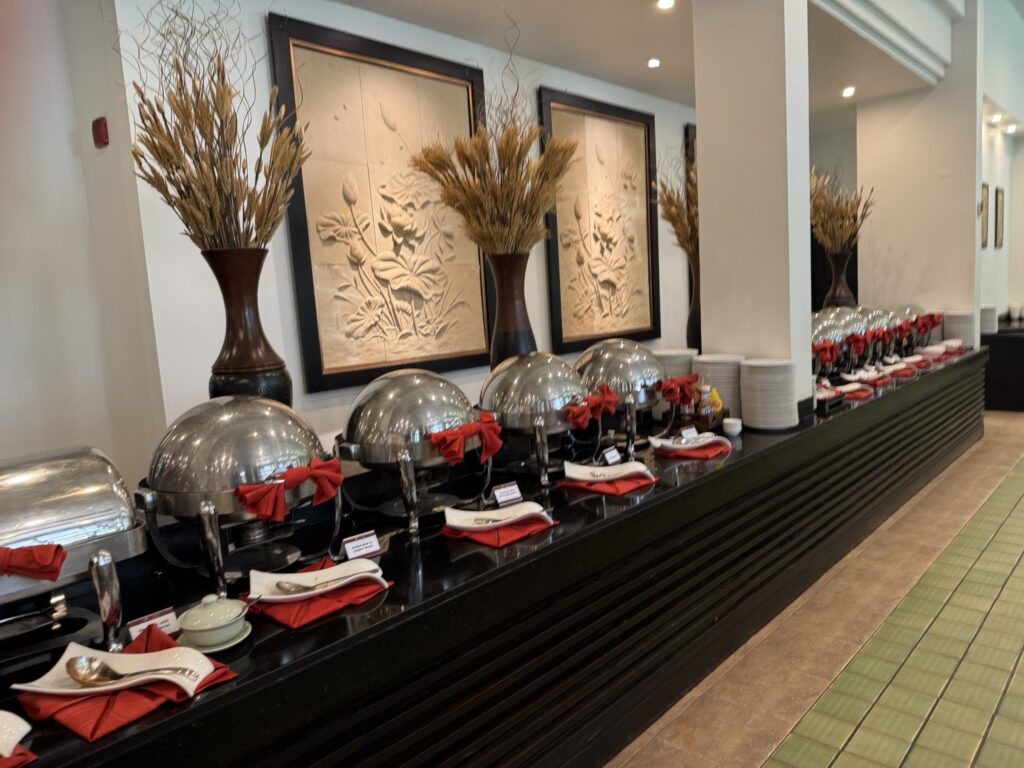
From here we head to lunch at Tara Hotel. Our daughter likes the curry here so much that the manager comes up to the table to remark on it – though really kudos are due to both kids for finding foods they will eat.
We are ahead of schedule at this point, so we are given the option of either visiting the antiques market or carrying on to the next temple. We elect to move on to the temple. I know some visitors like to stop in at the various markets, but that isn’t really our preference – and thankfully our guides do not attempt to give us any kind of hard sell.
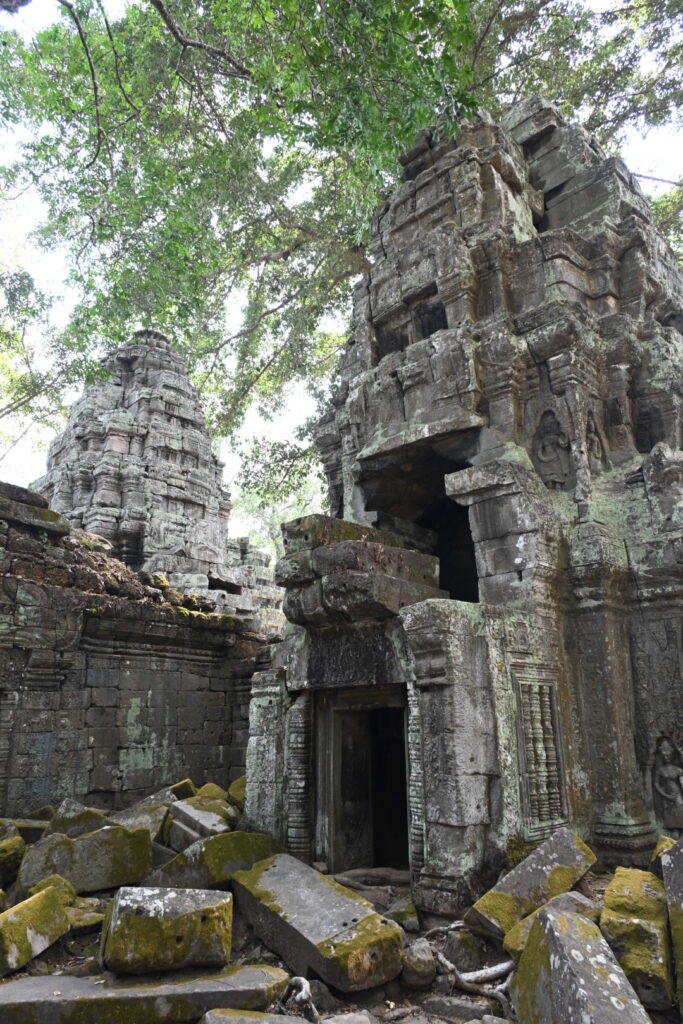
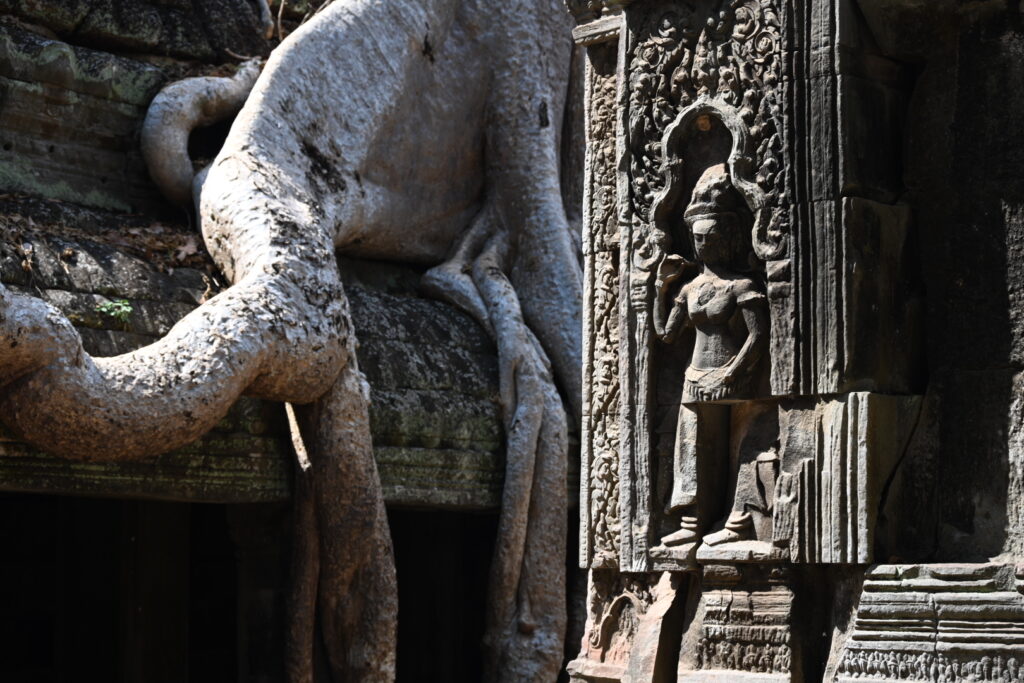
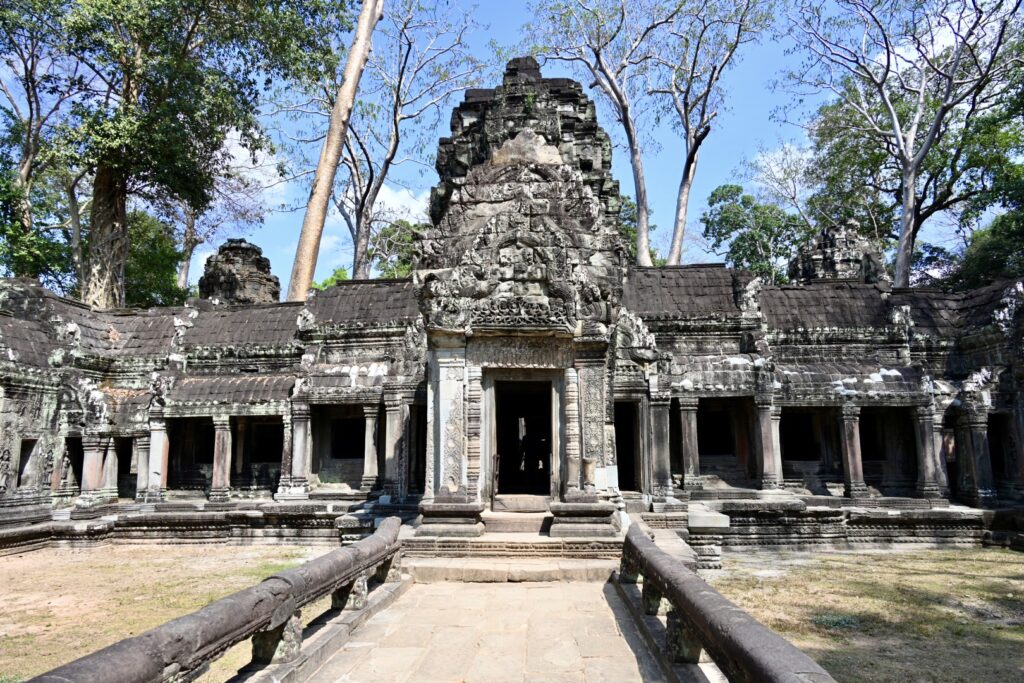
Following a brief drive, we reach Ta Prohm temple – also commonly referred to as the ‘Tomb Raider’ temple, as it appears in the first of the Lara Croft movies.
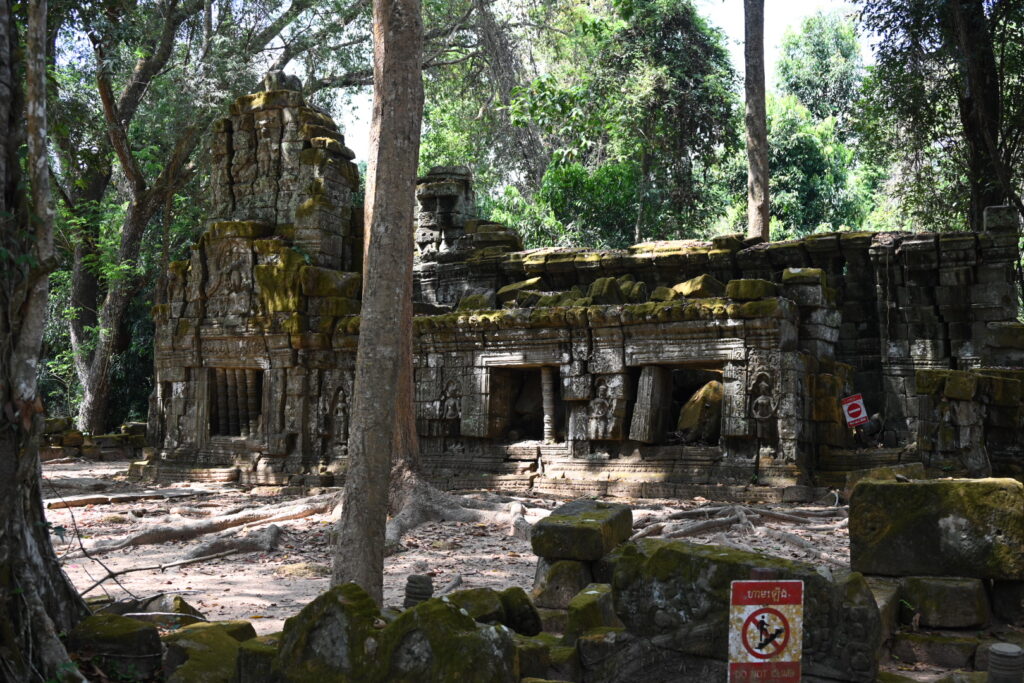
Let’s hear from the experts once more, shall we?”
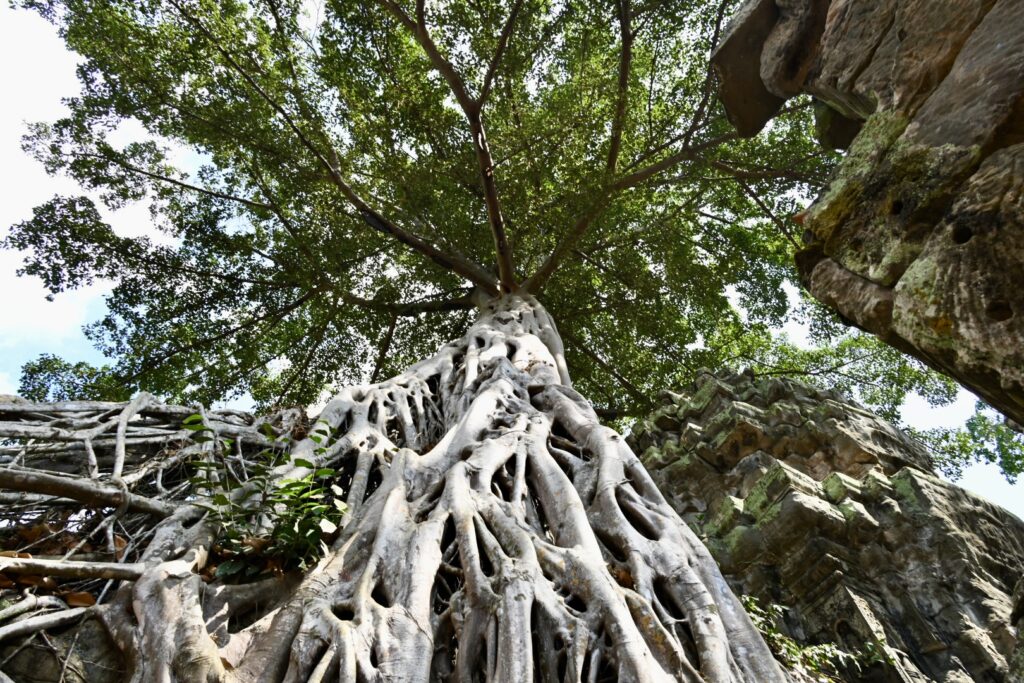
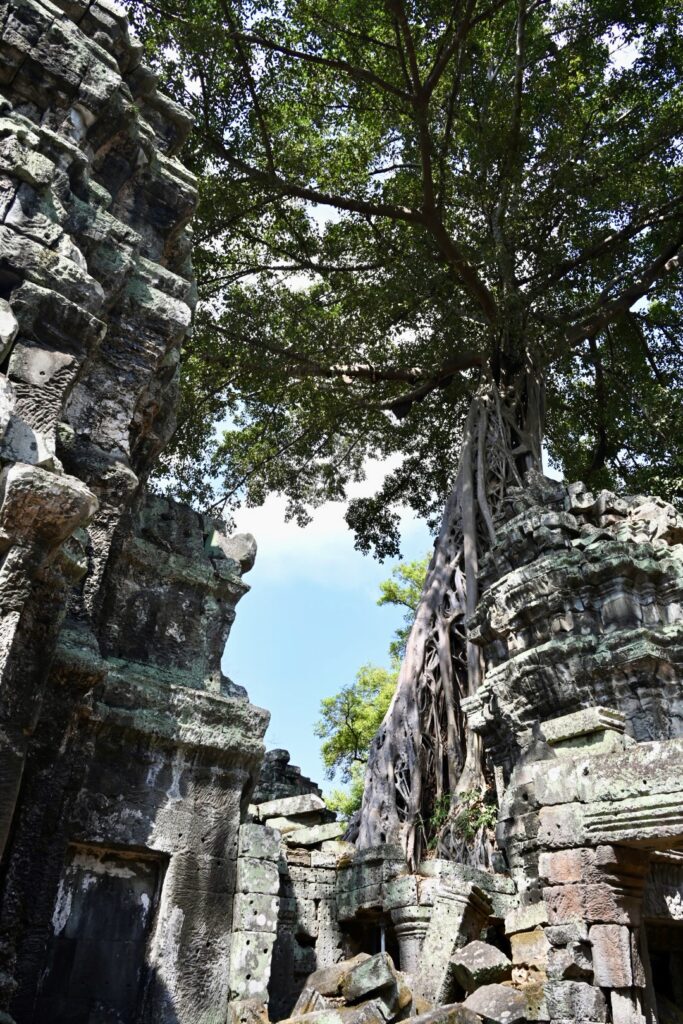
“Ta Prohm, known for the huge trees and the massive roots growing out of its wall, is believed to have been built in the late twelfth and early thirteenth century. This “Jungle temple” was featured in the adventure movie The Tomb Raider; several shots were filmed here.
“It was founded by King Jayavarman VII as a Mahayana Buddhist monastery and university. Unlike most Angkorian temples, Ta Prohm has been left in much the same condition in which it was found where the photogenic and atmospheric combination of trees growing out of the ruins and the jungle surroundings have made it one of Angkor’s most popular temples with visitors.
“Rajavihara (Royal temple), as it was originally known, was one of the first temples founded pursuant to a massive program of construction and public works after the King’s ascension to the throne in 1811 A.D. It was built in honor of his family. The temple’s main image, representing Prajnaparamita, the personification of wisdom, was modeled on the king’s mother. The northern and southern satellite temples in the third enclosure were dedicated to the king’s guru and his elder brother respectively. As such, Ta Prohm formed a complementary pair with the temple monastery of Preah Khan, dedicated in 1191 A.D., the main image of which represented Avelokitesvara, the Bodhisattva of compassion and was modeled on the king’s father.
“The site was home to more than 12,500 people (including 18 high priests and 615 dancers), with an additional 80,000 people in the surrounding villages working to provide services and supplies.“
– Source: Tourism Cambodia
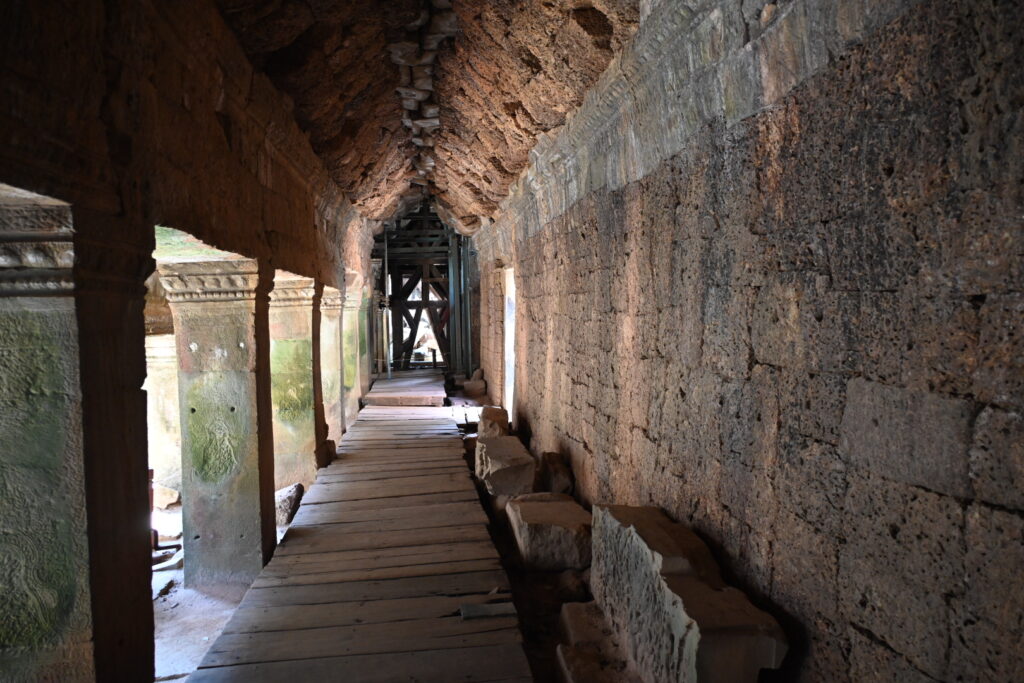
Unlike the remarkably intact Ankor Wat, Ta Prohm is better known for the manner in which destruction has been visited upon it – namely through the growth of these massive trees:
It’s quite striking, and we very much enjoy exploring the temple’s maze-like grounds:
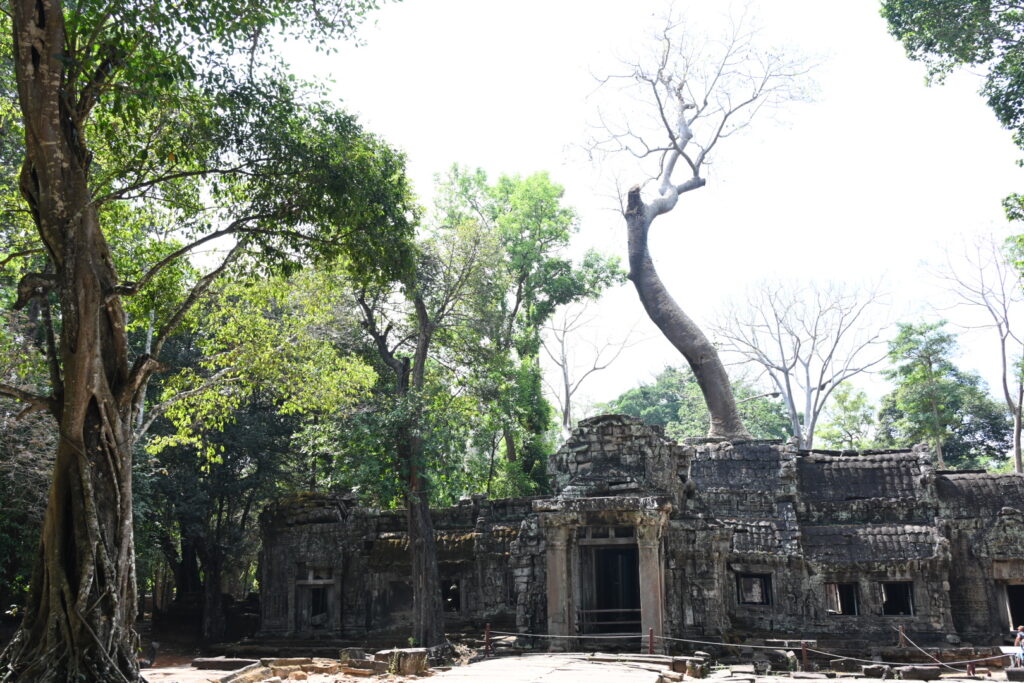
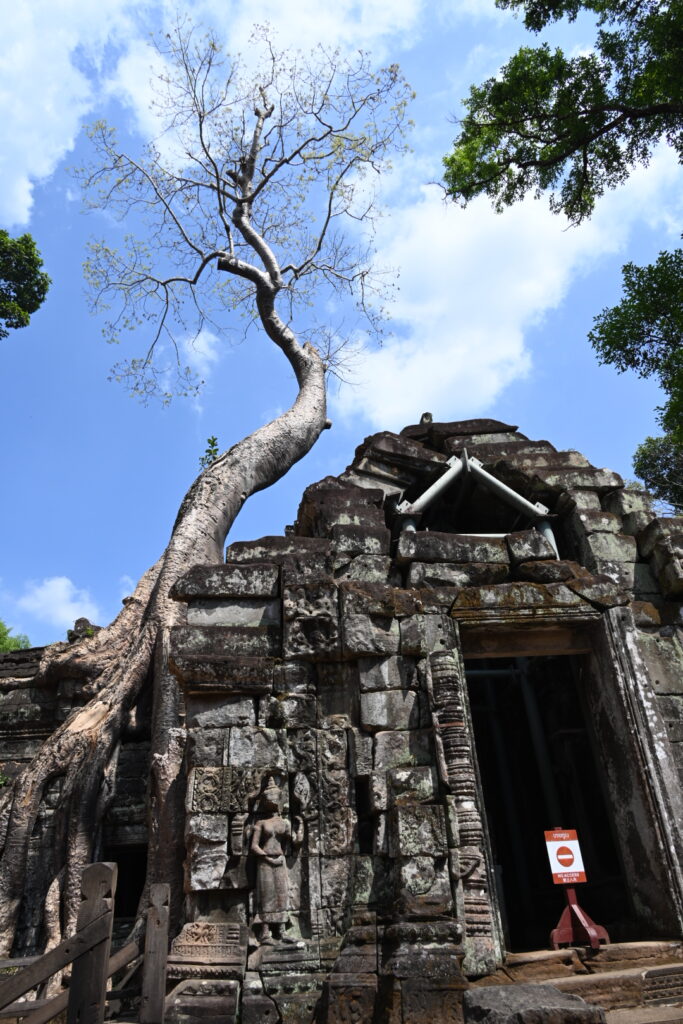
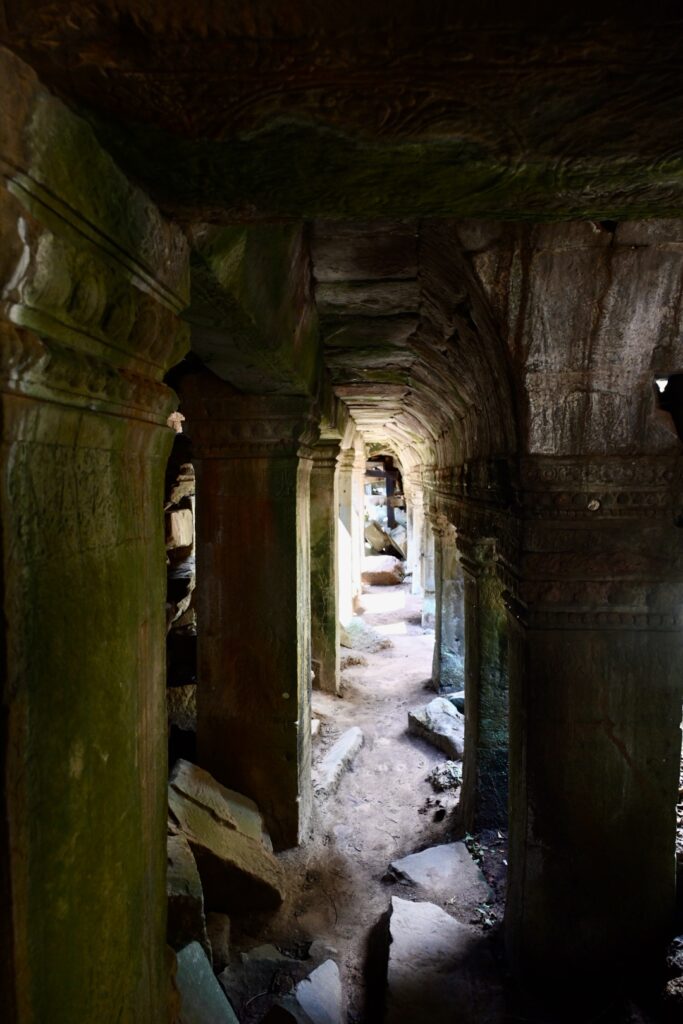
While much of the temple is in the shade, we have also lost that blessed breeze from earlier in the day – once more we drain our water bottles, one after the next. I think I’ve drank five bottles of water at this point, but I will firmly lose track before the day is out.
My wife asks our guide when the best time is to visit Cambodia and Angkor Wat, and our guide suggests August. July is peak rainy season and September has many holidays, but August weather is both milder and less crowded. Indeed, temperatures can be in the low 20s Celsius during the day.
From here we head to the town of Angkor Tom where we examine the city wall:
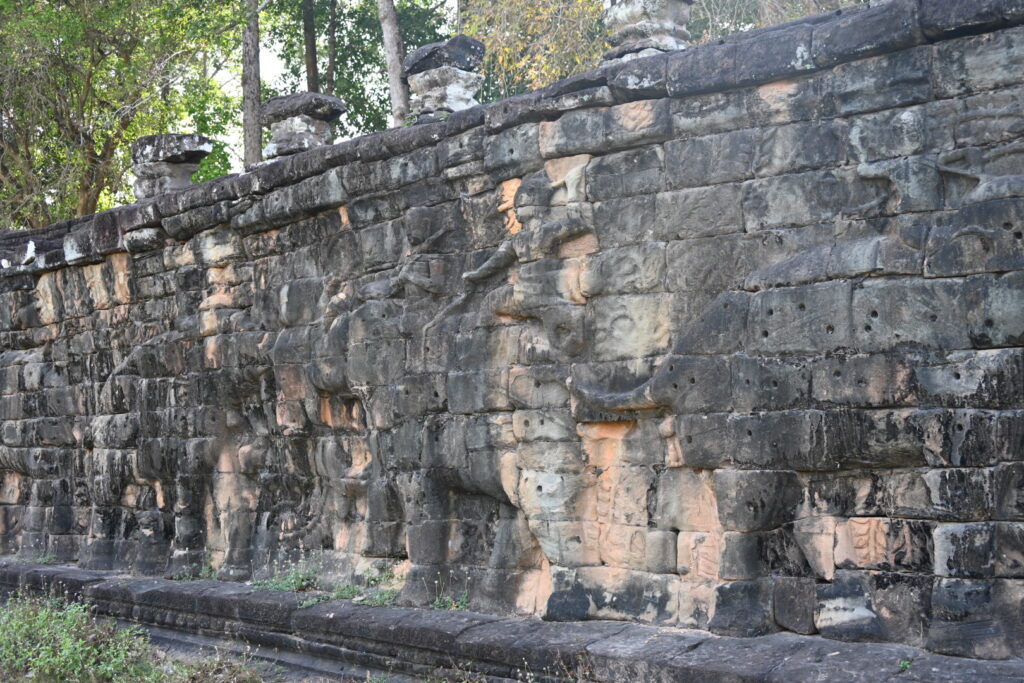
“The Terrace of the Elephants is part of the walled city of Angkor Thom. The terrace was used by king Jayavarman VII as a platform from which to view his victorious returning army. It was attached to the palace of Phimeanakas. Most of the original structure was made of organic material and has long since disappeared and most of what remains are the foundation platforms of the complex. The terrace is named for the carvings of elephants on its eastern side.
“The 350m-long Terrace of Elephants was used as a giant reviewing stand for public ceremonies and served as a base for the king’s grand audience hall. It has five outworks extending towards the Central Square-three in the centre and one at each end. The middle section of the retaining wall is decorated with life size garudas and lions; towards either end are the two parts of the famous parade of elephants complete with their Khmer mahouts.”
– Source: Tourism Cambodia
We then head off to Bayon temple – but on the way, we come across a mob of mischievous monkeys:
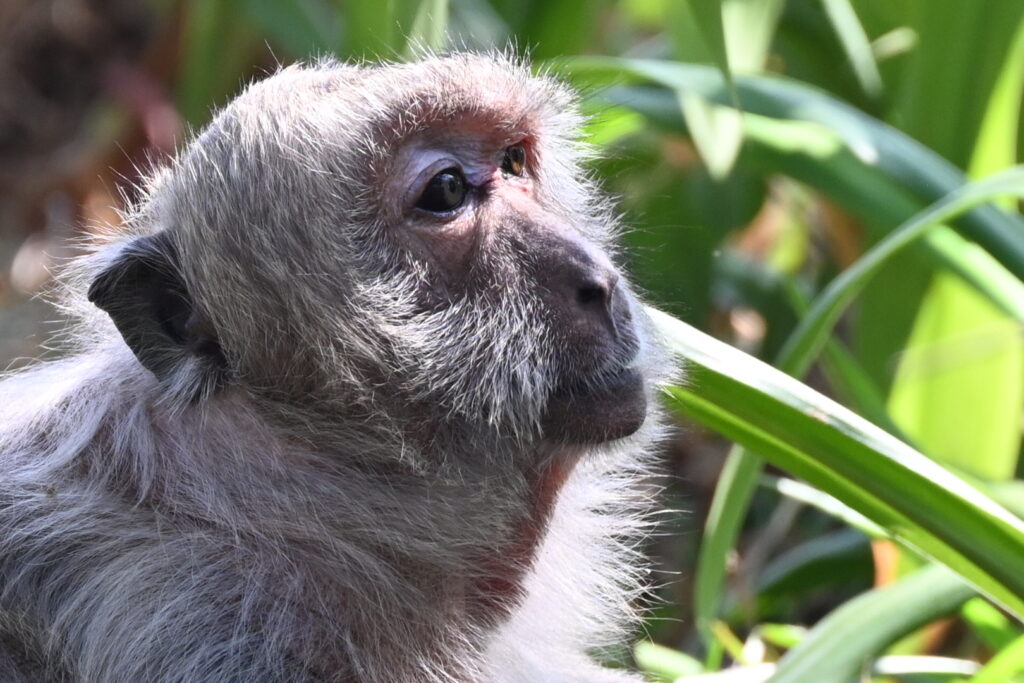
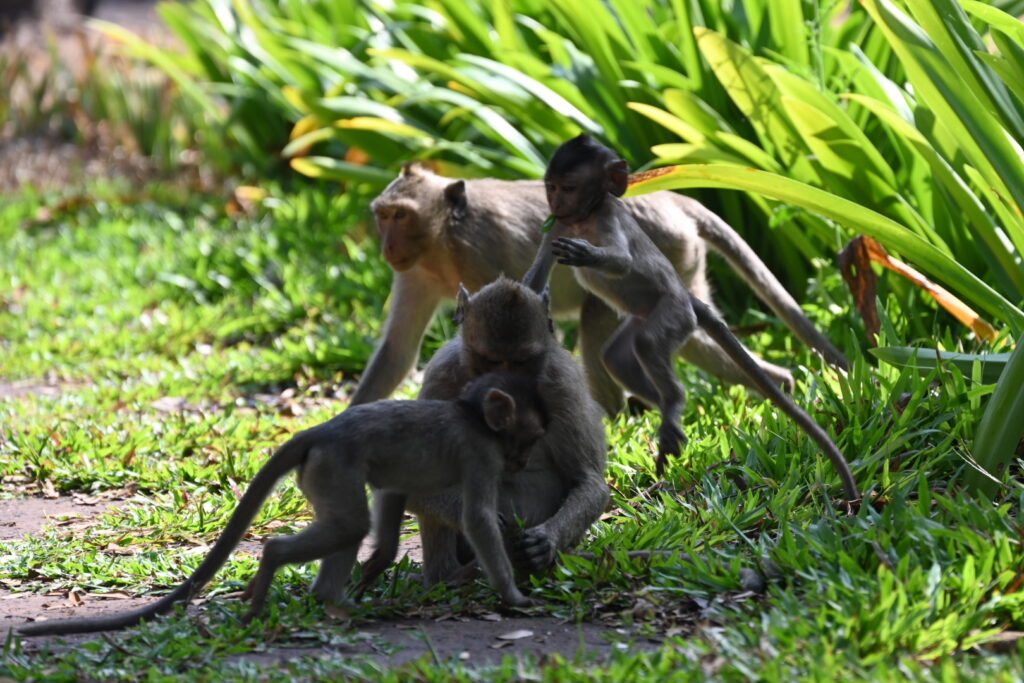
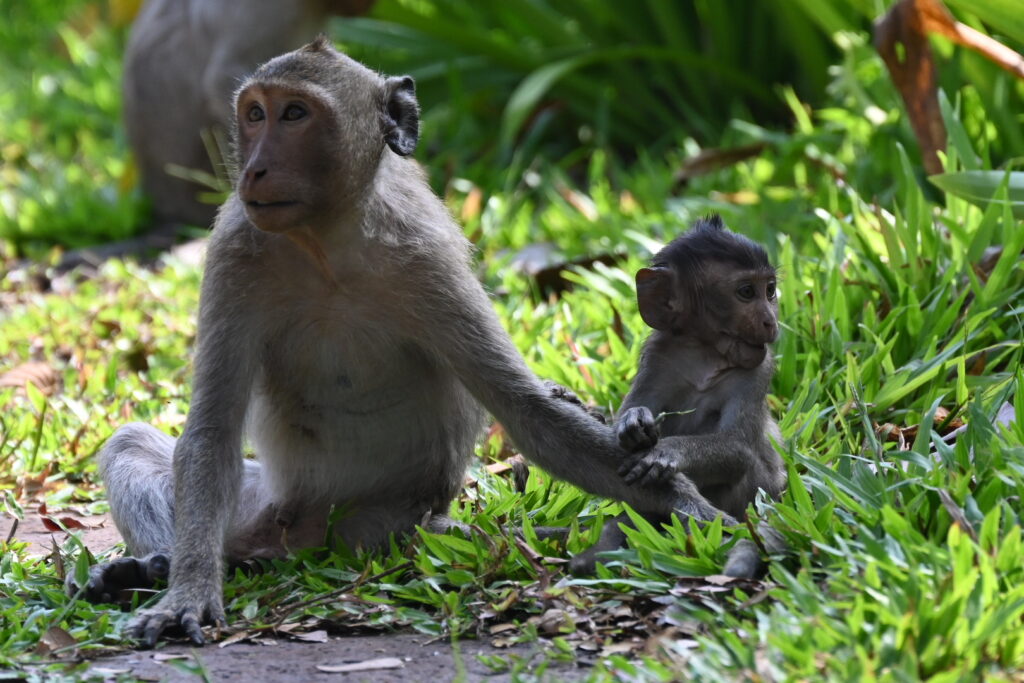
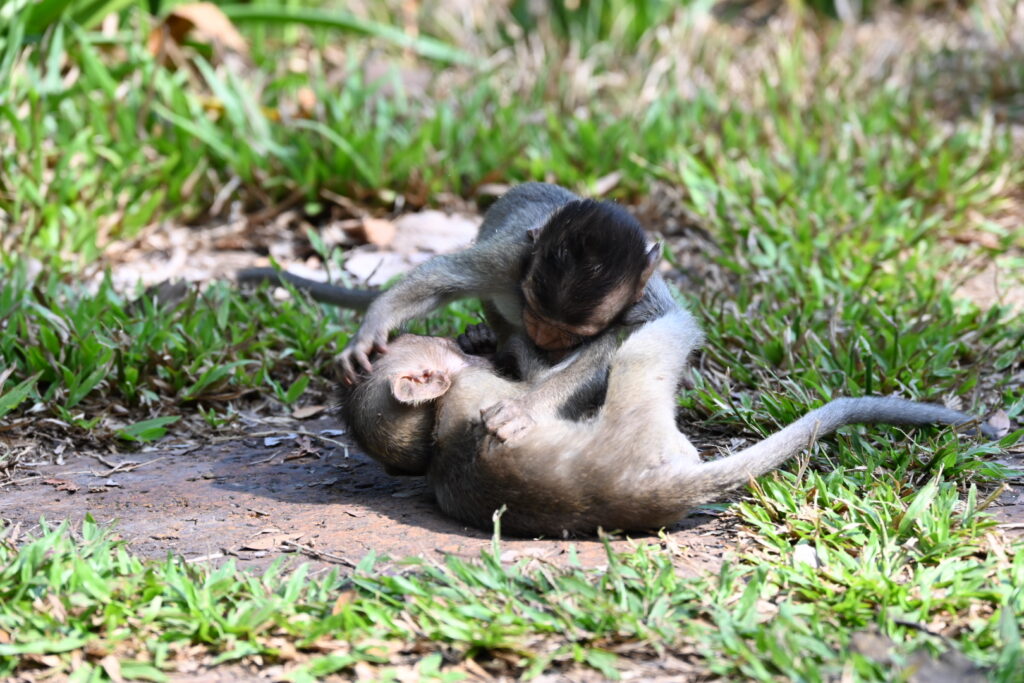
One monkey reaches up and grabs our guide’s water bottle, deftly twisting it so it comes out of his hand. The monkey then bites a hole in the bottom of the water bottle and proceeds to chug from it like a one-monkey water cooler.
I reach for my camera, but I only manage to capture the grizzly remains:
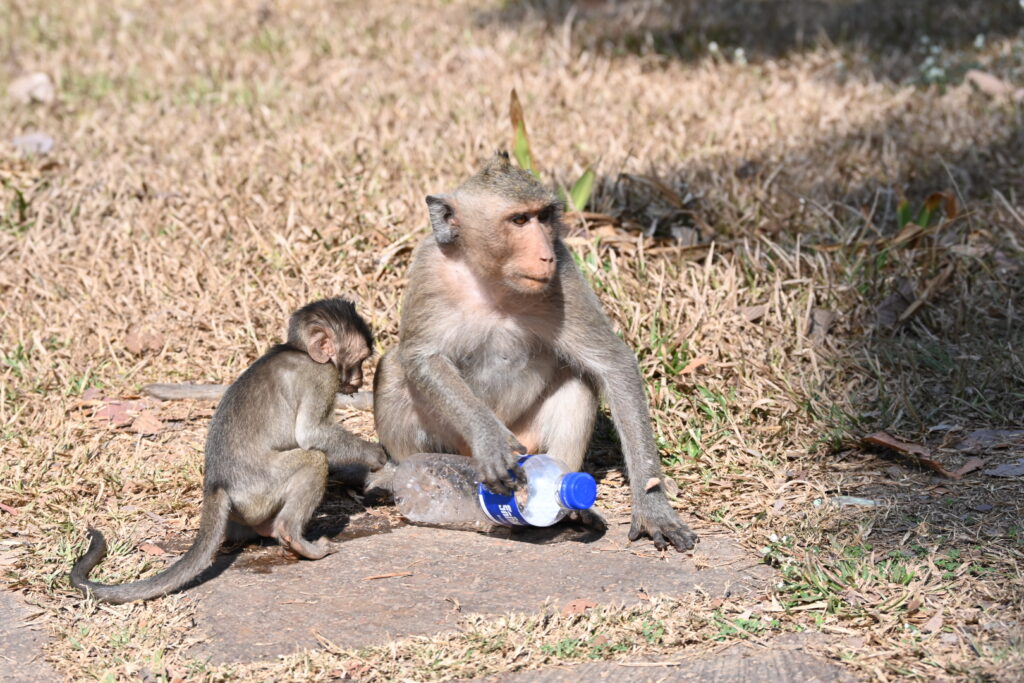
Finally, we reach the Bayon temple:
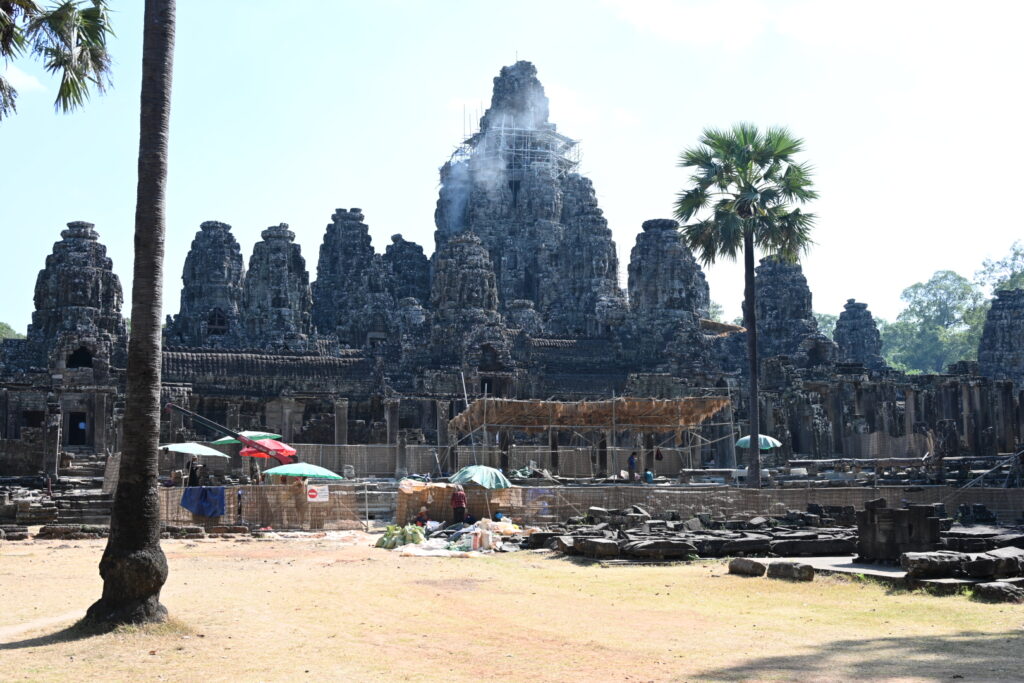
The building is stunning, but I now understand earlier comments about how distracting the scaffolding can be. We wander around the perimeter of the temple, staying in the shade of the trees and snapping photos as we go:
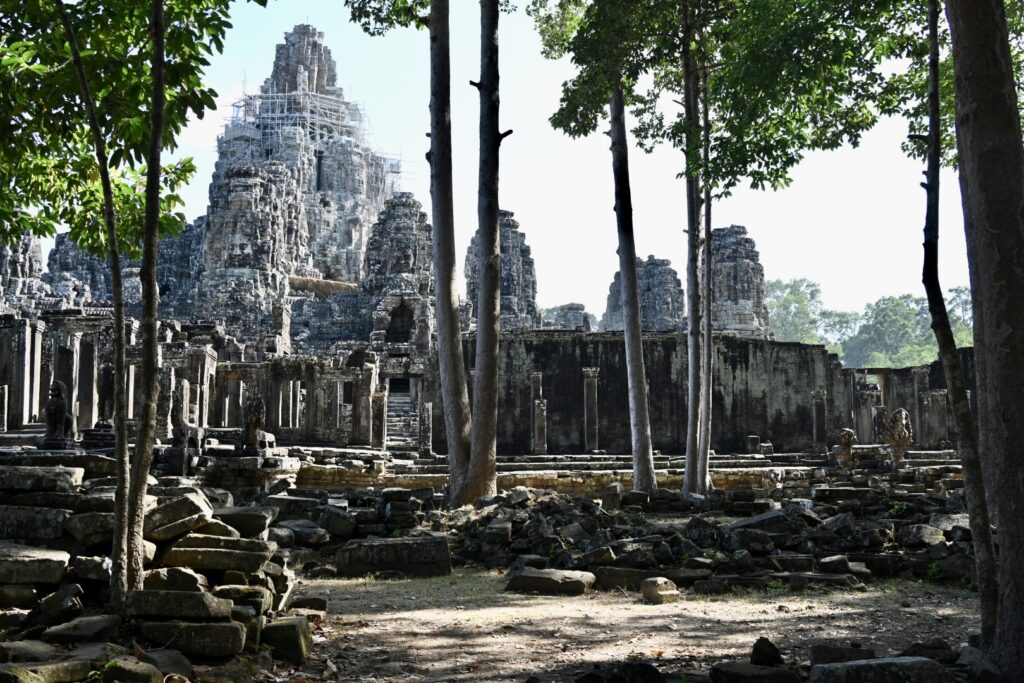
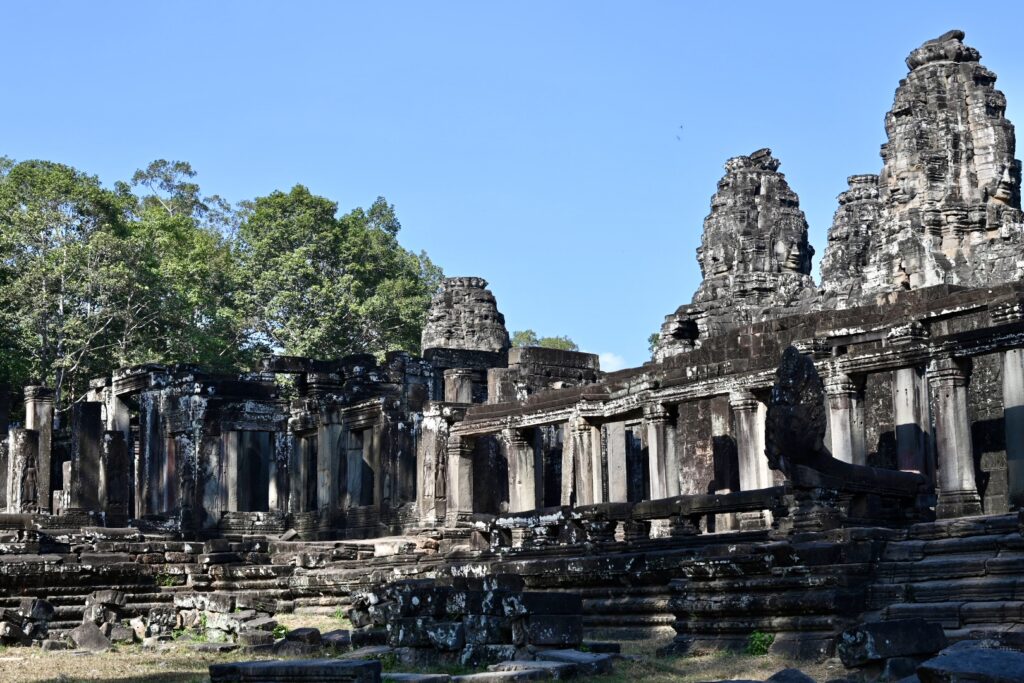
The initial plan is to wander around the inside of the temple, but it seems our group has little enthusiasm for that idea – it’s been a long day, and everyone is hot and tired.
I climb the stairs just to get my feet upon those hallowed stones but – if I’m honest – I wilt at the thought of another hour spent tromping through stone corridors beneath a blazing sun. Instead, we take a spell just to sit in the temple’s presence and take it all in.
Our guide claims that a nearby Buddhist shrine houses a Buddha which the Khmer Rouge attempted to remove, but that it became too heavy to move. He further claims they tried to detonate the Buddha but were unable to do so. And so it has become a holy place to the people nearby.
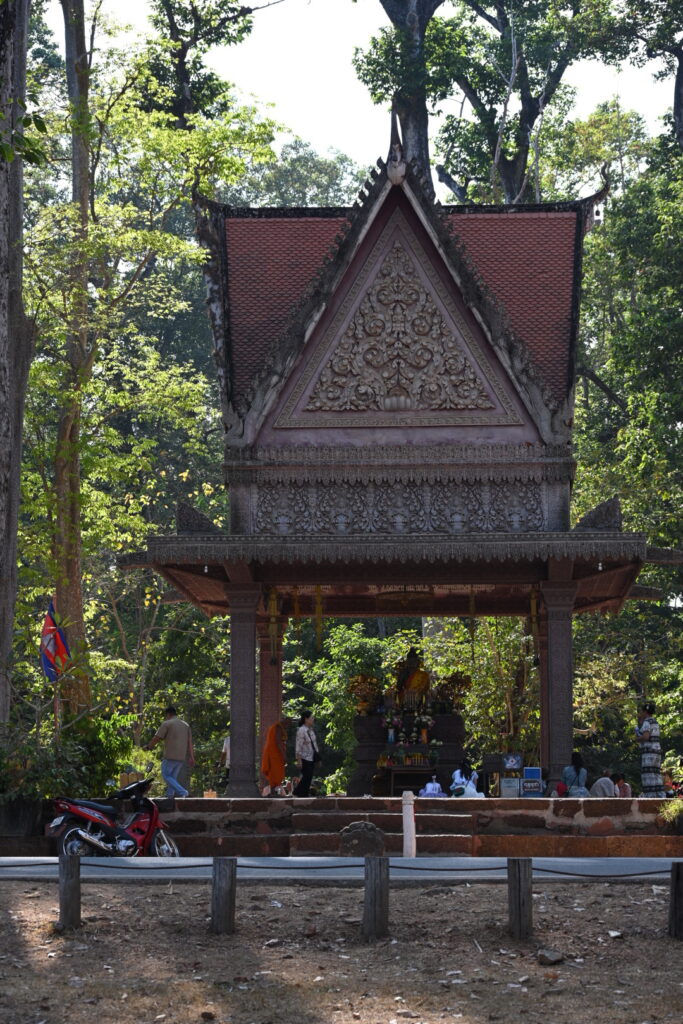
Some research suggests that this legend is attached to the Preah Ang Chek Preah Ang Chorm shrine, and that it’s more likely that the Buddhas were quickly replaced. Still, it’s an interesting story!
Regardless, our temple-crawling has come to an end. It’s time for the denouement – a gondola ride along the canal, followed by dinner and Aspara dancers.
But first – we watch as a monkey dismounts from a tree, lands on a tuk tuk, grabs the hand-hold and spirals down the pole before reaching the ground:
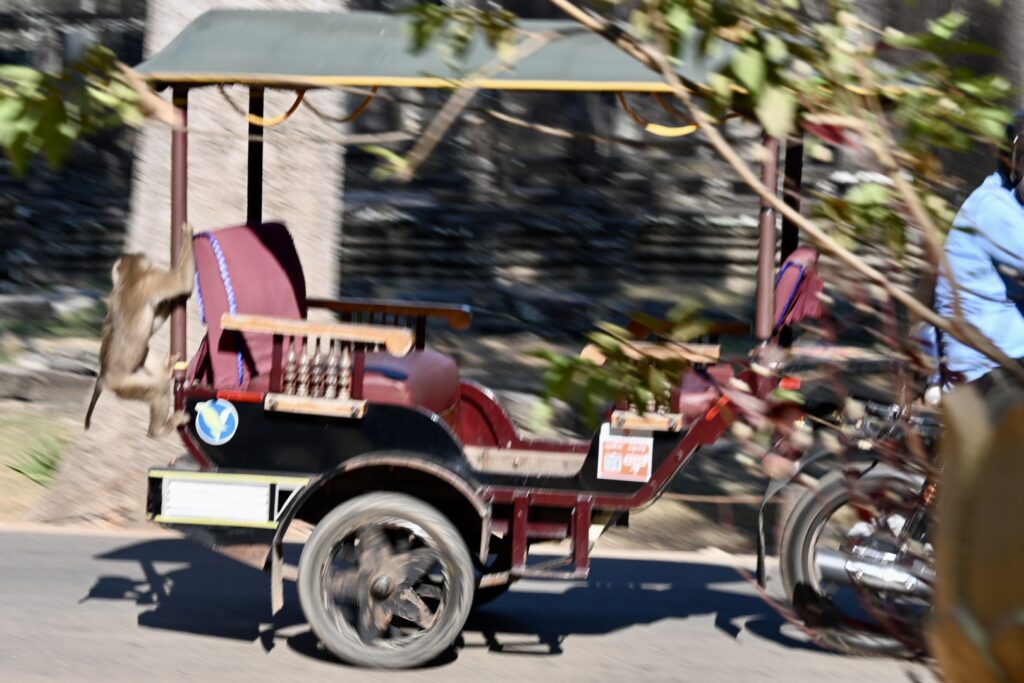
Behold – the Jason Statham of monkeys
Our guide also confirms that the Aspara dancers will be joining us at the hotel, which is a major win as far as we’re concerned – they had mentioned that we might need to hear to a nearby club instead. This way we can gracefully bow out before the end of the performance if needed.
We make a very brief stop at the southern gate of Angkor Tom:
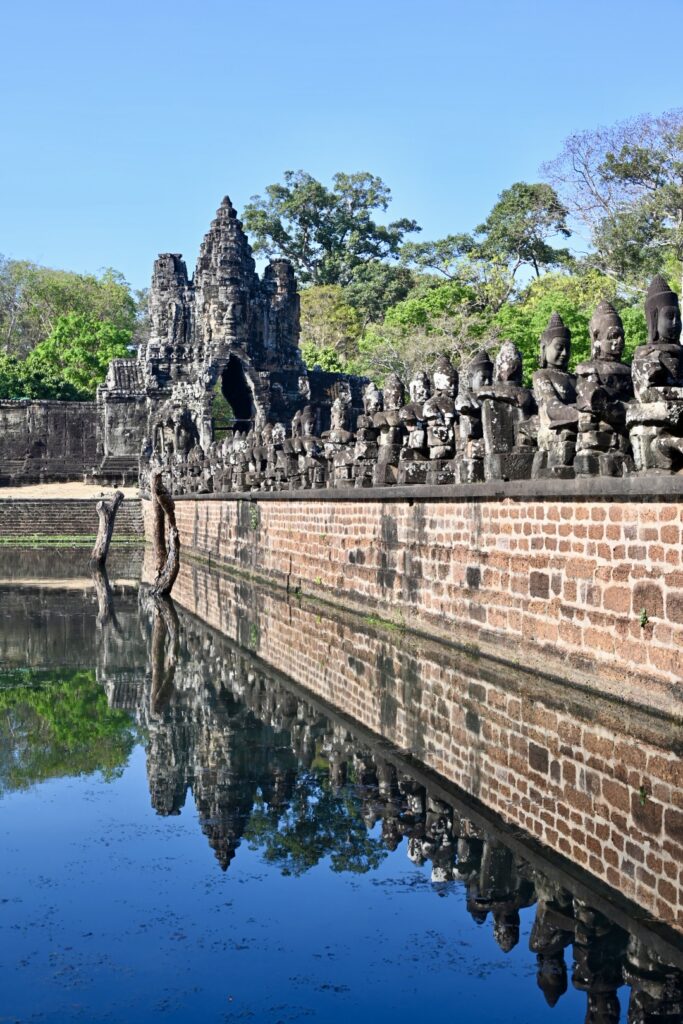
And then we board our gondola.
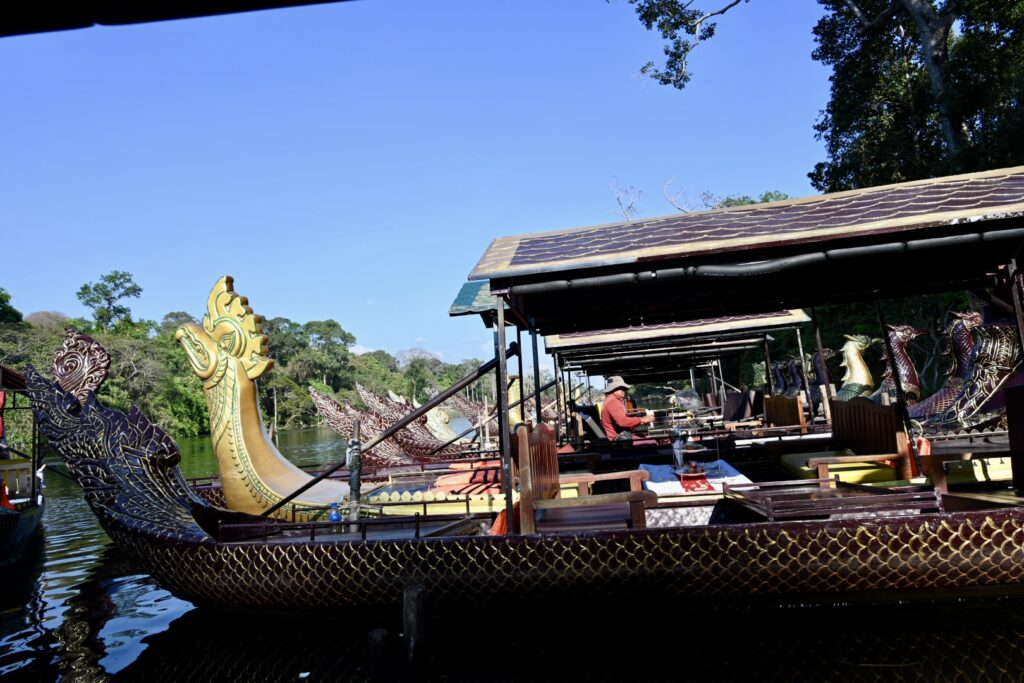
They have an remarkable spread laid out for us, including prosciutto, shrimp, cheeses, peanuts and more:
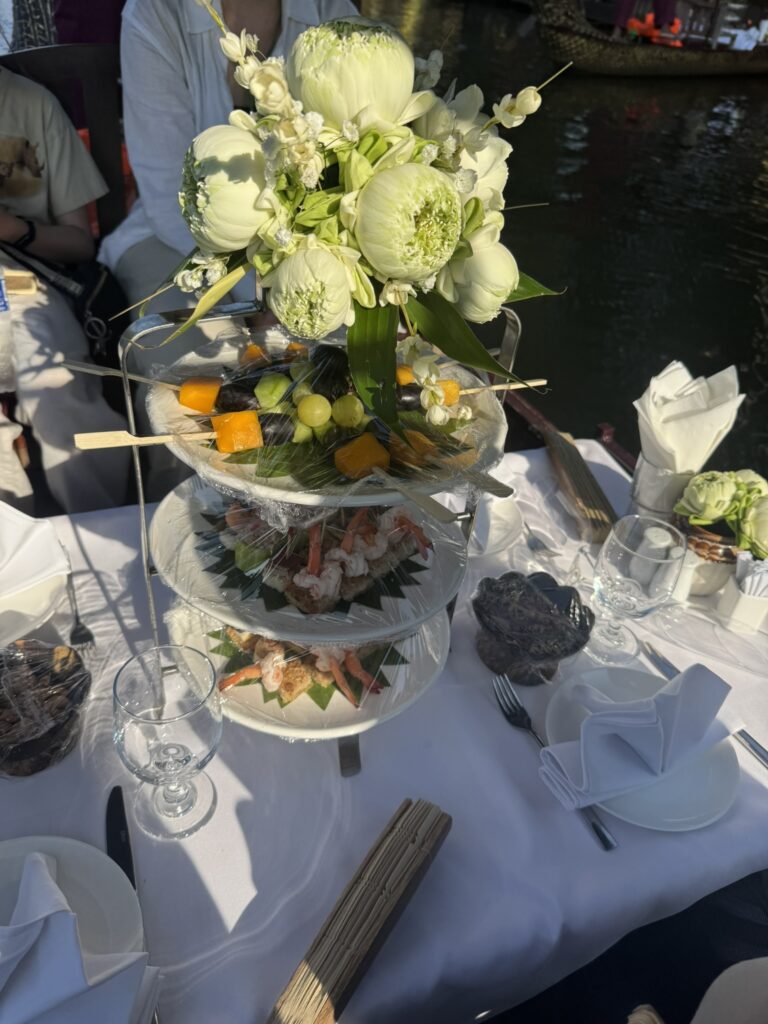
Along with a full bottle of champagne.
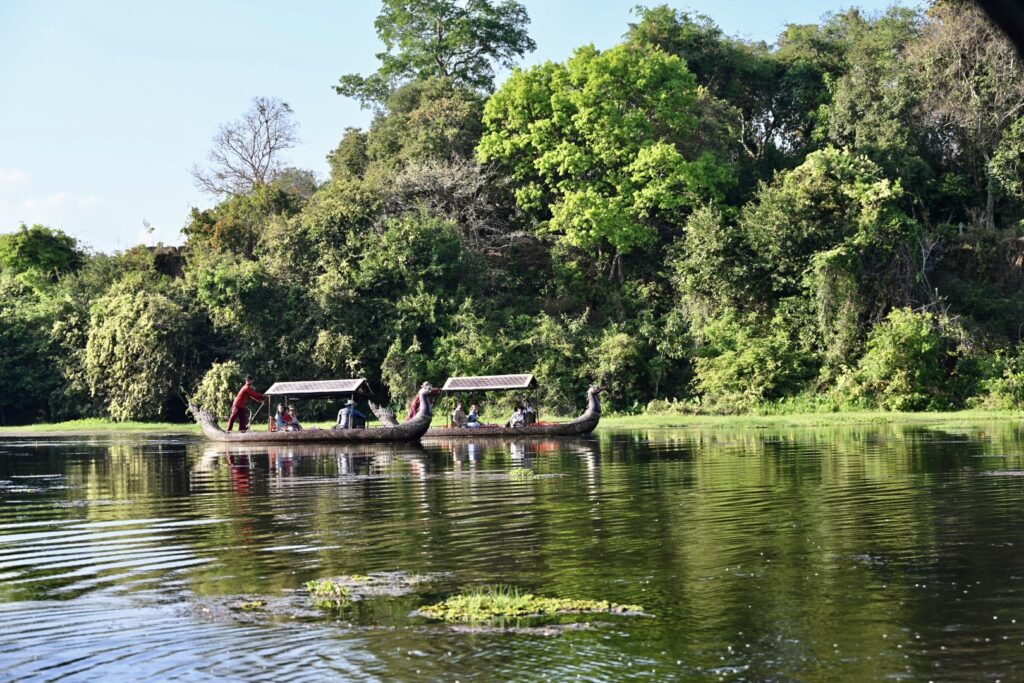
One of the downsides of being ahead of schedule – we are still in full sun for our sunset gondola ride.
Thankfully, our gondola driver does his utmost to keep us in the shade.
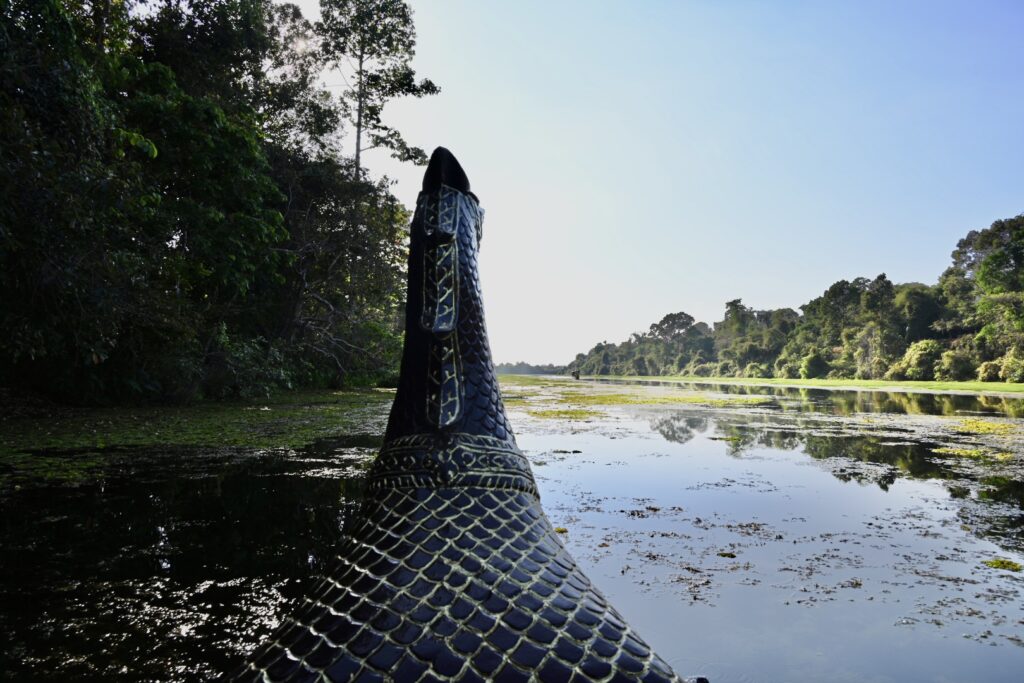
When in the sun, we cool ourselves down with ice from the ice bucket.
Our driver finds a shaded corner and parks the boat for a time.
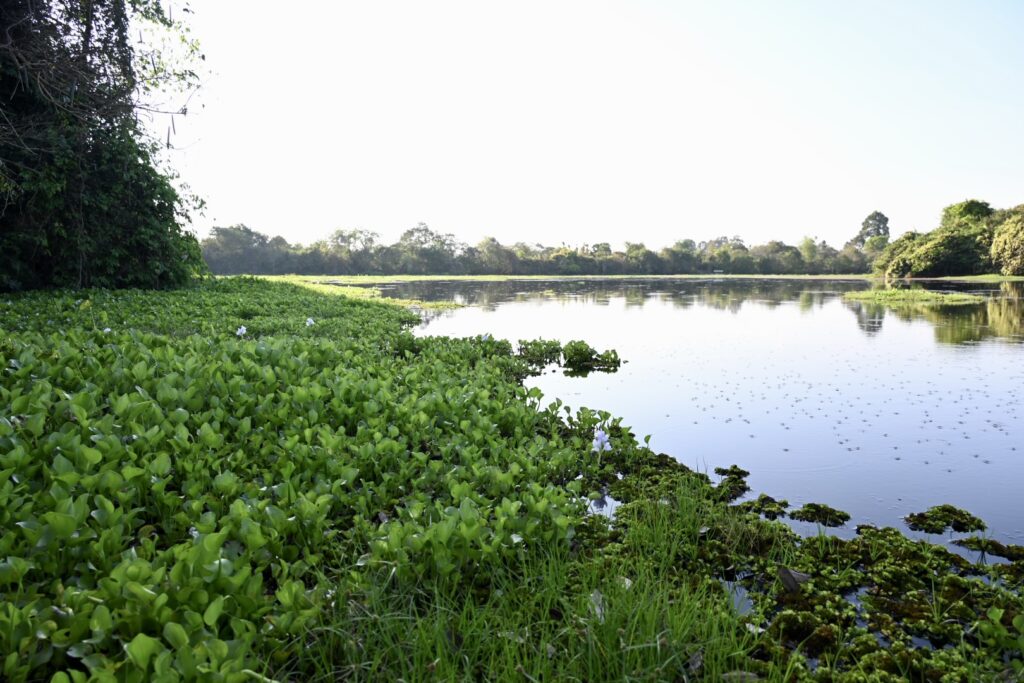
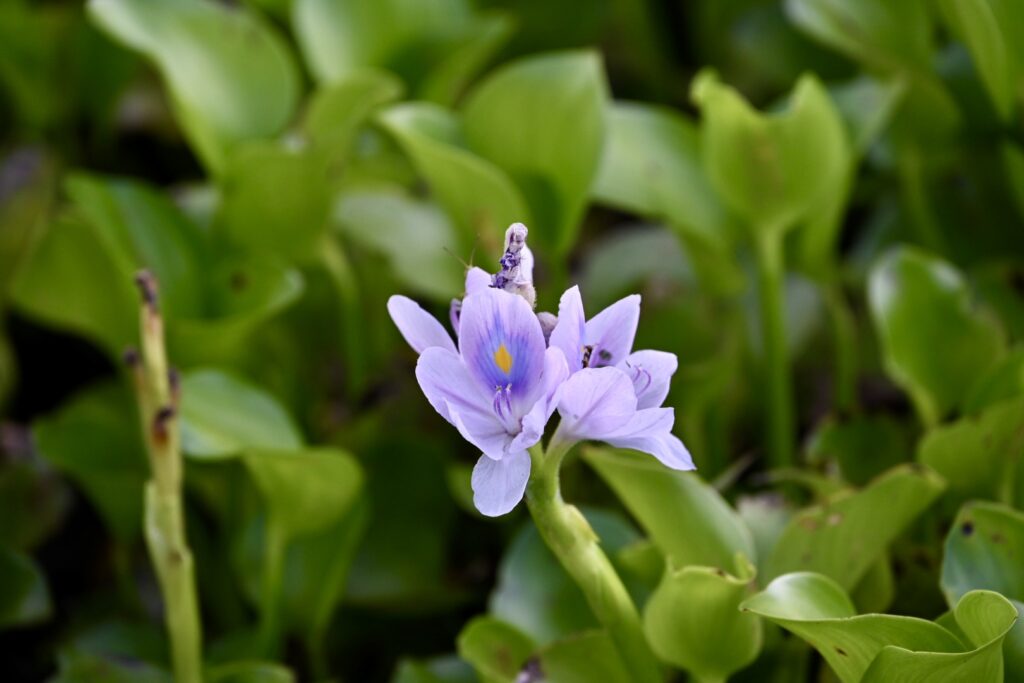
We watch as the sun heads toward dusk, and take in the view of one of the Angkor structures from amid the tranquil waters:
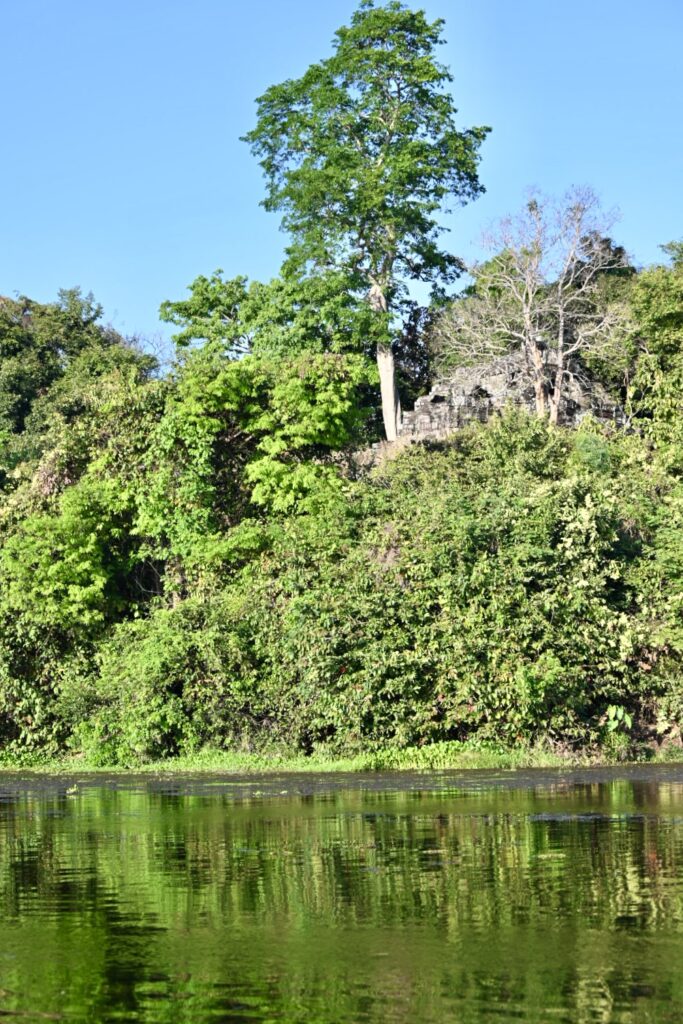
The sun does eventually start to set, and it’s time to head back to the dock.
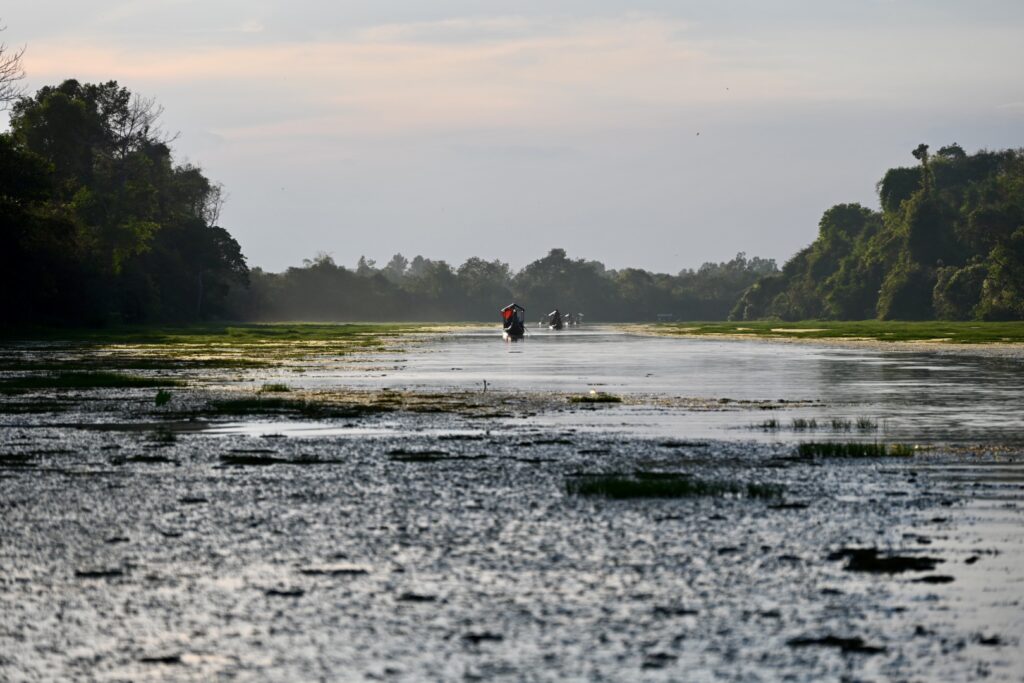
It was a special experience but – if I’m being honest – it went on for about 30 minutes longer than necessary. (Particularly after many, many hours of hot-and-sweaty temple-crawling.)
We tip our gondola driver well. That’s got to be a tough job.
Back to our hotel in a tuk tuk. It had seemed rather pedestrian in the morning, but the evening experience is somewhat claustrophobic as traffic reaches a fever pitch. Our driver is also busy listening to voice memos on his phone whilst driving. I distract myself by attempting to take sunset photos:
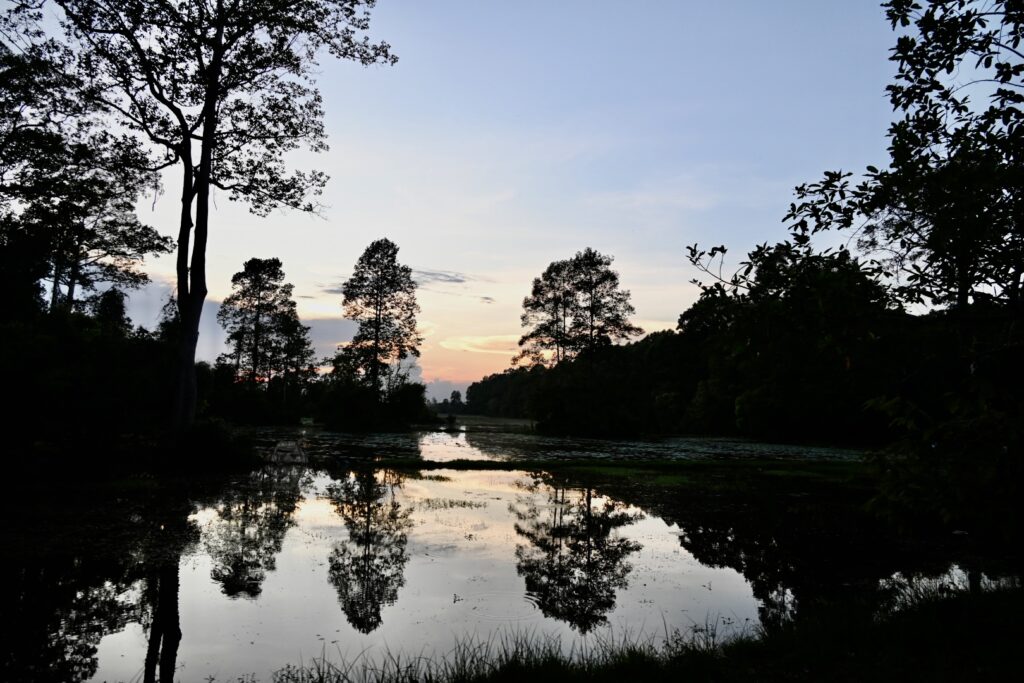
And then we’re back at the hotel – with time for a glorious, glorious, glorious shower.
I’m foolish enough to lie on the bed for a time, as I crop and sort through various photos. I’m on the verge of succumbing to the dreaded Nap Attack when I manage to roust myself and head downstairs. It’s a near thing.
The Sokha Hotel has truly outdone themselves with tonight’s buffet.
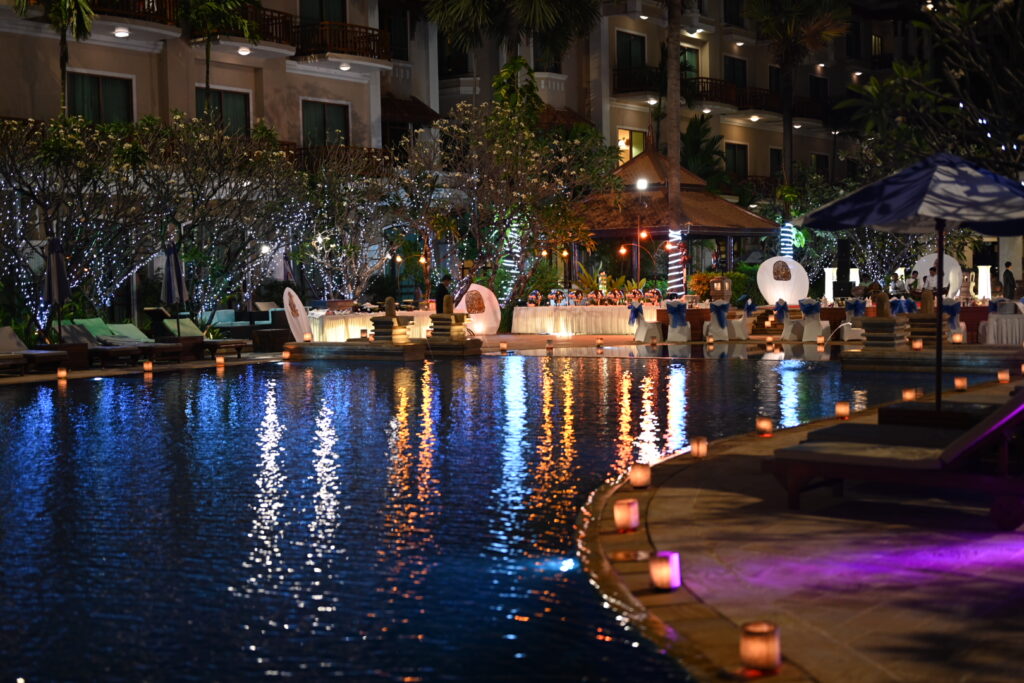
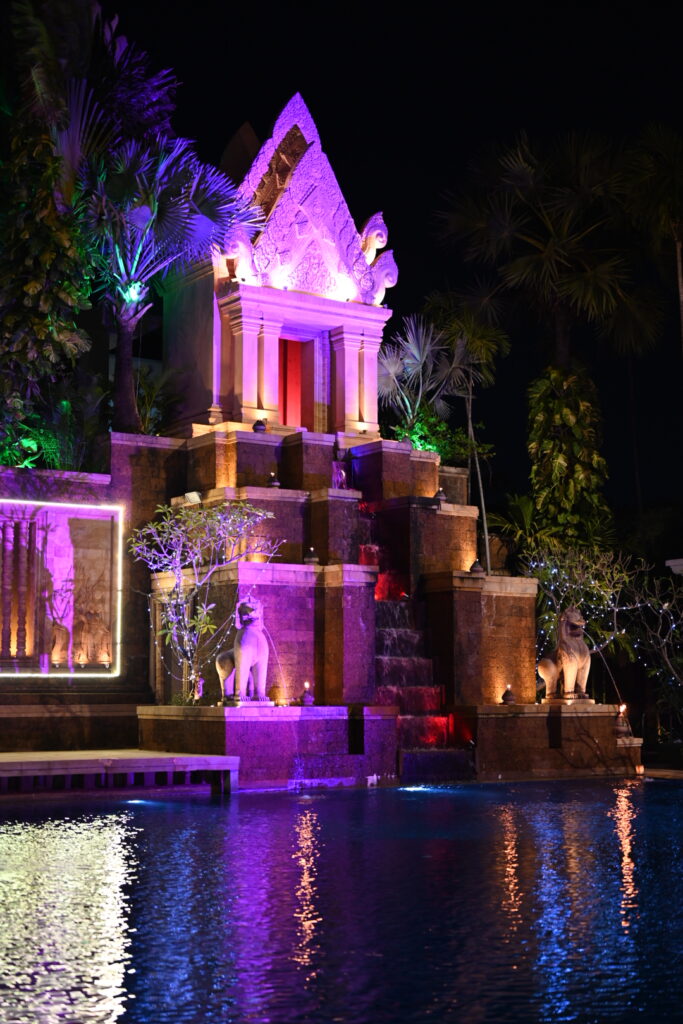
Not only are there many of our favourites from the night before, but there is also an entirely new ‘grill’ section with squid, prawns, steak, wings, ribs, corn, and more.
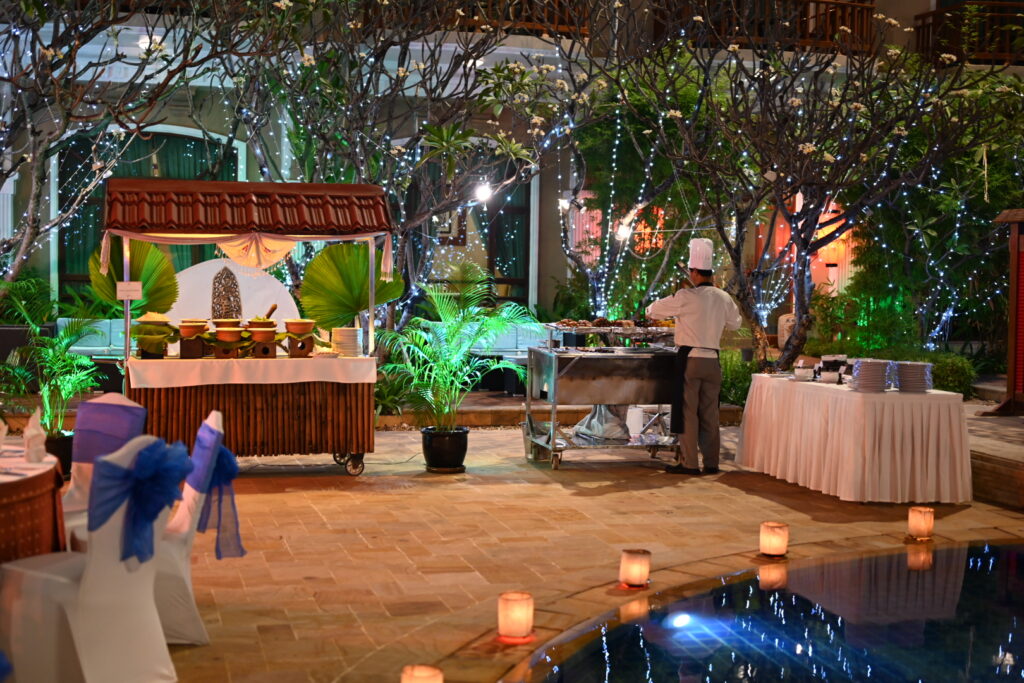
(One of our guests does thoughtfully ask what is done with the extra food – it is offered to the staff, so little goes to waste.)
Shortly after we begin to stuff ourselves, the Aspara dancers begin their first dance:
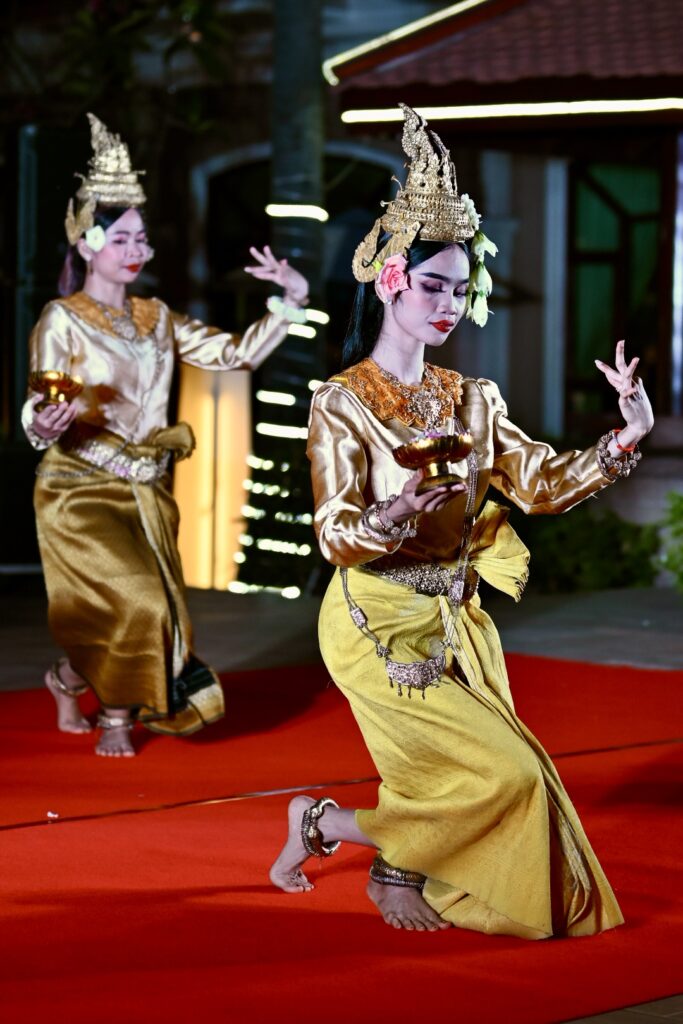
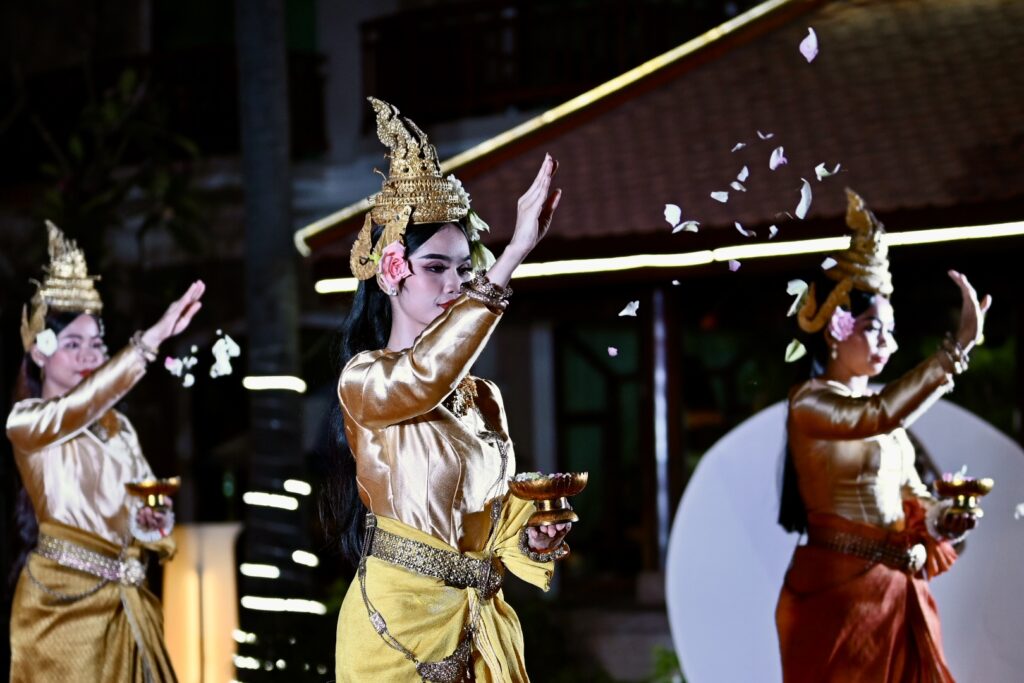
I enjoy the format for this show. The dancers perform for a time, you return to your meal, and then they come back out five or ten minutes later.
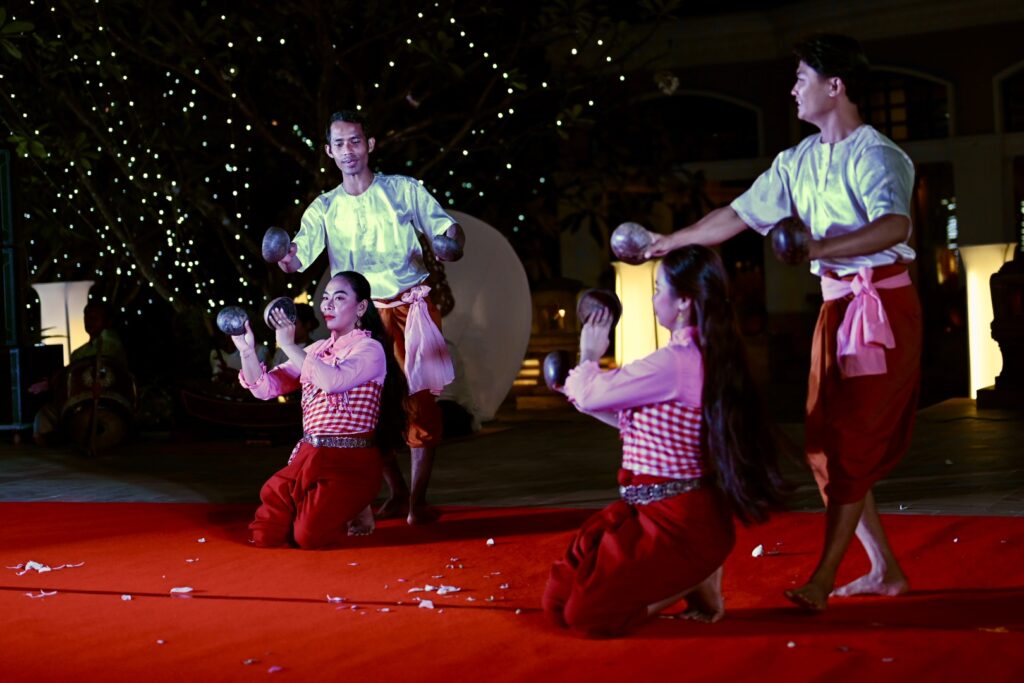
We then watch the coconut dance, in which women keep poorly-behaved men at bay with coconut shells:
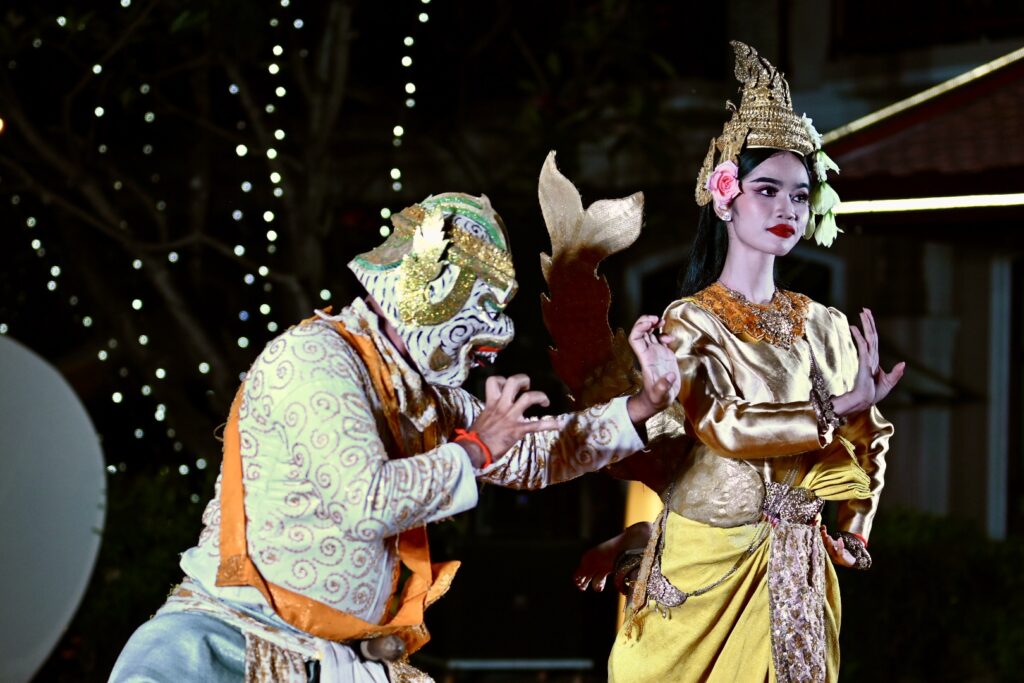
The mermaid dance, in which Sovann Maccha, a mermaid, carries off stones from Hanuman – foiling his plans to build a bridge to the island of Lanka. Hanuman eventually wins Sovann Maccha as an ally:
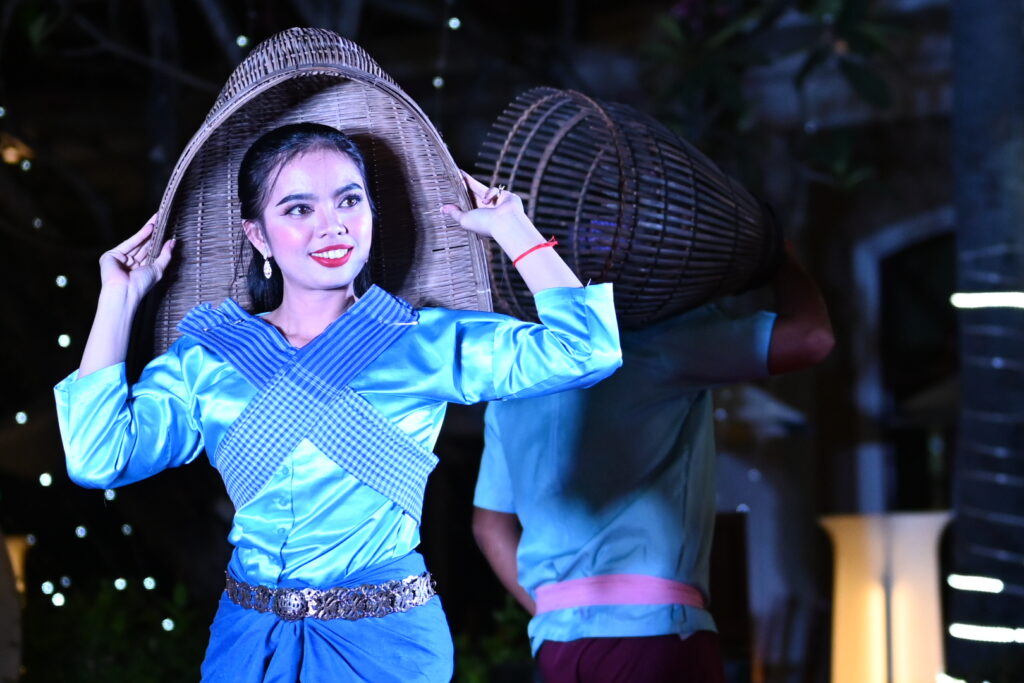
And the fishing dance (Robam Nesat), which depicts the daily life of Cambodian villagers using traditional tools like the Ang Rut and Chhneang woven baskets:
Two further dances remain, but we are completely exhausted at this point. But no rest for the wicked – we need to be up at 5:45 am again tomorrow so that we can make our 6 am breakfast and 7 am departure.
We retire to the room and I promptly fall asleep – and I do not dream of polar bears.
Continue reading Tasmania to Tokyo – Siem Reap / Cát Tiên Park – Day 44.