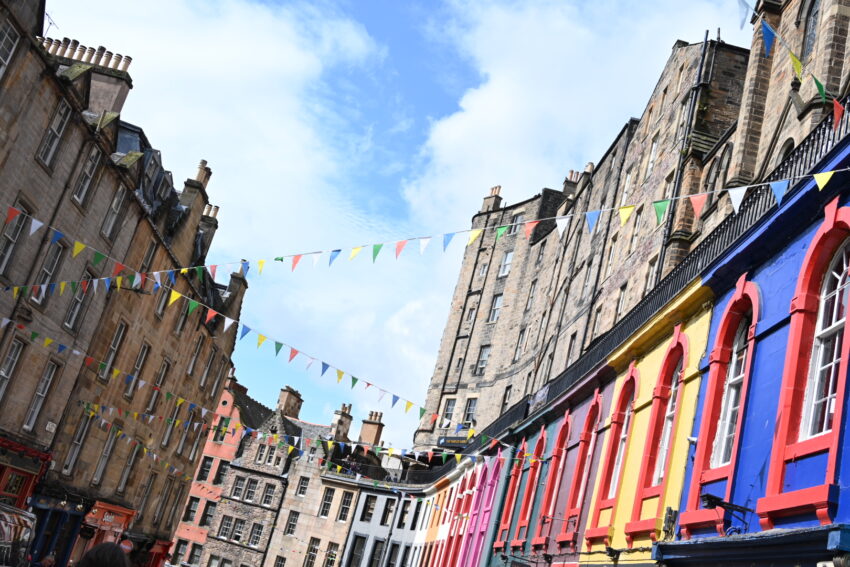
It always takes time to settle into a new location, though it feels like we’ll scarcely have the chance before we’re on our way to France – which itself is a stopover on our way to Svalbard. Half our attention is focused on timings and weight allowances, while the rest seems to be on figuring out how the new microwave works.
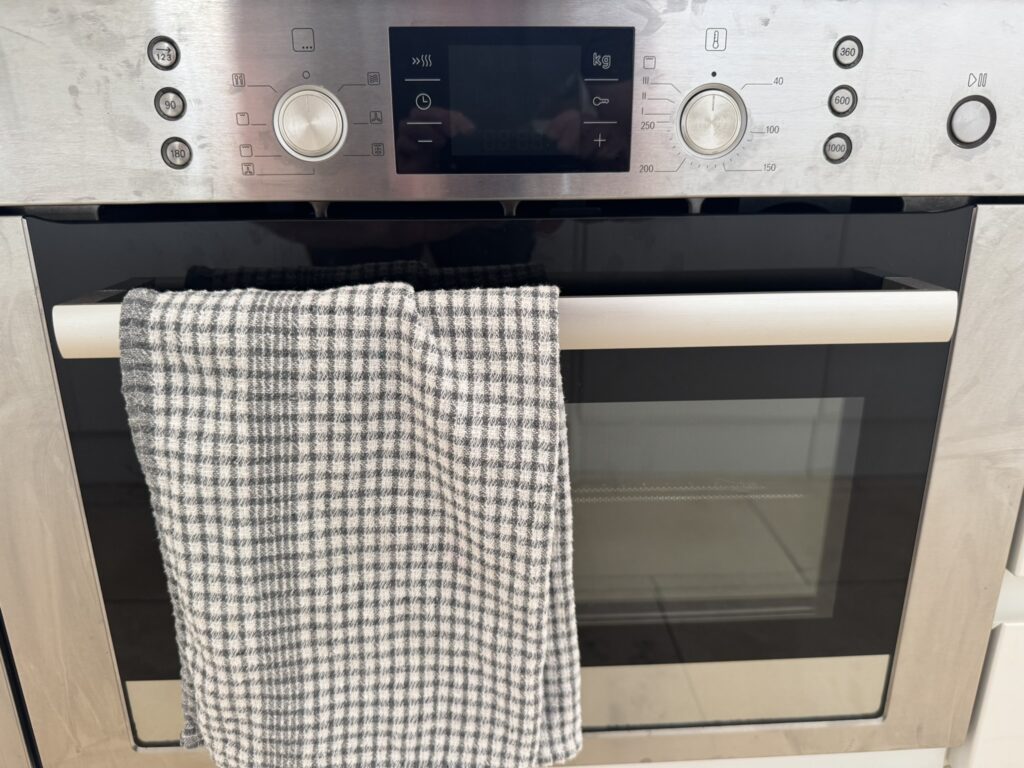
Seriously – this is not intuitive
Thankfully, we’ve been through this before and so we draw on a reliable tool from our toolkit – booking a private tour, this time for the Potter Trail.
This tour almost didn’t happen as – despite my best laid spreadsheets – I somehow awoke to the following text message in late June:
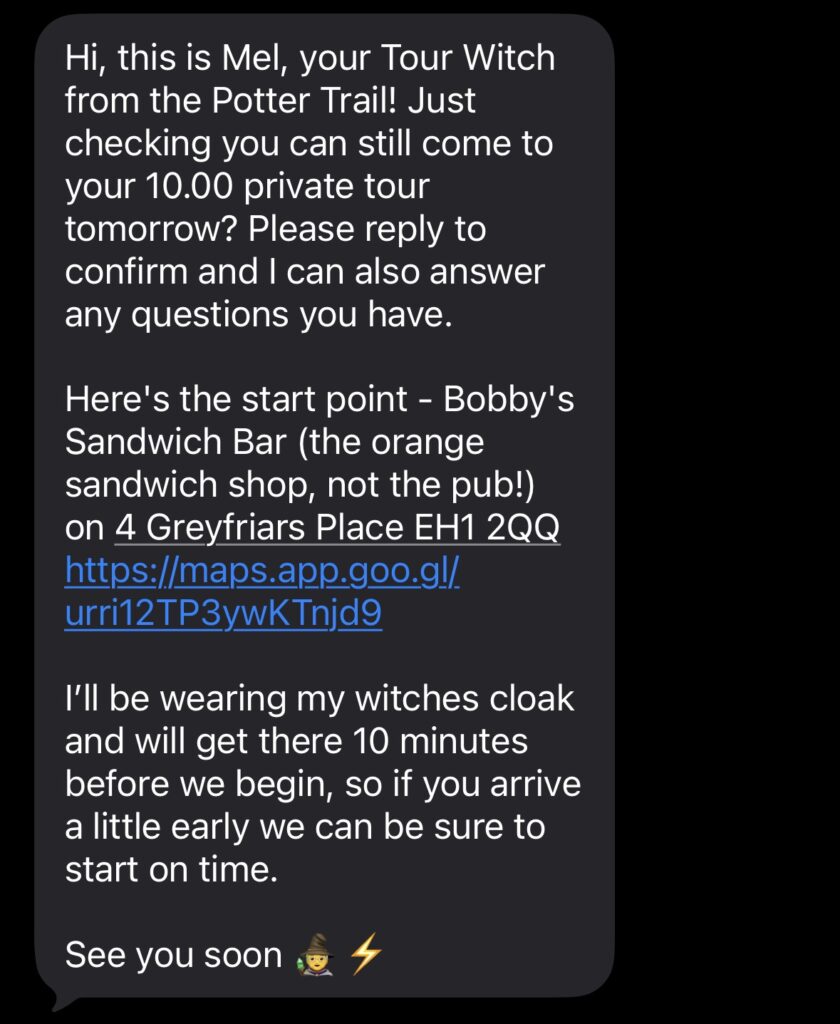
That’s right – I had accidentally booked the tour exactly one month early
I had more or less given that money up for lost, but thankfully the Potter Trail people were extremely accommodating and very kindly rebooked the tour for the correct day and time at no additional charge.
This means that we can have a (somewhat) leisurely breakfast before making our way through Edinburgh’s Old Town:
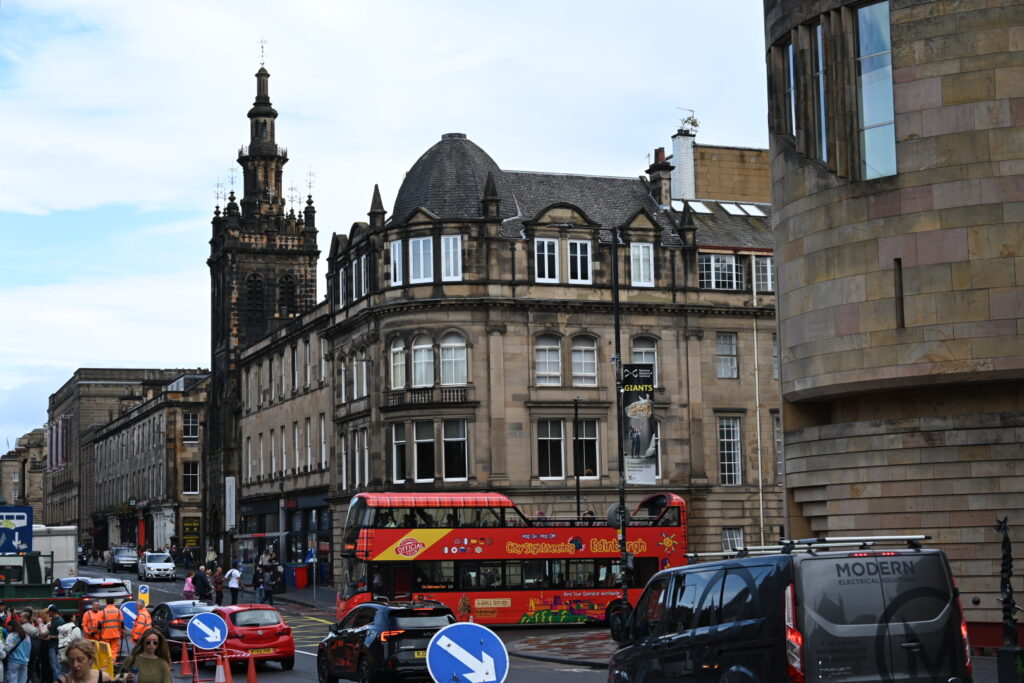
Eventually, we reach the designated meeting spot near Greyfriar’s Kirkyard Cemetary. Our guide – Head Wizard Stu himself – arrives precisely on time.
Stu asks us which of the Harry Potter houses we’ve previously been sorted into, and we end up with two Ravenclaws (the kids) and two Gryffindors (the adults). This tour is available free of charge – or rather, as a pay-what-you-can donation – if done as a group tour, but we typically prefer private tours when reasonably priced.
We then step into the cemetary.
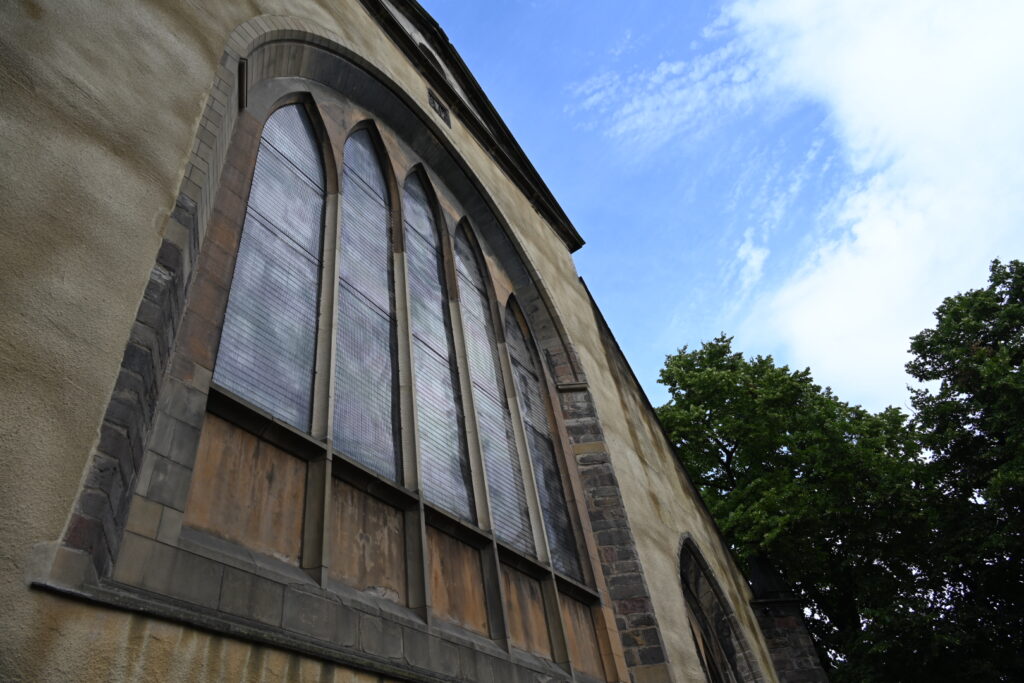
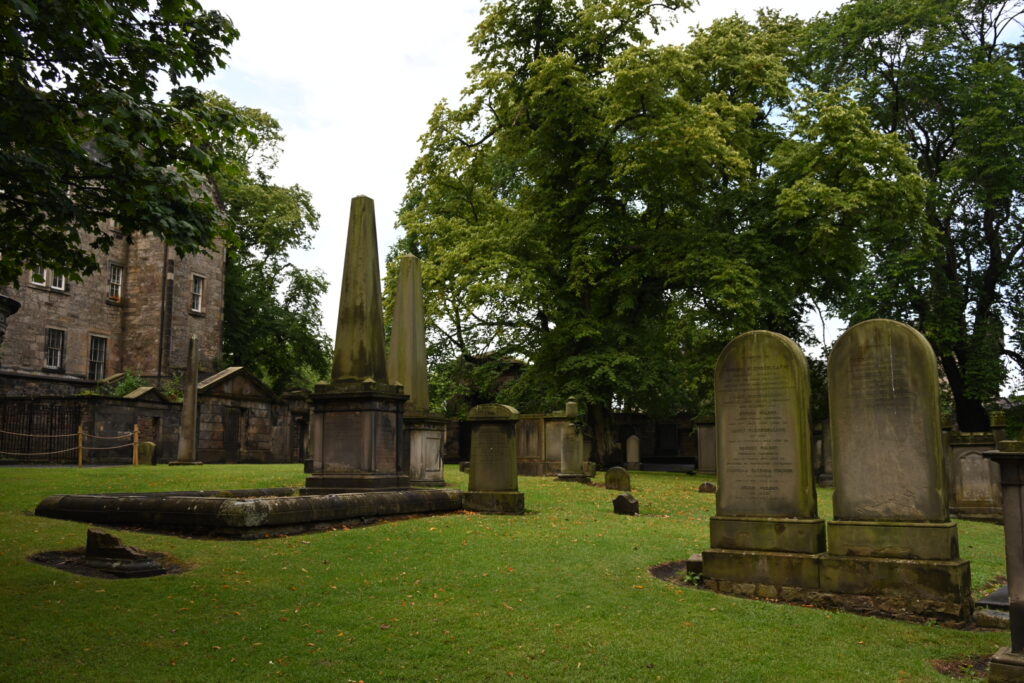
Stu poses us various Harry Potter-related trivia questions – which I won’t give away because either a.) you’re a huge Harry Potter fan and might do the tour yourself one day or b.) you don’t care about Harry Potter and so the trivia would be utterly irrelevant. (This isn’t a bad time to mention that the Potter Trail has a commitment towards equality and makes local donations accordingly.)
Anyway – back to the tour. The cemetery was one of J.K. Rowlings regular haunts, and provided the inspiration for many of the names found in the books – including Professor McGonagall:
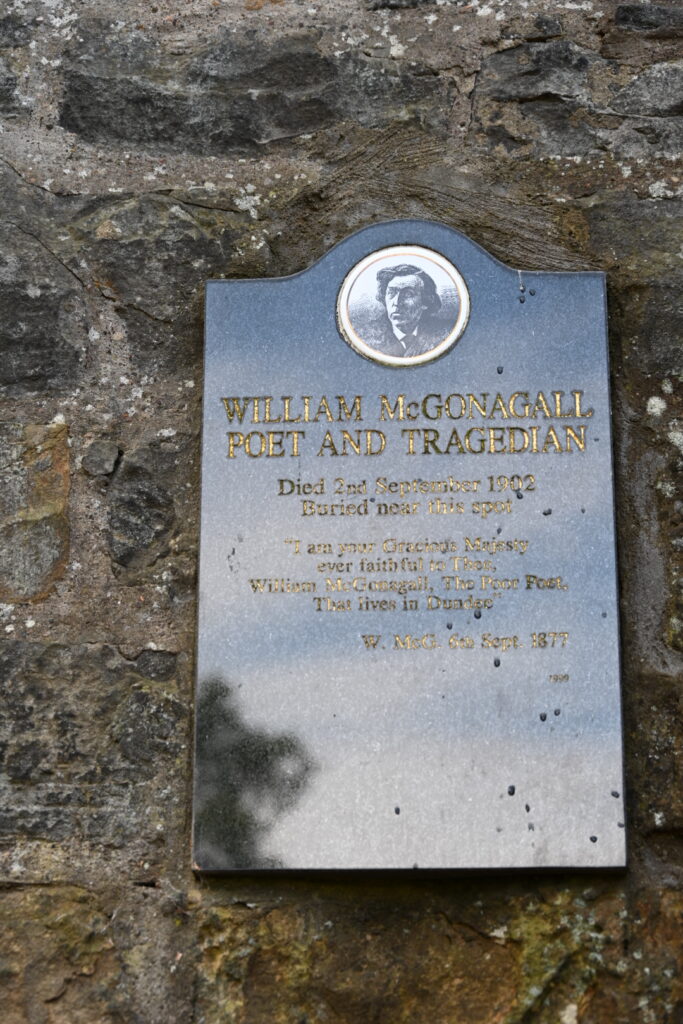
Beyond serving as literary inspiraiton, William McGonagall himself is also known for being perhaps the world’s worst poet.
One example of his singular work:
“On yonder hill there stood a coo
It’s no’ there noo
It must’a shif’ted”
Despite his literary skills, McGonagall actually supported himself with his writing – albeit by allowing his audience to pelt him with over-ripe produce while he was reciting his work.
We continue through the cemetery:
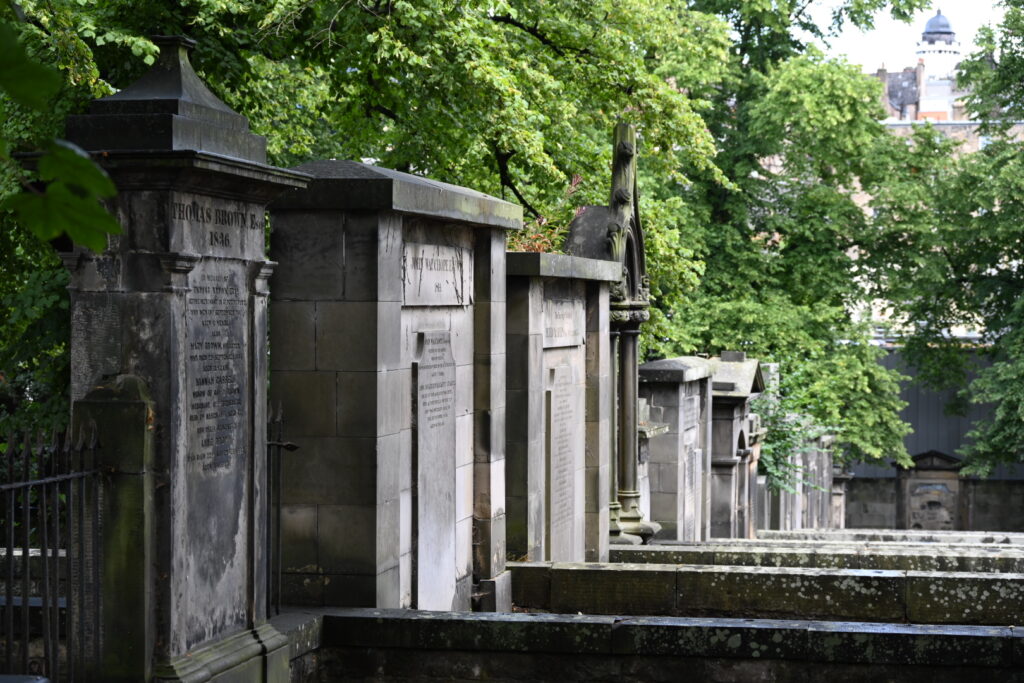
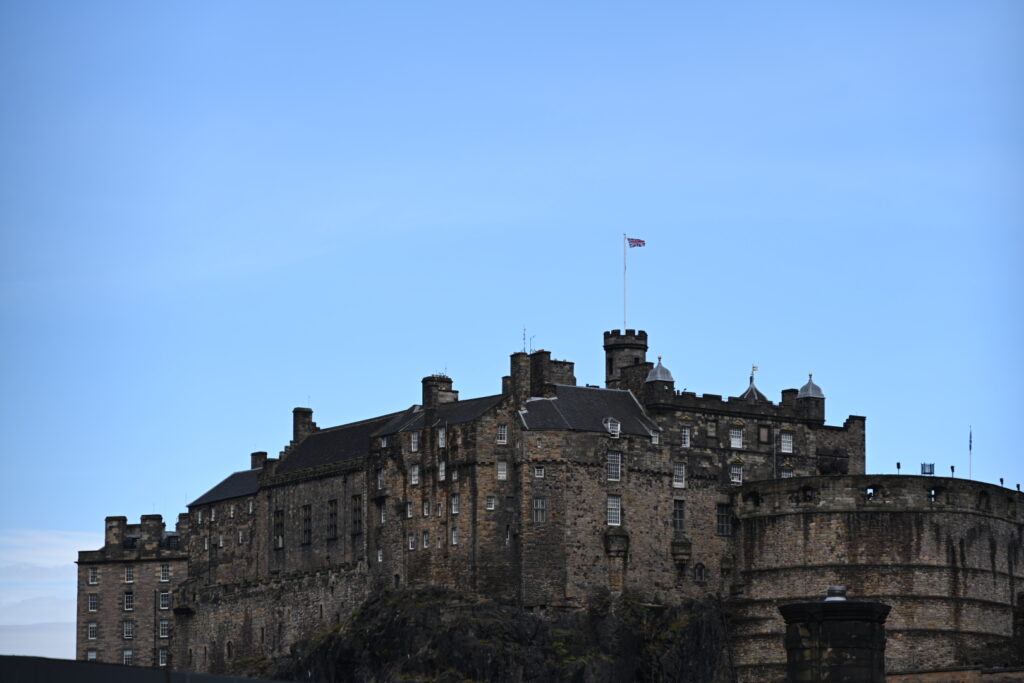
Getting some lovely views of Edinburgh Castle:
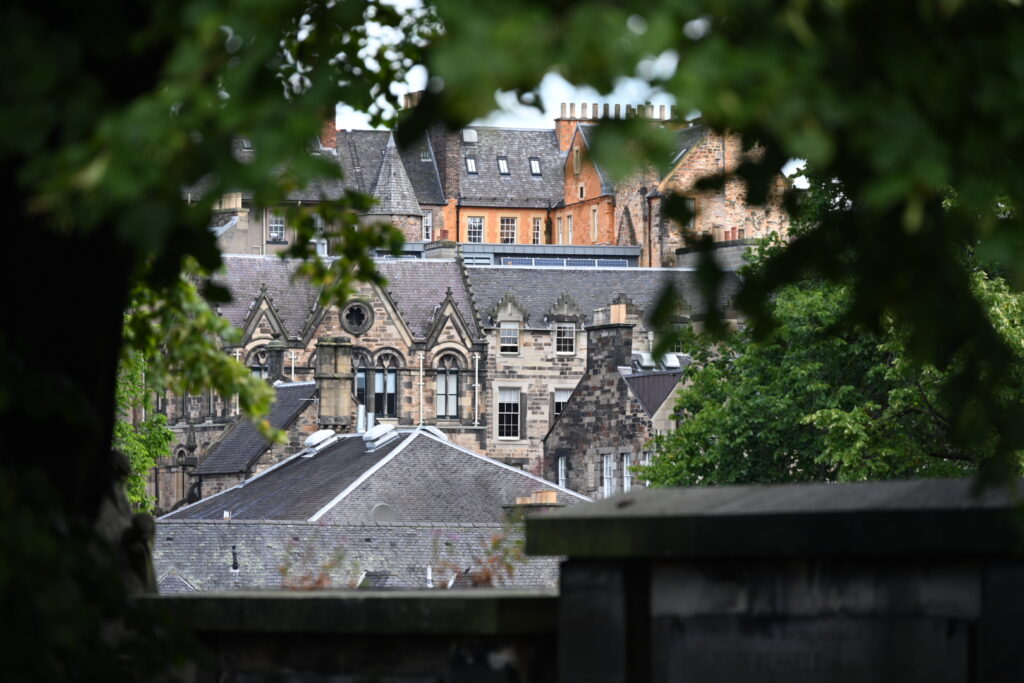
And Old Town along the way:
We also learn about Flodden Wall:
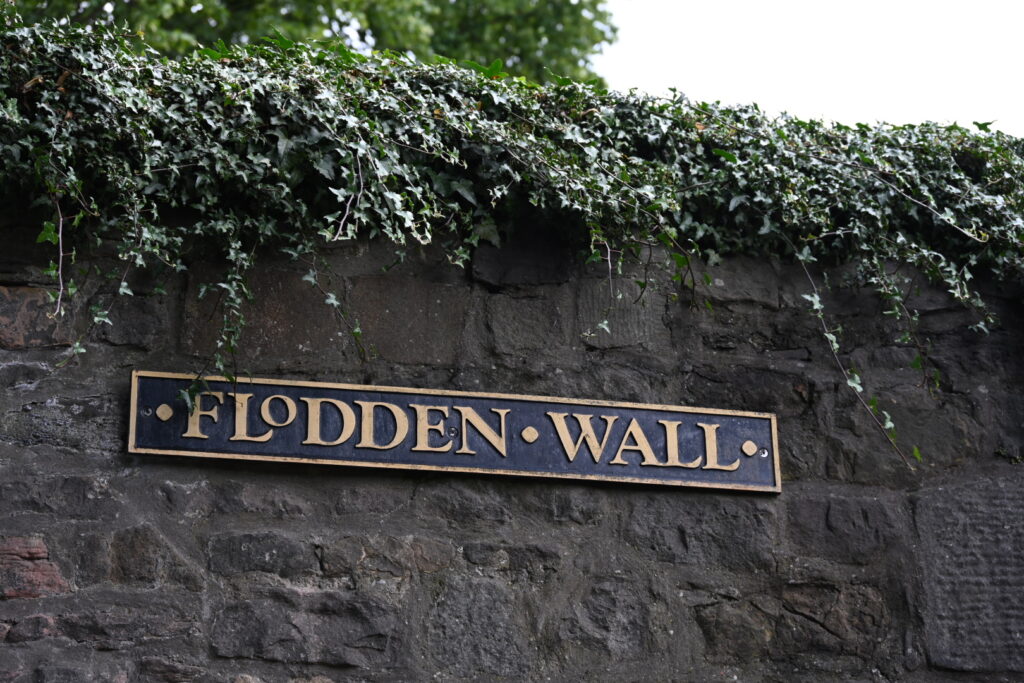
From Atlas Obscura:
“The Flodden Wall was completed in 1560 to protect the city against an English invasion that never came. After Scottish forces were defeated and King James IV was killed at the Battle of Flodden in 1513, Edinburgh officials feared the victorious English troops would soon descend upon the ancient Scottish city. So, as leaders who fear outsiders tend to do, they decided to build a wall to defend their domain.
The 24-foot-tall wall encased a 140-acre area. About 10,000 people lived within its confines. Six ports guarded the entrances in and out of the walled city, which also helped control smuggling.
Though the English never did actually invade after the Battle of Flodden, the wall played an important role in protecting Edinburgh from the turbulent times that rocked the city during the 16th century, when different groups attempted to besiege the castle. The massive cannon Mons Meg was even used to destroy the buildings snipers had settled in outside the wall.
The Flodden Wall, along with the other two walls built to encase the city, was eventually ruined in the 18th century. As Edinburgh expanded, the barriers became a hindrance rather than a help. Roads and buildings like the University of Edinburgh’s Old College were constructed over crumbling sections of the abandoned walls. Part of the Flodden Wall that surrounds Greyfriars Kirk was even destroyed in what is believed to have been a freak lightning strike.”
This is proving to be our favourite kind of tour – the kind that has enough cultural touch-points to keep the kids entertained, but which also has sufficient factual content to be educational.
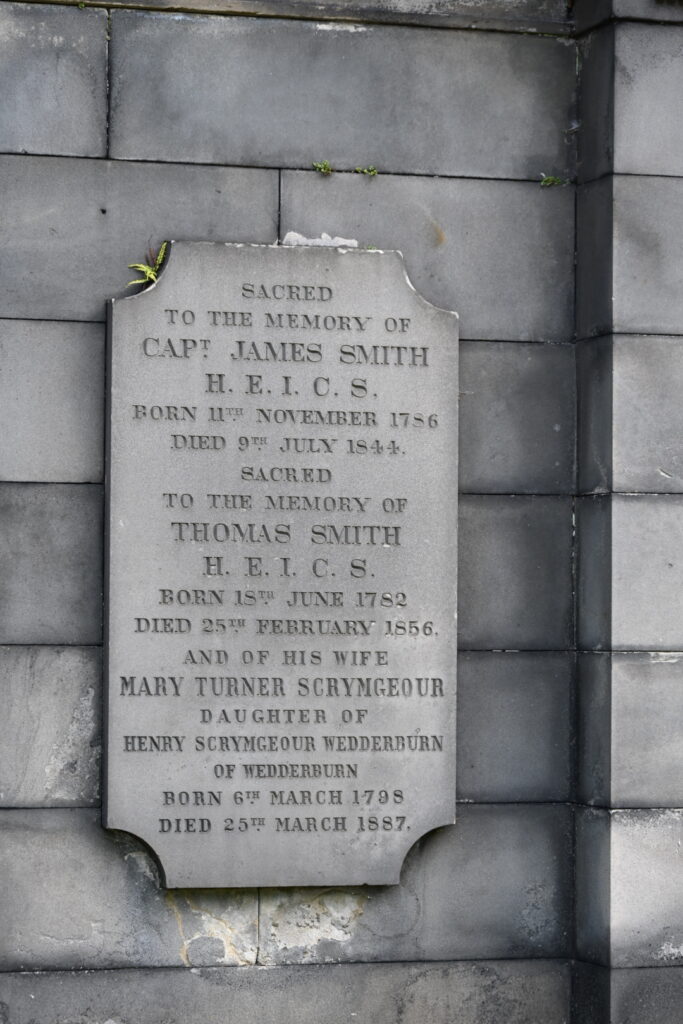
The kids are also fascinated to learn of all the many other names that likely came from Grayfriar’s Cemetary, including Scrymgeour:
Black:
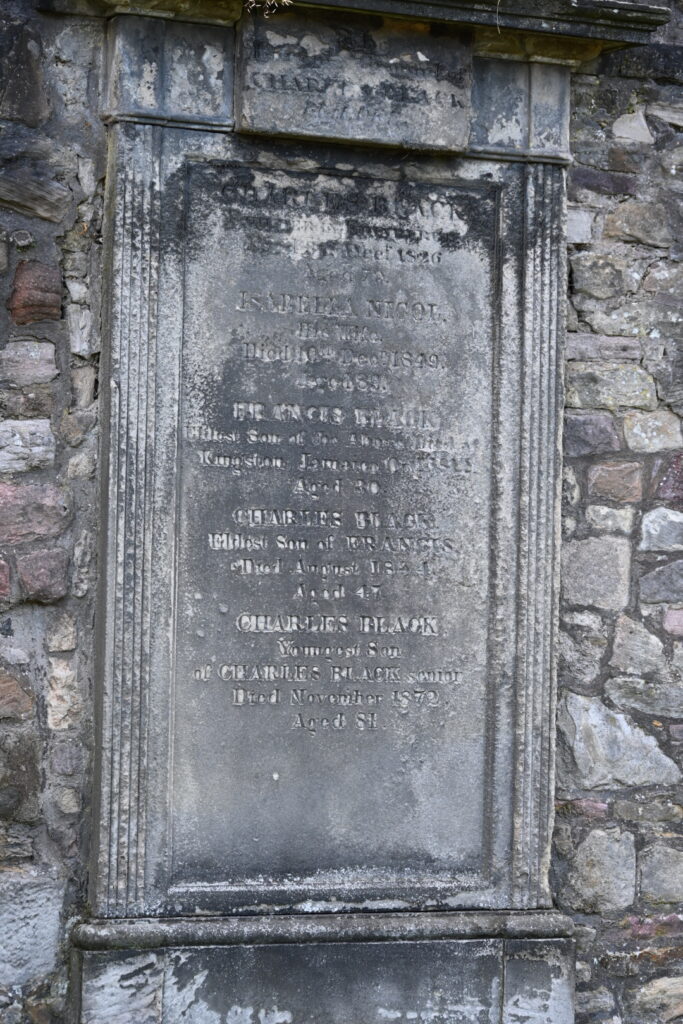
And Riddle:
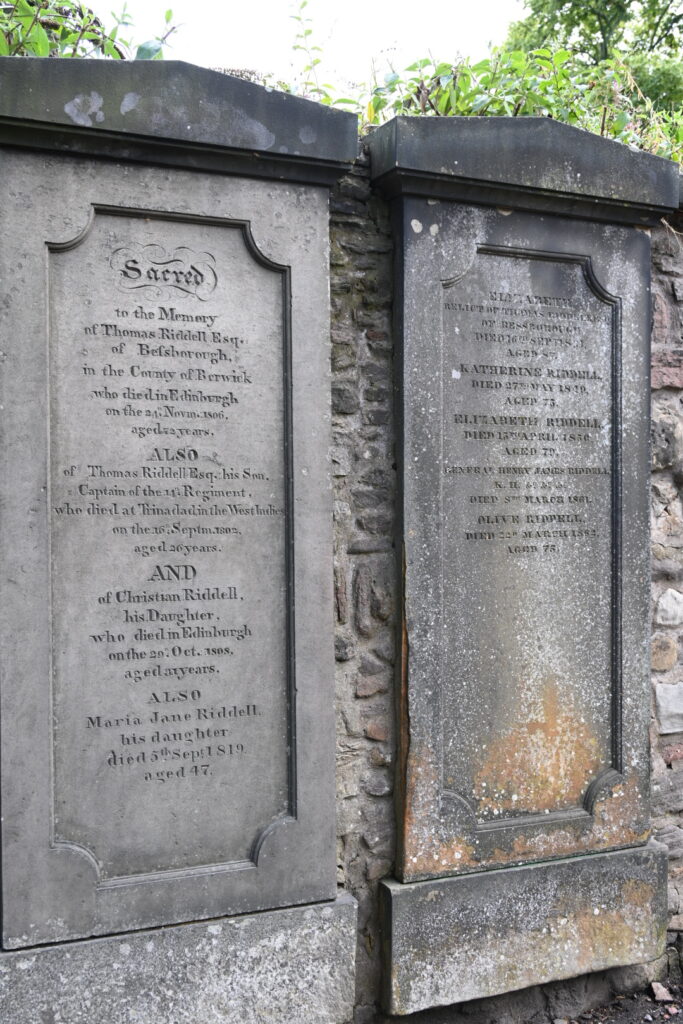
One interesting bit of trivia (and a mild spoiler) that I will share is that – when the Harry Potter books were translated – the name of Tom Marvolo Riddle had to be translated into the local language in order to complete the anagram, “I am Lord Voldemort.” In the case of the French translation, Tom Riddle’s name became Tom Elvis Jedusor (Je suis Voldemort) while in Icelandic he became the great, the terrifying – Trevor.
Back through the cemetery we go:
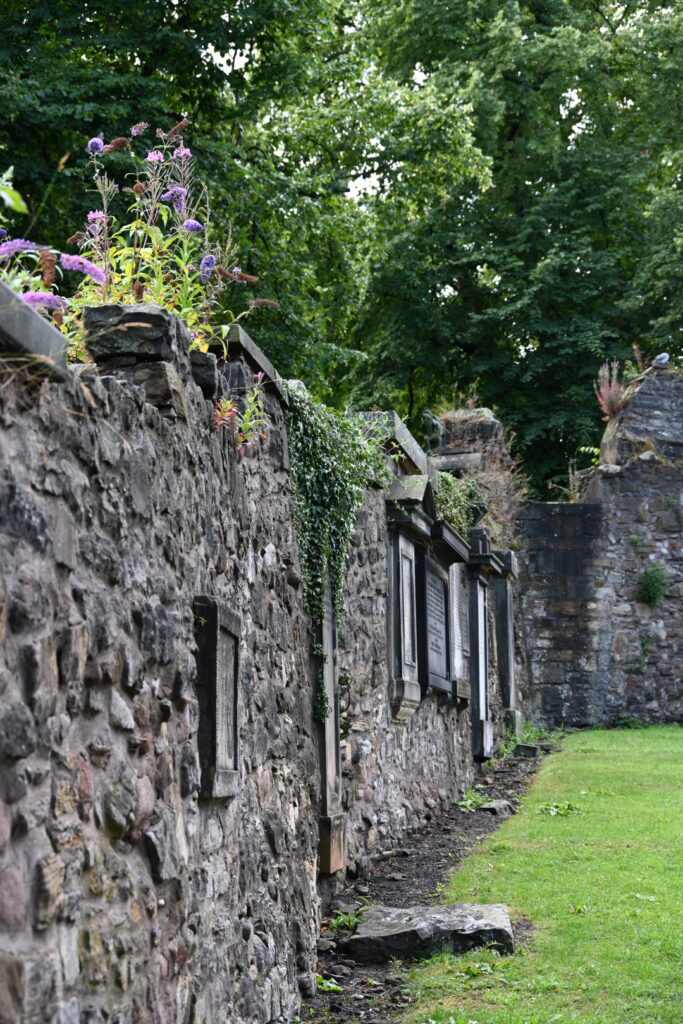
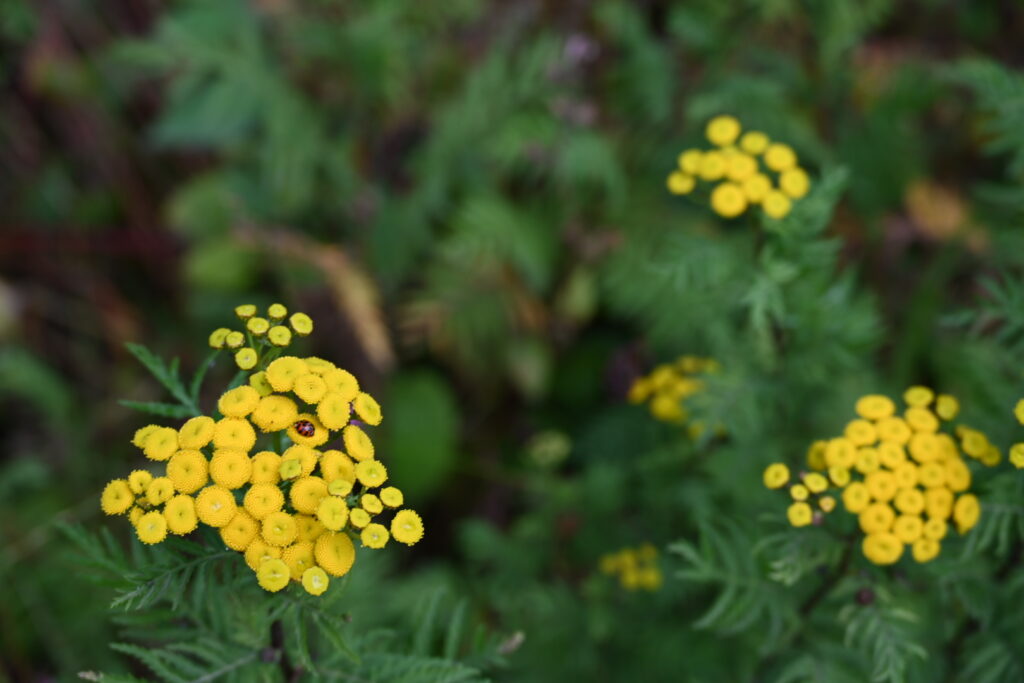
Passing some lovely bits of nature:
Until we reach the grave of Grayfriar’s Bobby:
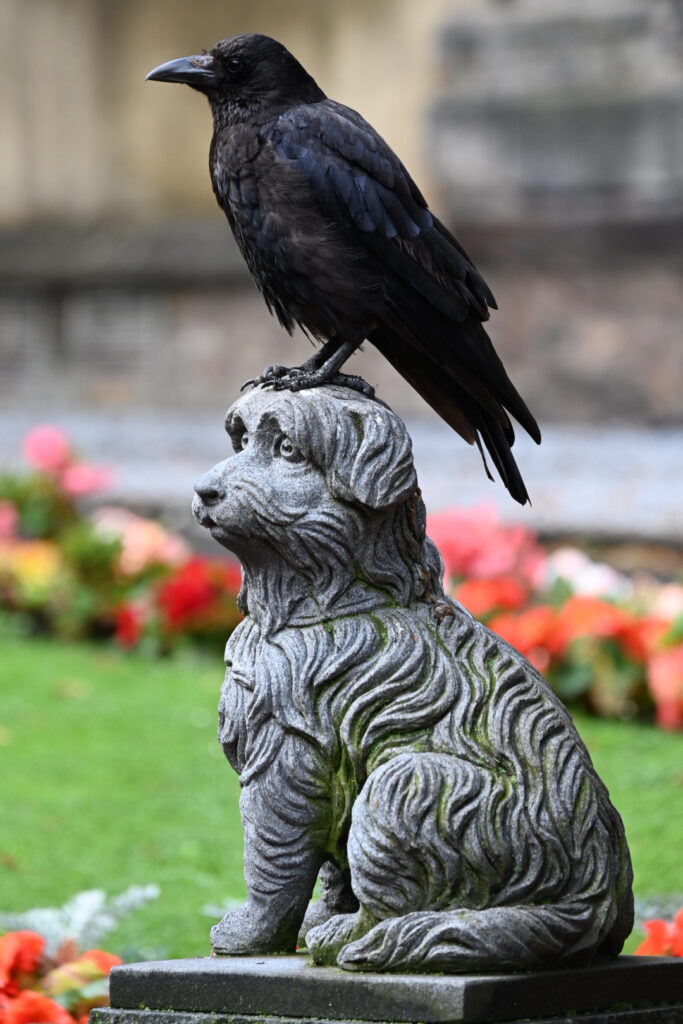
From Historic UK:
“To keep him company through the long winter nights [police watchman] John [Gray] took on a partner, a diminutive Skye Terrier, his ‘watchdog’ called Bobby. Together John and Bobby became a familiar sight trudging through the old cobbled streets of Edinburgh. Through thick and thin, winter and summer, they were faithful friends.
John eventually died of [tuberculosis] on the 15th February 1858 and was buried in Greyfriars Kirkyard. Bobby soon touched the hearts of the local residents when he refused to leave his master’s grave, even in the worst weather conditions.
The gardener and keeper of Greyfriars tried on many occasions to evict Bobby from the Kirkyard. In the end he gave up and provided a shelter for Bobby by placing sacking beneath two tablestones at the side of John Gray’s grave…
For fourteen years the dead man’s faithful dog kept constant watch and guard over the grave until his own death in 1872.”
The tour carries on outside of the cemetery, to the former location of the coffee shop – Nicholson’s Coffee – where the first book was written, thanks to the largesse of Rowling’s brother-in-law and cafe co-owner:
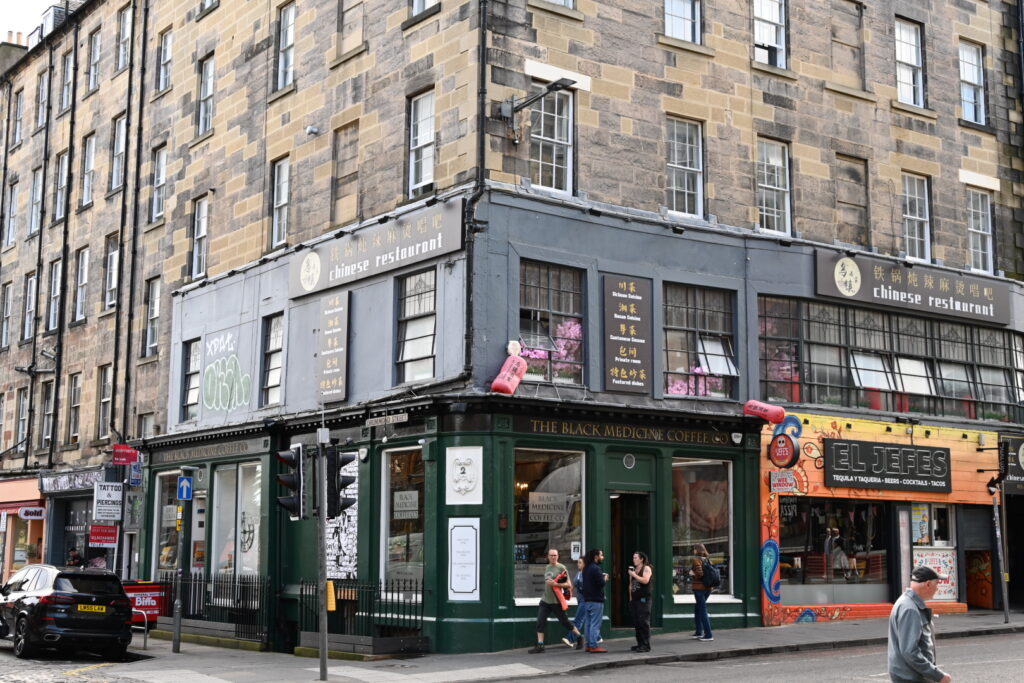
Black Medicine Coffee is very careful to explain that Rowling did not write her books there – it was the second floor business, which has since become a Chinese restaurant
We also find a quiet corner of the University of Edinburgh where Stu recounts an anecdote from when the last book was finished at the Balmoral Hotel:
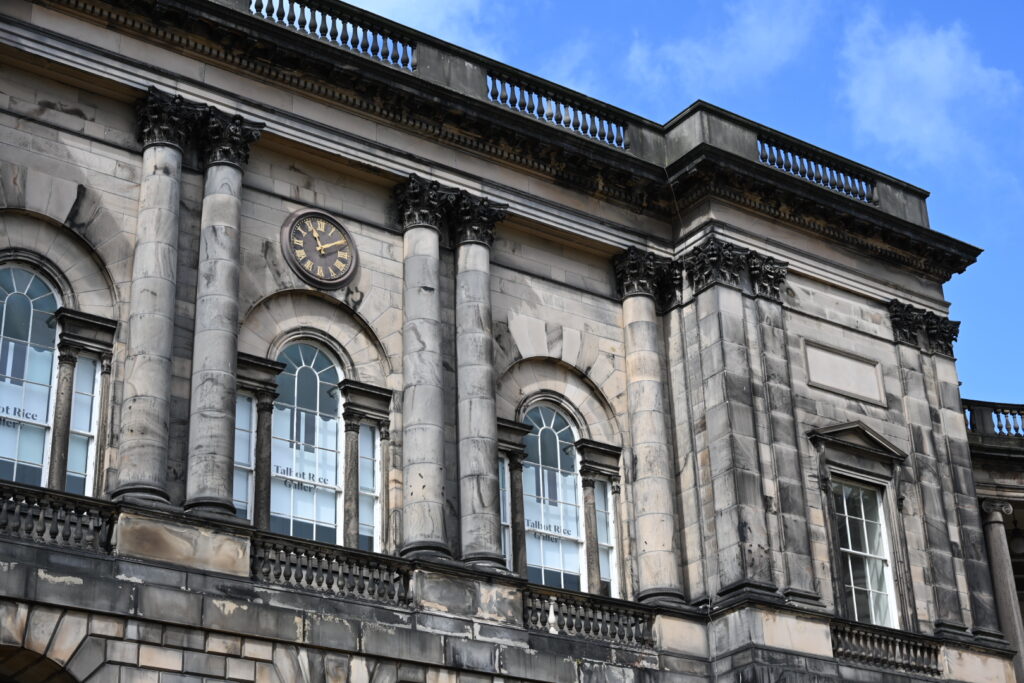
The quiet corner of the University – not the Balmoral
Rowling had sequestered herself away at the hotel for several months and – when the last book was complete – signed a bust of Hermes to signify, “J.K. Rowling finished writing Harry Potter and the Deathly Hallows in this room (552) on 11th Jan 2007.”
Far from being irritated at this act of vandalism, the Balmoral has since rebranded her suite as the J. K. Rowling suite – and now charges more than 2,000 GBP per night, almost a fourfold increase from its previous price.
We then go to visit the Elephant House – the cafe where many of the other books were written:
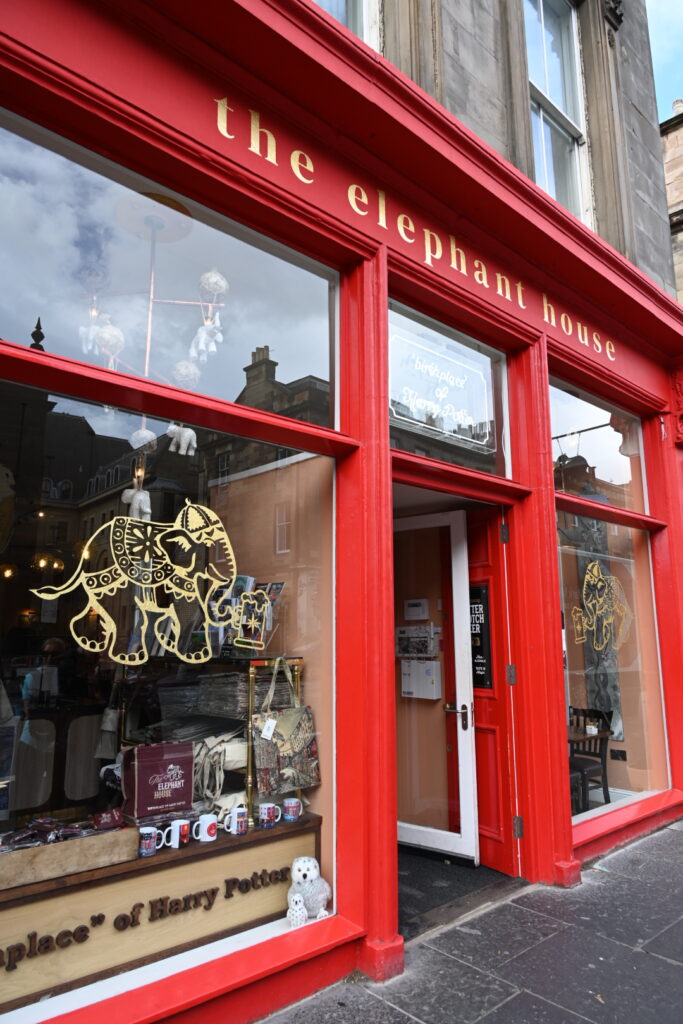
Regrettably, Rowling eventually had to stop writing in public as she was often interrupted by fans and paparazzi.
We then finish the tour at Victoria Street – a likely point of inspiration for the infamous Diagon Alley:
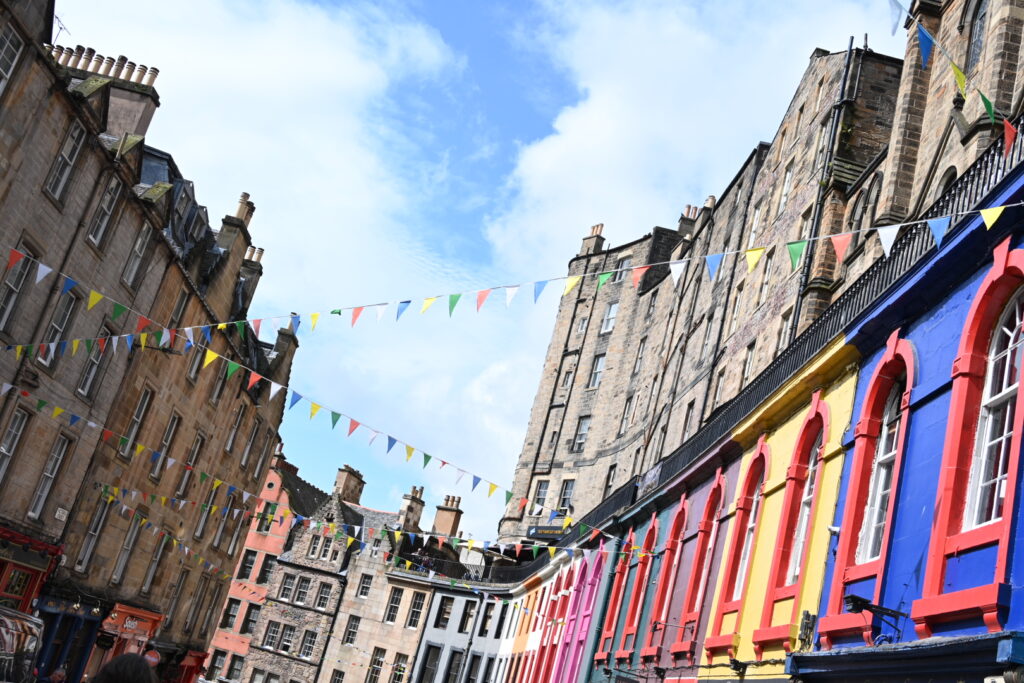
We thank Stu for an excellent tour – which combined the historic and modern with a Harry Potter pilgramage – and then head out to 3 Blind Mice for lunch.
On the way we take in more of vibrant Edinburgh, including the world’s finest name for a pub:
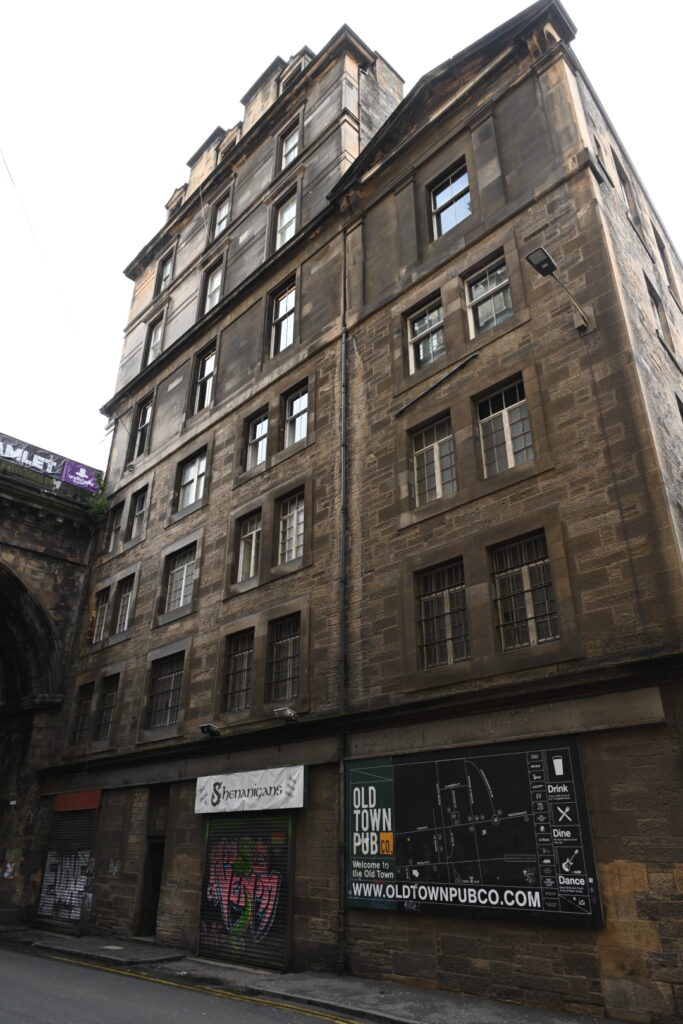
If I ever open a pub, it will absolutely be called Shenanigans
And some interesting street art:
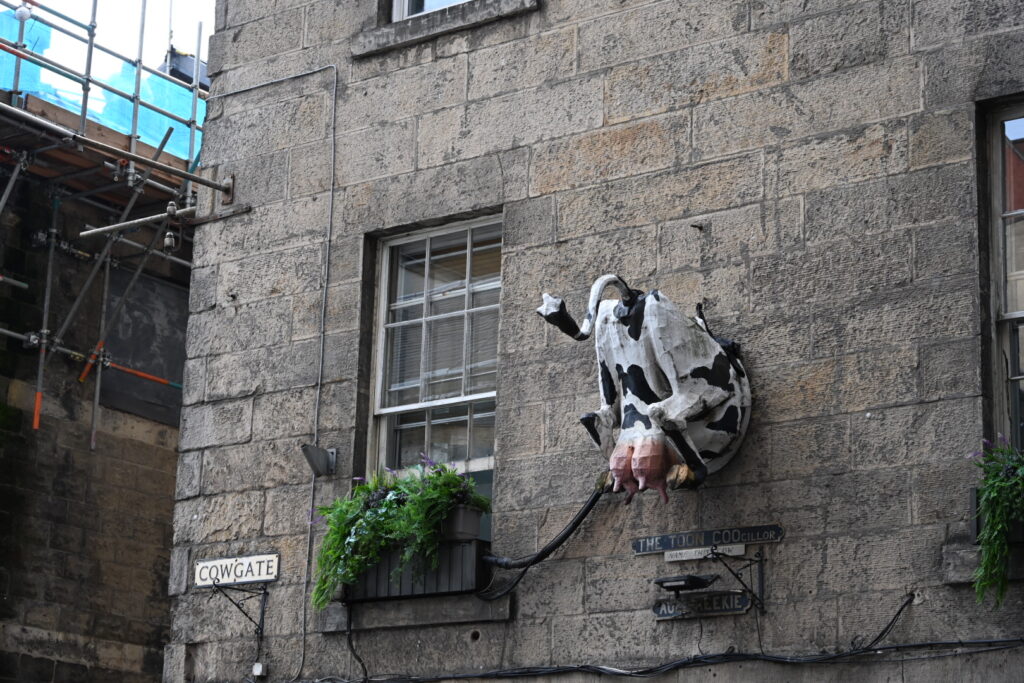
As well as some less-surprising but still very beautiful window boxes:
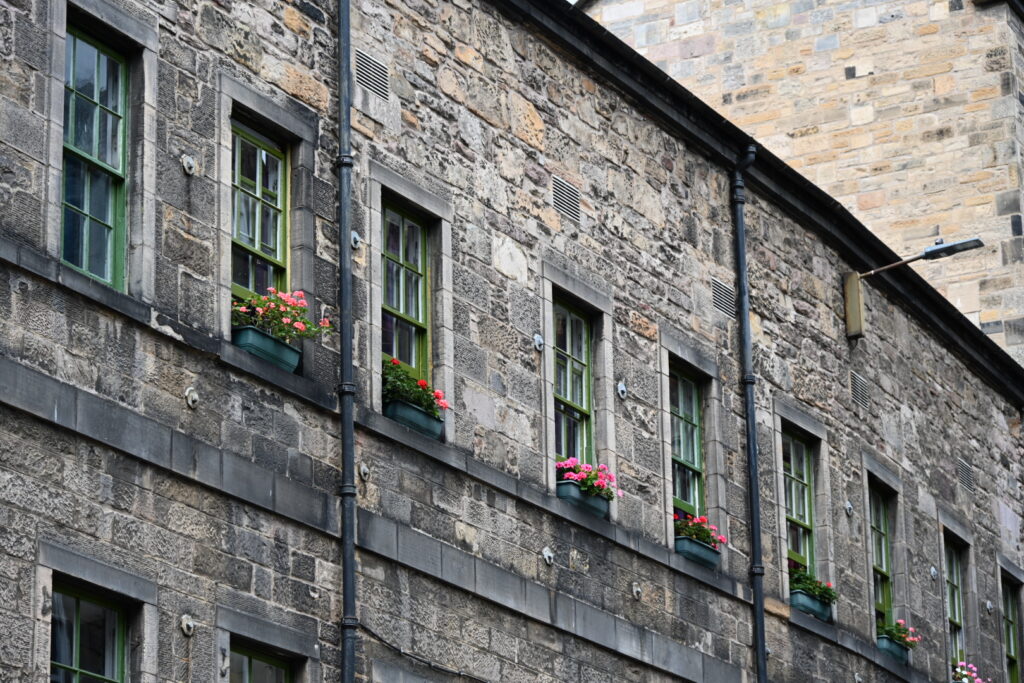
Eventually we reach 3 Blind Mice:
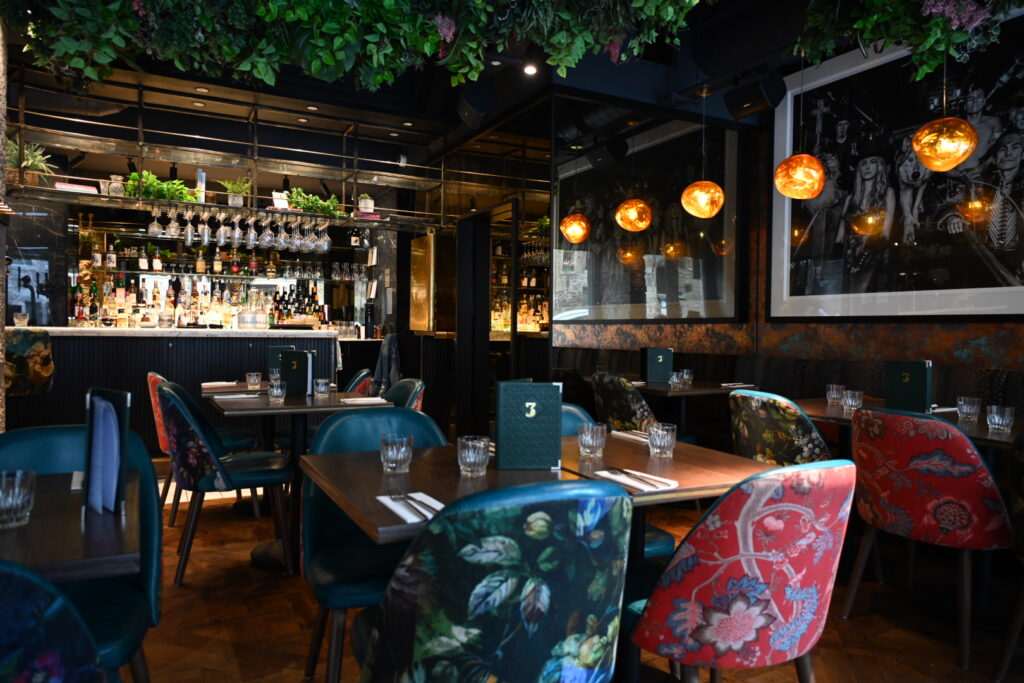
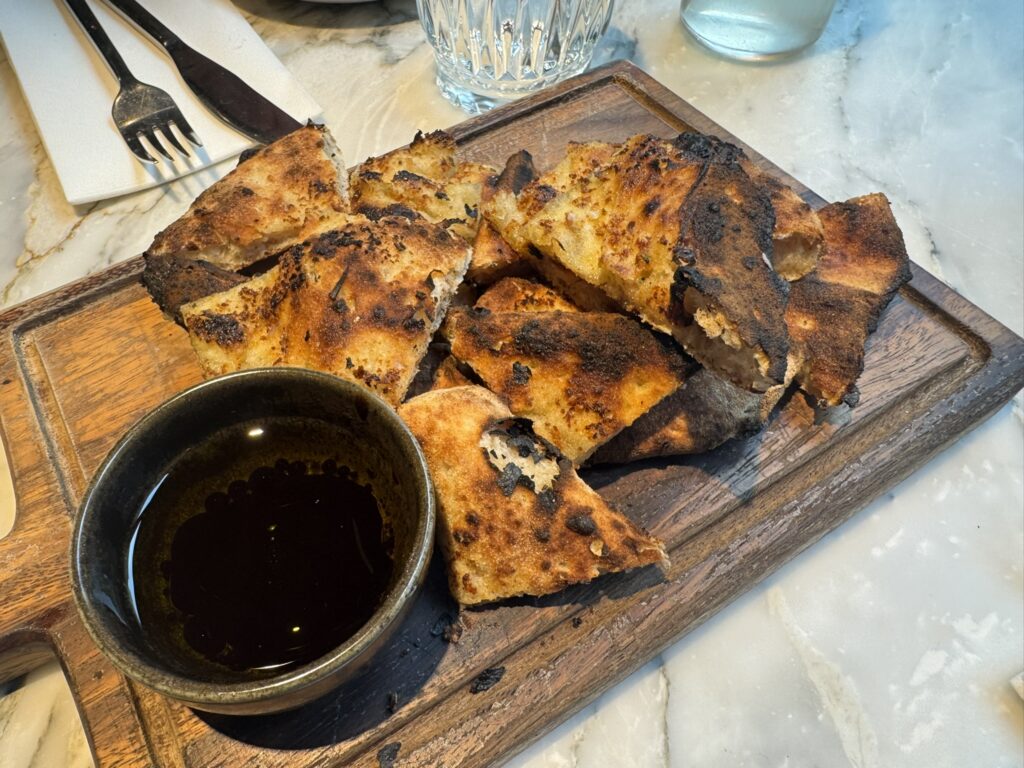
Which, in addition to having exceptional focaccia:
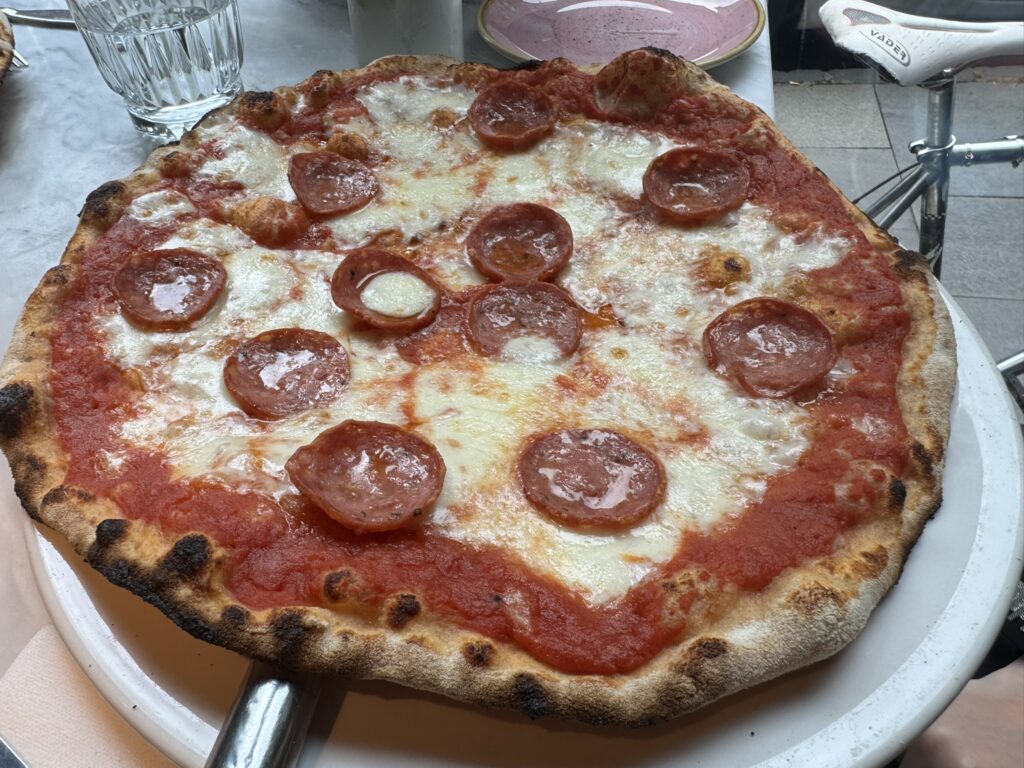
And pizza:
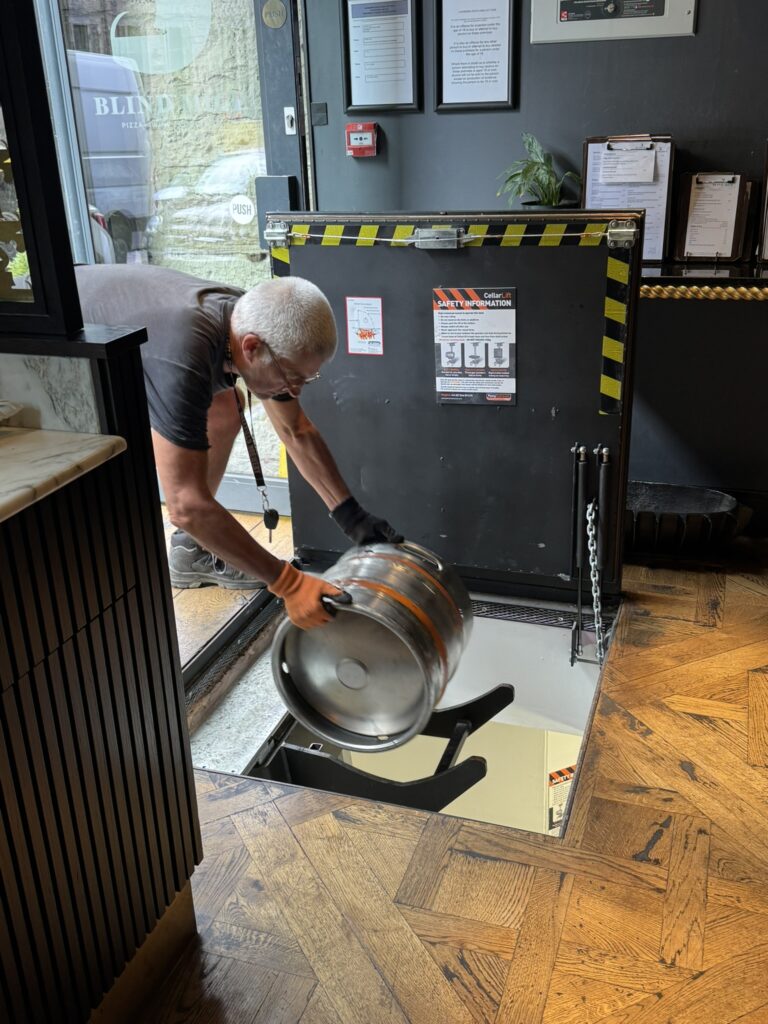
Also has a hidden elevator used to lower kegs into the basement:
And – in their downstairs lounge – an original Banksy:
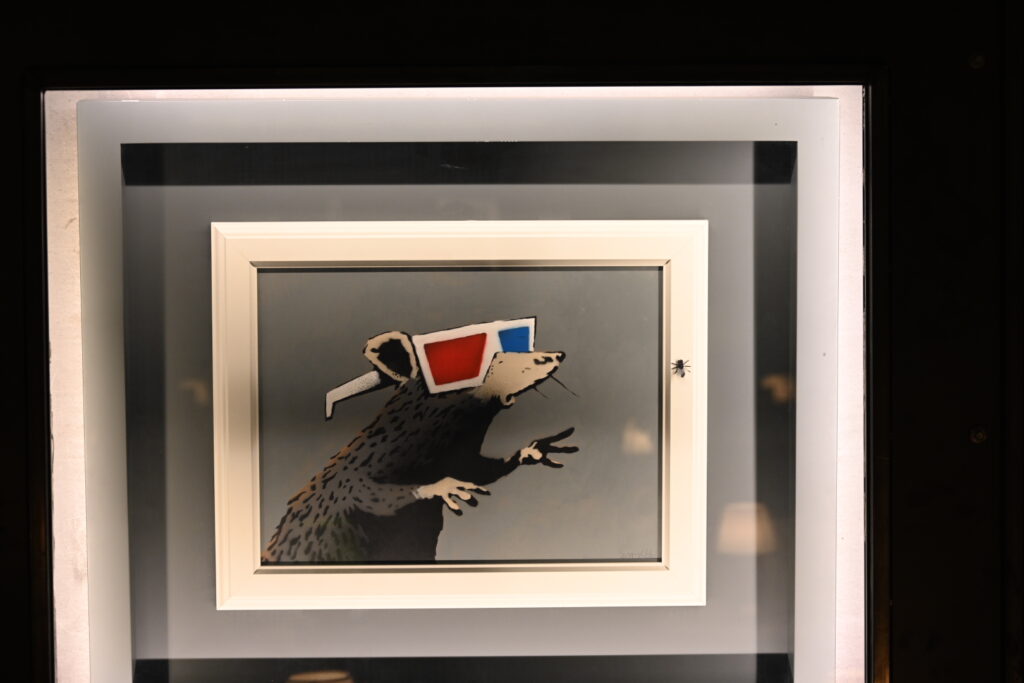
Yes, the fly is part of the art!
3 Blind Mice proves a great stop for lunch – and one which I am only glossing the surface of, as the proprietress spent ages offering recommendations of the many places to see and things to do while in Edinburgh.
(A few points that did stick with me were that Stockbridge Food Market is one of the top ‘local’ places to find food trucks, and that there is an elevator tucked behind the Scottish exhibit at the Scottish museum that leads to a terrace with a sweeping view of the Old Town.)
We then head to Royal Mile Silver where the kids pick up a few small pieces as souvenirs, and then on to the Chocolatarium for a chocolate tour – starting in the jungle room:
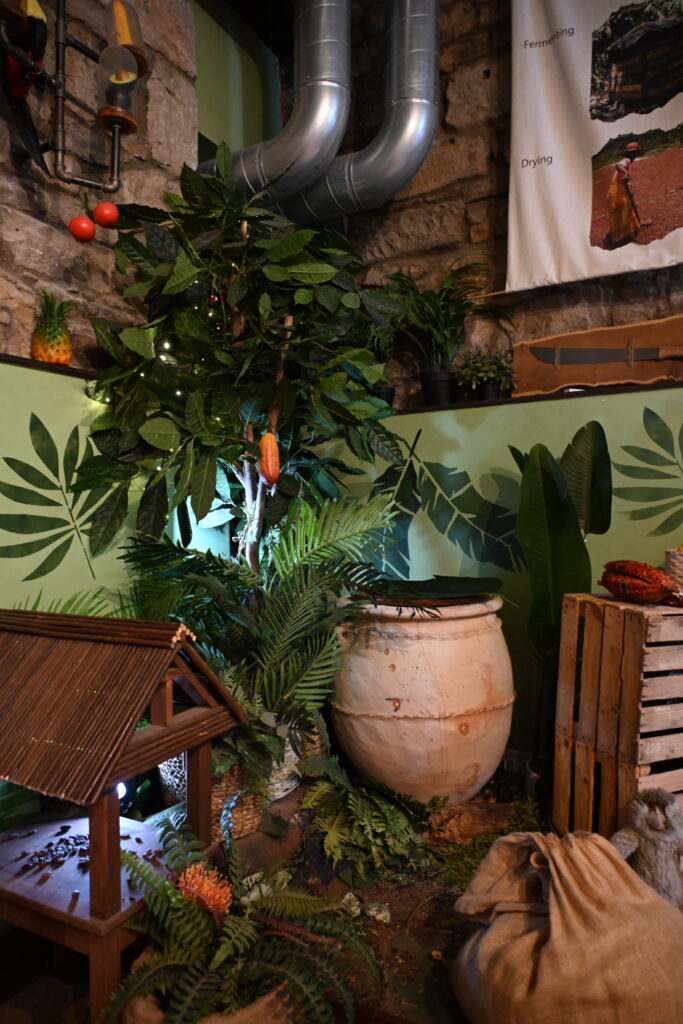
Don’t forget the monkey:
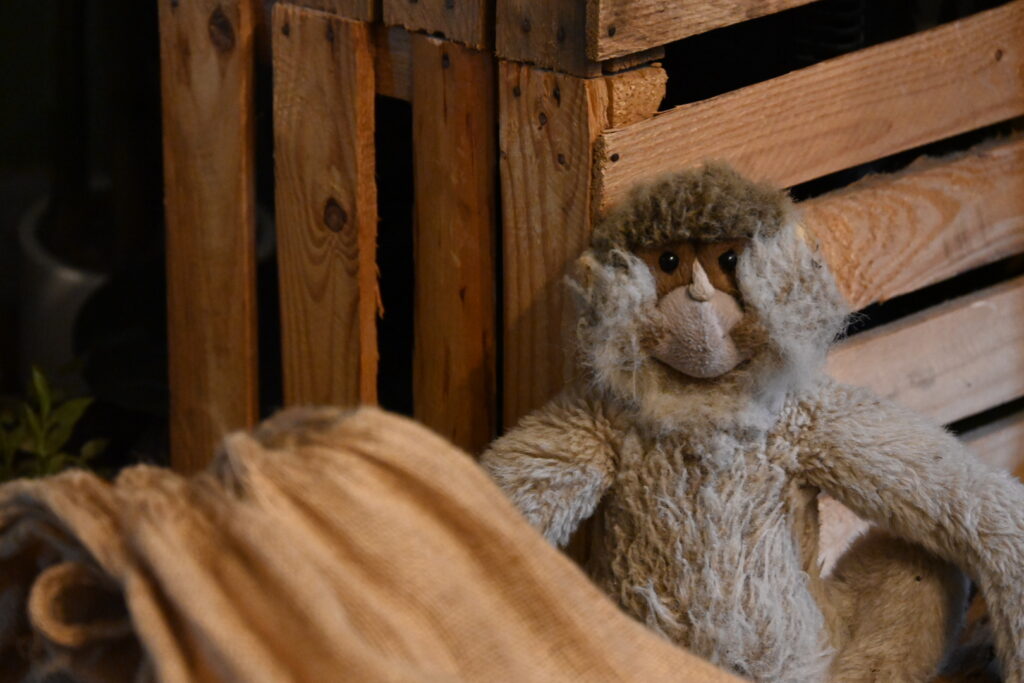
Monkeys will often get drunk as from fermented cacao fruit during the harvesting process – apparently there are some amusing videos of this on YouTube
With hot chocolate in hand, we start by learning about the chocolate cultivation process, in which cacao is grown and harvested by local communities in South America and Africa. The tour guide, Nyx, shows us some fresh cacao fruit:
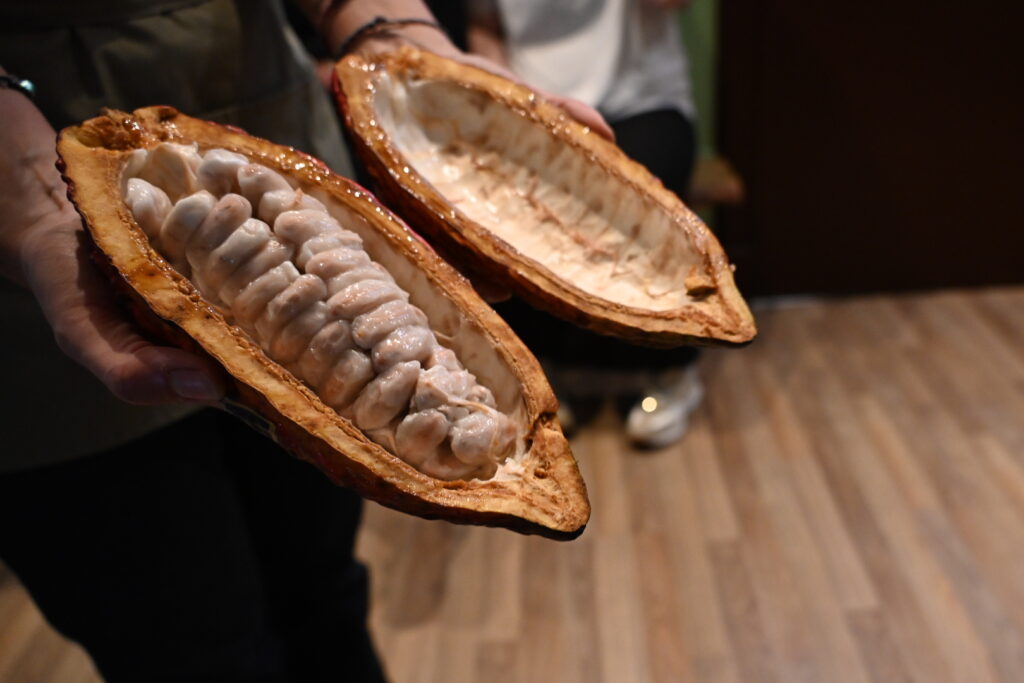
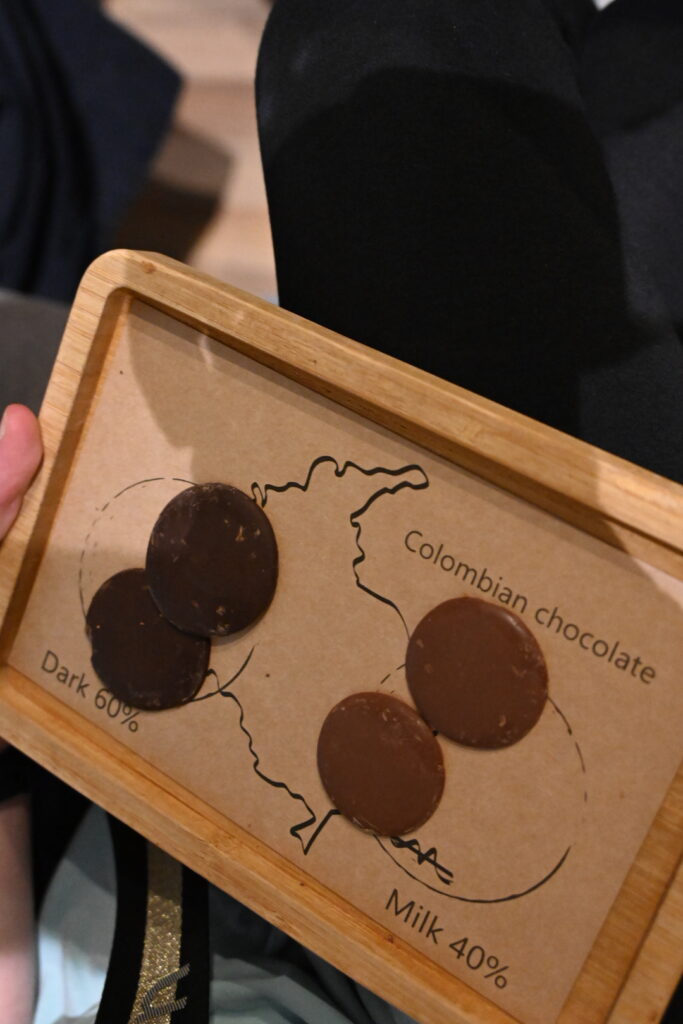
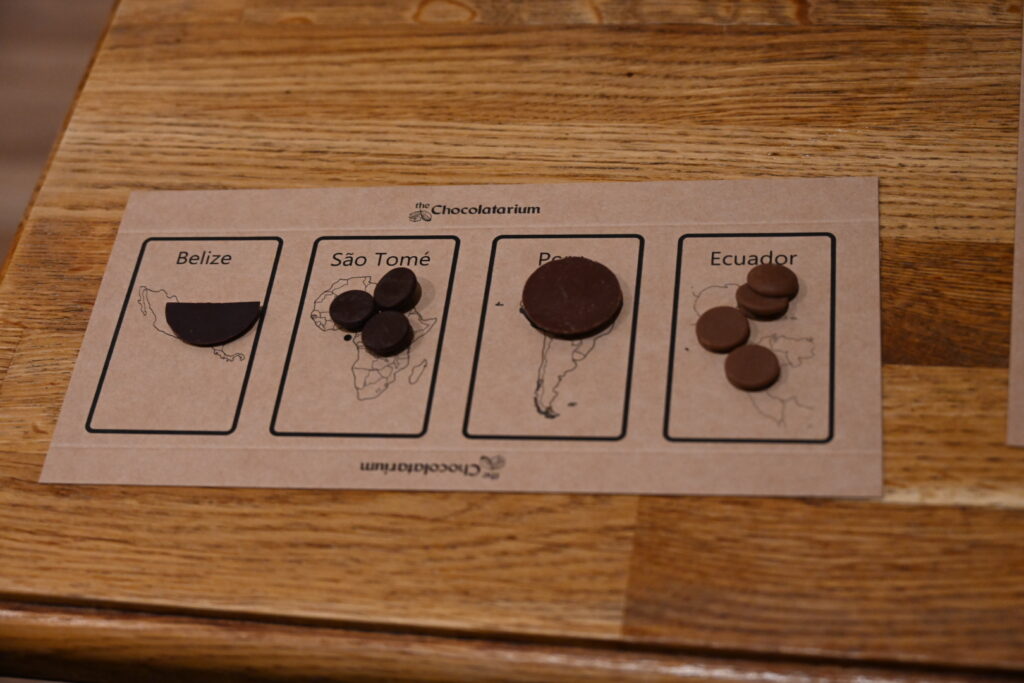
We then get to taste the difference between dark and milk chocolate of different origins:
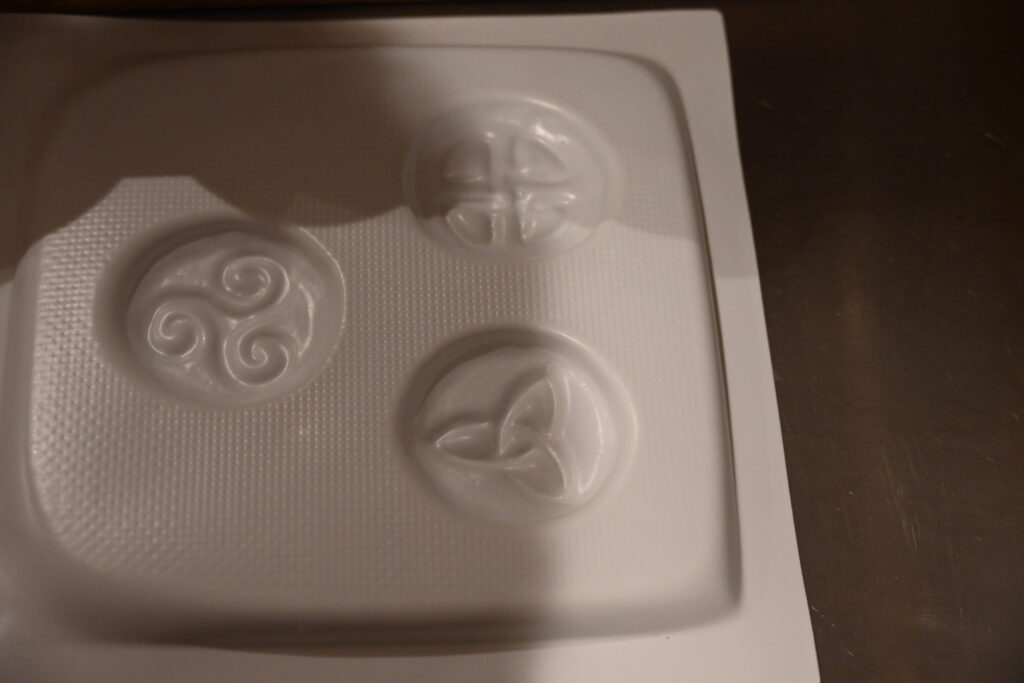
Then head to the manufacturing space where we get to select our own molds:
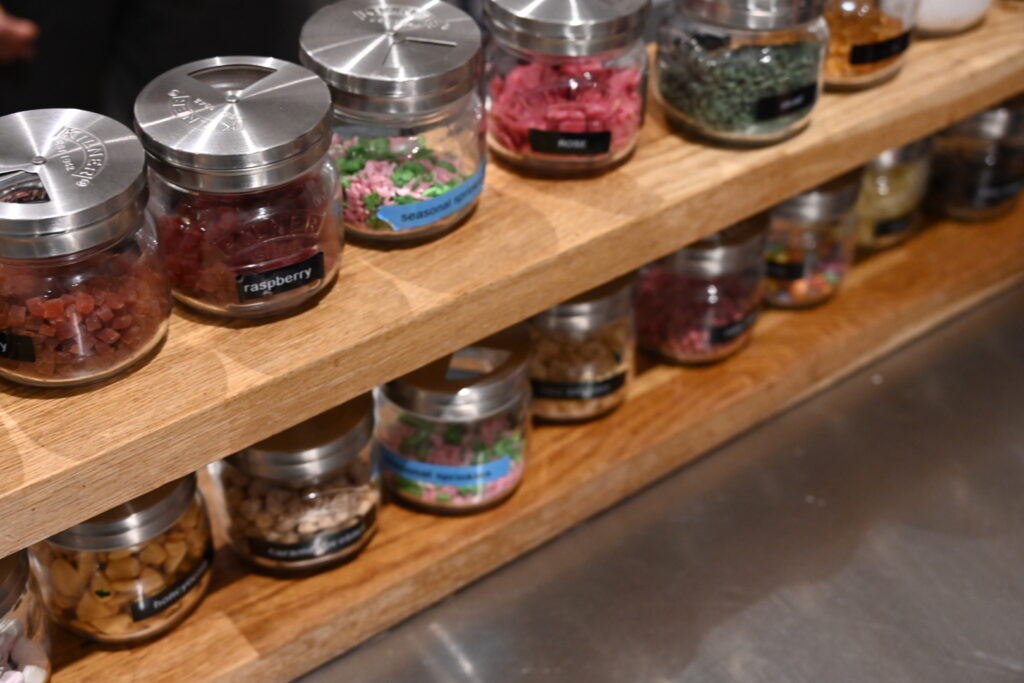
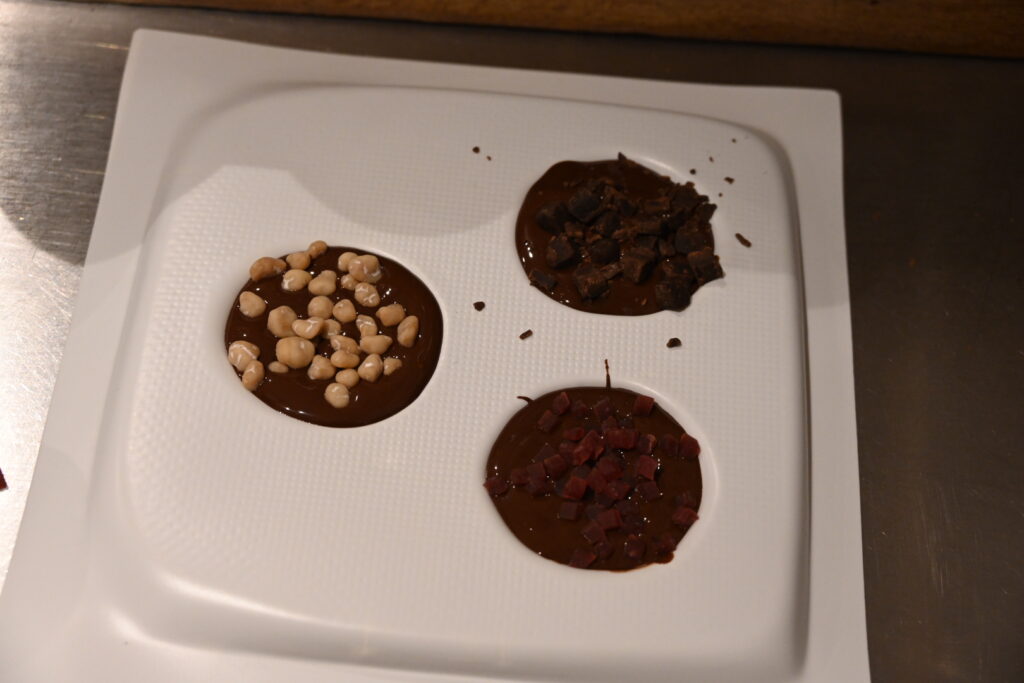
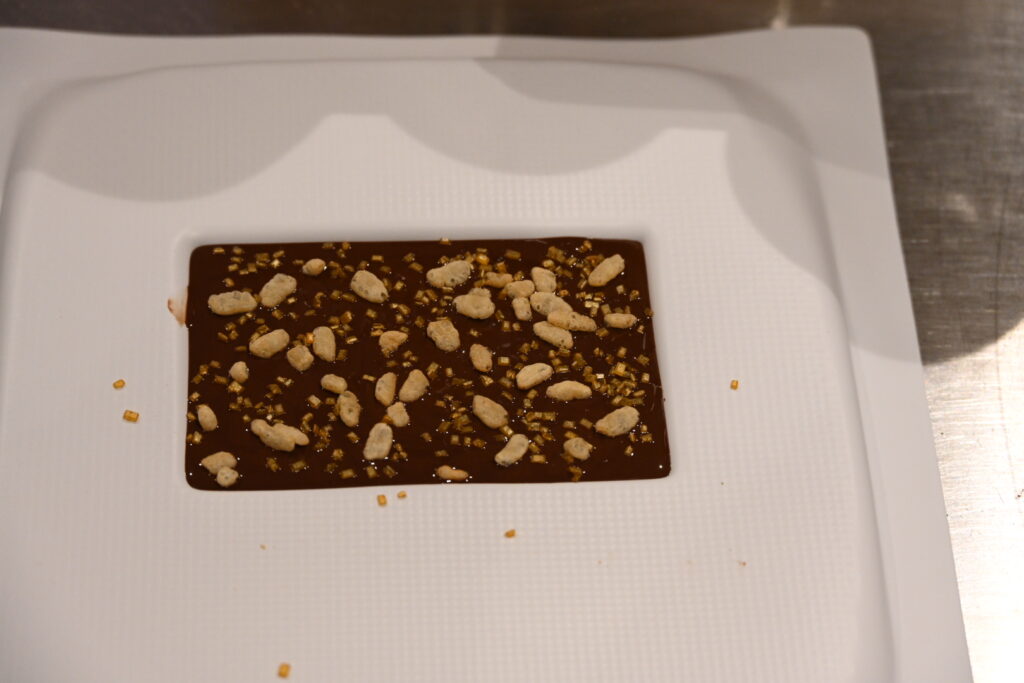
Choose our own chocolate (dark or milk) and our toppings:
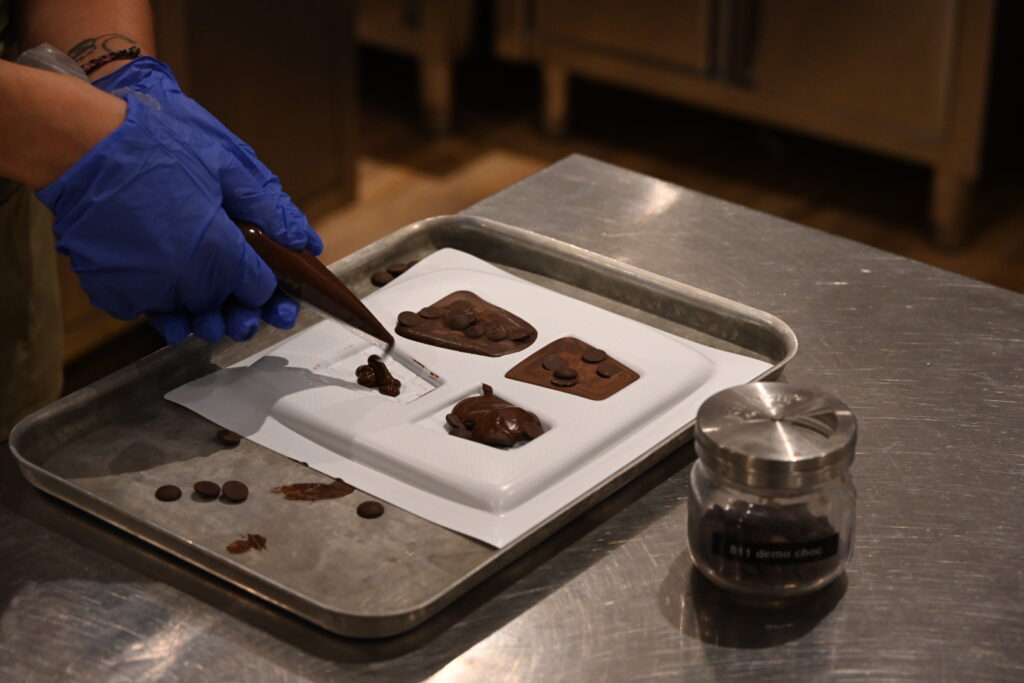
And then create our own chocolates:
I opt for caramel, brownies, and raspberry for my toppings:
While my wife goes for rice crispies and golden finishing sugar:
We then head into the tasting room to try a few more samples:
Nyx also hand-mixes some of the ‘original’ hot chocolate, similar to how it would have been served thousands of years ago in South America. The cocoa was crushed instead of powdered – or liquified – and had agave nectar instead of sugar. There was also chili and cinammon for seasoning.
The end result isn’t quite as tasty as the smooth, creamy drink we had at the start – but still quite nice.
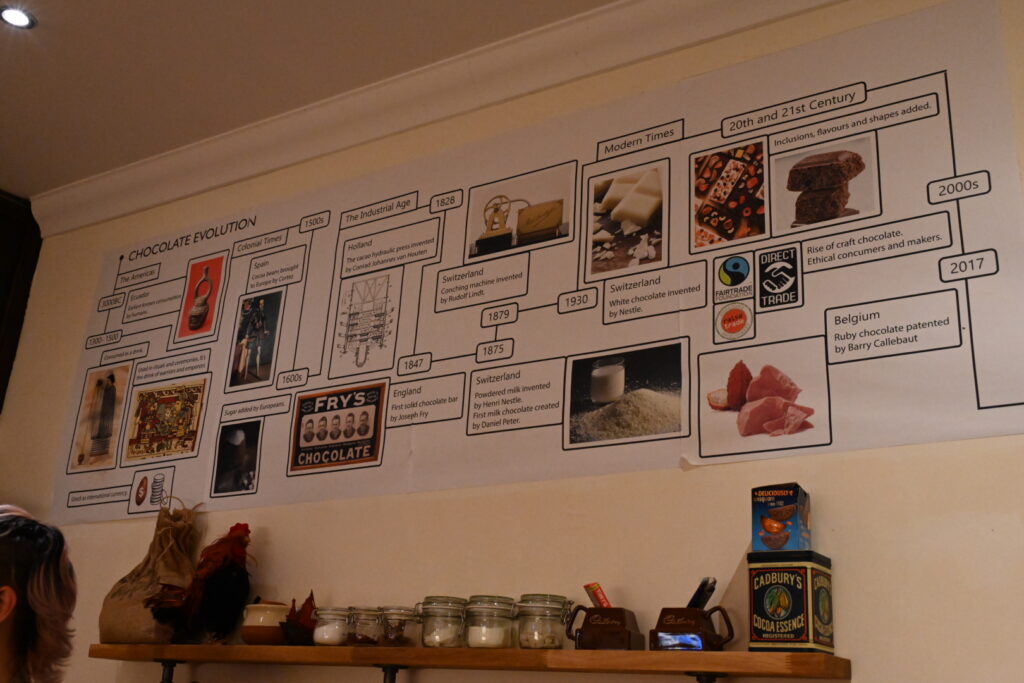
It’s fascinating to learn how much of chocolate making has only been discovered in relatively recent years. For instance, the first solid chocolate bar wasn’t created until 1847, milk cholate wasn’t created until 1875, and the ‘conching’ process that produces liquid cacao wasn’t discovered until 1879.
After working our way through our initial samples, we then have the board opened up to us:
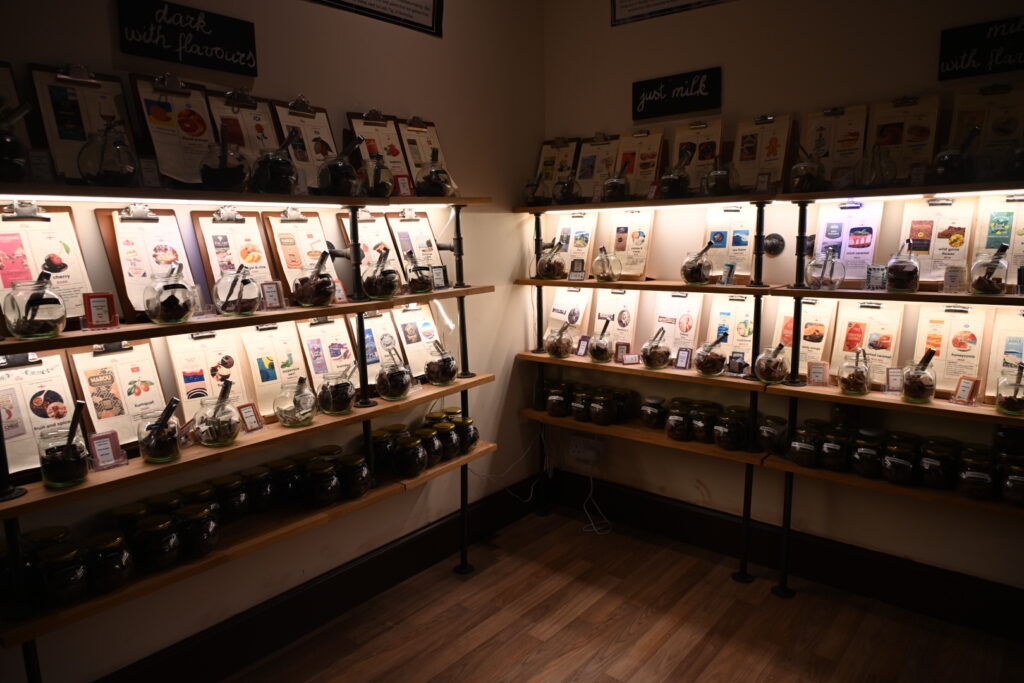
I try a whisky chocolate, a Dominican salted chocolate, maple bacon pancake chocolate, and Vietnamese coffee chocolate:
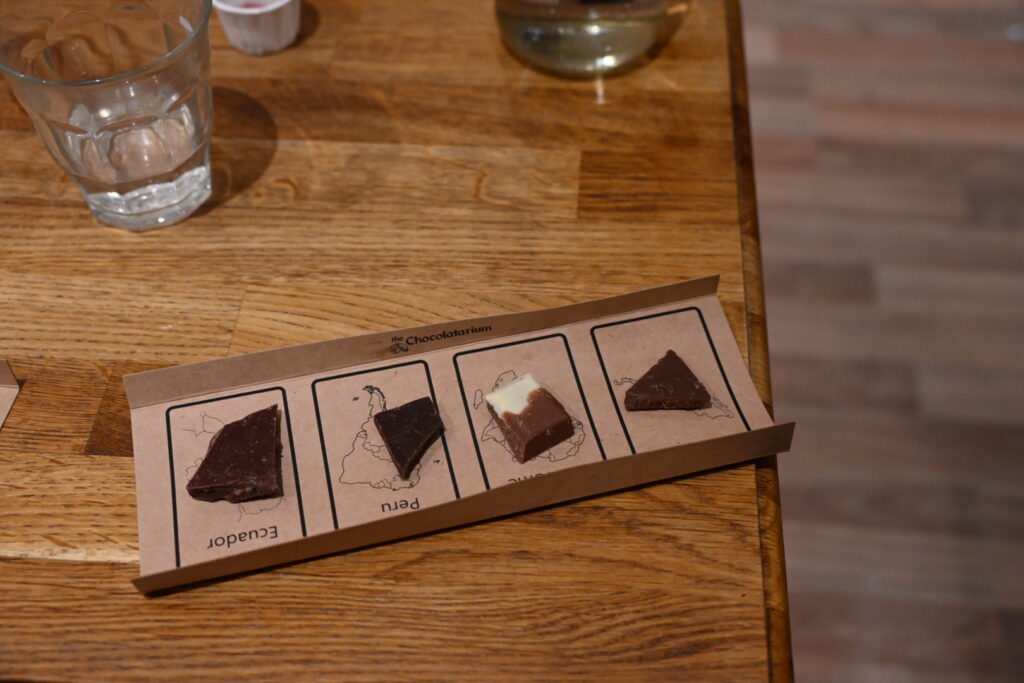
I’d say the whisky chocolate was the best of the bunch.
The tour draws to an end, and we collect the chocolates we made on the way out the door. While it’s not a particularly ‘Edinburgh-focused’ tour, the kids really enjoyed it – and learned something new in the process. So we’re glad we did it.
With that, we head back through Edinburgh:
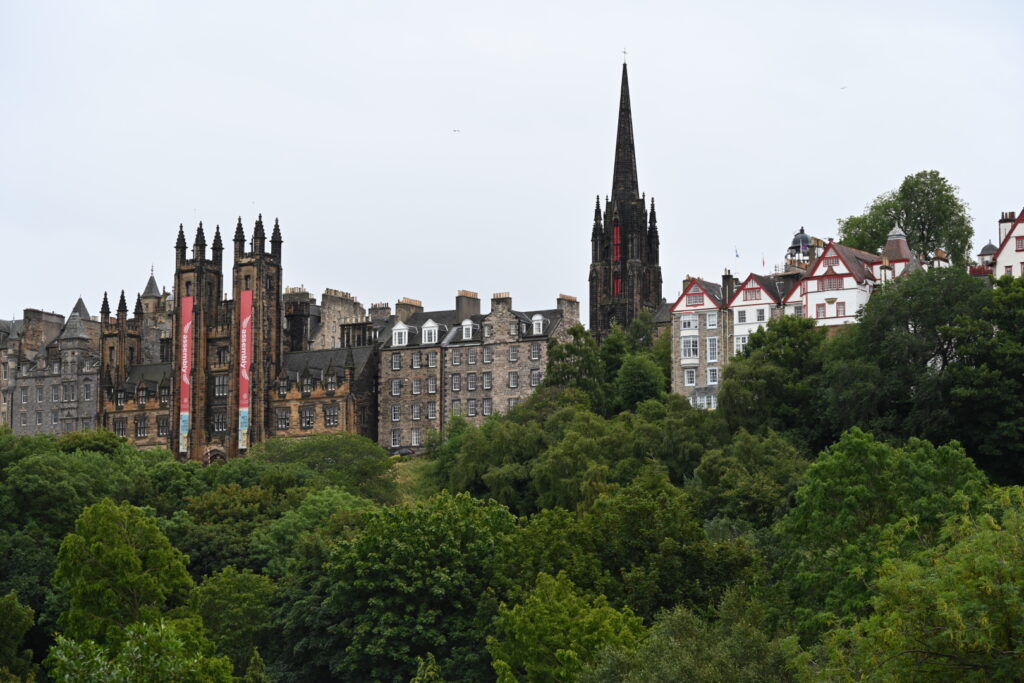
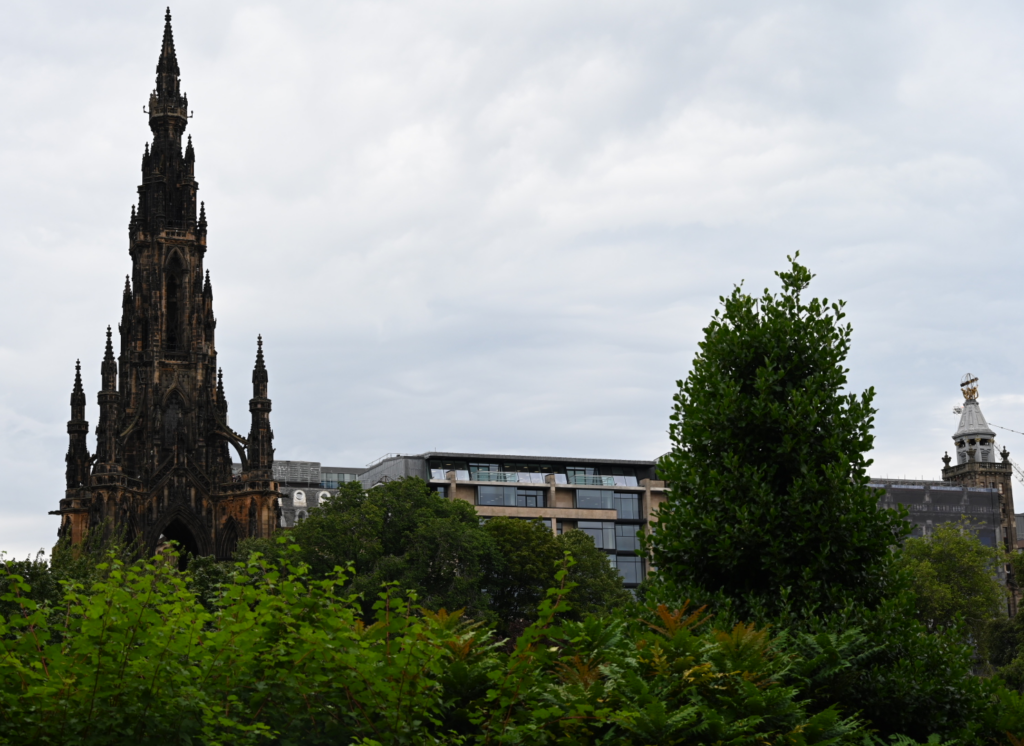
Back to our townhouse for a curry dinner, and the kids head off to bed while the adults get a bit of writing done.
Then an early bedtime – a busy day tomorrow, as we plan to tackle Arthur’s Seat and visit the Museum of Scotland.