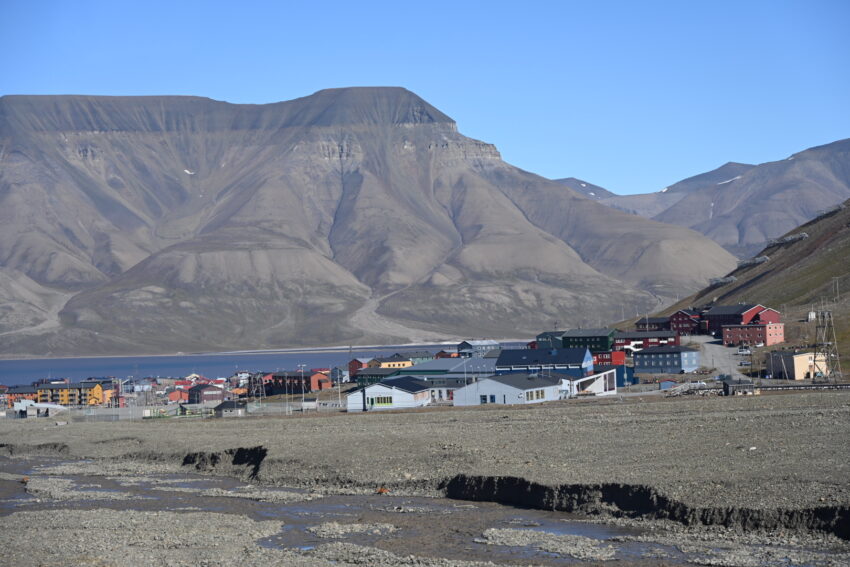
There’s no way to sugarcoat a 4 am wake-up. They’re all rotten.
At least we went to bed at a reasonable hour last night, though the Radisson Blu has to have some of the least-comfortable bedbug covers upon which I’ve ever slept. It felt like sleeping on a raincoat. Every time I turned, the bed rustled. Terrible.
But we still manage somewhere between 7 to 8 hours of sleep, our previous night’s sporadic sleep working in our favour for once. Hurray?
We’d hardly unpacked last night, which meant we hardly needed to pack up this morning. We head to the downstairs lobby at 4:20 am and check out shortly afterward. I look at the balance on the invoice – it seems slightly high, but only by a few Euros so I opt not to make a fuss.
Off we go to Terminal 3, following the route I mapped out the previous night – except that the hotel I intended to walk through has locked their backdoors, so we have to make a detour back to the CDGVAL train terminal instead. Ah, well. At least the floors inside the terminal are smooth – no more ungainly cobbles to huff the bags across.
We reach the terminal and immediately spot the Ponant rep, who points the way and informs us that there’s a snack waiting for us past security. We grab tags for our bags and head to the baggage drop. The desk hasn’t opened yet but there’s already a line of twenty-ish guests ahead of us.
Once in line, we’re met by David, the expedition leader, who takes down our jacket and boot sizes. Ponant does not offer a children’s parka (so we brought her Silversea one), but they are going to give our daughter the smallest size they have. Presumably she’ll grow into it one day, though we’re unsure whether our Silversea or Ponant parkas will make the journey home. There’s only room for one! Probably – we do have those extra two duffles used on Zuza which are currently empty…
The line starts moving and we finish off our bag tags. Today’s charter is being run by Enter Air, who has three desks open. Still, it scarcely seems enough to deal with the line of passengers – and indeed a line of perhaps a hundred passengers quickly forms behind us. We’re glad we got there when we did.
No issues with our baggage limits – we are all under 23 kg for the bags, and they do not weigh hand luggage, much less hand + personal items – and we soon have our boarding passes. We’re row 6 – AB and EF. Perhaps they’re leaving blank seats in the aisle? Given the number of passengers, however, that seems unlikely.
Through security we go. A short line, but we need to take all electronics out of our bags and I get selected for additional screening. But we soon find ourselves at one of the tables, putting Humpty Dumpty back together again.
Ponant’s snack consists of coffee, juice, water and some fruit. Not much, but presumably they’ll feed us on the plane. We nevertheless opt for some sandwiches from Pret a Manger:
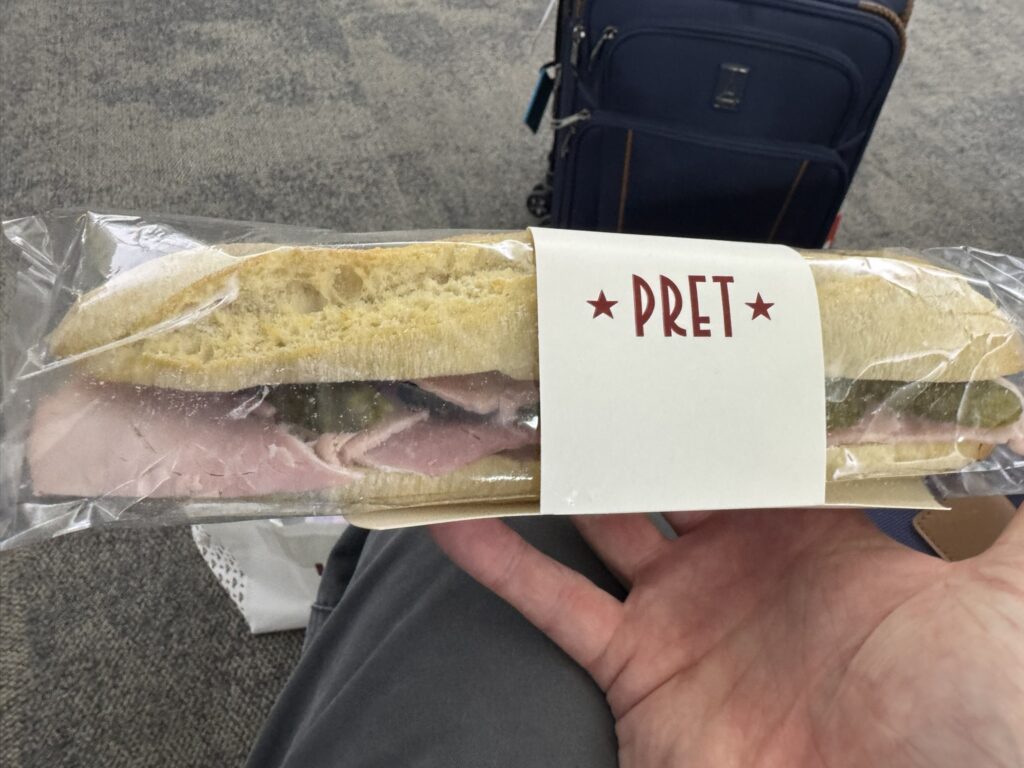
They’re surprisingly good – though that’s often the case with food in France. We also pick up some croissant for later.
We head to the gate, and Anne – a woman I met on the Ponant Yacht Club facebook group – swings by to drop off some Bonine that she had very kindly picked up for us. Bonine is not easily available in Canada as the company has decided not to translate their labels into both English and French. It is available OTC pretty much anywhere in the USA and onboard Silversea ships but we decided not to risk hoping Ponant stocks it.
I hear back from the Radisson. They seem to be charging me for not two rooms, but five rooms. I cradle my head in my hands. It’s too early for this nonsense. But the charges have not yet shown up on our credit card, so we will fight them when (if?) they do appear.
Oh, and I forgot to mention that my wife’s credit card was compromised while we were travelling – that was a fun half-hour to spend on hold on our last day in Edinburgh, plus the next morning in Paris as my wife moved over all of her recurring payments.
We refill water bottles and hang out for a bit, and then boarding is called. I heard “50 to 32” so I initially hang back, thinking that only the rear of the plane has been called. But it’s soon clear that everyone is boarding – perhaps I misheard the flight number, 5232? In any case, we soon board the bus and are shuttled out to our waiting plane:
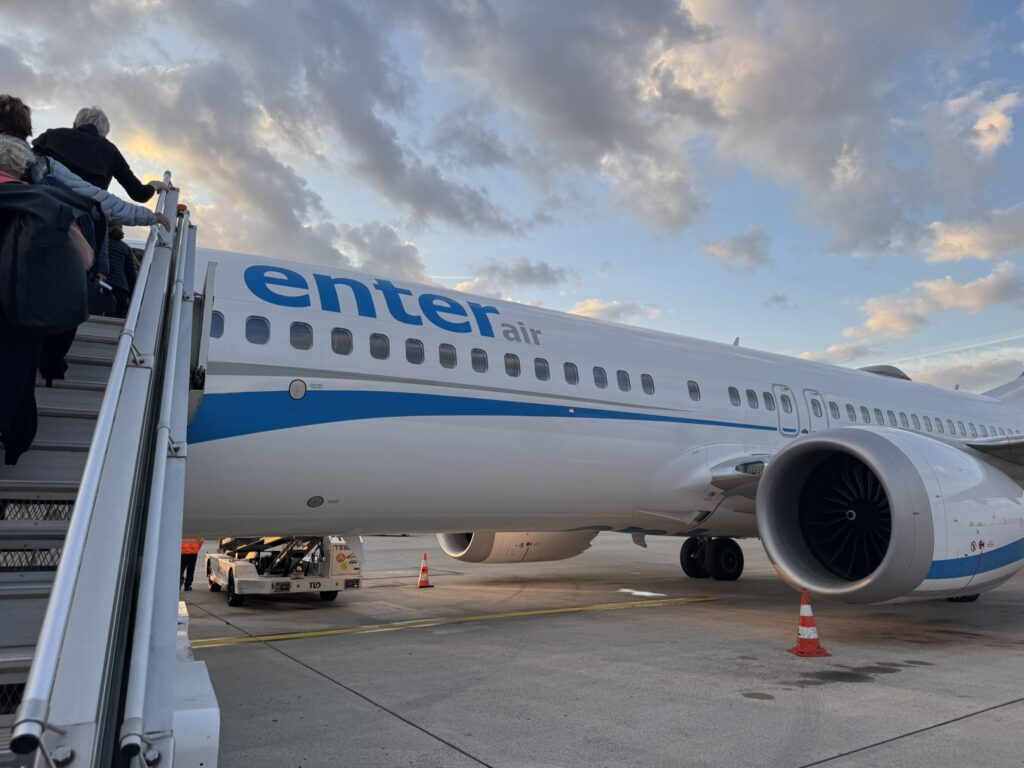
The plane is fine – not as nice as Air Canada, not terrible for a charter. We pretty much fill up the entire plane so few seats are left empty – but to be fair I prefer that to them sending out multiple flights, as Silversea did when they shuttled us down to Puerto Williams. Twice the number of flights means there’s twice as much that can potentially delay sail-away.
I would say that the seats are wider than many of the other charters and Air Canada Rouge that we’ve been on, and there’s a bit more legroom too. Perhaps roughly equivalent to LATAM.
No issues getting our carry-on luggage into the overhead bin, though some of the other passengers’ bags are shuffled near the end. If everyone had slotted them like books on shelves as we’ve heard previous flight attendants insist on there would’ve been much more space as these were generously sized overhead bins.
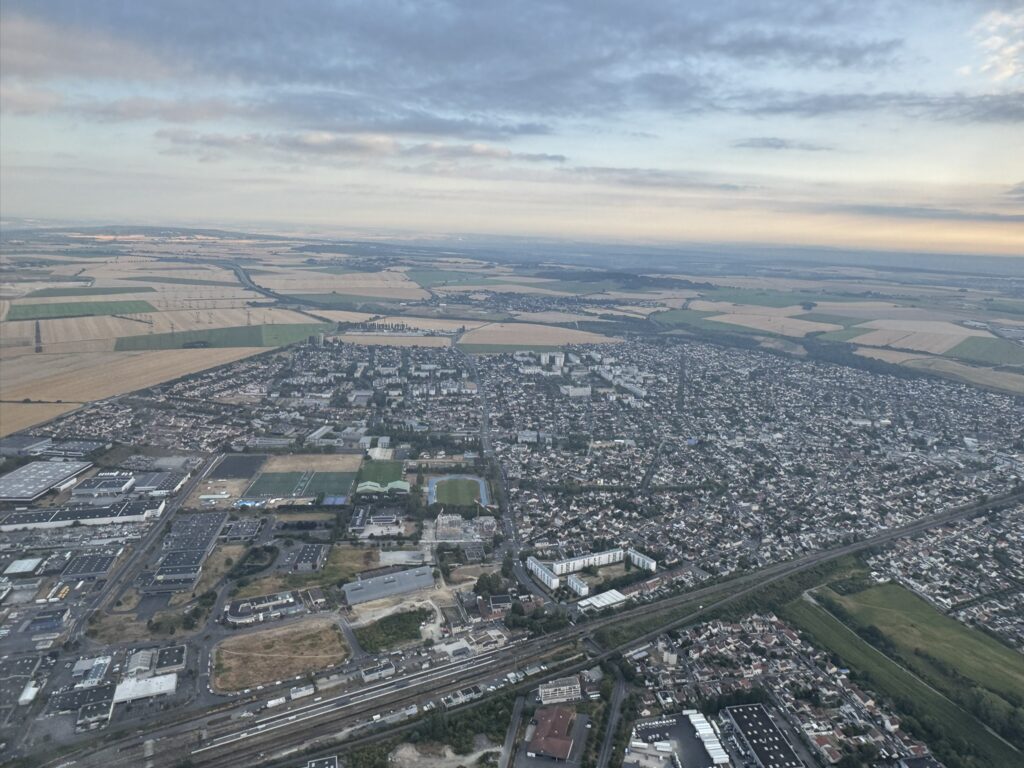
Au revoir, Paris!
Time for a late breakfast:
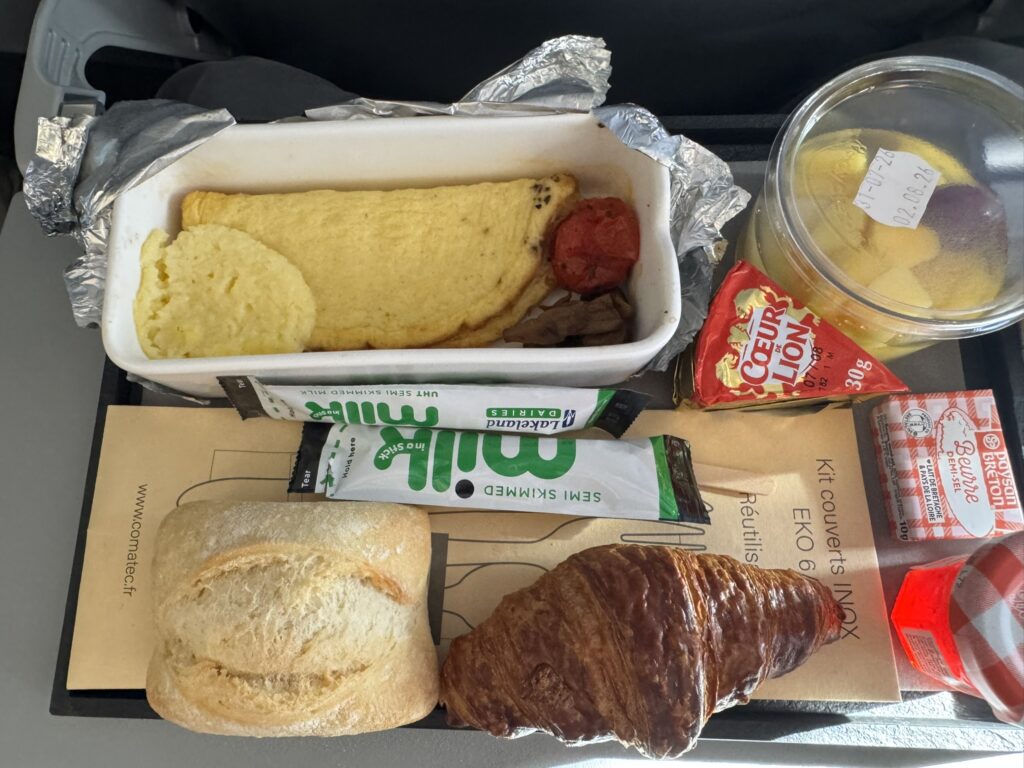
This is surprisingly good. The rolls and the little slices of cheese in particular, though I actually enjoy the omelette – which is something I rarely say even regarding Air Canada’s Signature class omelettes.
My wife asks if I can hand across a croissant, and I unfortunately tilt my tray table just a little bit – enough to send it crashing down on my bags below. Miraculously, the open omelette container lands omelette-side-up, but I still need a few minutes to tidy up the mess I’ve made. My seat mate is very patient.
Speaking of our fellow passengers, it’s an interesting international blend. I would say there is a significant contingent of French-speaking passengers, as well as decent sized groups of American, Brits, Aussies, and more. I’ll be curious to see what sort of that dynamic that translates to while onboard. (And I am actually slightly surprised that I don’t recognize anyone from our previous cruises – though there is one or two semi-familiar faces, so maybe there has been some overlap.)
The staff come by with chocolate, and this is followed up with champagne service:
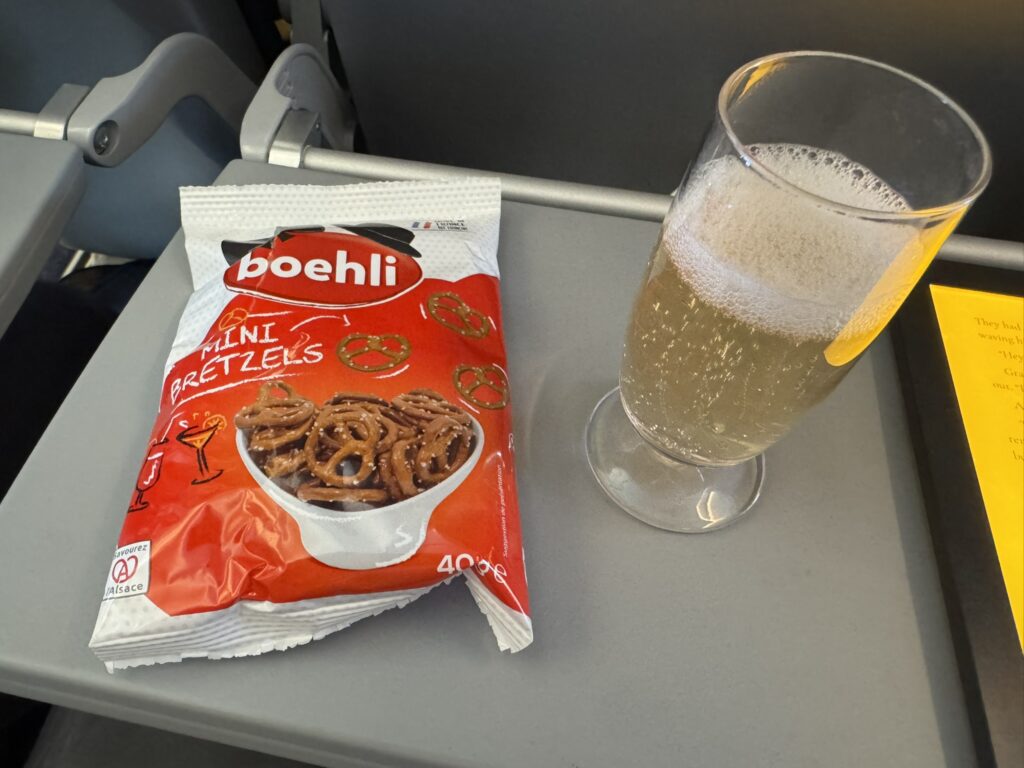
And – just before we land – we spot some familiar faces who are also toting Silversea backpacks. These turn out to be the friends of @JPAlbny – and they were also on our original British Isles cruise. Small world!
Hello, Longyearbyen:
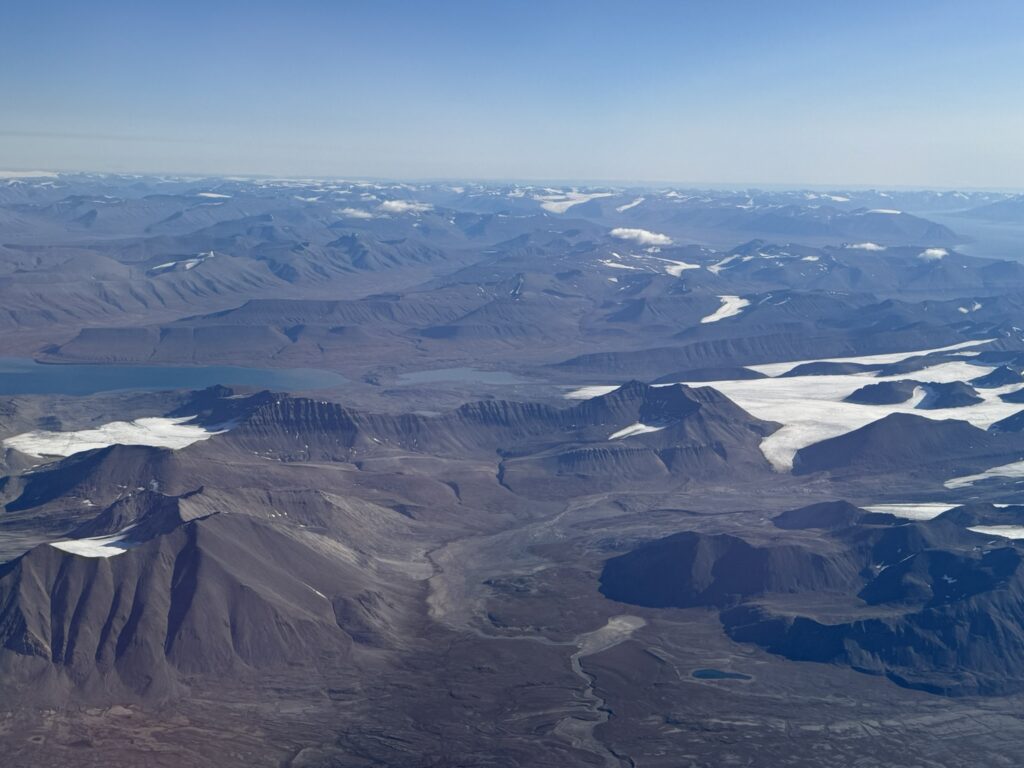
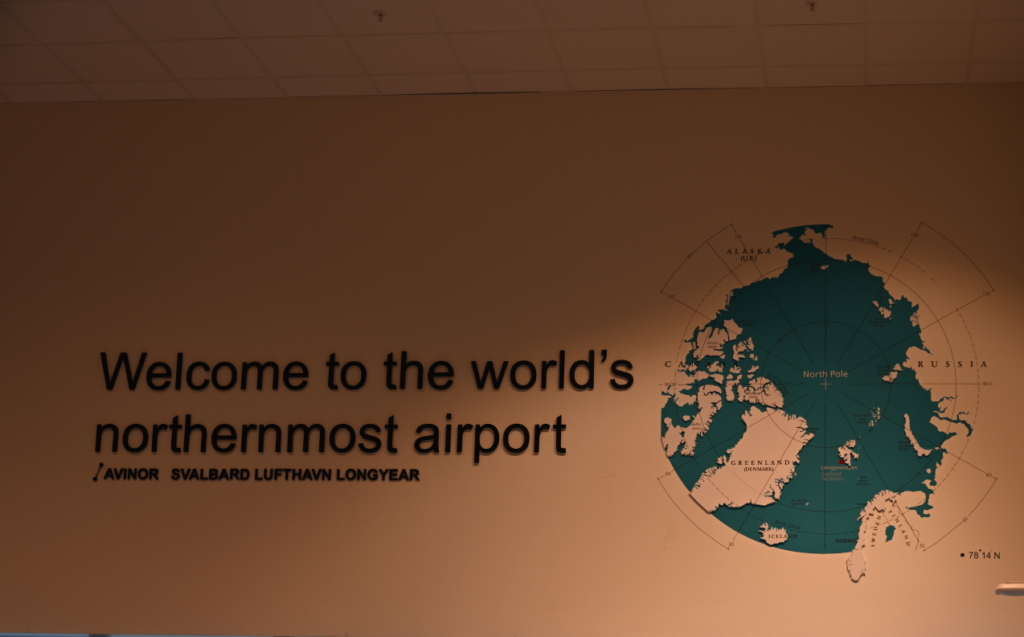
Home to the northernmost airport in the world:
Ponant has a solid system for moving bags – they have a moving truck pulled up next to the buses, and load all the checked and carry-on bags into the back of it. It sounds simple, but I still remember the end of the Pole-to-Pole cruise when Silversea’s partners in New York took upwards of ninety minutes to load everything into the underside of buses.
We then head to grab a spot on one of the buses. Bus One is the Francophone bus, and Bus Two is looking full so we head to Bus Three – except we’re told to turn back to Bus Two, instead. However, it turns out that there is a large tour group from Taiwan aboard this sailing and their guide had wanted to reserve the last bus solely for their group.
The guide did soon relent and let other members join, but it seemed rather cheeky under the circumstances. Hopefully this doesn’t foreshadow the rest of our time aboard with the tour group.
Still, we ended up on Bus Two – though we had to split up in order to get all of us aboard.
We get a glimpse of the Svalbard Global Seed Vault on the way out of town:
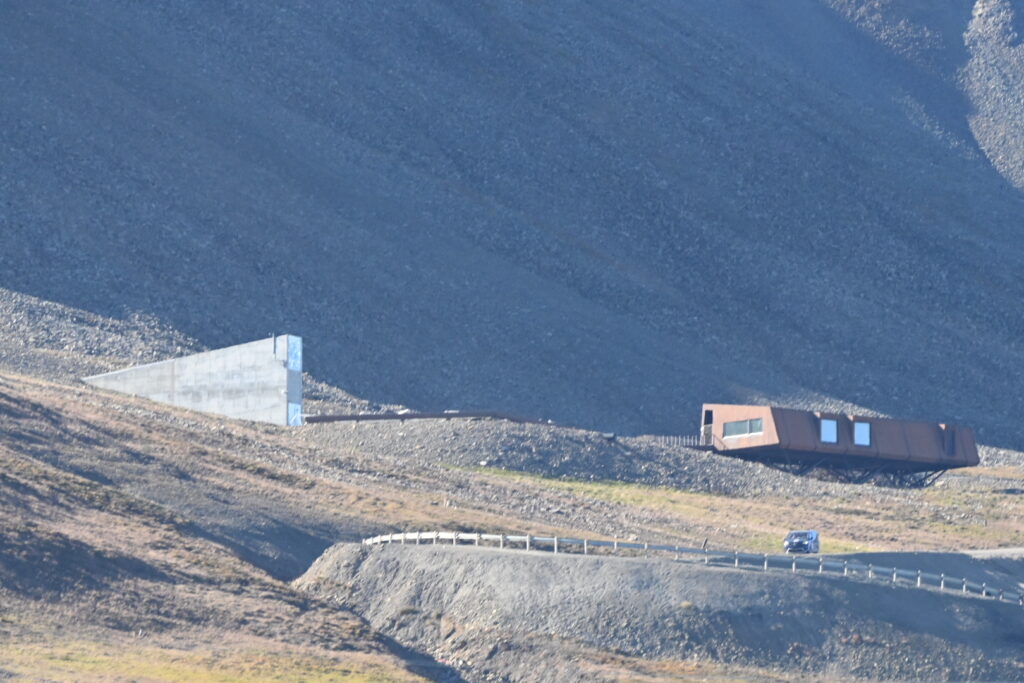
For those not aware, the Global Seed Vault has samples of most seed varieties in case of global apocalypse or other cataclysm
Or most of us do, at least. Our son unfortunately does not get to see as he’s at the very back, and he can’t see out to the right. He’s a good sport though, despite having mentioned wanting to see it while we’re here. (Though to be fair we only grab the smallest glimpse of concrete in the distance.)
Despite being more than 78 degrees north, Svalbard is uniquely protected by the gulf stream – similar norther destinations are completedly covered in ice. Our guide notes that we are now so far north that we would need to look south to see the northern lights.
Longyearbyen was predominantly a mining town for many years – and has a rich history, which we will get the chance to discover as part of today’s tours. However, in July 2025 mines were shut down as accessible deposits have run low and Norway has shifted more towards sustainable energy.
We weren’t really sure what Ponant would do with us during the gap between when we land and when we’re able to board – it’s before noon, and embarkation isn’t scheduled until after 4 pm – but we’re pleased to hear that they have lunch and a tour laid on, including time to explore town and a stop at the Svalbard Museum.
We then head to the Restaurant Huset, a former community meeting all that is now widely recognized as the northernmost fine dining restaurant in the world.
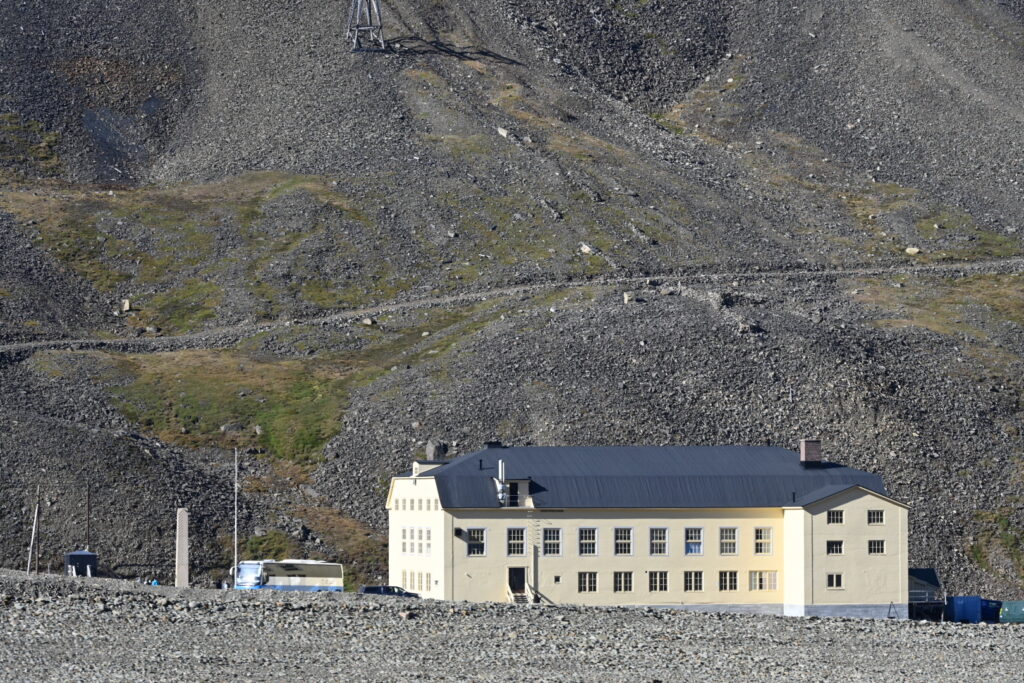
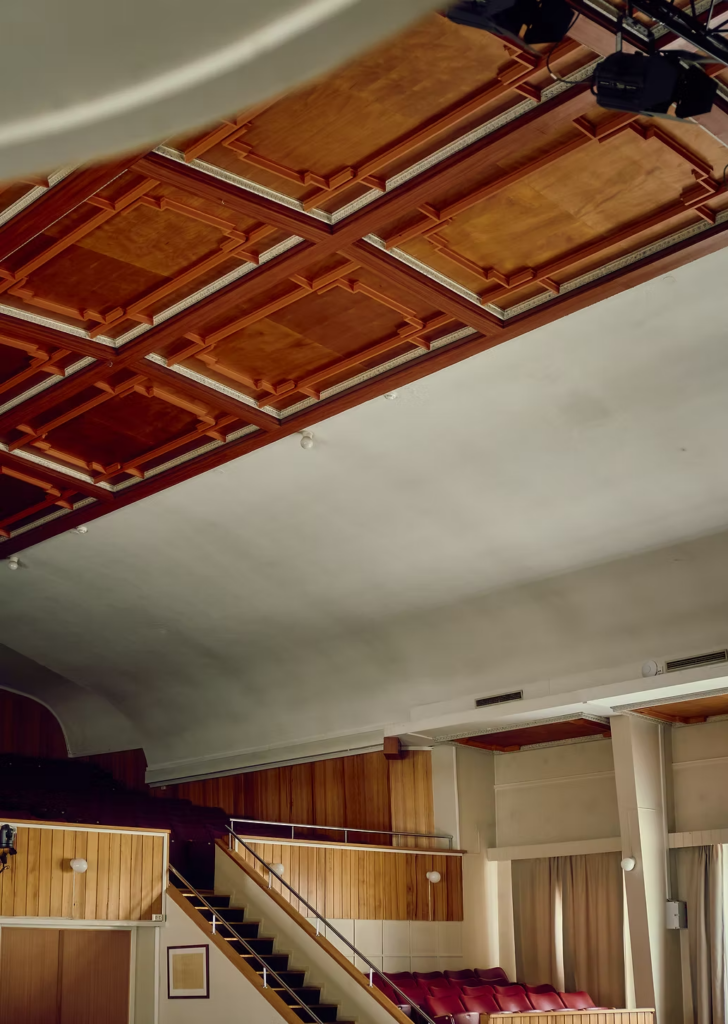
Photo Credit: Huset Restaurant Website
They lay out a delicious buffet for us, including a wide range of fish, meats, starches and vegetables:
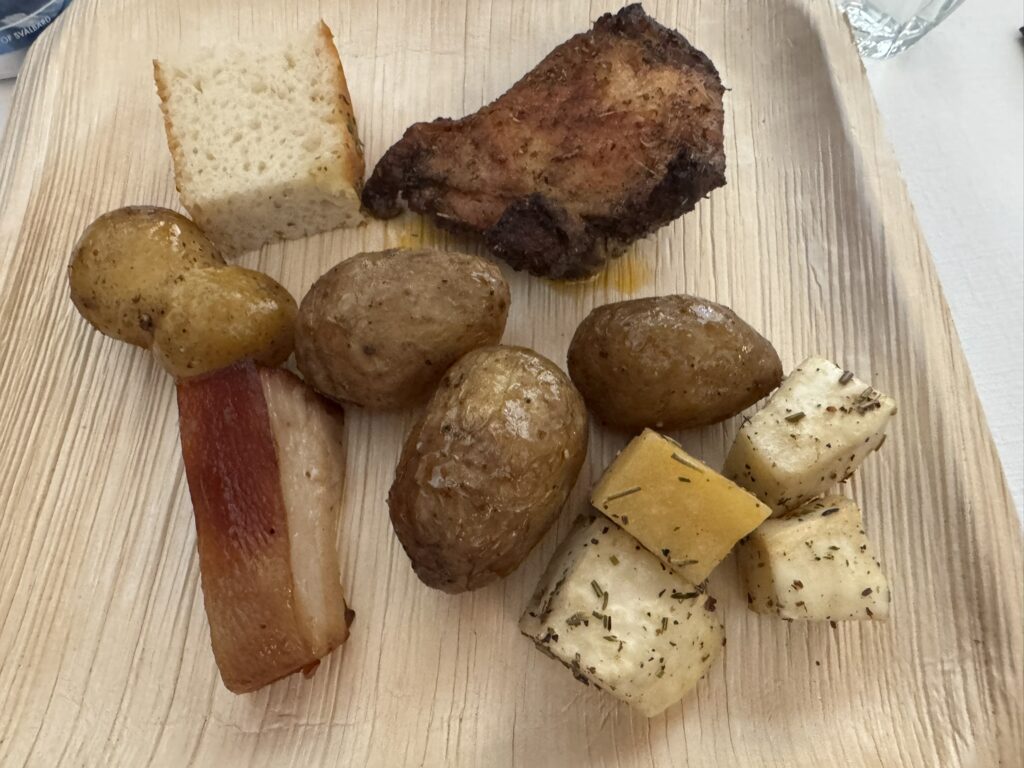
I particularly enjoy the roast chicken and the roast potatoes. The focaccia is pretty good, too.
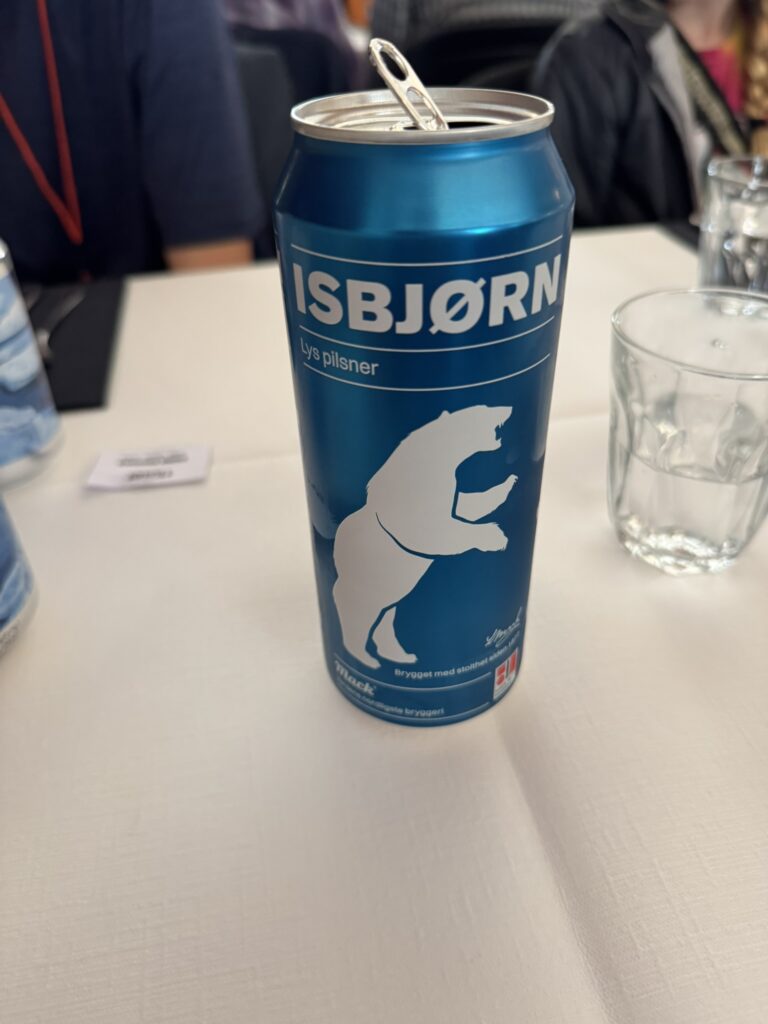
We’re also given a drink ticket. I use mine for a tasty pint of Isbjørn – which is actually brewed locally in Svalard:
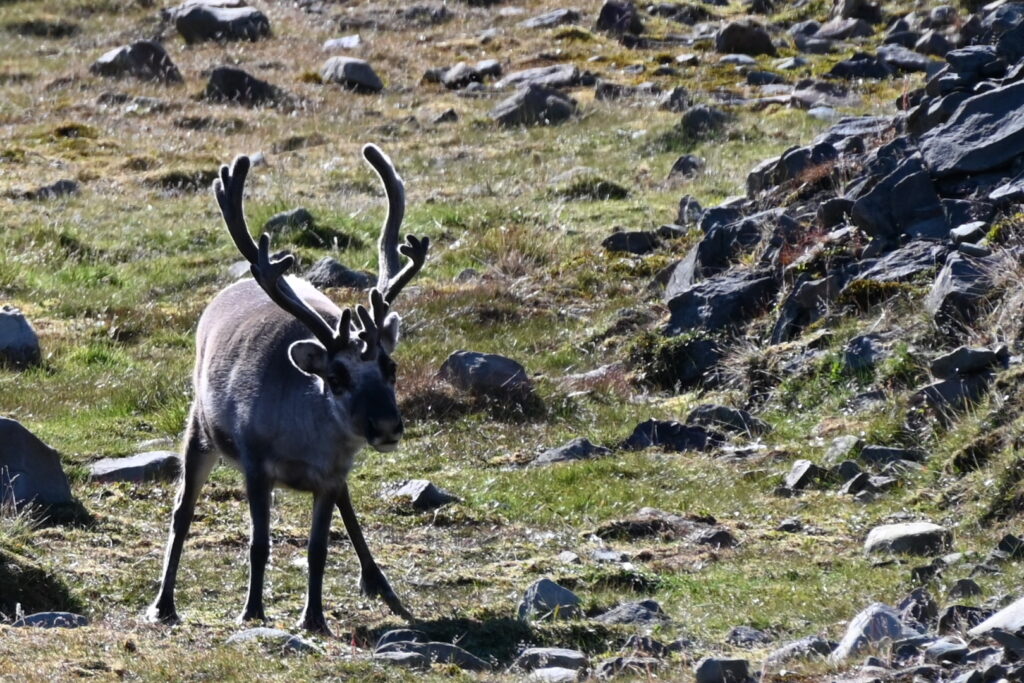
We spotted some reindeer during the drive, but I couldn’t get a decent photo. Thankfully, they’re still around after lunch:
Guests are reminded to be mindful of the polar bear signs.
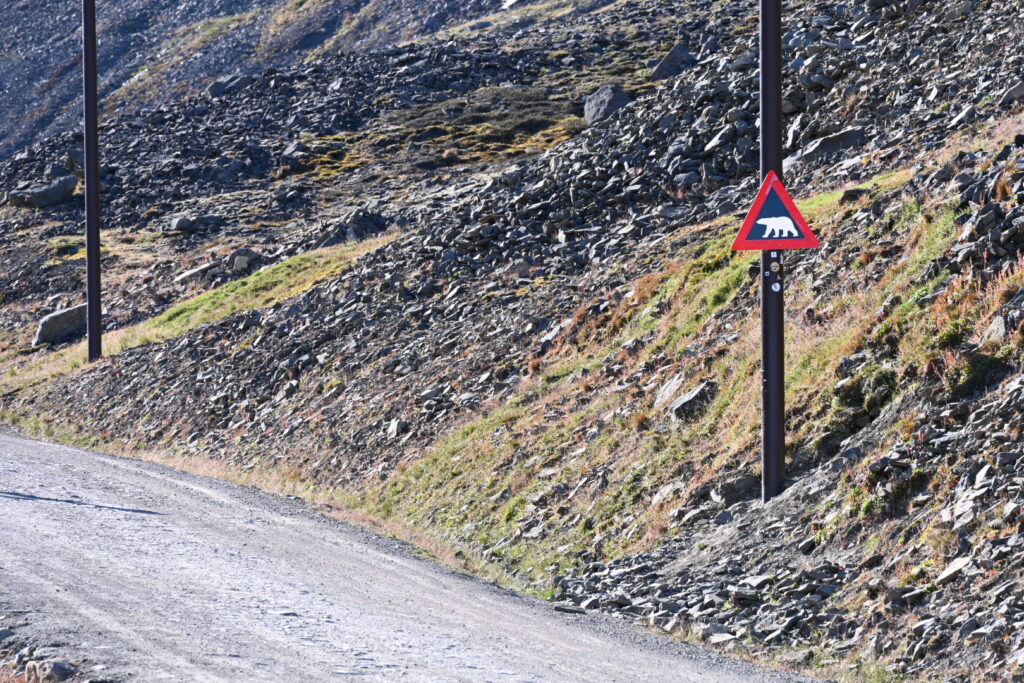
We’re not allowed past them “unaccompanied” – by which I mean unarmed.
Back aboard the bus, which takes us into Longyearbyen itself.
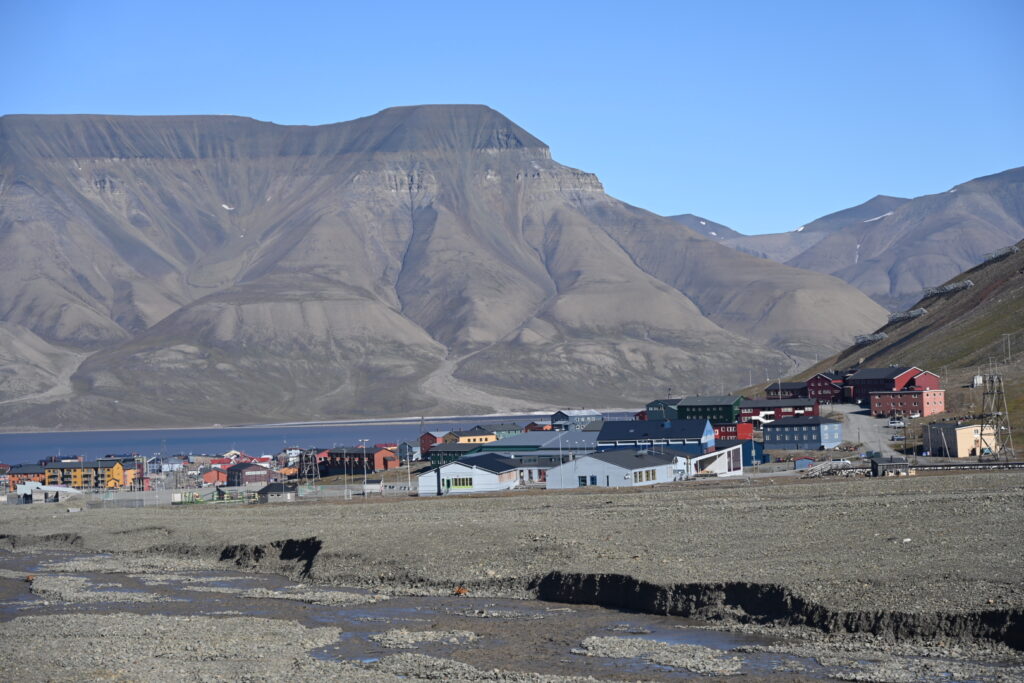
We have a few options here, including some souvenir shopping – and a trip to Cafe Huskies, which bills itself as the world’s northernmost cafe. (You may be noticing a pattern here.)
Needlesss to say, there wasn’t a long debate as to where to go next:
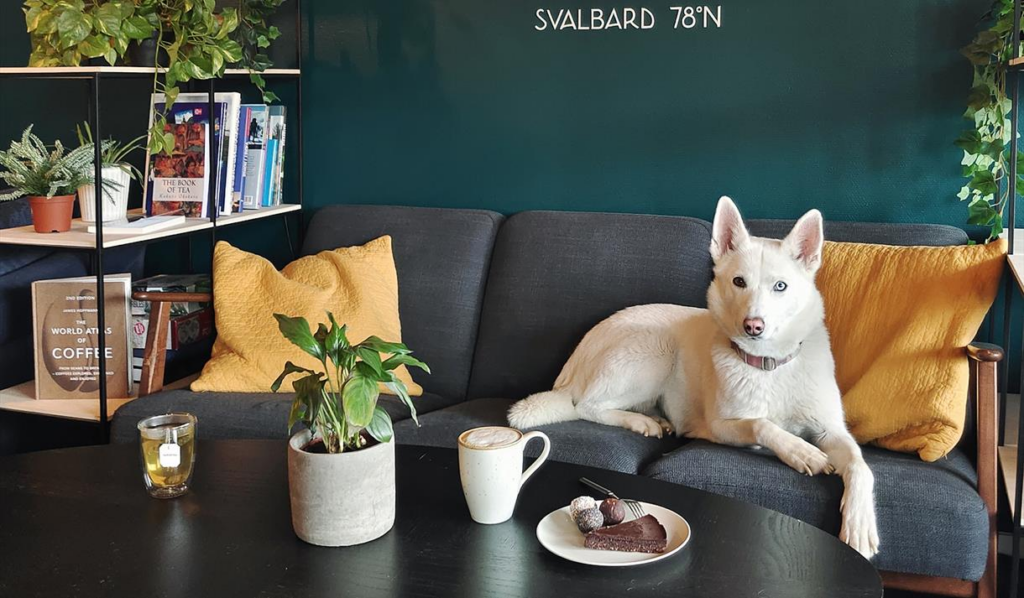
Photo Credit: Visit Svalbard
We were initially concerned that our daughter might not be old enough to visit, but thankfully the Cafe welcomes children as young as five years old. However, they must be accompanied by their parents at all times when interacting with the huskies. No issues on our end – glad they put safety first.
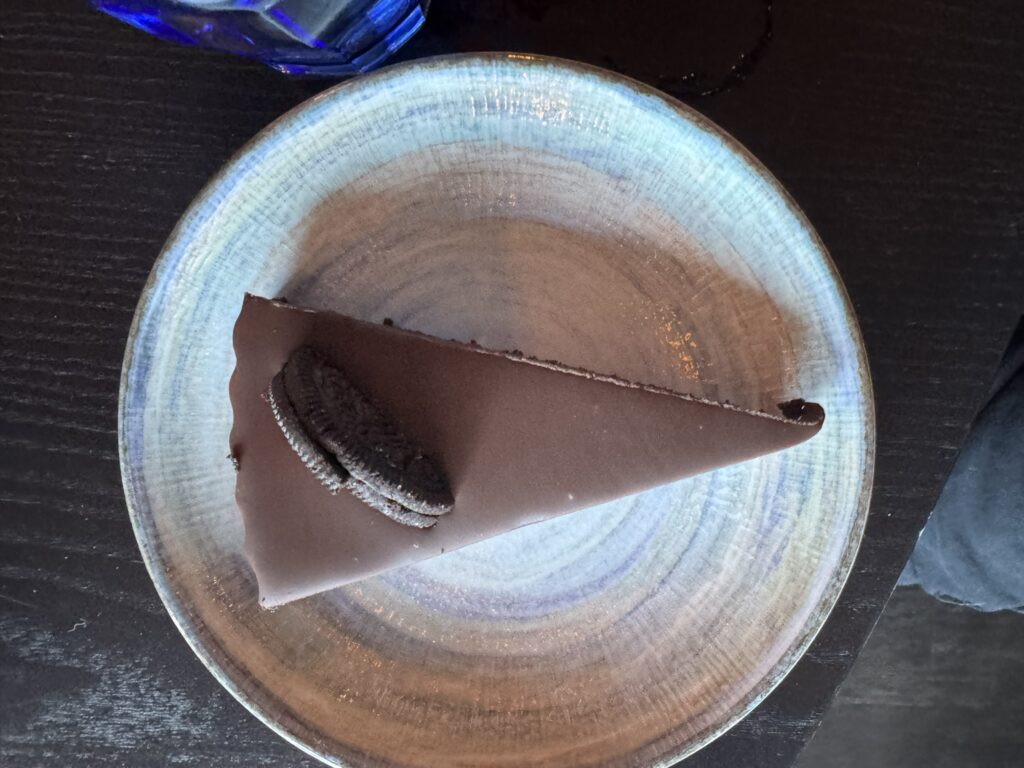
We take off our shoes before we enter – a tradition in Svalbard (and much of Canada, too) and choose our treats. The kids each get a piece of Oreo cake:
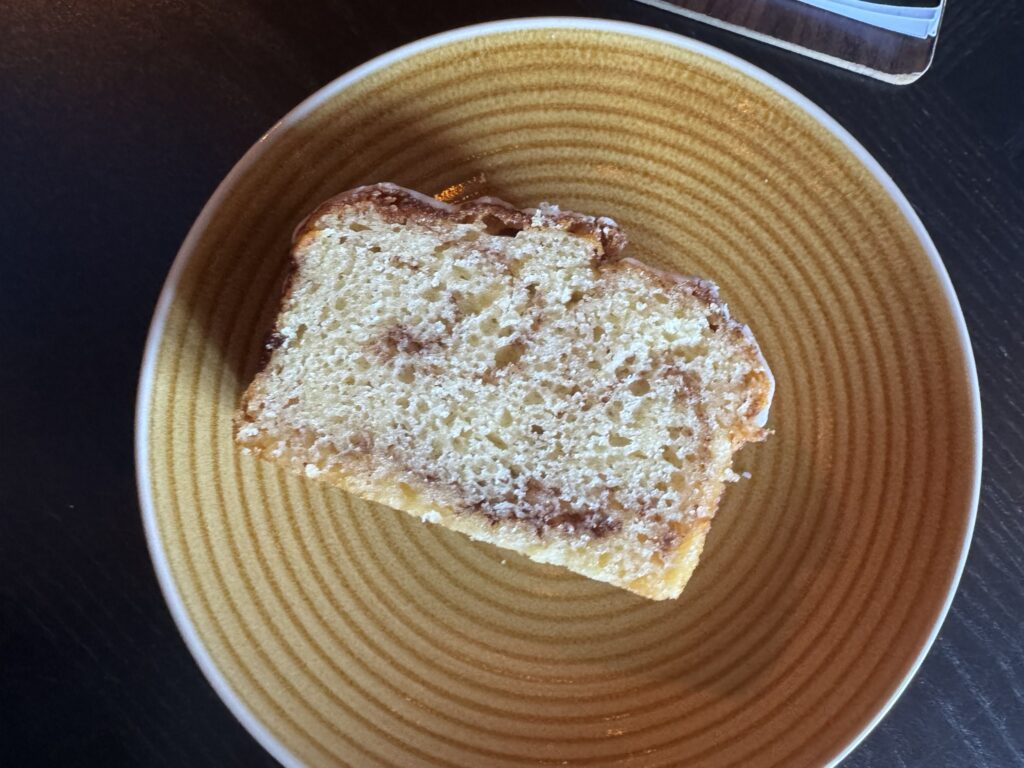
While my wife gets the cinnamon loaf:
I just have a coffee.
A retired sled dog – we believe this one is named Geiser – comes by. Our kids both go over to give it a pet:
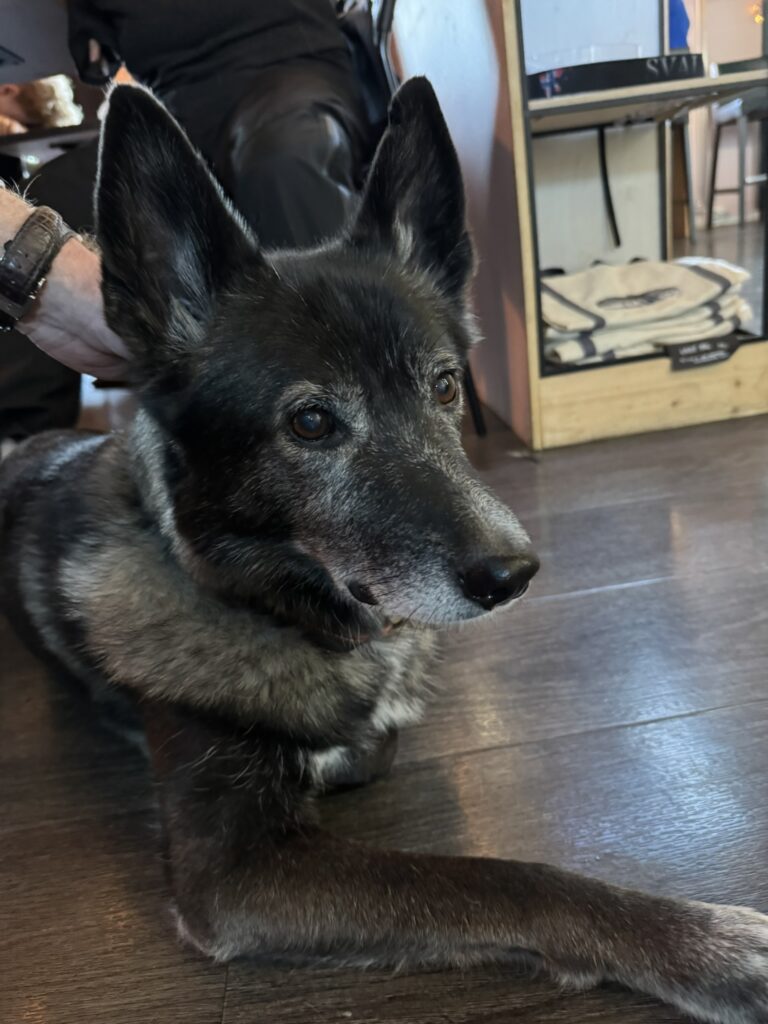
It’s very well behaved, and loves being scratched.
We’re then joined by a younger dog named Nanook – who is very friendly. Nanook is just two years old – practically a puppy.
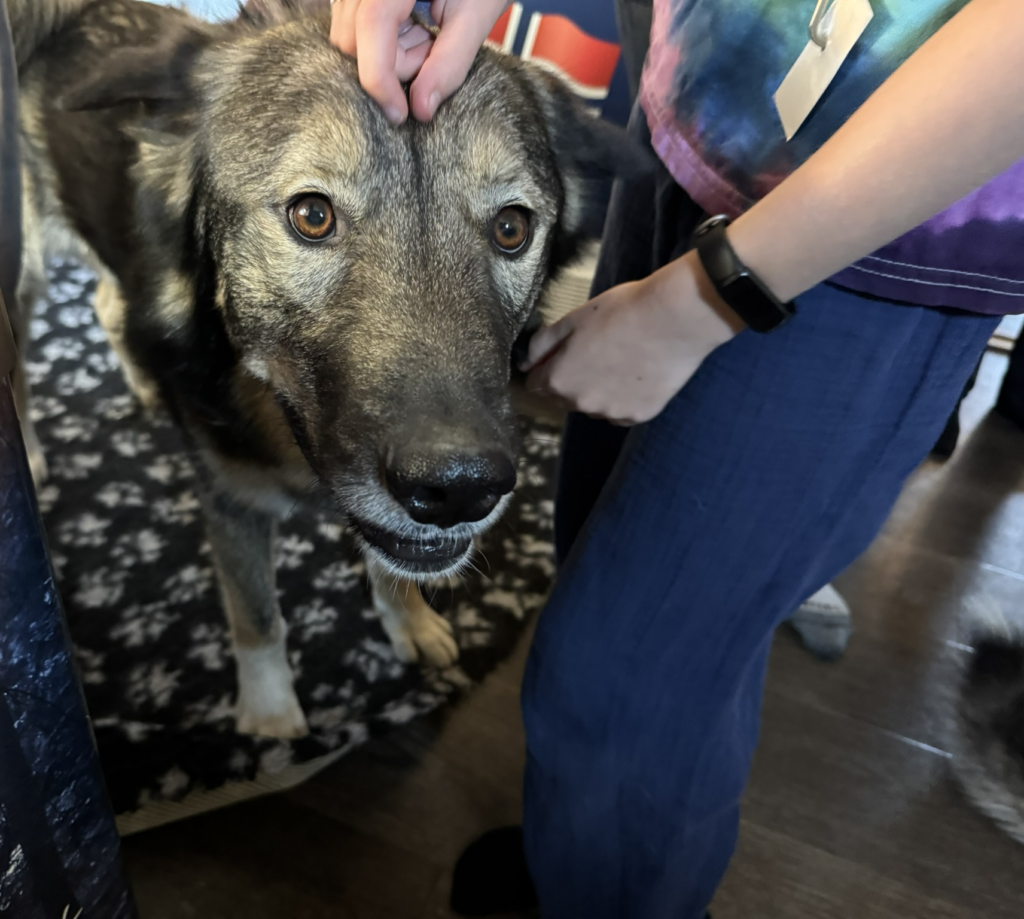
But there’s not much time before we leave on our tour again, so we soon have to head back to where the bus dropped us off.
I spare a moment of commiseration for the poor Svalbardposten:
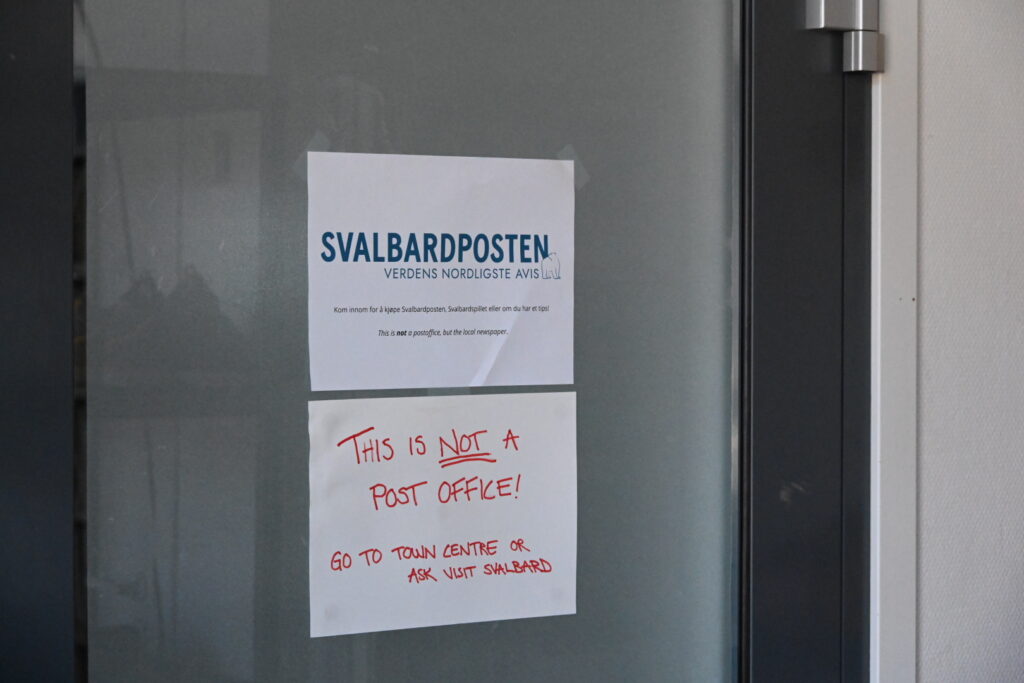
Which is a newspaper, not a post office! (I wonder how many times their work was interrupted before they finally decided to make a sign.)
We walk through town.
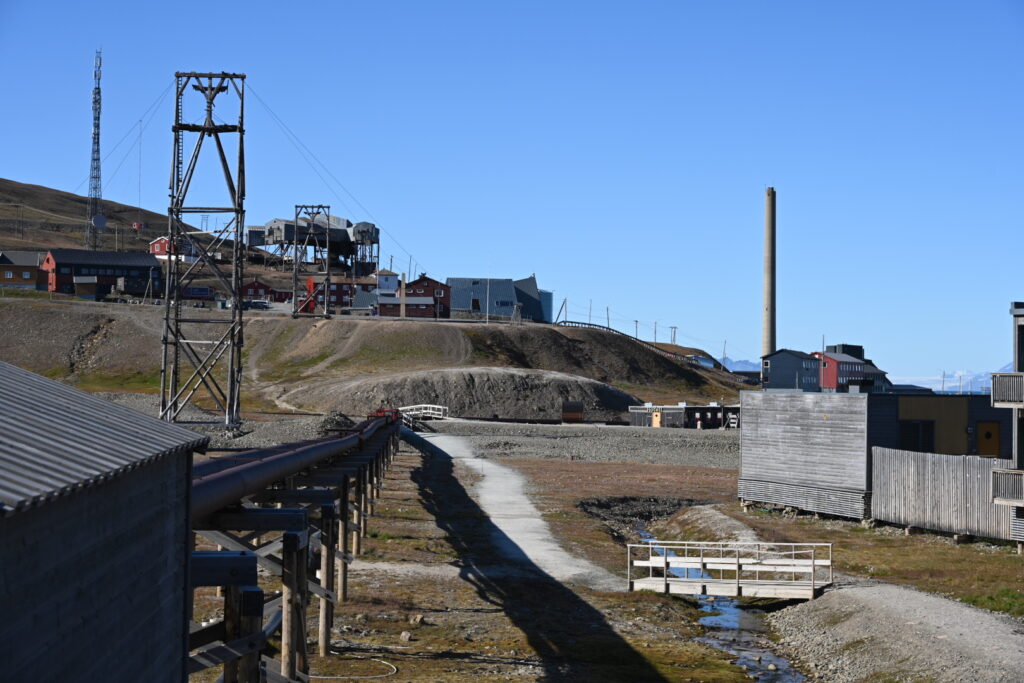
The pipes are above ground because the ground is frozen year round
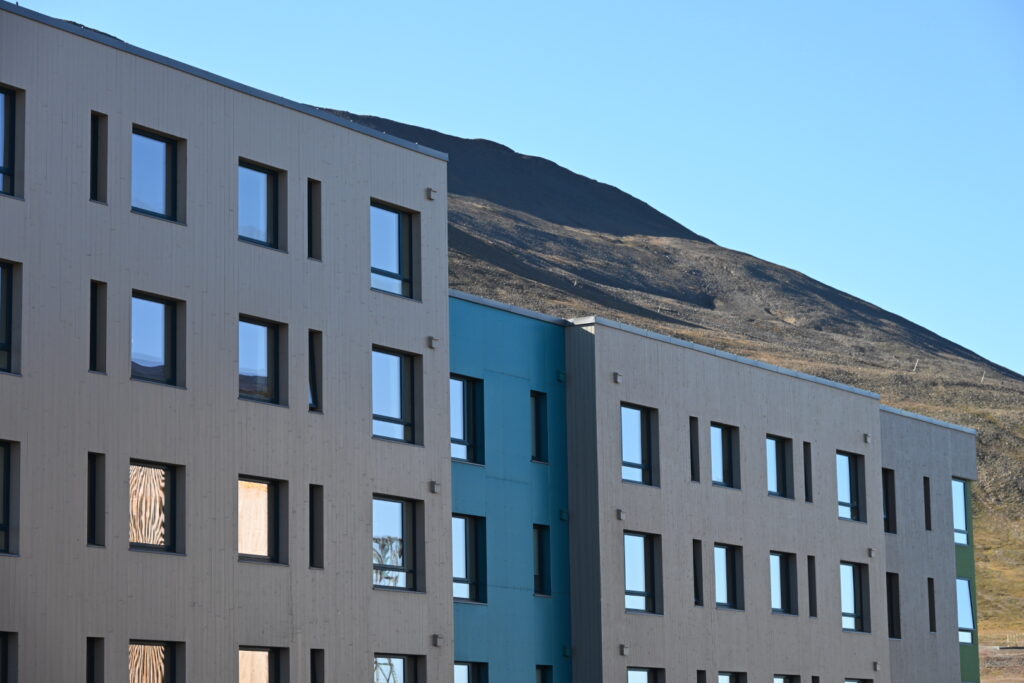
But they do have some nice Scandi-modern apartments:
We head to the local shopping complex, where we find a fabulous Arctic fox stuffy for our daughter. The stuffy is just USD$11, or roughly the same price as what we’d pay back home. Just out of curiosity, my wife checks the price of an orchid – and finds that it was less than USD$25 for an orchid. Surprisingly reasonable considering the affordability crisis is Canada’s North. I wonder how they manage that?
We then re-board the bus and head to the Svalbard museum:
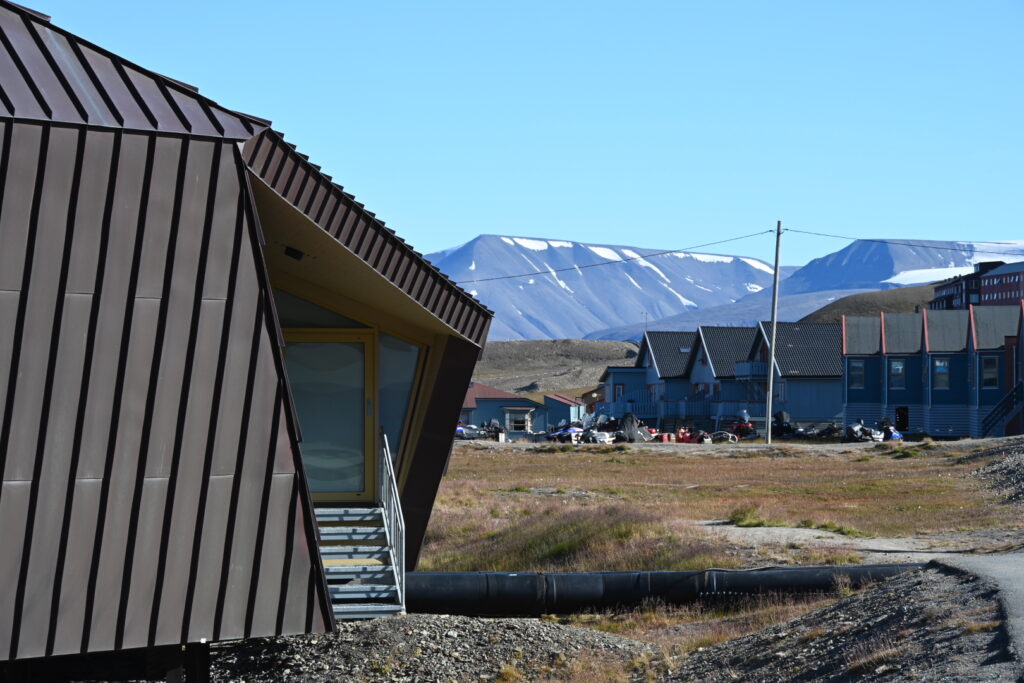
The guide is going to give a tour whilst inside, but we usually prefer to just explore on our own. Once more, shoes and backpacks must be stowed – or you can leave your backpack on the bus if you so prefer.
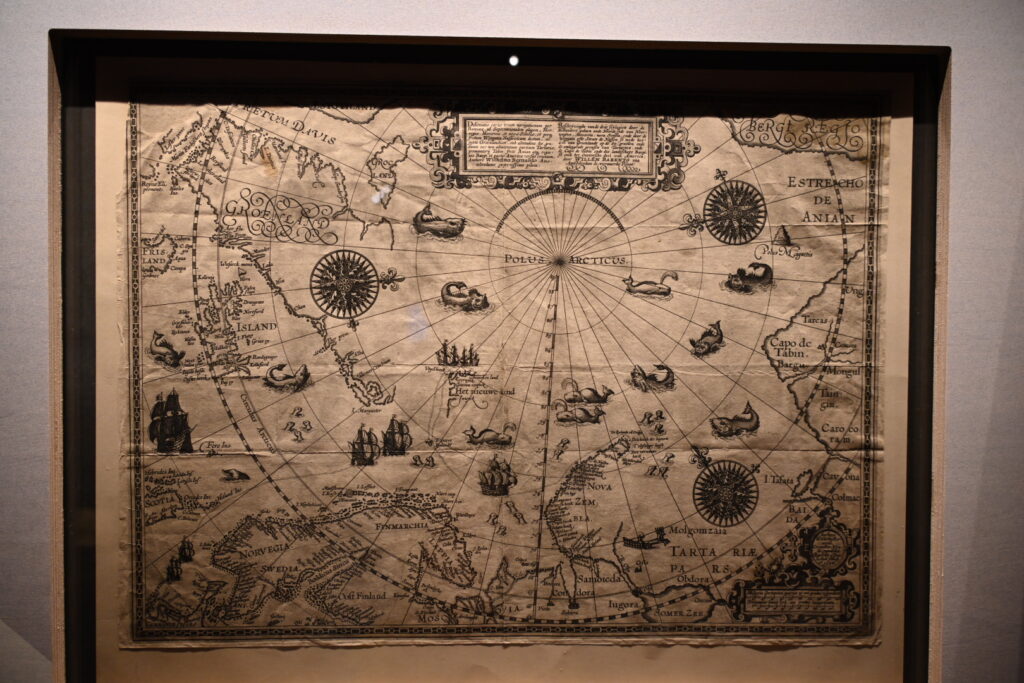
We start by learning about the discovery of Spitsburgen, which is Dutch for “pointy mountains.” (In the words of our guide, “The explorers were strong and brave, but not very creative.”)
But there’s much more to it than that. From the Svalbard Museum’s website:
“As is the case for many geographic discoveries, Svalbard was found purely by chance. The explorers actually had a completely different objective in mind. But it was no coincidence that it was Dutchmen discovered Svalbard, or that it happened at the end of the 16th century.
At that time, the tiny Dutch Republic was a major trading and seafaring nation. The country was experiencing rapid economic growth and was at the forefront of shipbuilding, seamanship, and geography. The Republic had active authorities and a rich merchant class. They could equip and send expeditions all around to world in search of new markets and opportunities. Spain and Portugal controlled the important southern sea routes to the Far East. For this reason, the Dutch were eager to find a northern sea route to the valuable Asian markets – the Northeast Passage.
In May 1596, two Dutch ships set sail from Amsterdam, northward bound. They were captained by Jan Cornelisz Rijp and Jacob van Heemskerck. Willem Barentsz served as navigator on Heemskerck’s ship, and was the de facto leader of the expedition.
This was the third straight year Barentsz had gone in search of the Northwest Passage. In both 1594 and 1595, the expeditions had been thwarted by ice in the Kara Sea. This time they attempted a route straight toward the North Pole. As early as 5 June they encountered drift ice that forced them to take a more easterly course. On 10 June, they discovered Bjørnøya, Bear Island. The Dutch name – Beeren Eiland – was given after a long battle with a polar bear off the coast of the island. The expedition continued northward until they encountered the ice edge, which they followed to the southeast. On 17 June, they sighted land again at about 80° North. They sailed south along the west coast and described the terrain as ‘nothing but mountains and sharp peaks, so we called it Spitsbergen’. This is the first known description of Spitsbergen.
Back at Bjørnøya, the two ships parted ways. Rijp and Barentsz disagreed about the onward course. Barentsz rounded the northern tip of Novaya Zemlya, but became trapped in the ice; it was now late August. The ship was broken apart by pack ice and the crew were force to evacuate to land. They built a house out of driftwood and ship timbers, in which the seventeen crew members would spend the winter. Most of them became ill and two died. Barentsz himself was sick and exhausted when they started the homeward journey in two open boats 13 June 1597. He died 20 June and was buried on Novaya Zemlya. Two others died shortly after.
With great effort, the twelve survivors made it to the Pechora coast. At the beginning of September, they reached Kola, where they were fortunate enough to meet three Dutch merchant ships, which took them home.
Barentsz’ crew arrived back in the Dutch Republic 19 October 1597. The Northeast Passage had not been found. They brought along Barentsz’ maps of their discoveries in 1596. The dramatic events of the previous winter and the journey home were a sensation in their own right. Never before had Europeans survived a winter at latitudes as high as 76°N.
Almost three hundred years later, in 1871, the Norwegian Arctic skipper Elling Carlsen discovered the site where Barentsz and his crew had spent the winter. Many artifacts from the expedition lay well preserved under layers of ice.”
The events of the Barentsz shipwreck are described in the book Icebound: Shipwrecked at the end of the World by Andrea Pitzer – which I have not read, but which I would love to tackle sometime this trip. Assuming I can keep up with the blog!
I wish I could do credit to the rest of the Svalbard Museum, but I would just end up copying and pasting most of their excellent website into this blog. So seriously, just go and visit the website – Svalbard Museum.
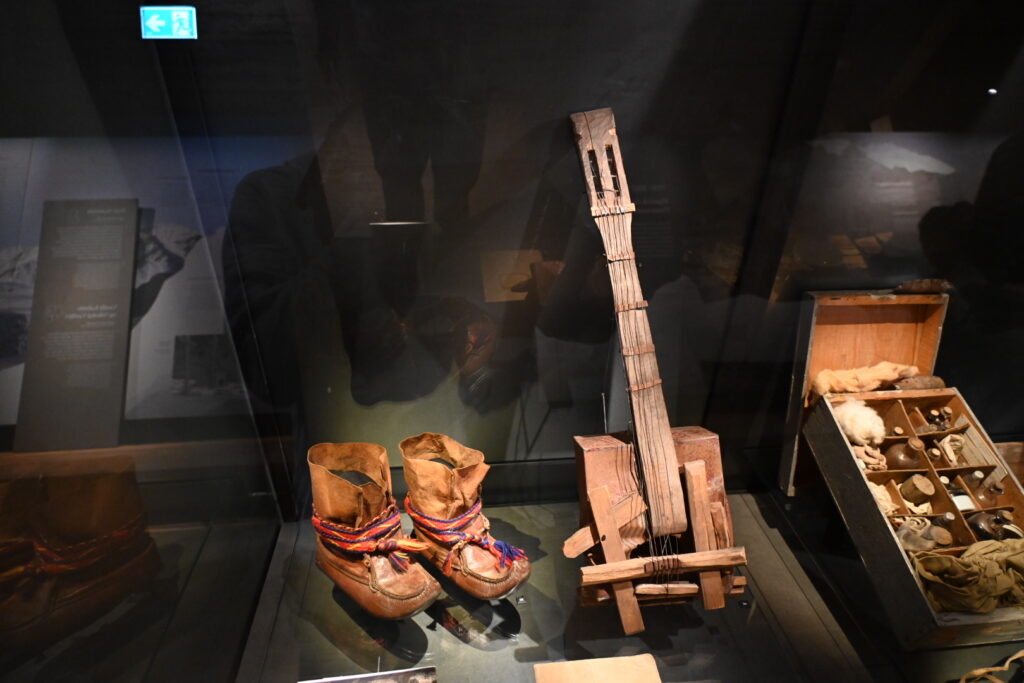
Some artifacts of early life in Svalbard
I will mention some of the facts that really stood out to me, however:
– There was a huge array of wildlife in Svalbard, but the exploitation of these creatures eventually drove many close to extinction. Polar bears were prized as one of the most dangerous types of ‘big game’ trophies, while whaling and hunting of seals and walruses had similar consequences.
– Svalbard became a kind of government-free zone (or a Terra Nullius to use the scientific term for it), with a might-makes-right approach. Claims were staked with makeshifts signs. Eventually, there became a need for government regulation. Norway took on this role with 4 principles – Svalbard is governed by Norway, but all citizens have equal access to Svalbard; all taxes collected in Svalbard must be spent to benefit Svalbard; no fortifications or naval bases can be established; and Norway is responsible for Svalbard’s environmental protection.
– Practically speaking, Norway subsidizes the cost of living in Svalbard, citing both security and climate concerns.
– The Soviet Union (and later Russia) tried to create a mining community in Svalbard – ostensibly as a legitimate business activity, though on several occasions they proposed joint rule with them and Norway.
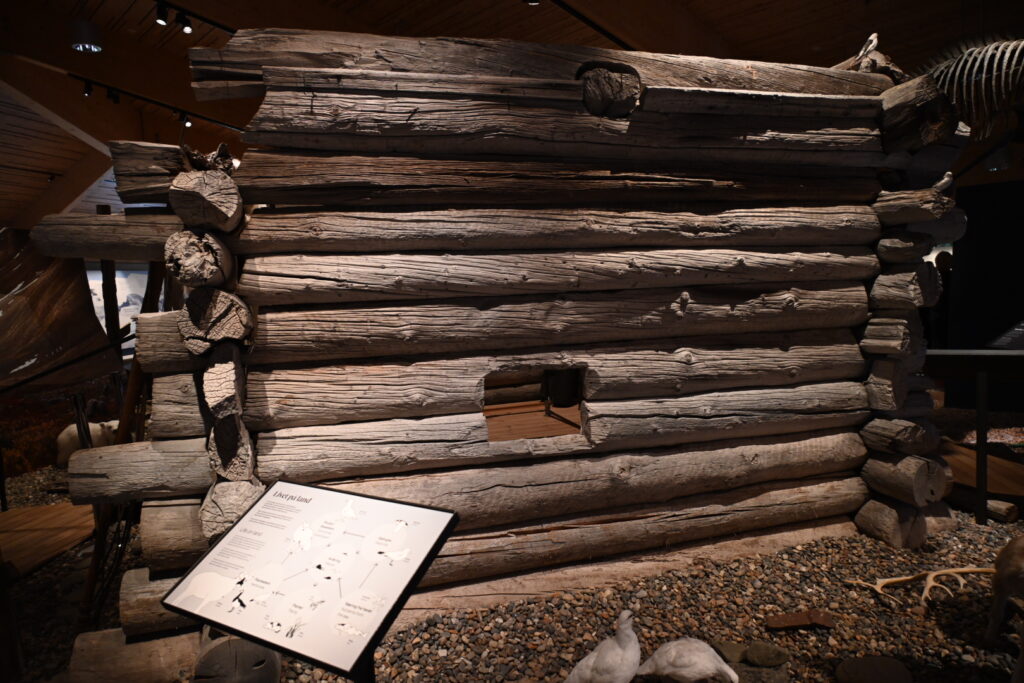
An early shelter for Svalbard’s inhabitants – rebuilt in the museum
The kids also really enjoyed the exhibits, which included climbing through a mock Svalbard coal mine and identifying which bone goes with which ancient predatory marine creature. My wife is particularly horrified by Predator X, an immense, big-headed marine reptile said to have a bite four times stronger than Tyrannosaurus rex – and which just so happens to look like an utterly massive crocodile.
One hour at the museum was not nearly long enough, but we’re eager to get back on the road – and to board Le Lyrial!
But first, a few words about the travel day cruise organized by Ponant – overall, we thought it was very well organized and included a good mix of guided tour and free time. With Ponant needing to bring up the charter flight early so it’s ready for the disembarking guests, there’s just no way to get away from a long stopover.
My only comment is that it would have been nice if they had included some croissants or muffins as part of the courtesy desk in the airport. But that’s a pretty minor nitpick in the grand scheme of it all.
Back to boarding – we go through the usual process of showing our passports, presenting our health questionnaire, and then handing over a credit card to cover all on-board charges. No, we did not immediately have a glass of champagne pressed into our hands – though we did receive a wet towel. Champagne was available from the main lounge – which is perhaps easier, anyway.
Off to check out our rooms. I have yet to photograph our second room, but here’s our third-floor Deluxe Verandah:
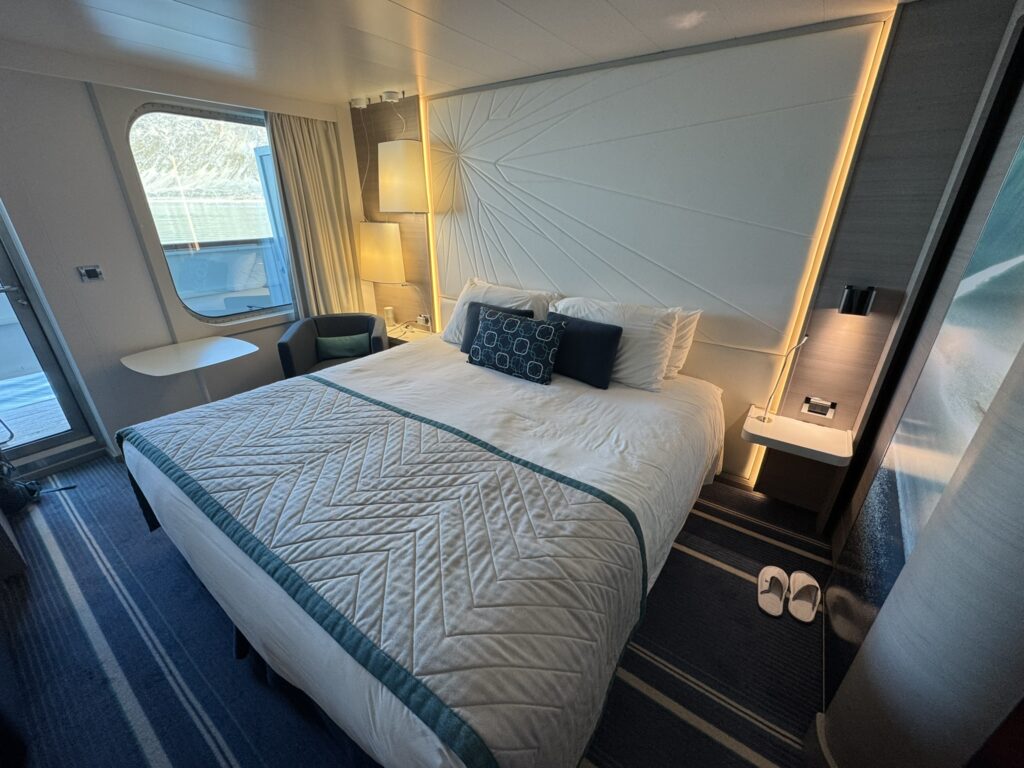
The second room being a nearby Superior Stateroom with a window. That room effectively converts the patio space into additional living space – which isn’t terrible, all considered.
Other first impressions? The ship is absolutely beautiful – light, and modern, and new. But it is considerably smaller than Silversea expedition ships – and nowhere do you notice this as much as when you’re in the staterooms.
Some elements on Lyrial are objectively better, however. I’ve long felt that the bathrooms on Silversea ships are poorly designed. The showers on the Silver Moon – for example – are quite small, all so that you can also enjoy a bathtub at sea, which we have never used except as a place where we might hang items to dry.
The lack of a real sitting area – and the inability to block the light even with two sets of blackout curtains – are the real trade-off here. This is particularly noticeable in Svalbard in August, when the sun effectively does not set.
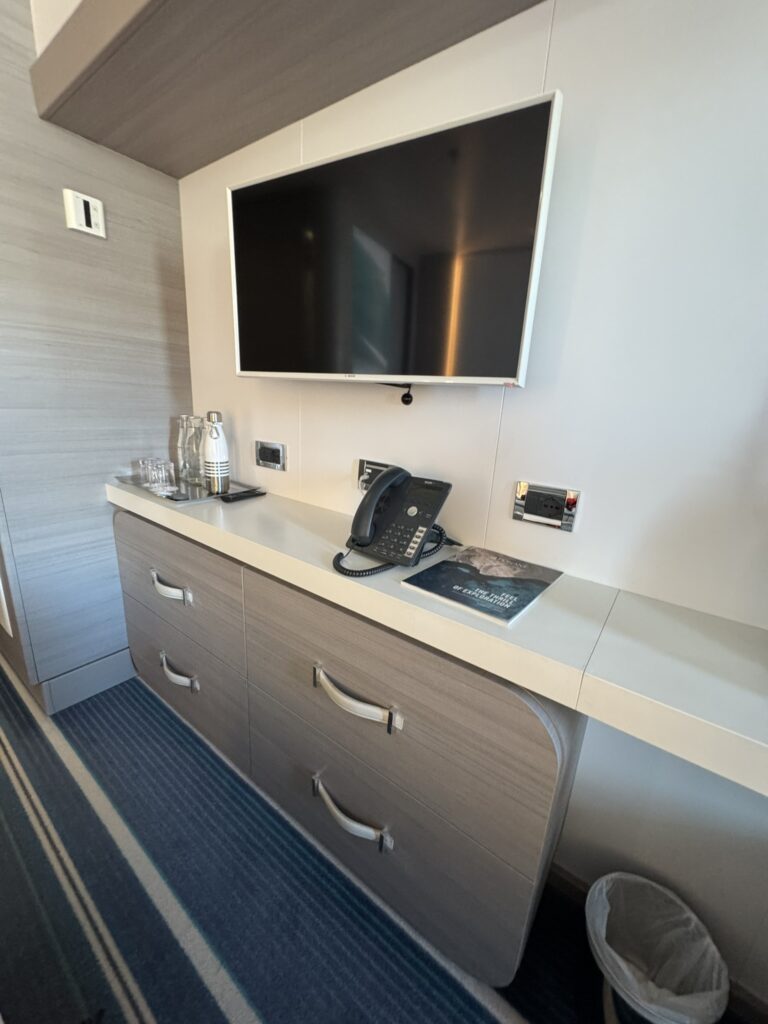
Other quirks and features? The storage is fairly reasonable, with a large closet and plenty of drawers.
It’s not a walk-in closet like you’ll find in Silversea but that is arguably a waste of space. However, there’s no drawers under the side tables nor are there any USB plugs, plus there’s only a single North American adaptor in the entire cabin – so hope you brought your European power adaptors. One side of the bed does not have any power outlets whatsoever, and it just so happens to be on my wife’s side. She is not impressed. There are ridiculous bedside reading lamps positioned inconvenitently right next to the bed where you might want to put a glass or water or a phone and hopefully on the next “refresh” these are removed and turned into usb charging ports (hint, hint).
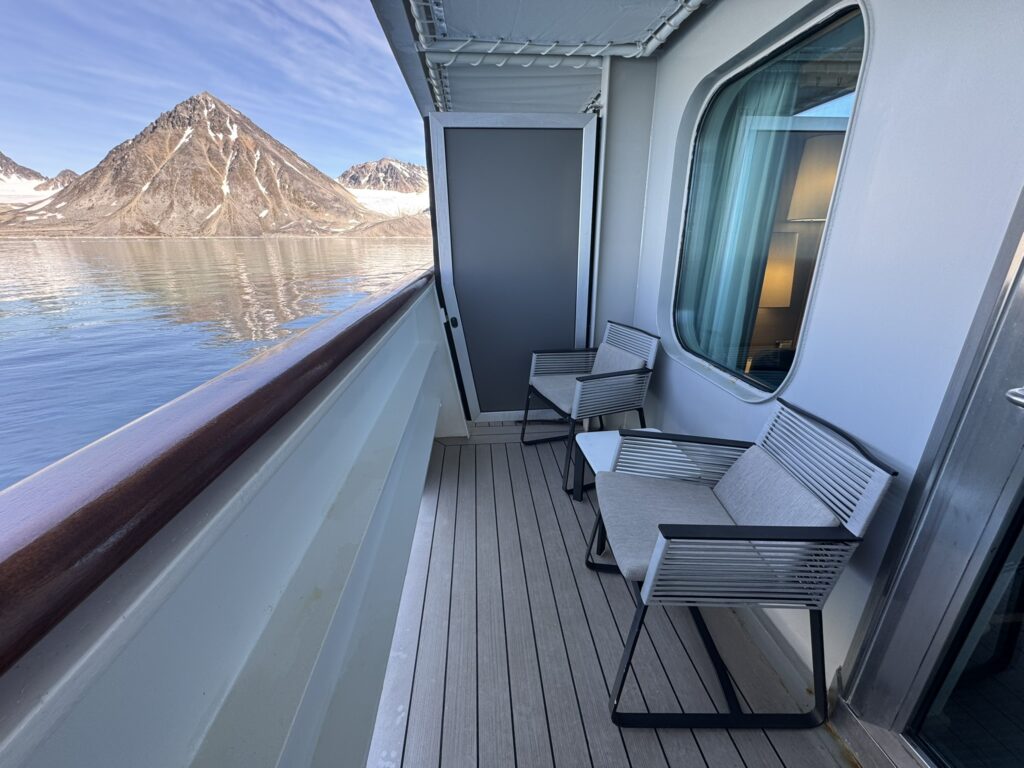
The balcony has high-quality, comfortable furniture though the railing itself is largely closed off – except for a convenient hole through which you can drop your phone into the ocean.
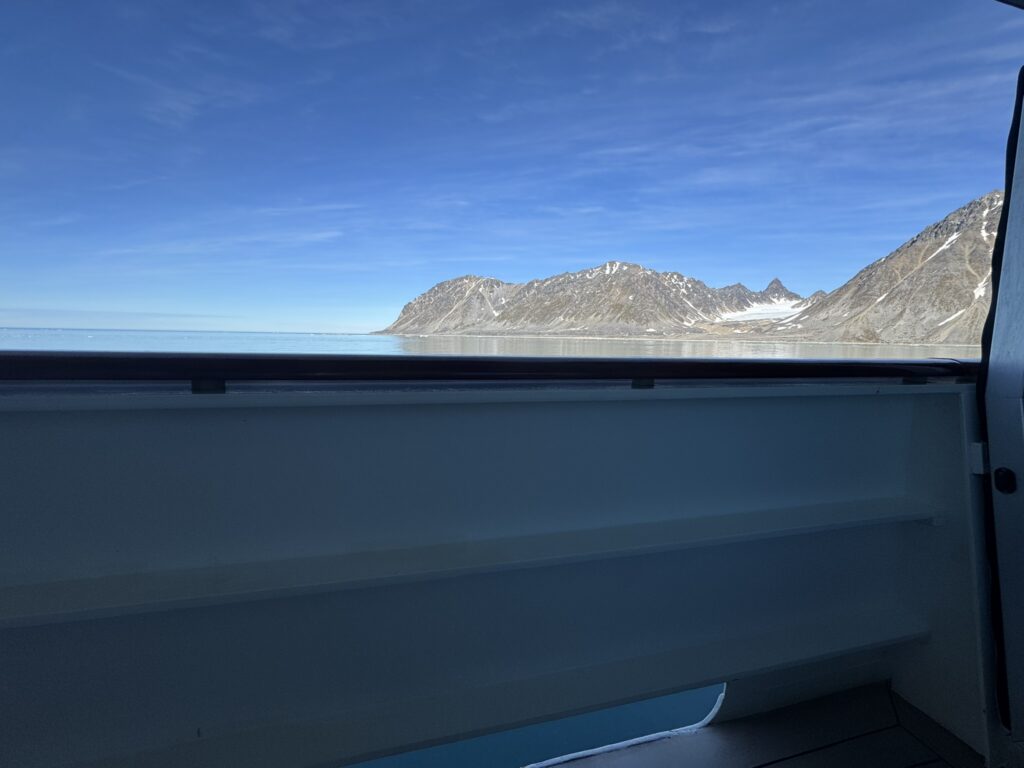
The view from the balcony – note the convenient phone-vent at the bottom
(It does mean that the balcony is a more sheltered spot when the ship is in motion, but you don’t get to see quite so much of the ocean – at least not down in these lower-level staterooms.)
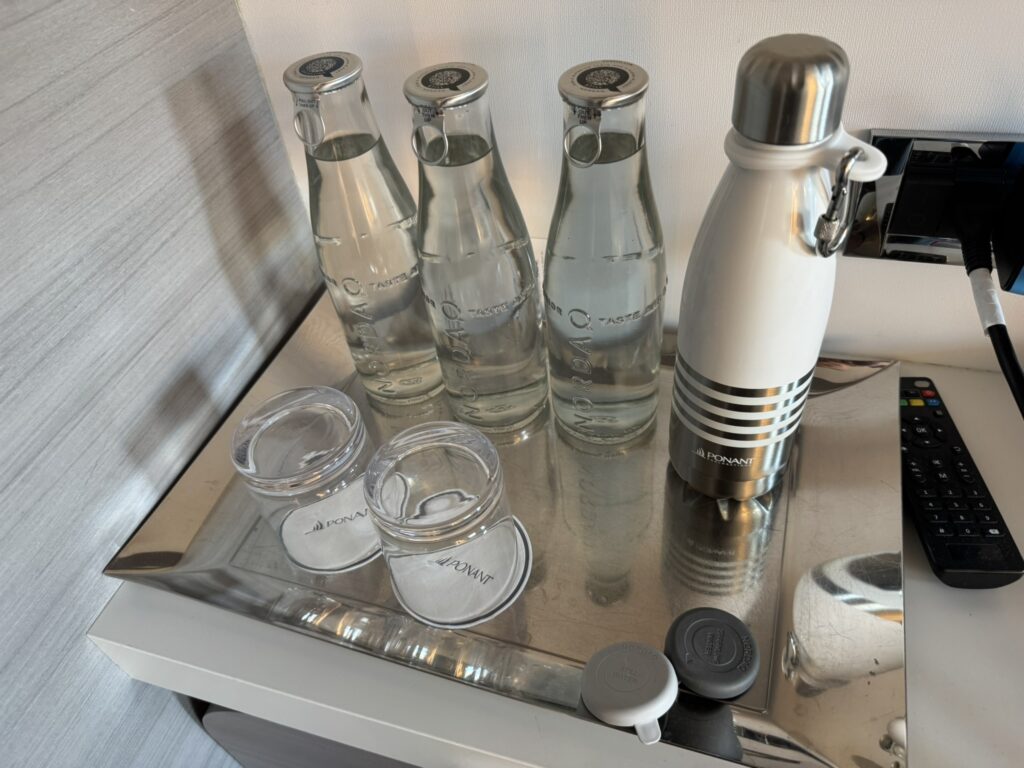
No bottle of champagne on ice, and the flowers are plastic – but you do get a fairly well-stocked mini-bar with various sodas and some airline-sized bottles of alcohol. They have a water station including still and sparkling water bottle, and a lovely free water bottle.
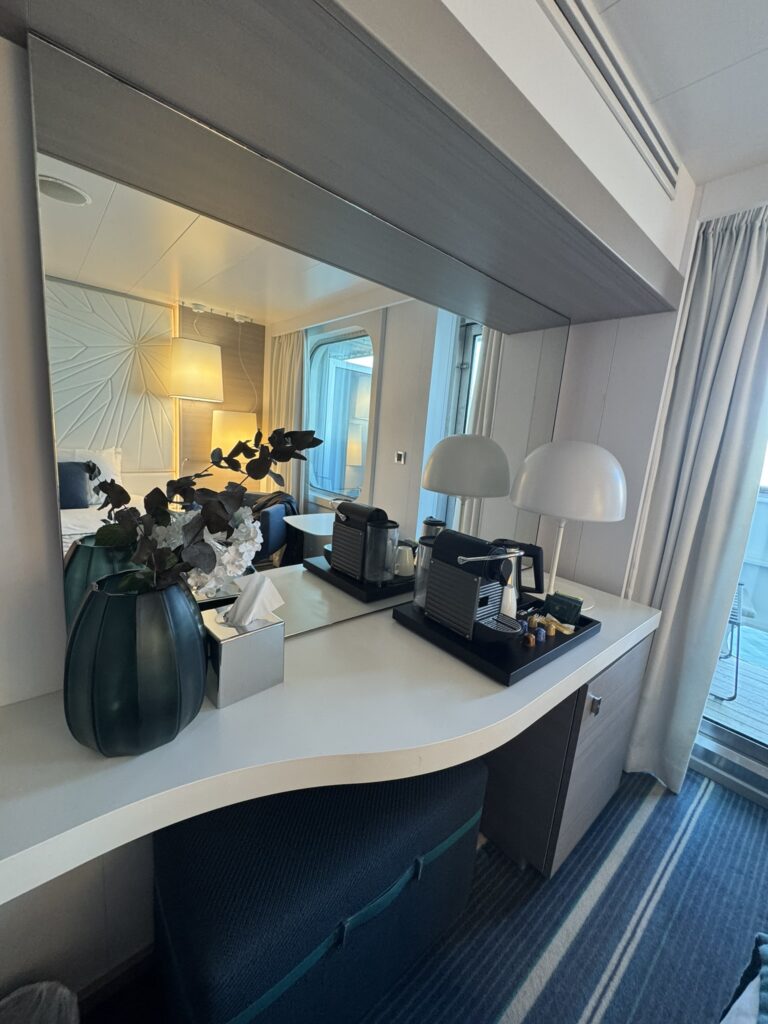
Tea and coffee station are in room as well.
Parkas are provided for you to keep, while boots are available to borrow.
We immediately meet our stateroom attendants – no butler – and then head up to the Captain’s Welcome, in which the various departments are introduced.
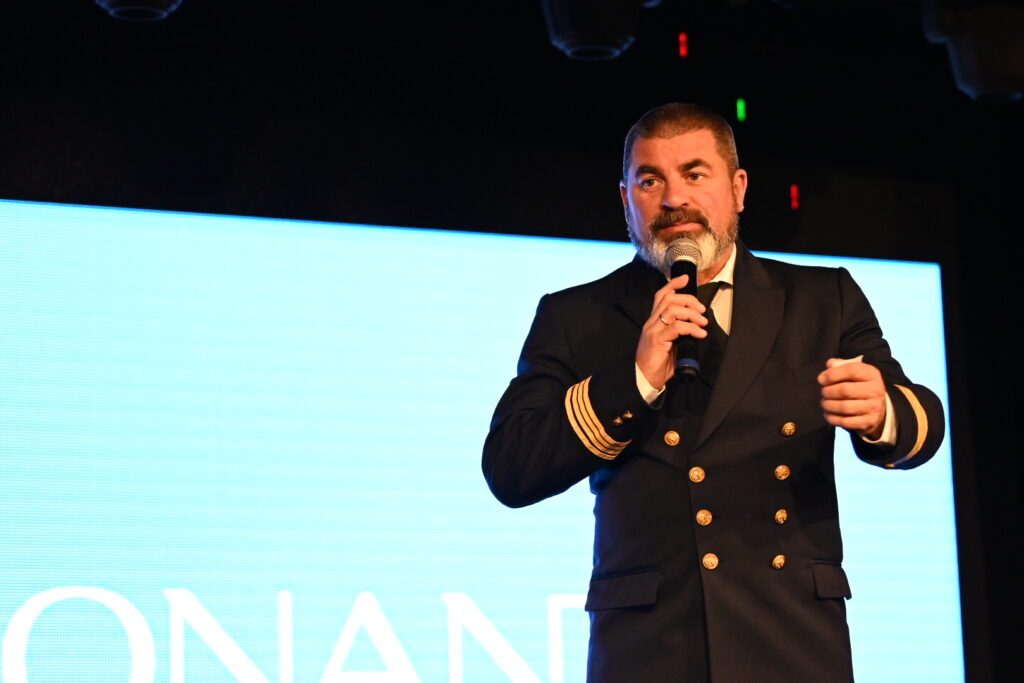
This is bogged down by the need to translate between French, English and Mandarin (presumably it’s Mandarin given we’ve been told it’s a Taiwanese tour group but please don’t hold us to it), but we get there in the end.
We do a brief headcount as we attempt to determine whether we are at fewer than 200 guests. The Theatre looks distressingly full (it seats 250). Svalbard significantly limits what areas you can visit if you have more than 200 passengers – and we confirmed in writing that we would be sub-200 when we booked almost 2 years ago. But what’s an e-mail from customer service worth? We might be about to find out.
Back to the rooms for a bit as we continue to hunt down various items of administrivia. Does everyone in our party have free laundry under our status-match from Silversea as confirmed through head office in advance? No, it’s only me – not even my wife, who has the words ‘Grand Admiral’ emblazened on her keycard. But that should be sorted tomorrow. Can we hand over our EKGs for the polar plunge? This is the first that new Expedition Leader David has heard of a polar plunge for this cruise (it’s been highlighted as part of the trip for 2 years and is one of the only things you can see in the app before boarding), but he will look into it and get back to us.
There’s other minutae – like our inability to log in to the Ponant app with any regularity – but those are the ones that stick out.
Up to Le Comete – the casual restaurant on Deck 6 – for dinner.
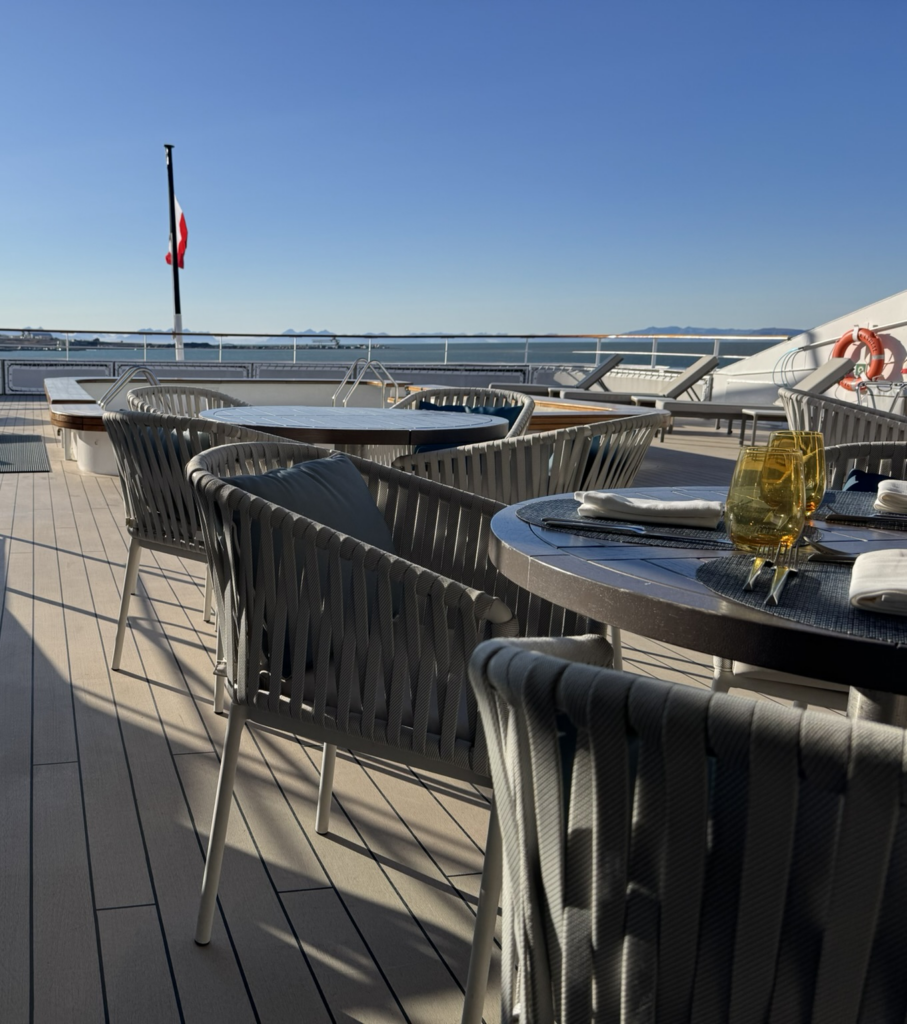
And, I will be honest, it doesn’t get off to a great start.
We try to order a steak off of the anytime menu for our daughter, but we are told that the ribeye on the menu is not available. That’s fine with us – we will have any kind of steak whatsoever. We are then informed that there is no steak on the ship at the moment – and potentially none for the entirety of the cruise. This is stunning to me, as I have never heard of a luxury cruise ship running out of steak – berries, perhaps, and myriad other items. But steak? They freeze them and stack ’em to the rafters.
We go back and forth with the server, then with the Maitre d’, and then with the head chef himself. Eventually we settle on a plain pasta this evening, with the likelihood that there will be some sort of steak available tomorrow. (So maybe there are some frozen options after all?) And we talk through the next few days, too. Apparently we should have mentioned that we wanted regularly available beef steaks at least 72 hours before boarding but when there’s supposed to be a beef steak of some description available every day on the anytime menu why would you do so?
So – yes, this went a bit off the rails, but we are very pleased that the head chef came out to sort it with us, and we feel confident that we’ll be able to work something out. (But also – there should be steak at least a few times this cruise.)
And how did the rest of meal go? It started off a bit wobbly – the pork loin was dry, the roast potatoes lacked any crunch to them – but we got there in the end.
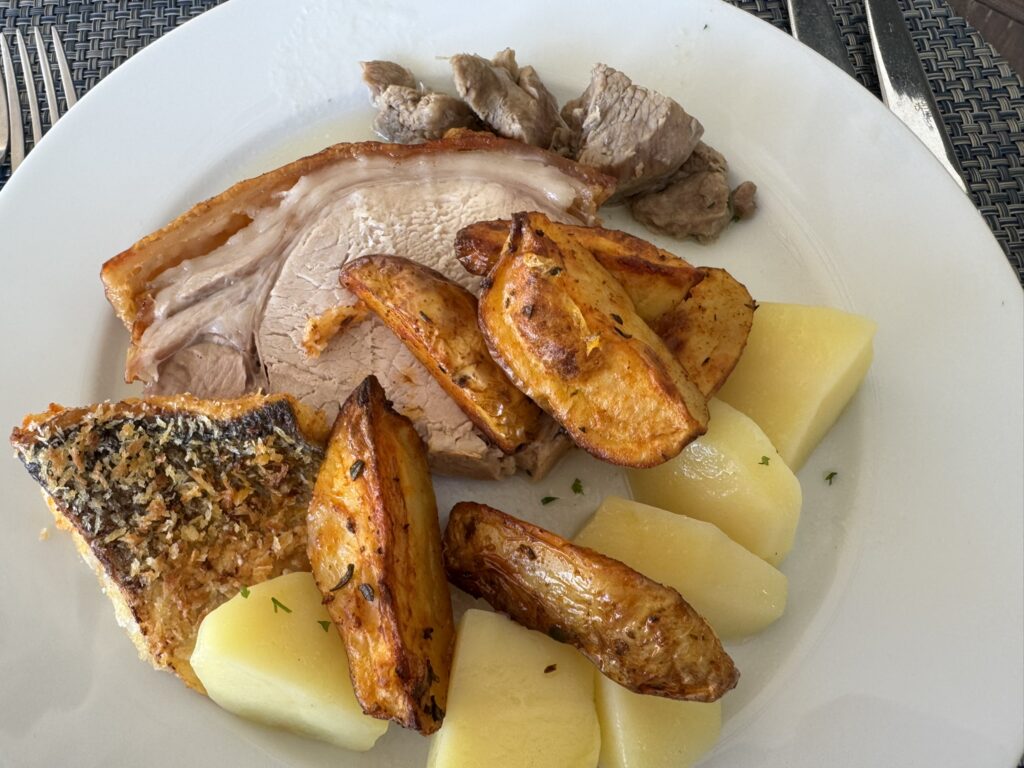
The fish in particular was excellent, as was the bread – a major sore spot with Silversea – and our son really enjoyed his chicken breast. Desserts and cheeses were also great.
So, we’ll chock this up to first day transition challenges. Every cruise line has strengths and weaknesses, and over time you figure out what to seek out and what to avoid.
Up to the 5th floor for parka and boot exchange. The boots fit much larger than we expected – and I didn’t receive a parka at all for some reason – but the line isn’t long and they don’t run out of our sizing.
Rooms are now cleaned and ready for us to go to bed – and we are absolutely ready for bed – but we still don’t know when briefings start tomorrow. Another whip-round of Reception and the Expedition Desk. David says he’d like to get us out the door early tomorrow so there’s a briefing at 8:30 am. And apparently I get free laundry but no one else does – but they will confirm that tomorrow. Hmm.
Still, we send out the most critical items to be washed and get ready to settle in with a bottle of wine to enjoy on the verandah – except there’s no bottles of wine that can be taken back to our room, even if we buy them off the premium menu. Instead we settle for a glass of champagne and a caparainha that could take the paint off the ship.
And we have a long, lovely sail-away:
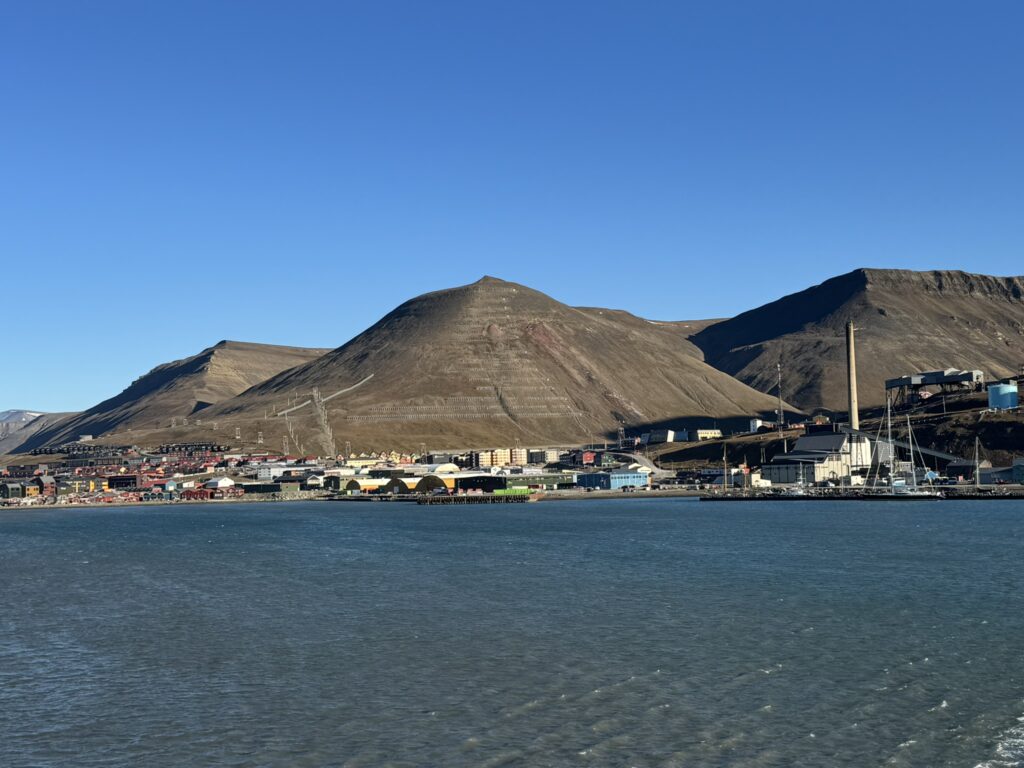
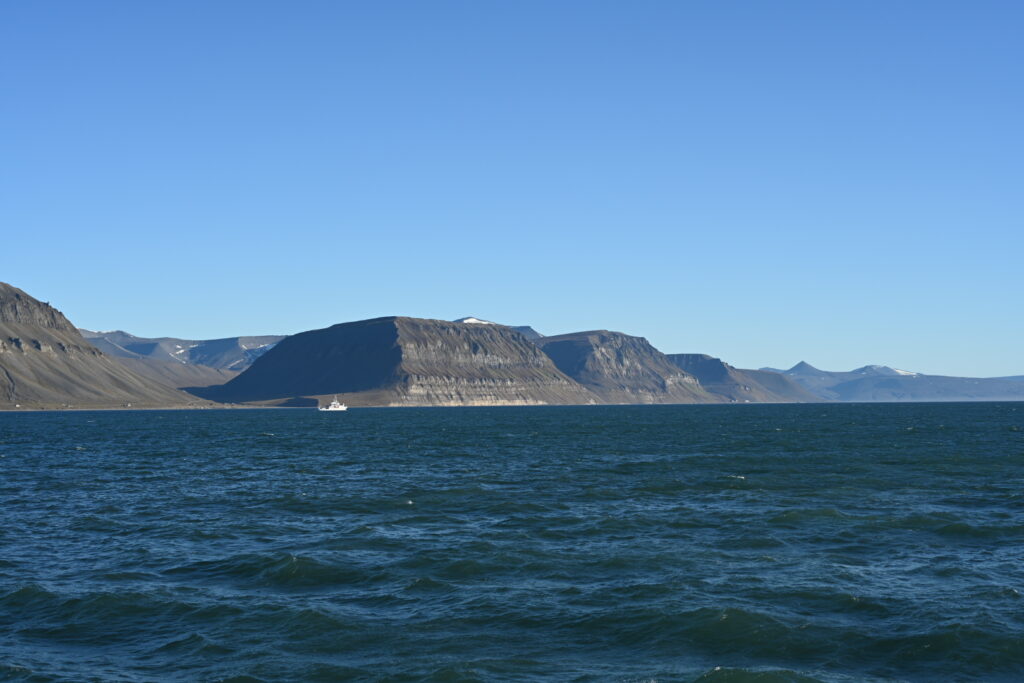
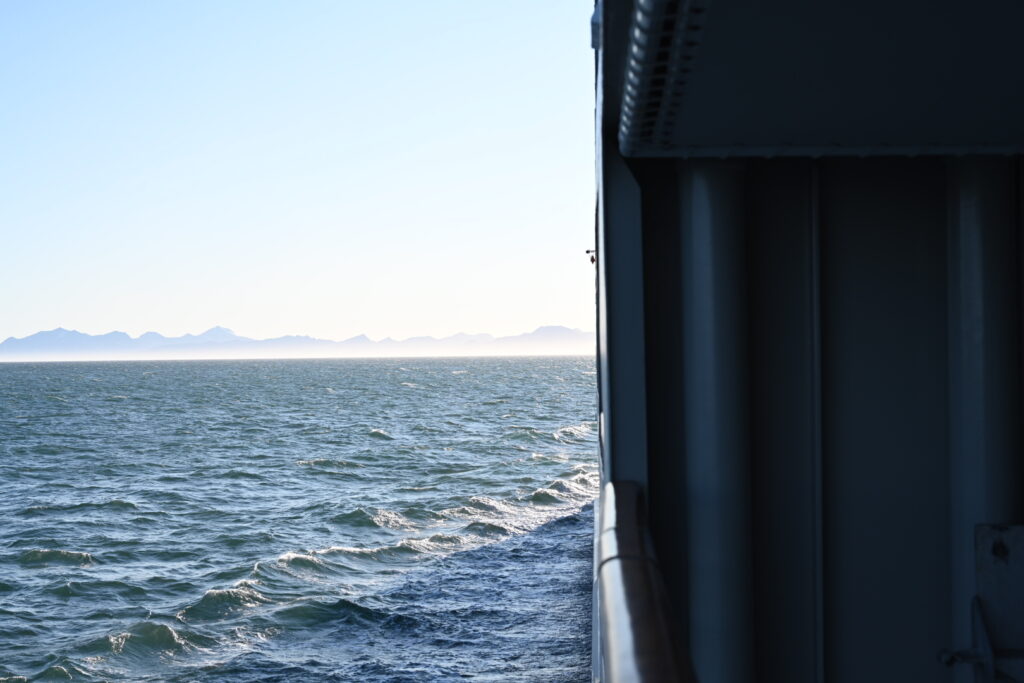
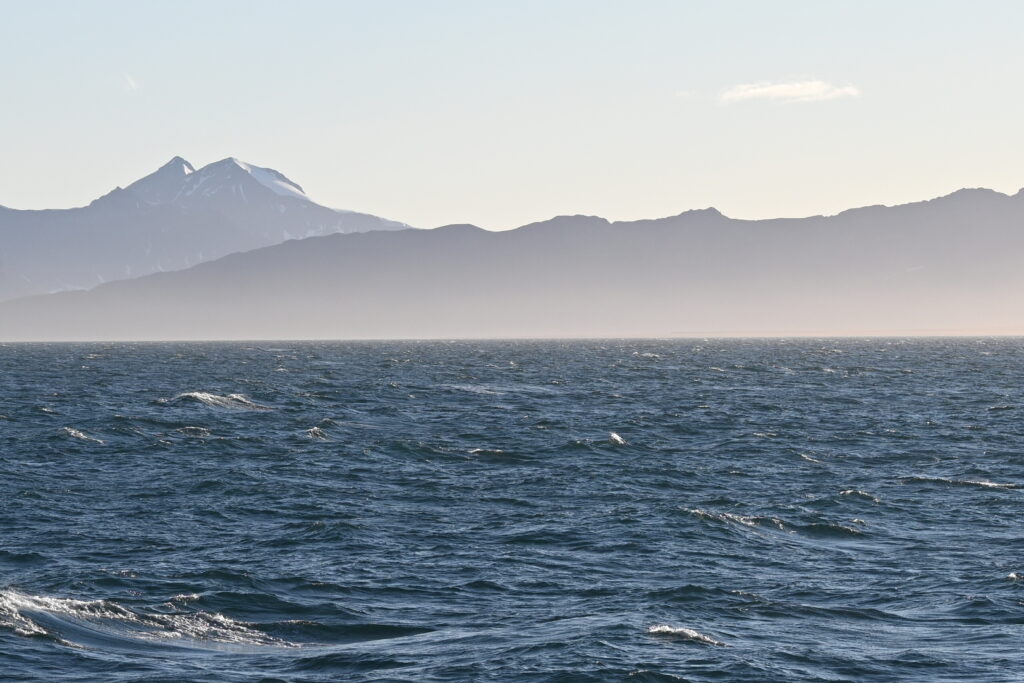
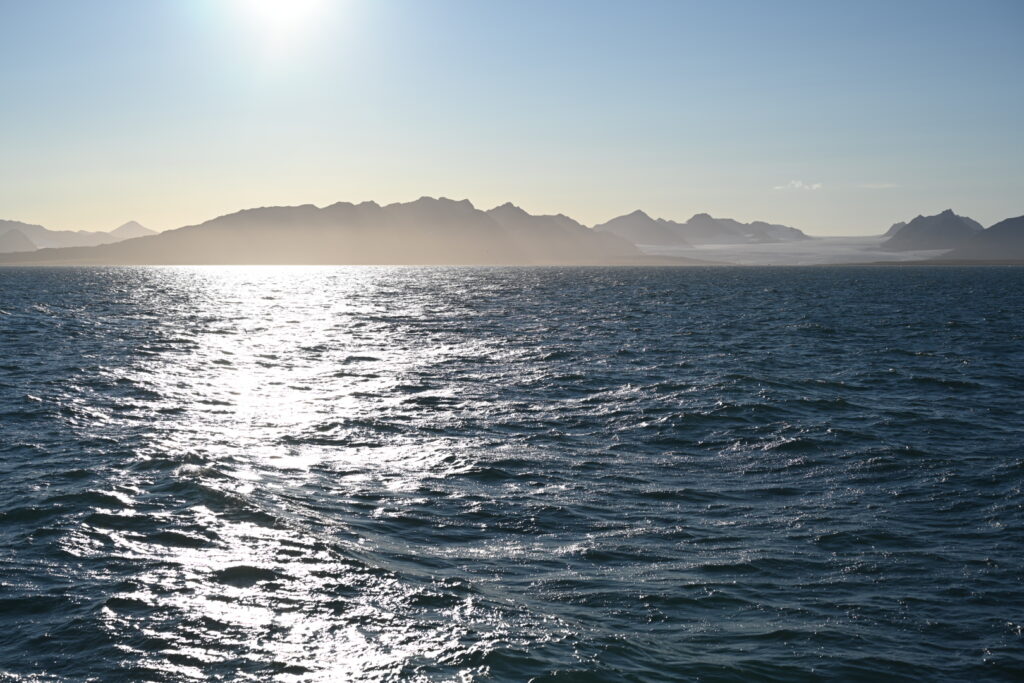
But not too long, and not too lovely – because we are all exhausted, and 8:30 am will come soon enough.
Except it turns out the briefing has been moved to 9:30 am in tomorrow’s program. Ah, well – we won’t argue with an extra hour’s sleep!