Tasmania to Tokyo – Kyoto – Day 73 can be found here.
So dawns our final day in Kyoto – damp, and wet, and rainy.
We wake at 8 am and head down for breakfast. It’s Tuesday, so quieter than Sunday when we had to wait 20 to 30 minutes for our eggs. My wife and daughter scarcely make it down before our hot meals arrive:
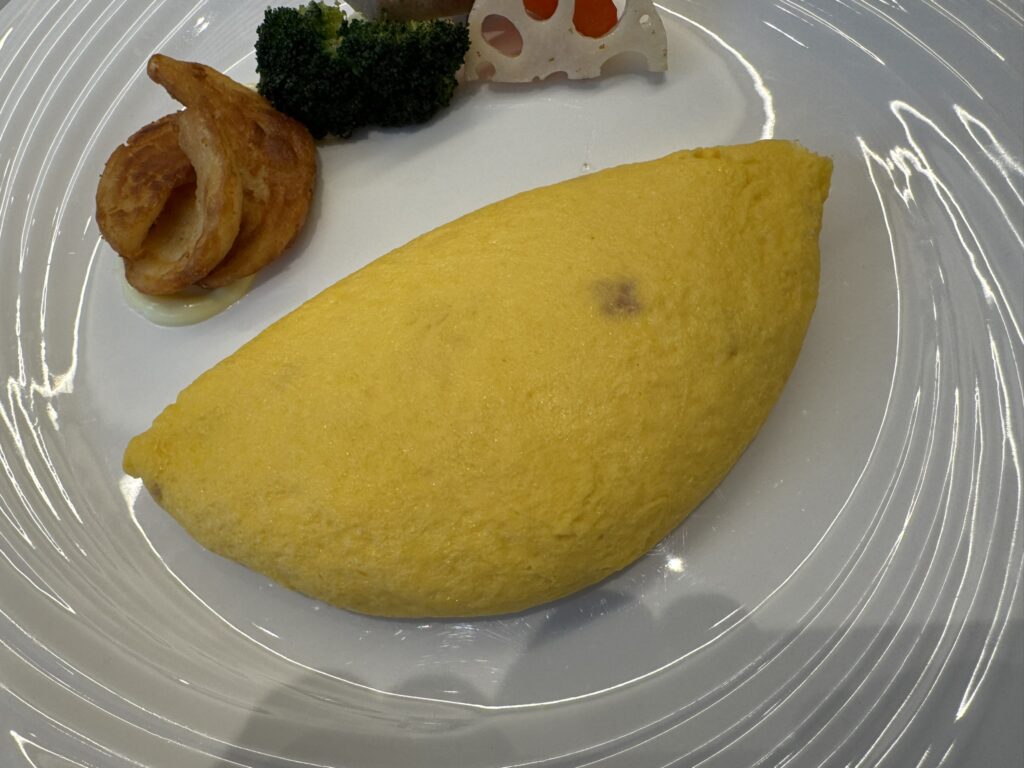
I compliment this with another bowl of yoghurt and cocoa puffs, freshly sliced banana and my perpetual pineapple – chiefly beloved of all buffet breakfasts.
If I seem to be waxing poetic over breakfast, it’s because this all will soon be over. (And make no mistake, I need this to be over – neither wallet nor waistline can withstand another month on the road.)
But – this is it. Our last hurrah. The final big trip we’ll take before our son heads to high school, and three-month sojourns become an impossibility.
I’ve spent far too long staring at sakura blossoms over the past week, and it’s been hard not to see life and travel reflected in those fragile pink blooms. These windows are so fleeting and so precious.
But there will be other trips. The shape and length may change, but what matters most – the adventures, and the time together – will remain. I remain confident in our ability to make each other laugh until we double over, drawing the curiosity and ire of our fellow diners.
And what to do with our final day?
Well, we find ourselves standing on a nondescript street sometime after 9:30 am:
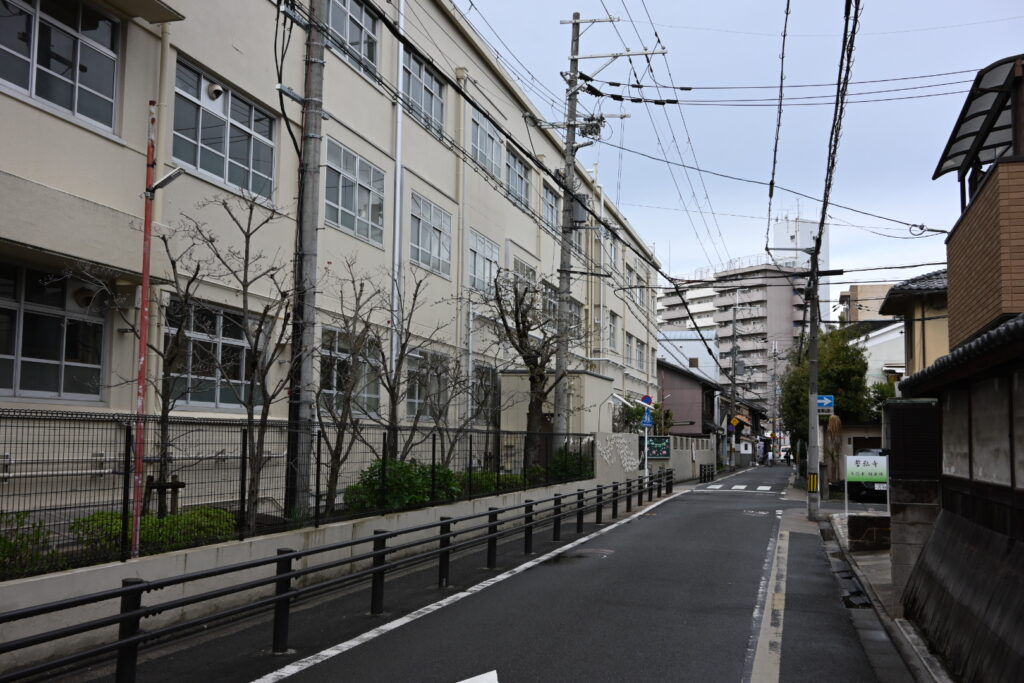
And what are we doing here, you ask?
Well, we through the kids might enjoy going to school.
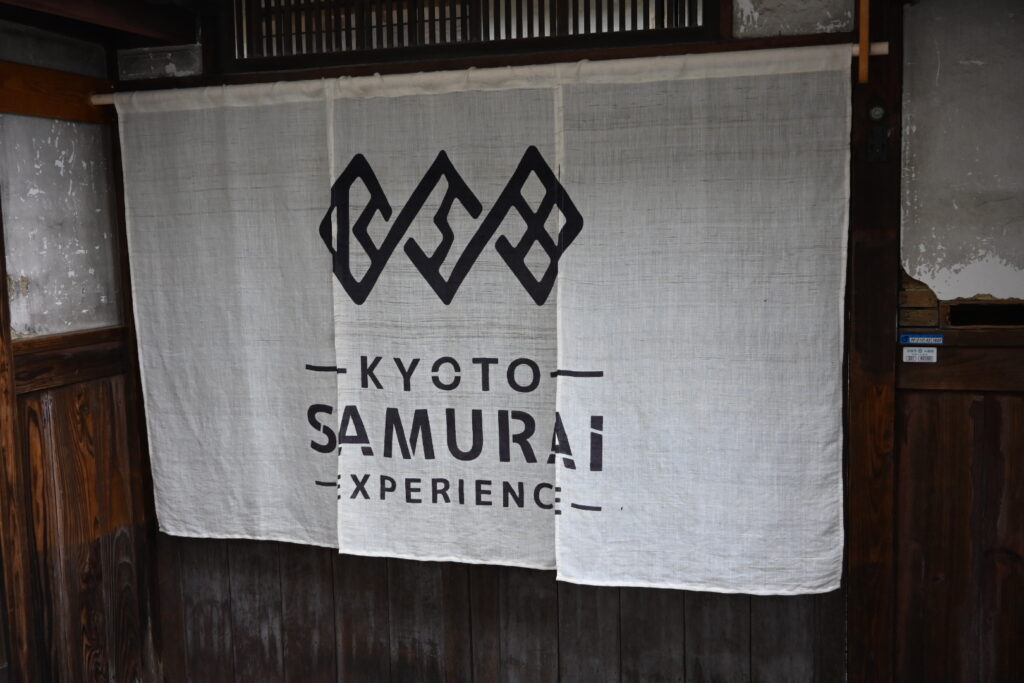
Samurai school!
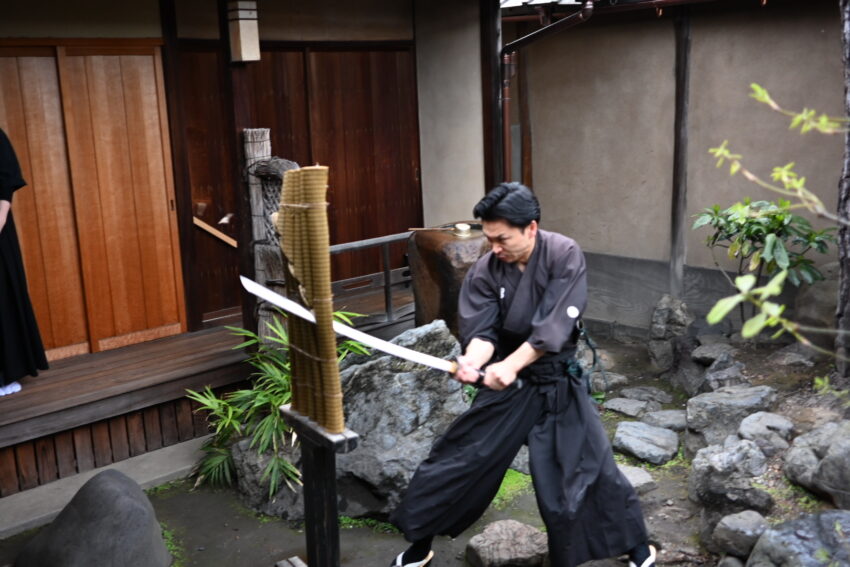
The doors soon open, and we are ushered inside a genuine 250 year old samurai residence.
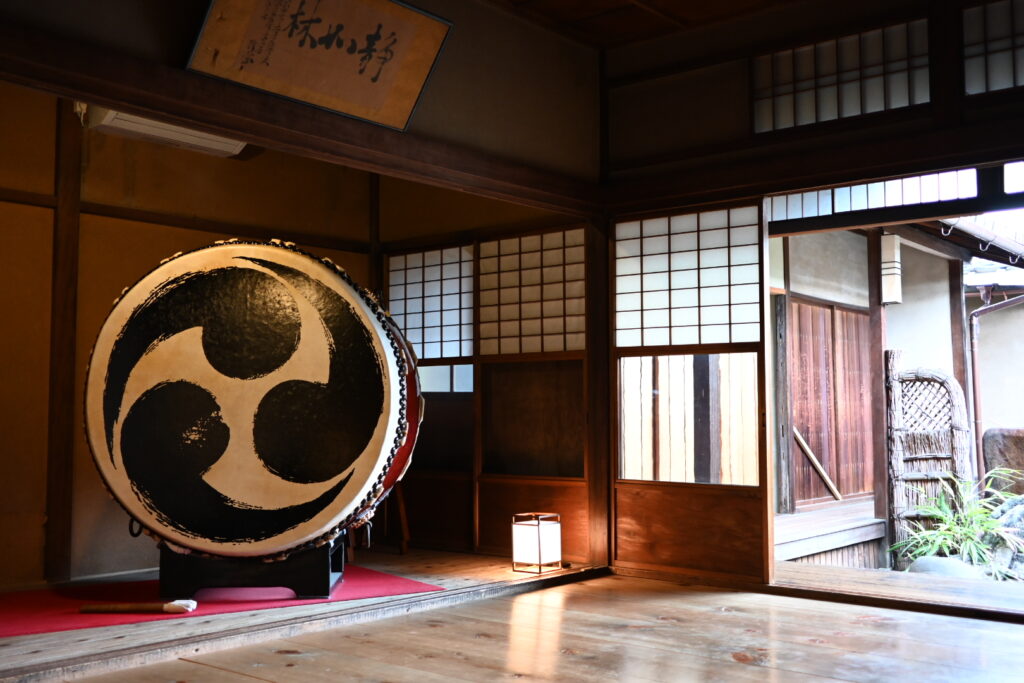
Here we are going to be learning from an expert Japanese swordsman, practicing Zen meditation – and more, besides.
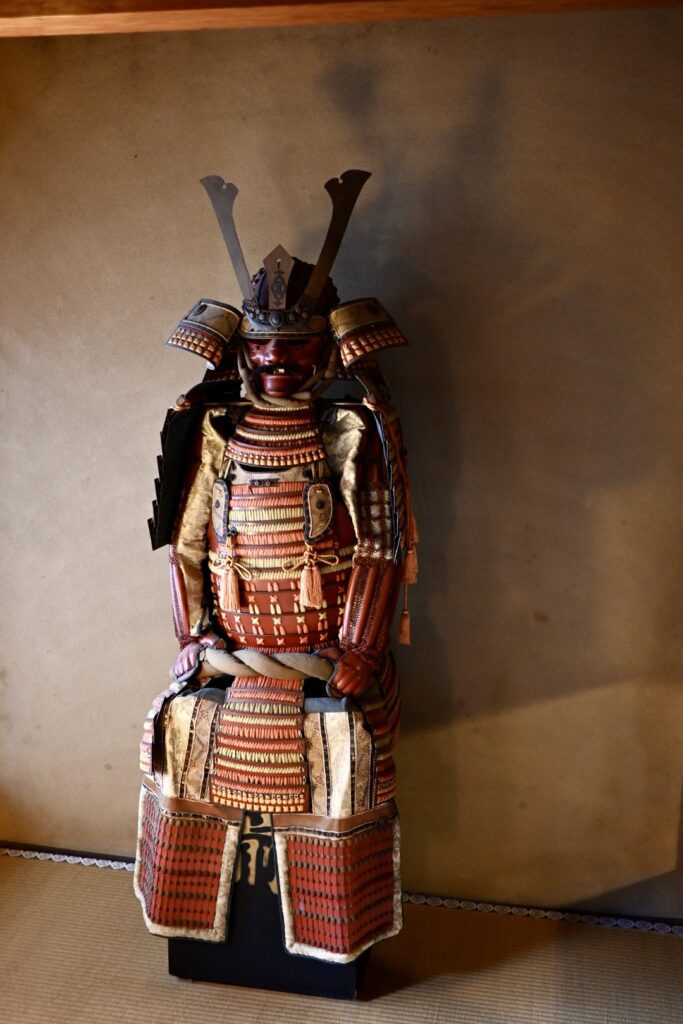
I’ve mentioned the benefit of proper planning when booking excursions in Japan, and this is another such instance – these spots fill up fast, and we booked this even before it opened to the public. (Bookings generally open six months in advance, but if you e-mail and ask nicely you may be able to book directly via their website as opposed to on TripAdvisor.)
The staff work quickly and we are soon dressed in Hakama, samurai fashion.
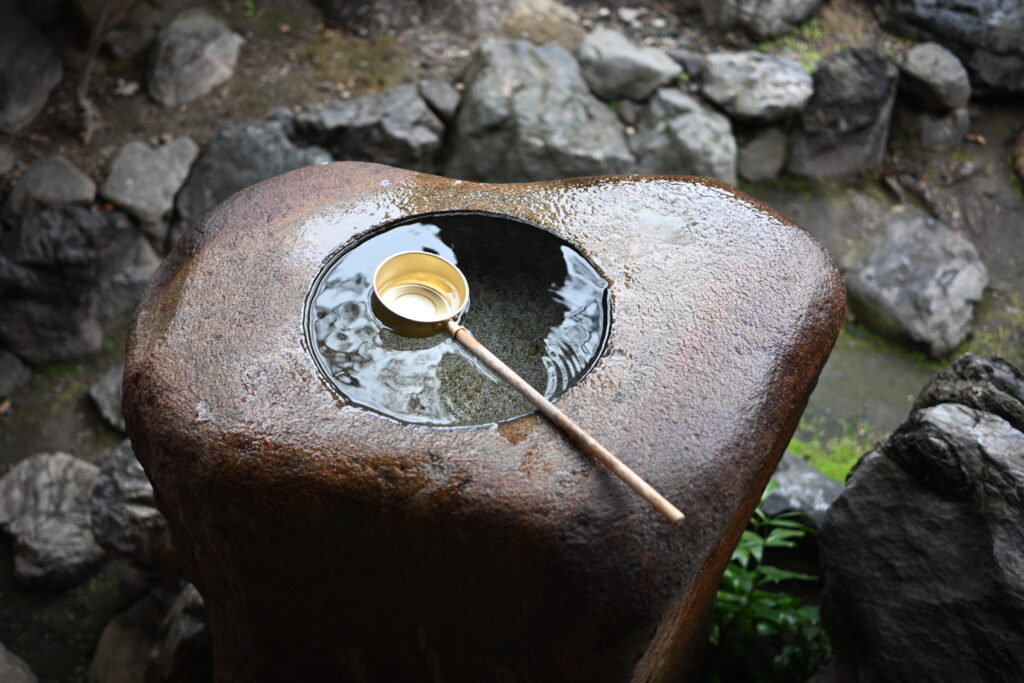
Even the sink for washing your hands has a Zen influence
One of the staff members provides an introduction, touching on many of the points that we’ve mentioned earlier. Samurai were well-trained warriors who also functioned as a type of civil servant, collecting taxes and managing government institutions.
This house belonged to a samurai from the Edo period – a period of prolonged peace. He ran one of the nearby jails, and was married to a member of the royal family. Not a princess, more like a cousin. It was through her influence that her husband and their children were protected when the shogunate ended and the Emperor ruled supreme.
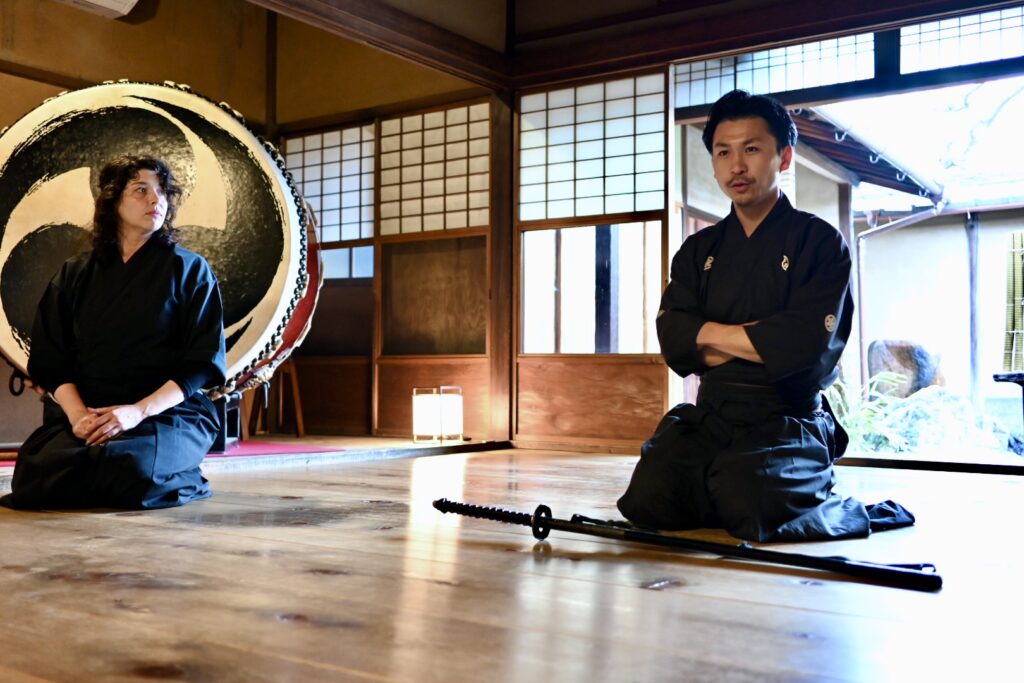
The master introduces us to Bushido, the way of the samurai
Though the period of time lacked the widespread battles of the “Age of Warring States” (Sengoku period), there were still machinations and infighting. Hence, samurai residences were designed with defence in mind.
Beyond the outer walls, the inner door is designed to require anyone entering to put their head through first and lower their weapons, thus making it easier for a lone defender to hold off a large number of assailants.
The solid wood beam design of the house also transmits noise throughout the house, making it difficult to move through without being heard. (And apparently makes quite a racket during heavy winds.)
Also, the low doorframes that hold the wooden and paper screens make it difficult to raise and swing a sword. There are houses in Kyoto with sword marks from where various battles and assassination attempts took place.
The master then provides us with a demonstration:
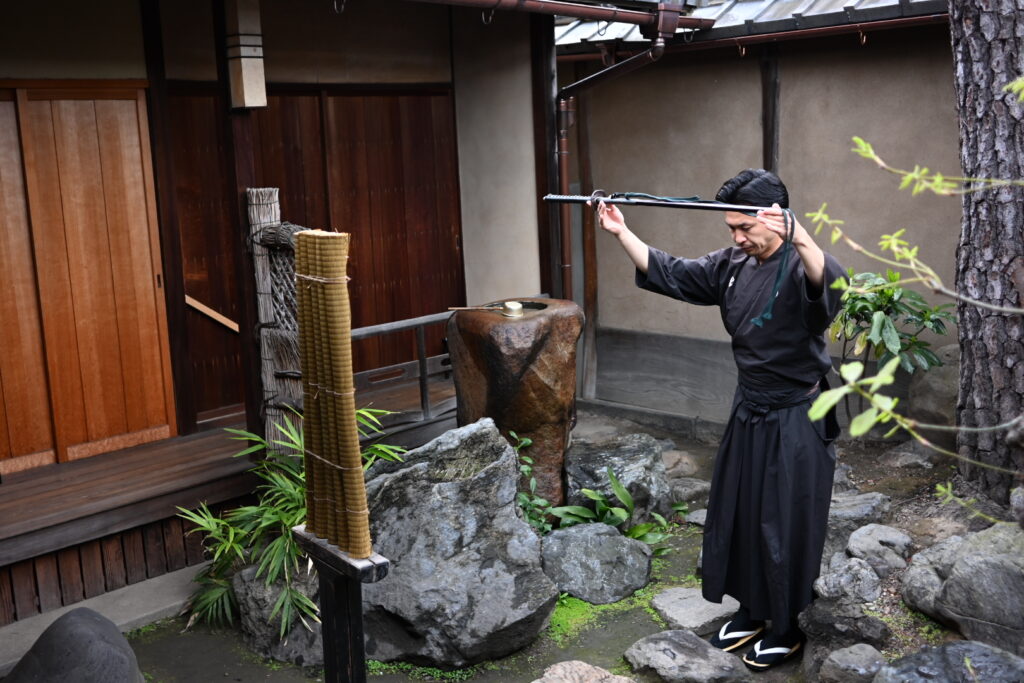
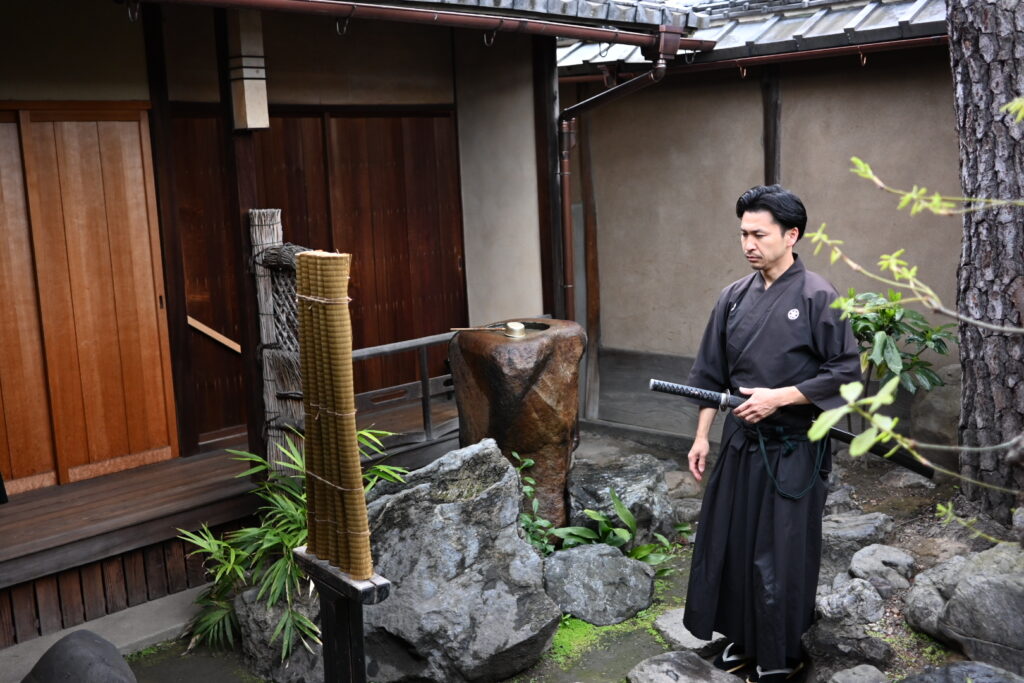
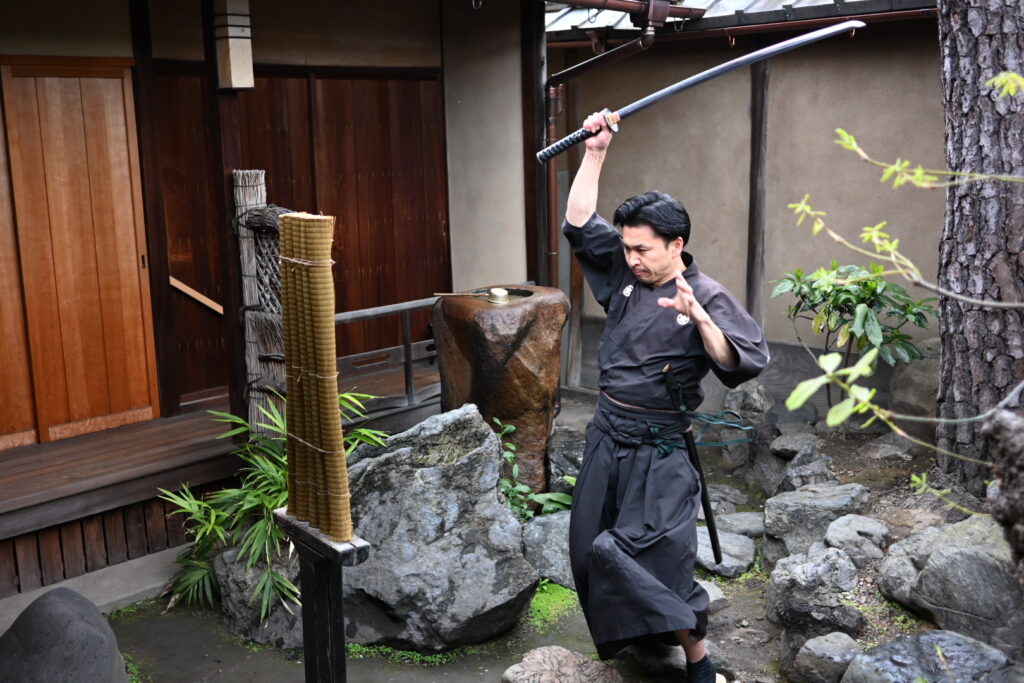
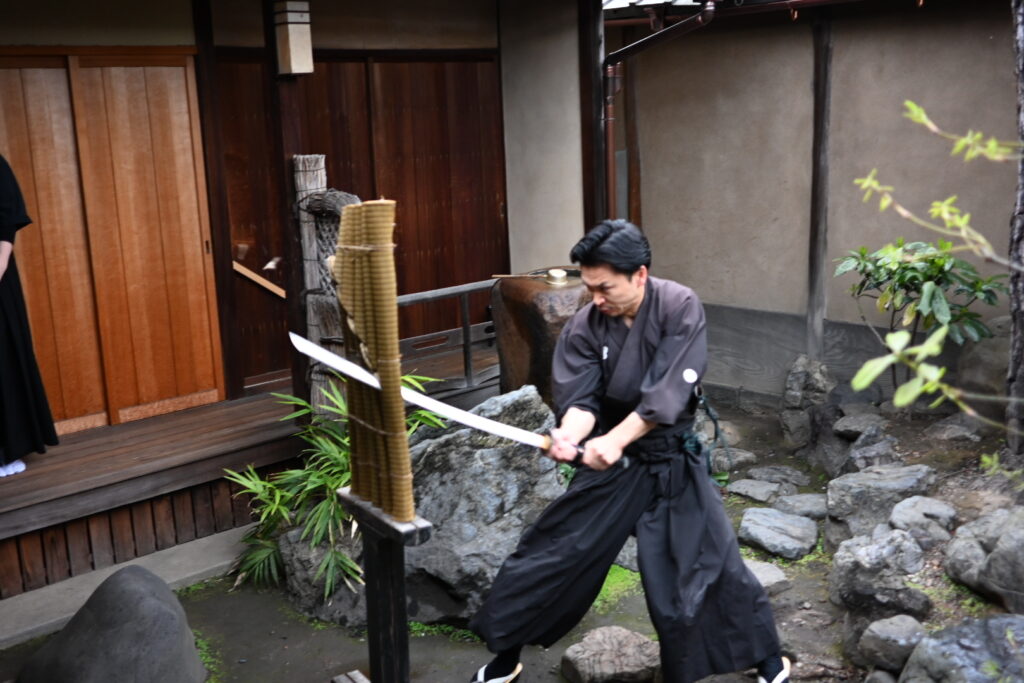
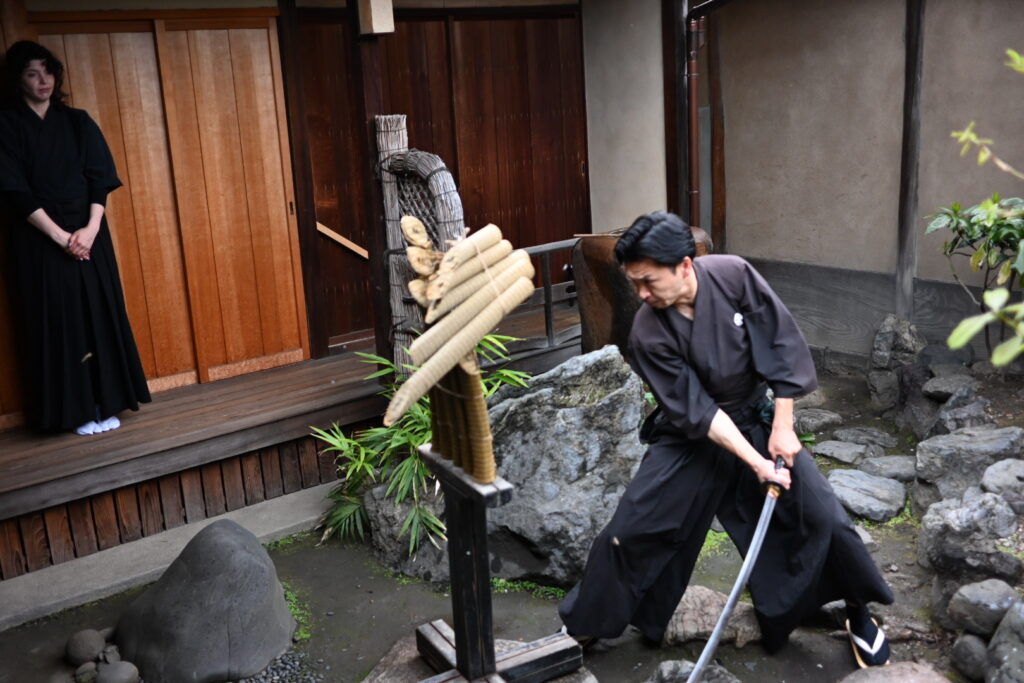
My wife also took an excellent video:
It’s all quite remarkable.
The participants are then split into two different group. One group practices meditation, while our group is given wooden practice blades with which to learn the basic sword forms.
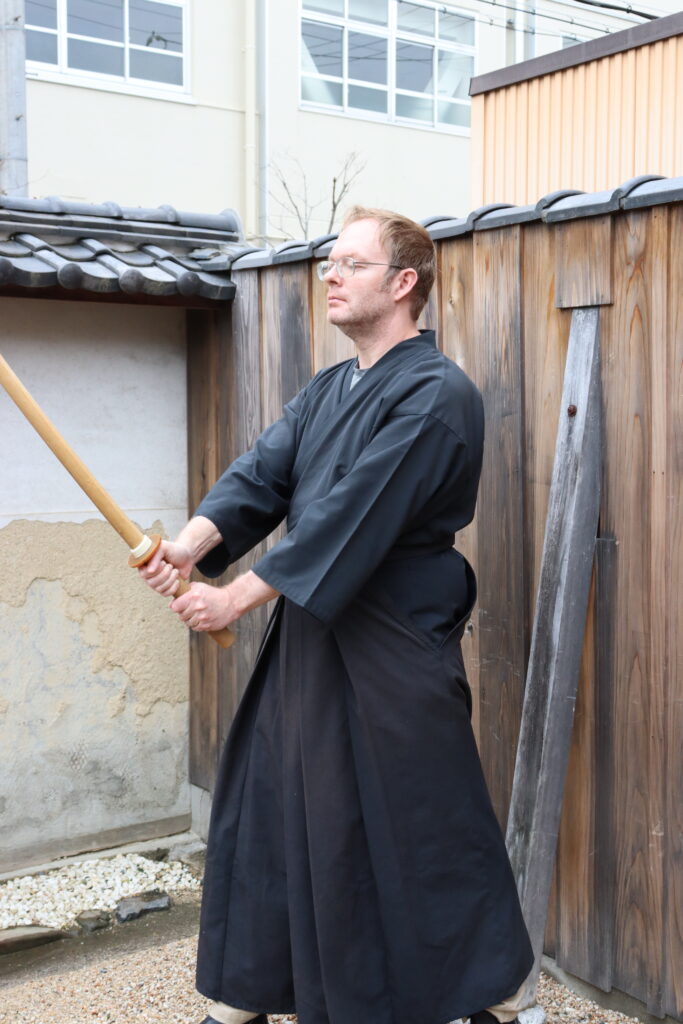
Safety is important, so the first lesson is how to hold the blade properly, and how to safely pass it to an instructor. Two big points – never let the blade point at your feet, and don’t bow when handing over the blade.
We then step through the three sword forms – slicing from the right, slicing from the left, and slicing across.
Each of the moves are broken down into three individual movements.
Ichi – Move the sword into position either above your head or sideways.
Ni – Tilt the blade to the correct side, or wind it back if slicing sideways.
San – Slice through crisply and cleanly. You want to focus on form rather than power.
If cutting from your right side, then your right foot should be forward. This is to prevent you from accidentally cutting down into your own leg.
While we’re practicing, two of the participants show up very, very late – and are promptly turned away. Another pair had arrived shortly after the start time and were admitted, though only one of them had the chance to dress for the activity. You’re expected to arrive 15 minutes early to have time to dress and gates are firmly locked 20 minutes after start time – no exceptions, no refunds.
Having practiced this as a group with wooden blades, we then have the opportunity to try slicing wet foam blocks with actual metal swords.
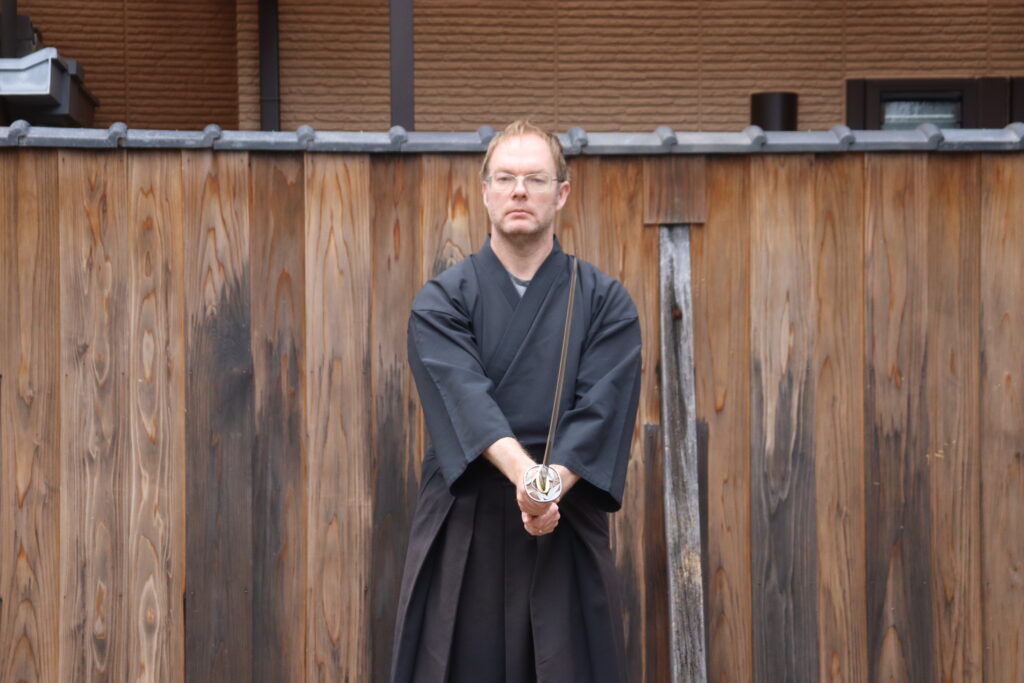
There’s a groove along the side of blade that serve a “variety of purposes” (cough blood groove cough) but it also provides an audible signal as to whether the sword is being swung properly. When done correctly, you can hear the sword whip as it cuts through the air.
We are then given actual metal training swords and the chance to practice for ourselves – starting without a target so that we can hear how the sword moves through the air.
We then move on to cutting the block using the four different strokes – one from each side, and two across:
The staff says that if we can ‘stack’ two of the horizontal slices then we can go into ‘bonus mode’ – but no one manages that feat.
It’s a phenomenal experience – it passes quickly, but it’s an incredible amount of fun.
From here we return to the main room of the samurai residence, where we are introduced to Zen meditation. Incense is lit, and Japanese singing bowls are played as we focus on our breathing and gaze toward the walls and screens of the room. I expect that this to take quite a long time, but it passes quickly.
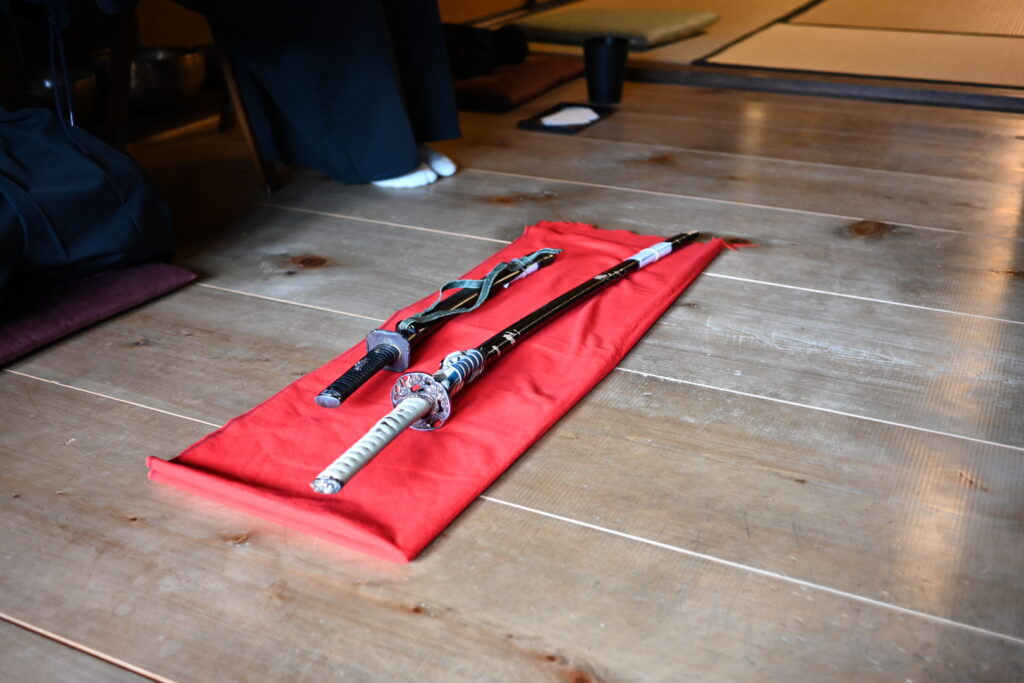
Next we are given the chance to hold and contemplate two genuine samurai weapons – a short sword that is 350 years old, and a long sword that is more than 650 years old.
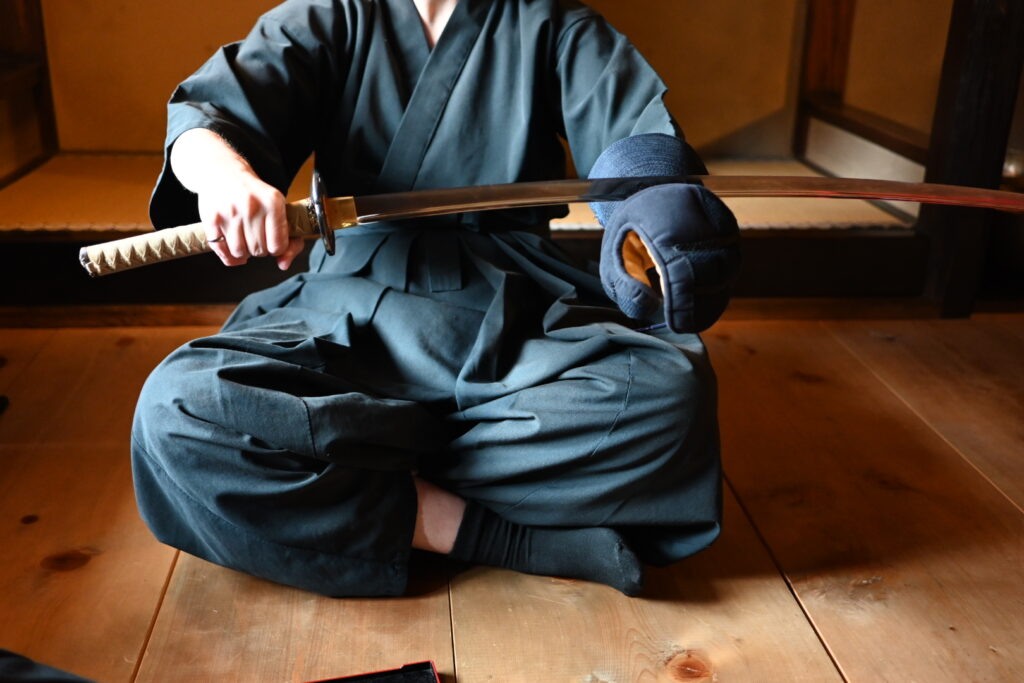
Each of us in turn put on a special sword handling glove, and take the hilt of the sword in our hand. This practice is called Mokuso, and it was one of the ways in which samurai would prepare for battle.
While so engaged, we place pieces of paper in our mouth to prevent the moisture from our breath from rusting the swords.
The workmanship is incredible. The short sword is named after its maker, while the longer sword has no known name.
While once there were a large number of artisans who created samurai swords, now there are only a very limited number of such masters. The process for creating a sword was once 2 to 3 months, but it now takes upwards of a year. The Japanese government closely controls the manufacture of such swords. Each craftsman is restricted to producing a maximum of 24 long swords each year.
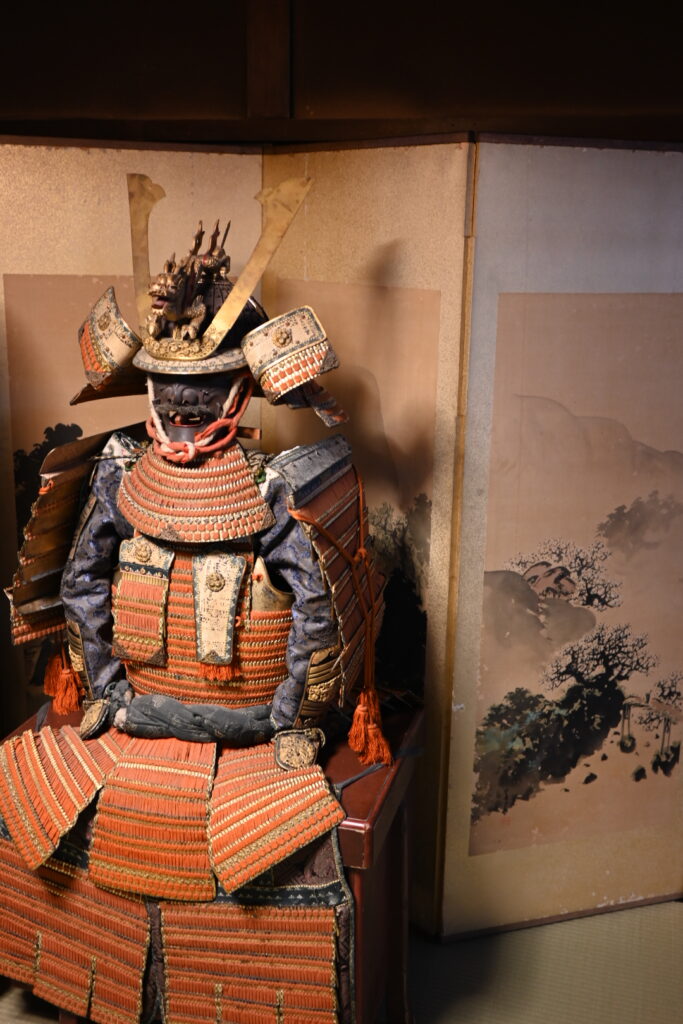
With our meditations complete, we are given the opportunity to sound the massive drum in the main room and then we must doff our Hakama and return to the real world.
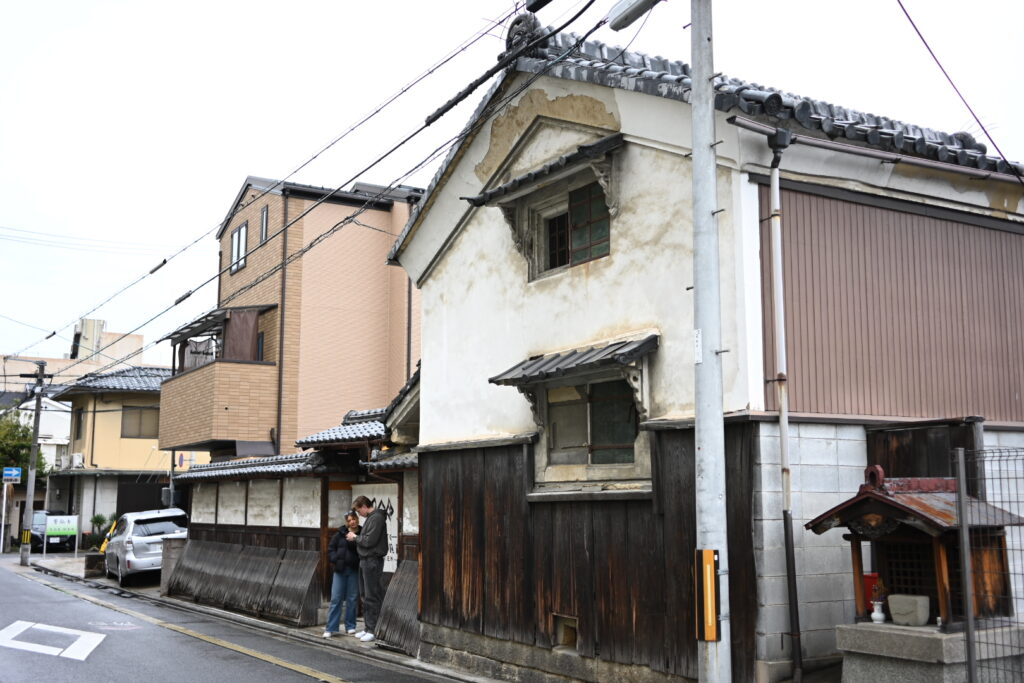
So much history behind this unassuming facade
And the verdict? Waraku was a fantastic experience. Not cheap at 18,000 yen or roughly USD$110 per person, but well worth it. Given the option, I think we would have preferred to meditate before learning the sword skills but it also poured rain while we were meditating so we’re not going to complain about how it all shook out.
Were we to visit Kyoto again, I would be strongly tempted to book it as a private group. You pay twice as much, but you get to slice up additional foam blocks – which is definitely the best part. There may be room to negotiate on price if you aren’t going during the busiest time of year, as we were.
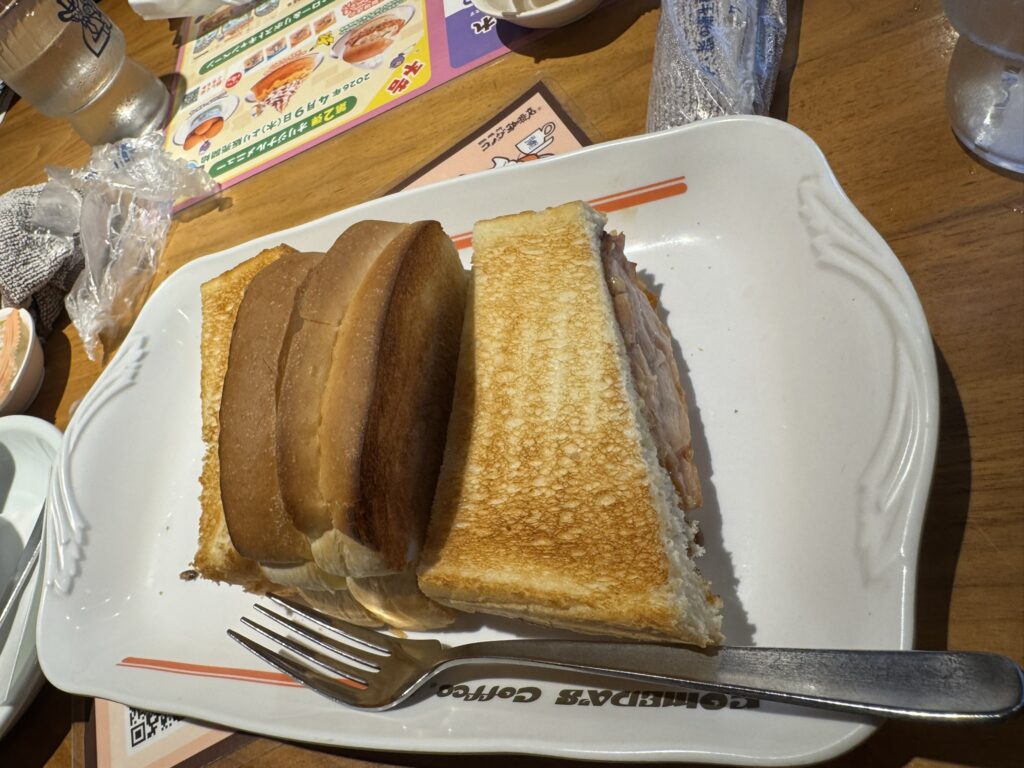
From here we head to a nearby sandwich shop that has three stools and is all sold out of sandwiches. So no lunch there. Instead, we head to Komeda’s Coffee – which is like a Japanese diner.
My wife and I both get the grilled chicken sandwich:
And the kids get fried chicken and fries.
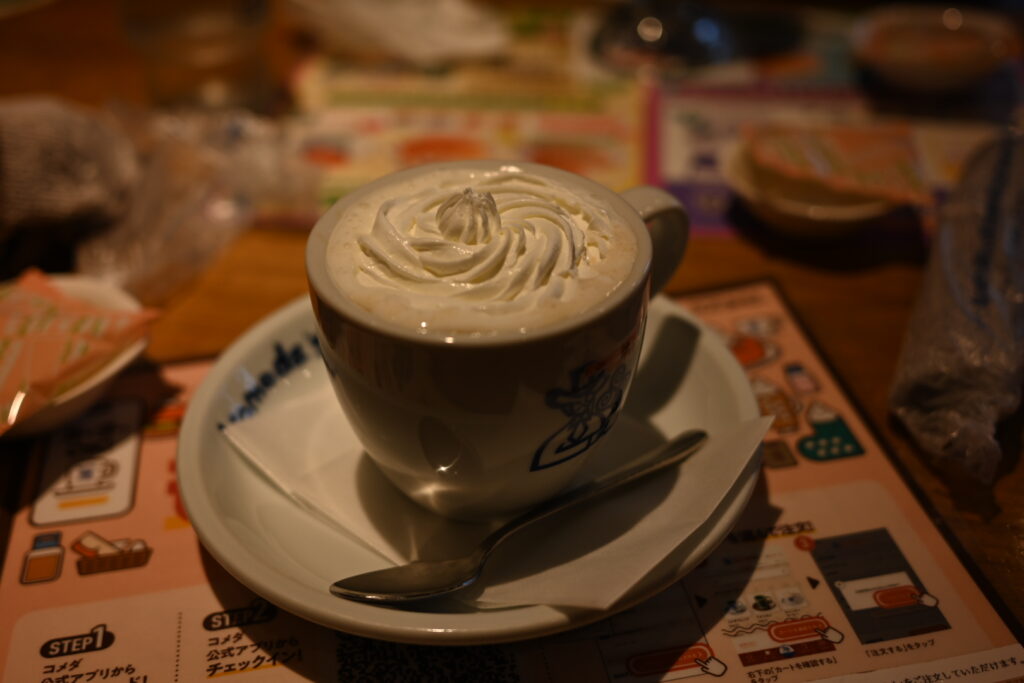
I also get a Viennese coffee:
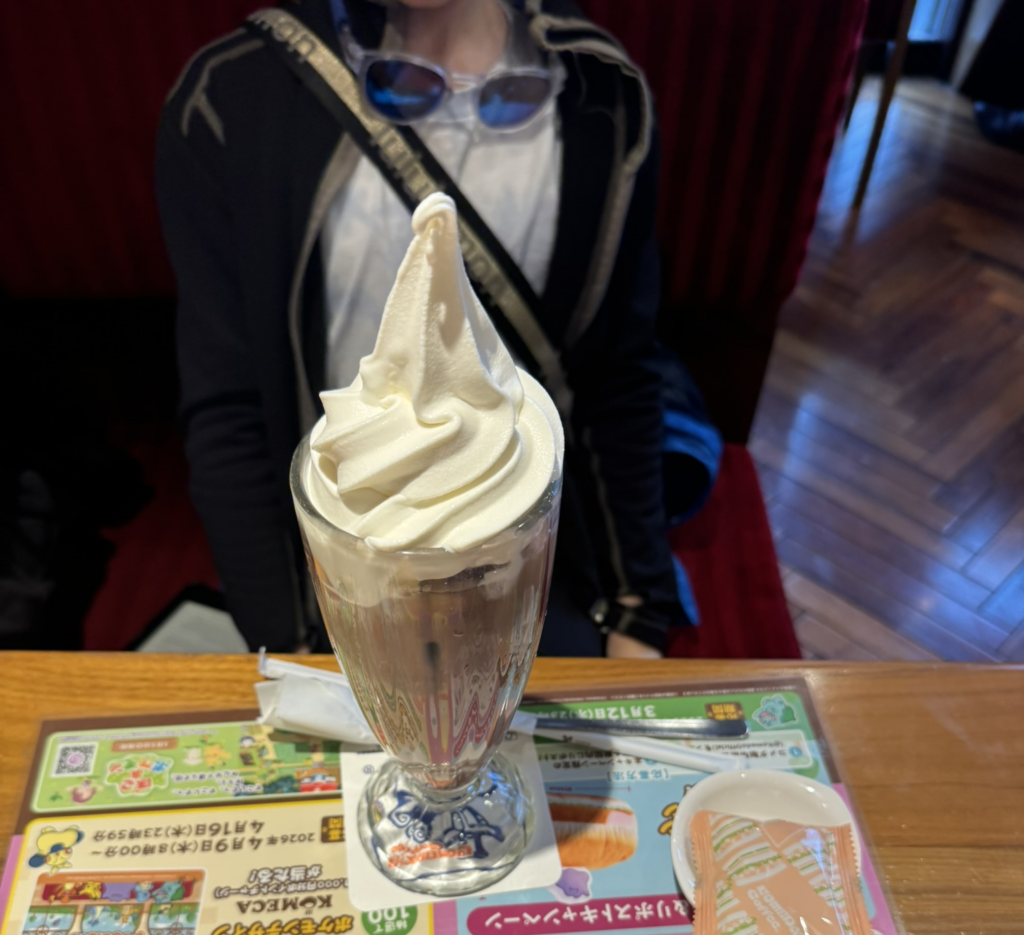
While our daughter gets an iced chocolate with soft serve on top:
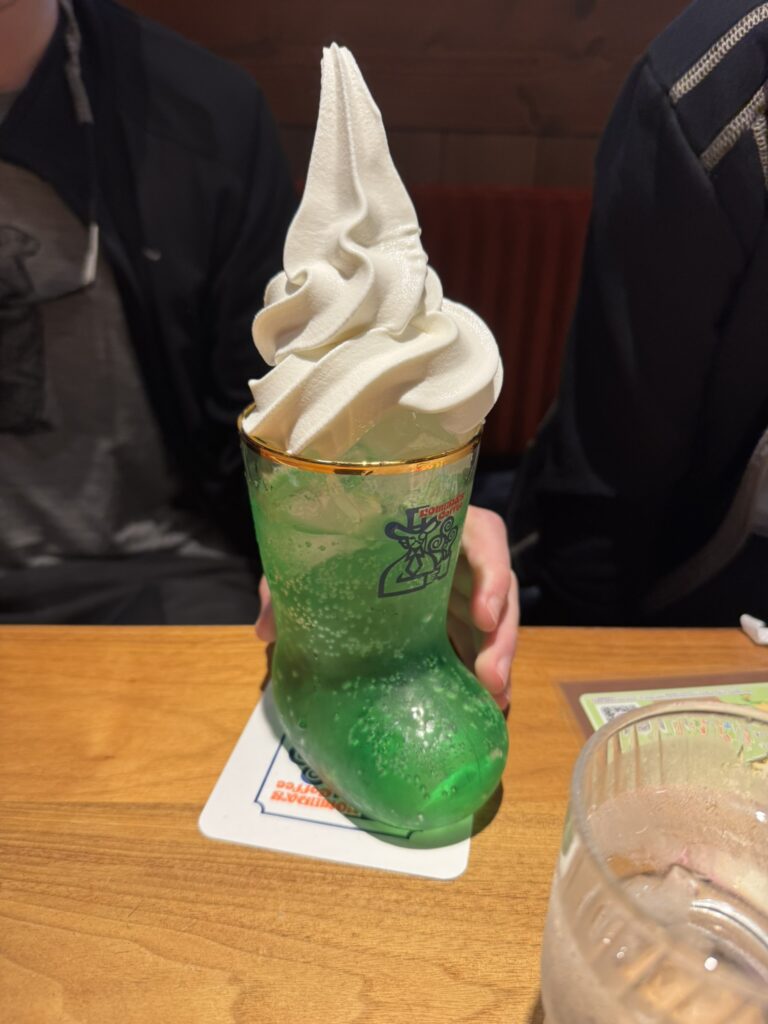
And our son gets a cream soda – also with ice cream on top:
For dessert we get a kuro neige, which is like a brownie with a hole for – you guessed it – more soft serve.
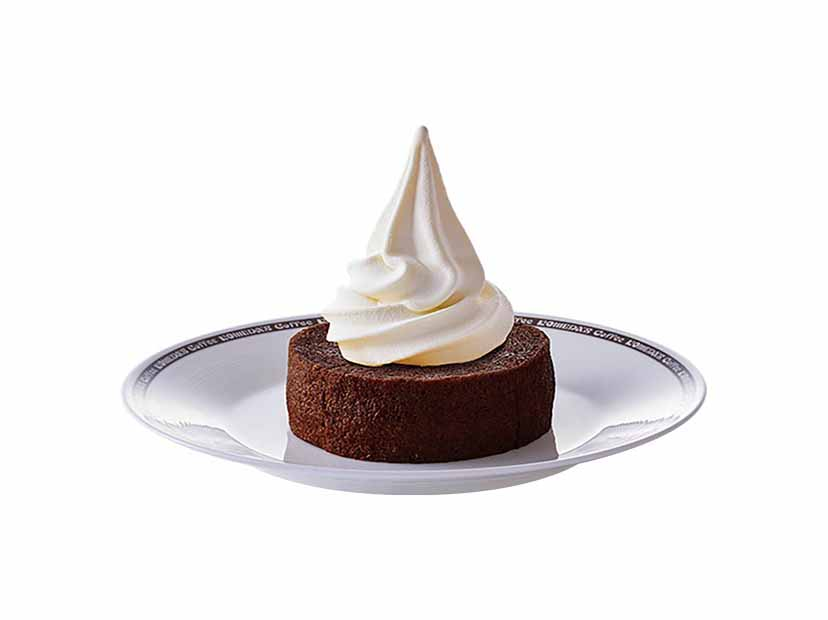
Photo Credit: Komeda’s Coffee
It continues to pour off and on, so we’re glad we chose an indoor activity for our final excursion in Kyoto – the Cat Retreat at Utanekodo.
But first, we need to get there. Initially it seems that we have almost too much time, so we “only” leave 30 minutes for the 10 minute cab ride. But we somehow end up transiting through the busiest area of town, and it takes way longer than we expect.
(Though in the driver’s defence I’m not sure that the taxi GPS system shows traffic in the same way that Google Maps does.)
We talk briefly about baseball, and our driver mentions that he went to the same high school as the Dodgers’ famed pitcher, Yoshinobu Yamamoto – and that they played baseball together. Our driver also strongly recommends visiting Kyoto in the autumn, when the leaves are changing.
We end up arriving at the Cat Retreat roughly 5 minutes after our planned session started. There’s no sign of the proprietor there so we’re concerned that we might have missed our window.
But thankfully she soon comes downstairs and we get ready for our semi-private cat experience.
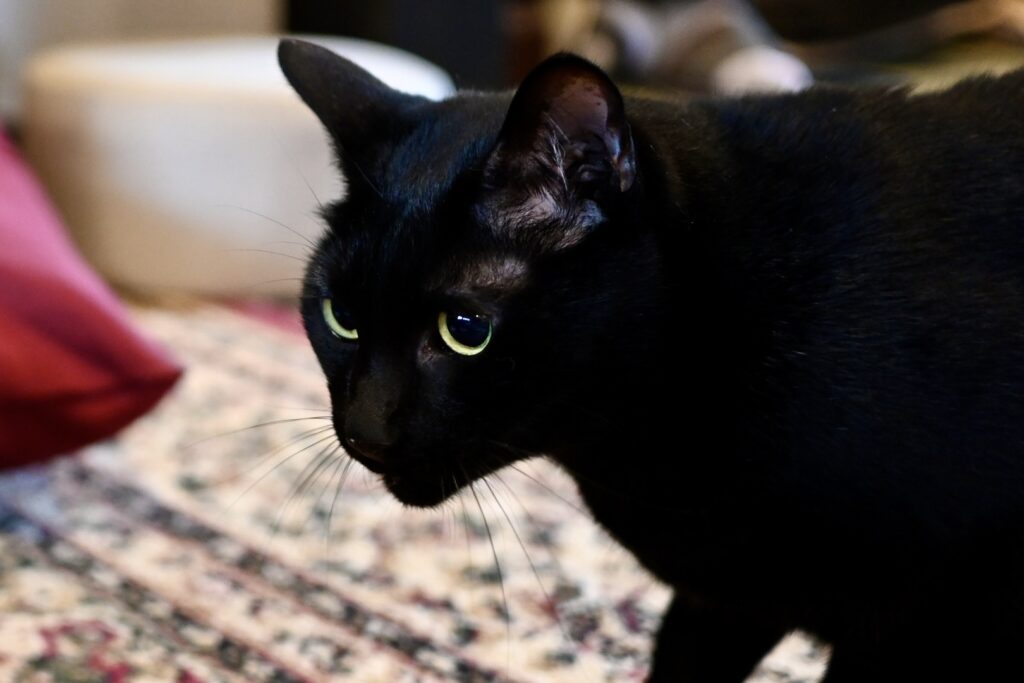
The Cat Retreat is not like other cat cafes, in that they focus on rescuing cats and adopting those with higher needs. One such cat – Ben San – is a Bengal with a heart problem that requires regular care.
To protect the cats, visitors go through an extensive decontamination process upon arrival. We’re asked to wash our hands, have our hands and feet sanitized, sanitize our smart phones and other devices, and leave our bags downstairs. Only then do we get to head upstairs and meet the cats.
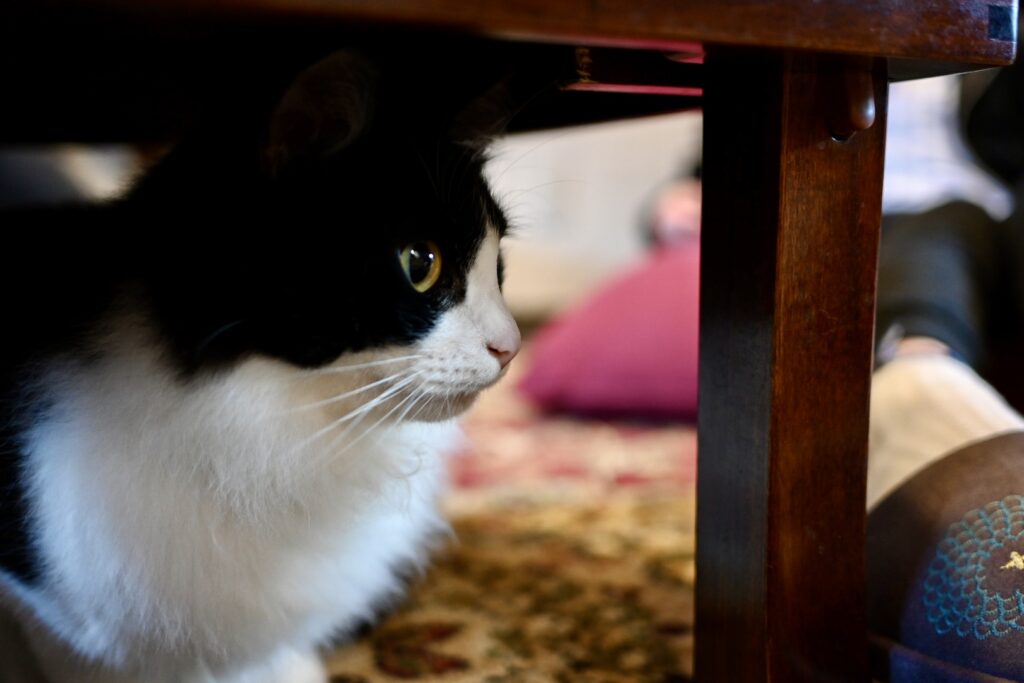
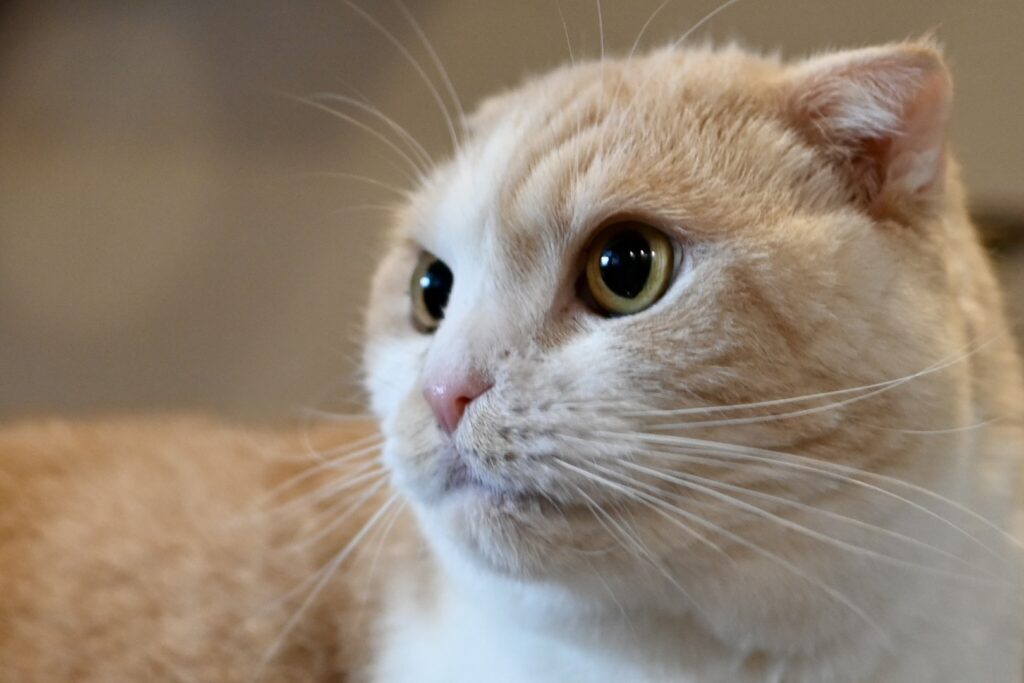
Who are, as you might expect, adorable:
The kids are given two rounds of treats with which to feed that cats, as well as their choice of drinks and an ice cream sandwich. (In case they hadn’t already had enough ice cream.)
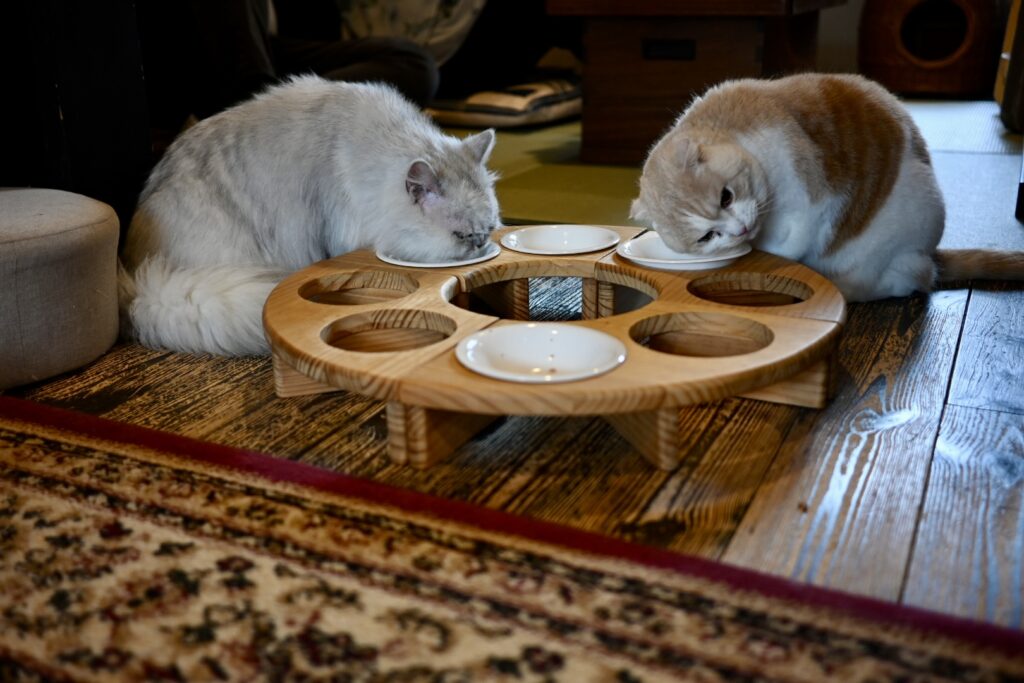
But these cats certainly aren’t going hungry:
The adults get to enjoy another Japanese tea ceremony made with excellent matcha, and to have a kind of dessert made with a rice crisp and sweet bean paste.
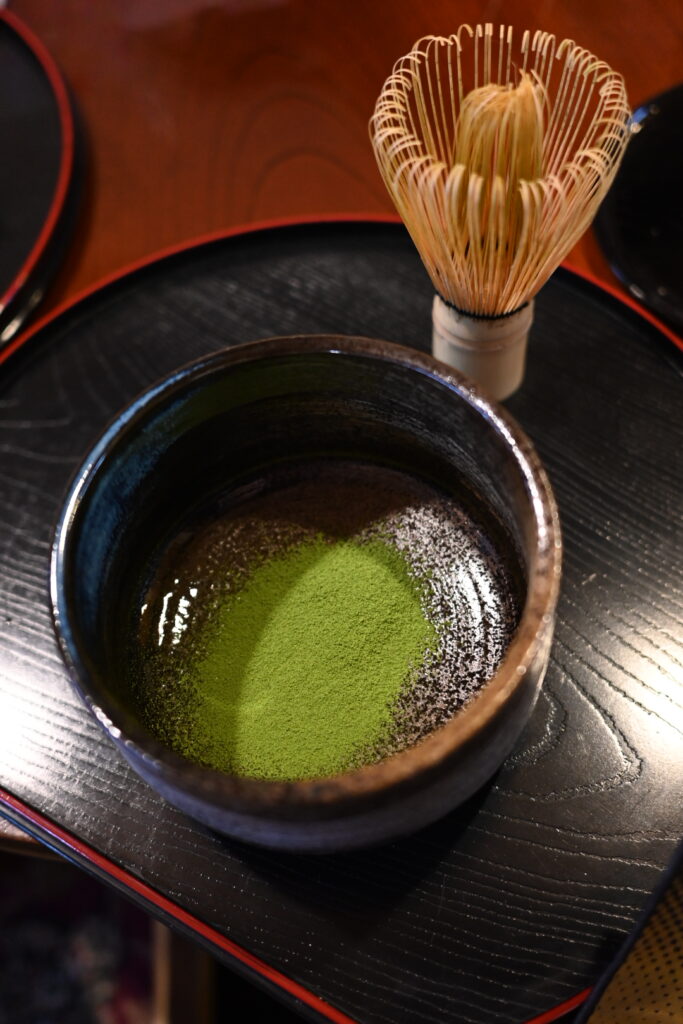
All very tasty.
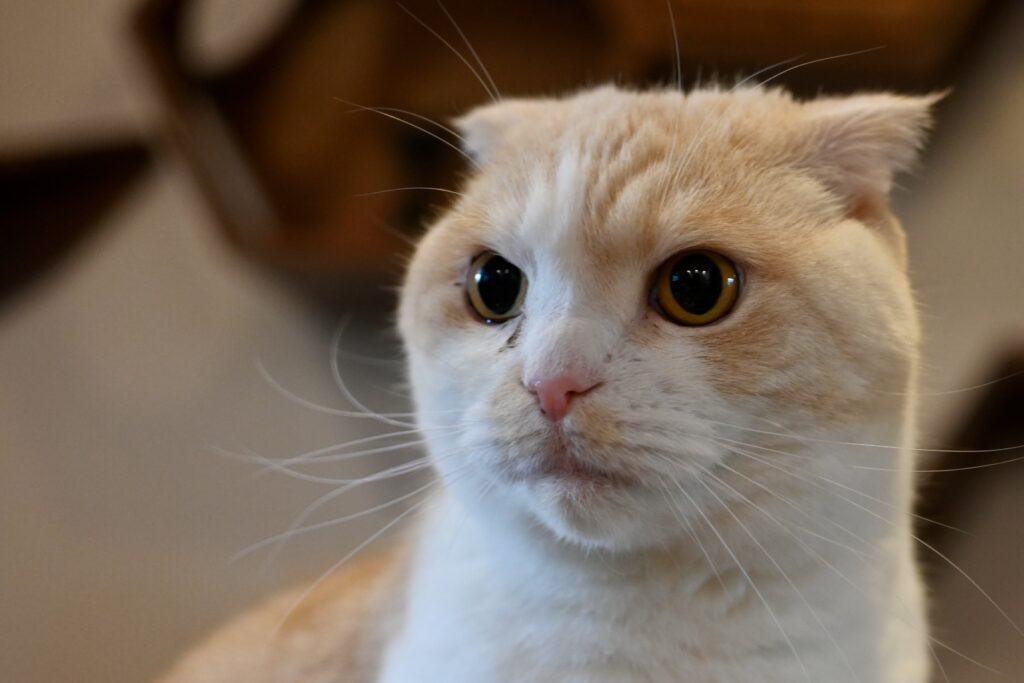
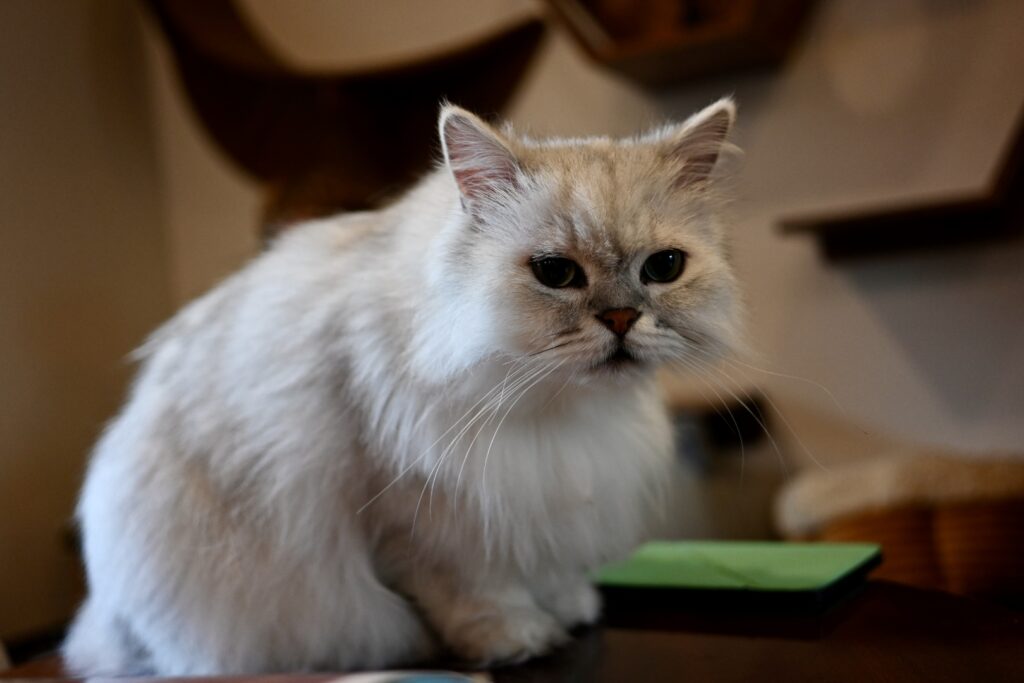
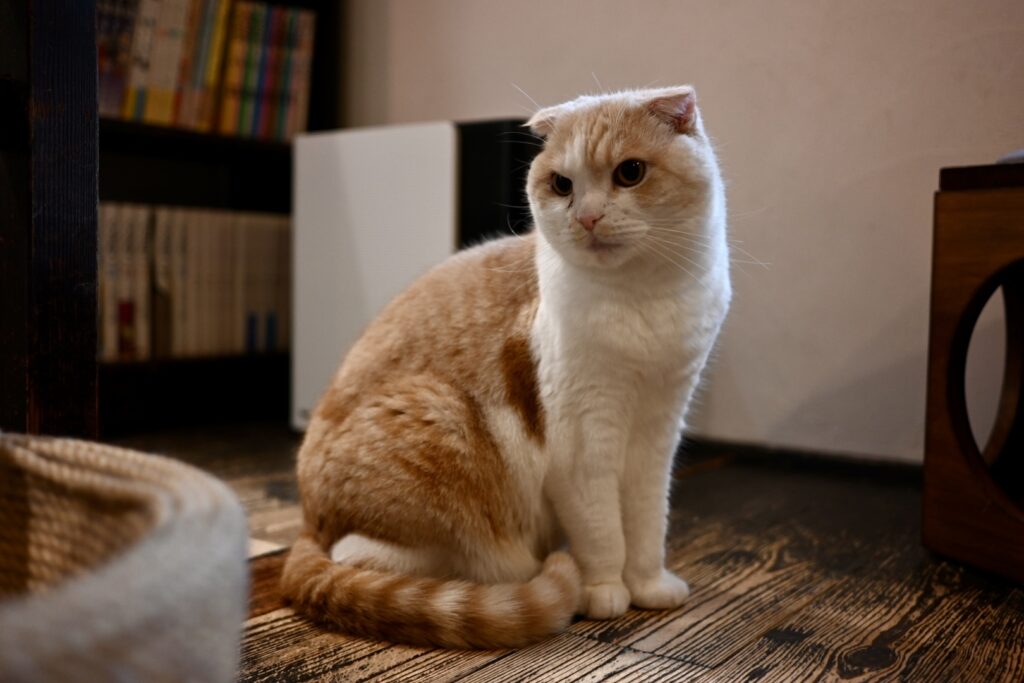
The Scottish fold looks perpetually grumpy! I love him
There’s another couple there as well who seem quite nice, but the space is large enough that we have no issues spreading out. Everyone gets lots of time with the cats.
It’s another expensive tour – costing roughly USD$50 per person for 90 minutes – but the pricing is understandable given the limited number of guests and the quasi-charitable nature of the café.
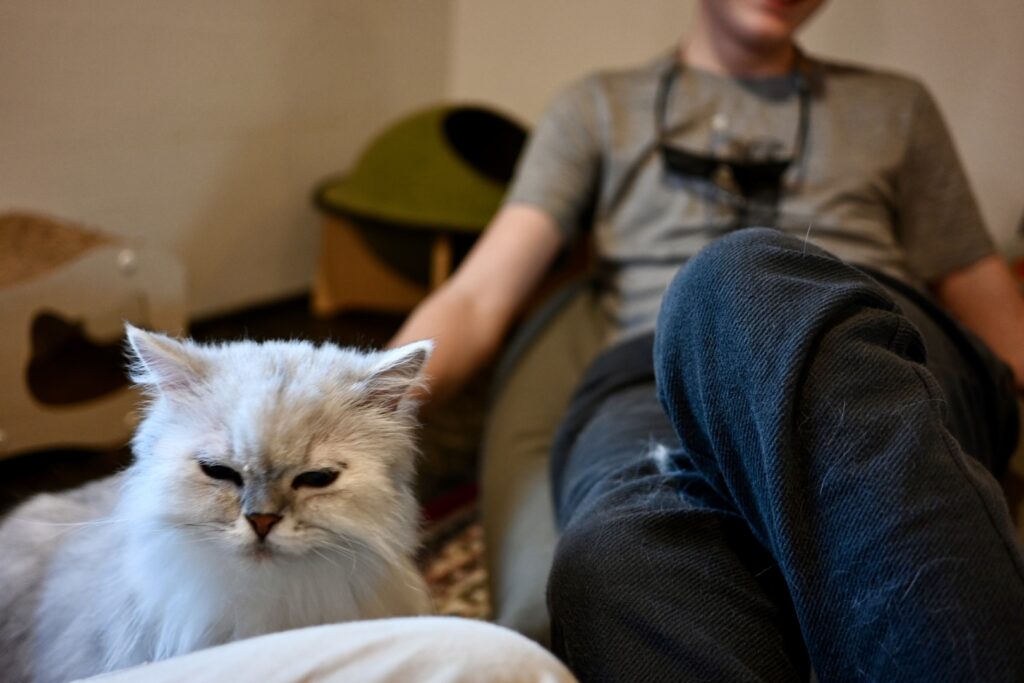
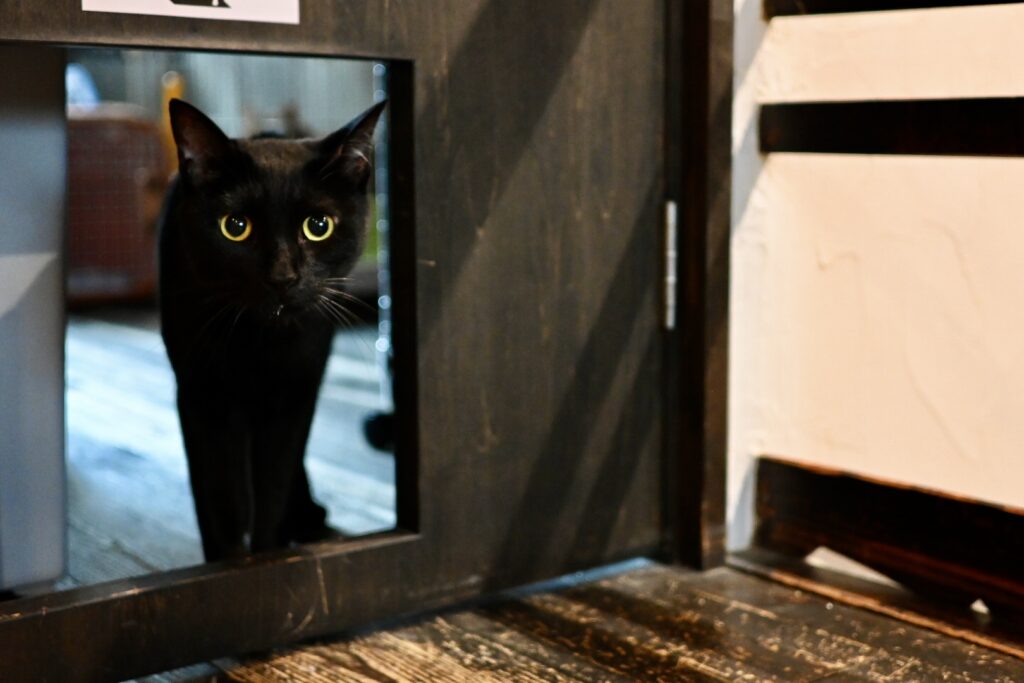
Soon it’s time to say our goodbyes:
We then head back to the Iconic for afternoon tea – but are caught out by a rain storm while enroute.
It isn’t long before the rain starts to slacken, but the storm is leaving its mark on the delicate blossoms.
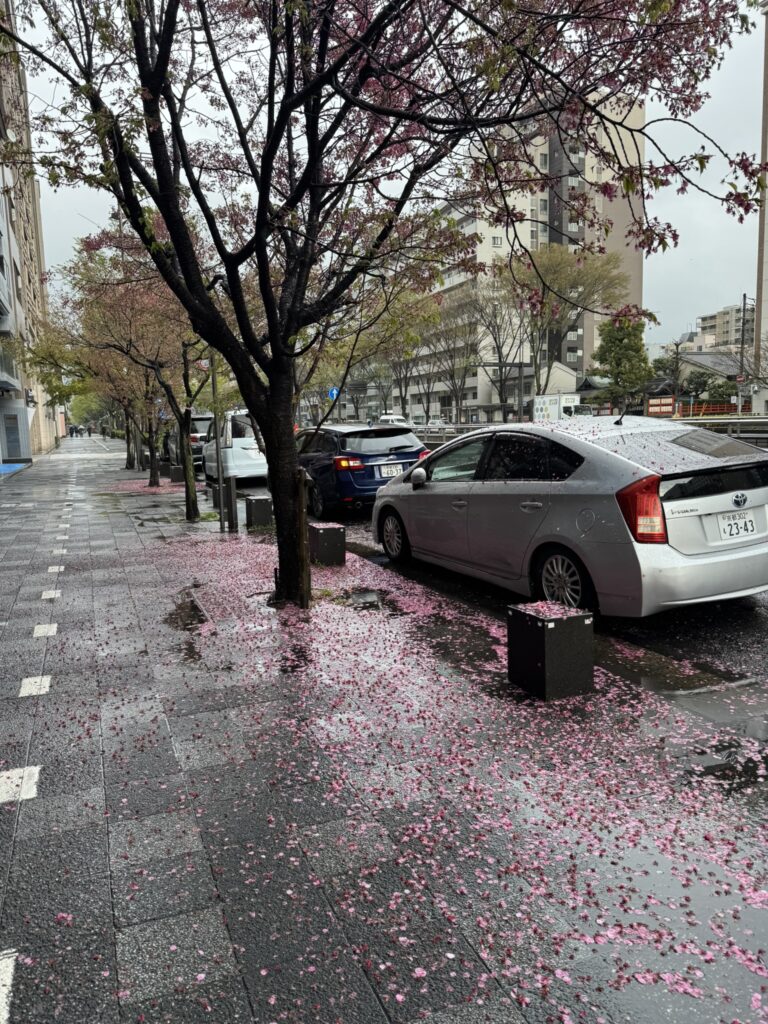
How fleeting it all is
We enjoy yet another round of afternoon tea. Back to the rooms to work on packing up, and then we head out for our final dinner in Kyoto at Hyoto Shijo, a hot pot restaurant (shabu shabu).
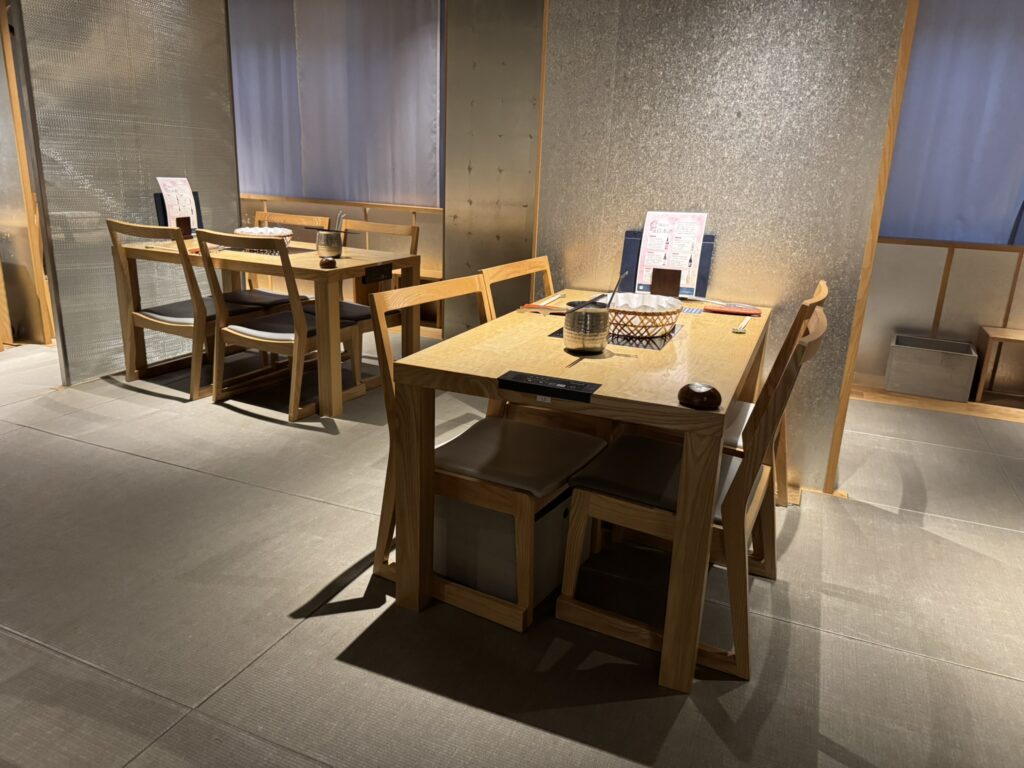
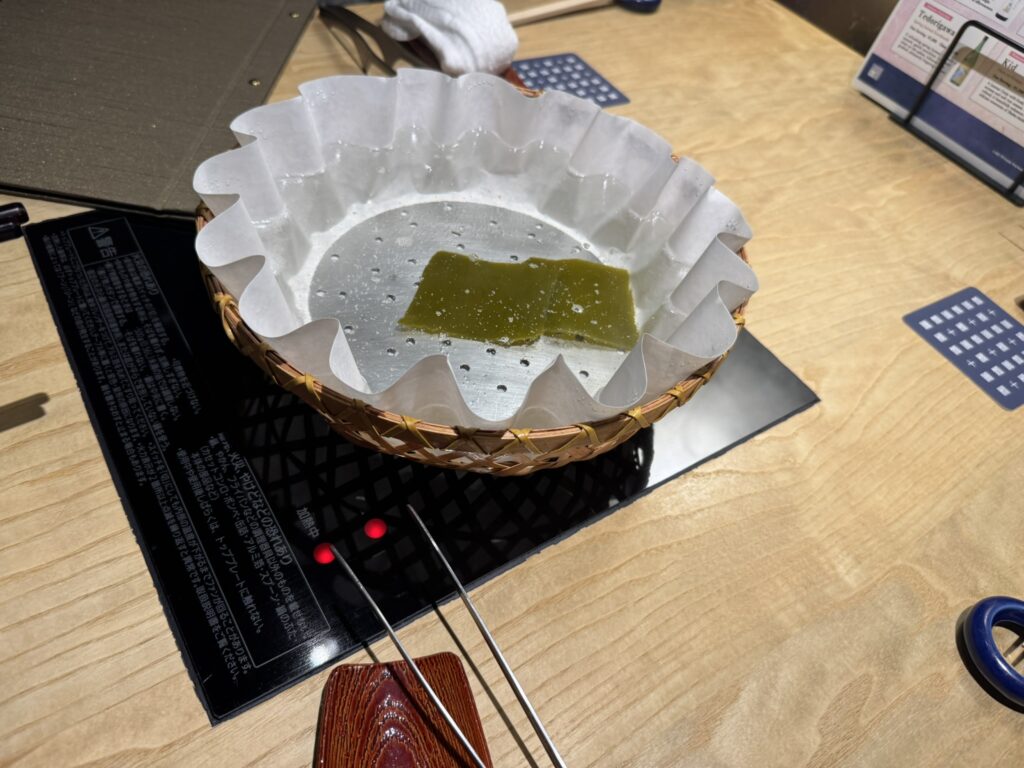
Each course is done as a complete package with appetizers, vegetables, noodles, and so forth. We opt for the pork for ourselves, while the kids get the pork and wagyu. We figure that the adults can always have the wagyu if the kids decide they aren’t interested.
First we get a small tofu and sakura appetizer, followed by a kind of hot custard soup:
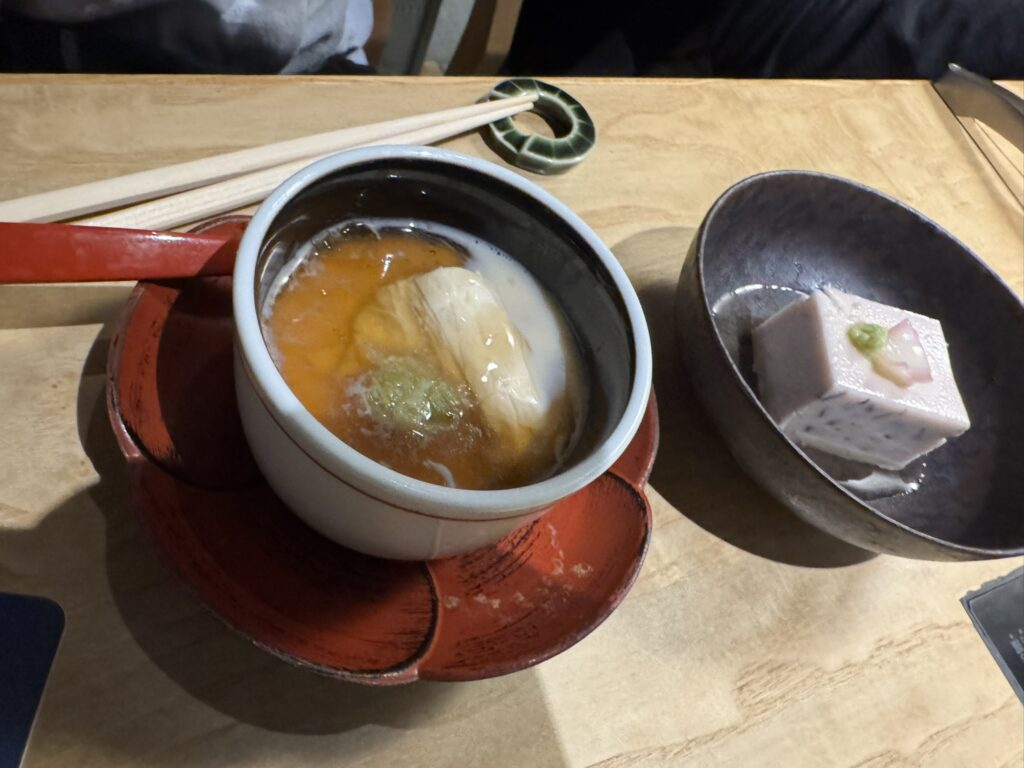
And mackerel sushi, which I find phenomenal:
Our server then turns up the hot pot and dumps in all of the ingredients – tofu, leeks, greens, noodles, mushrooms and so forth.
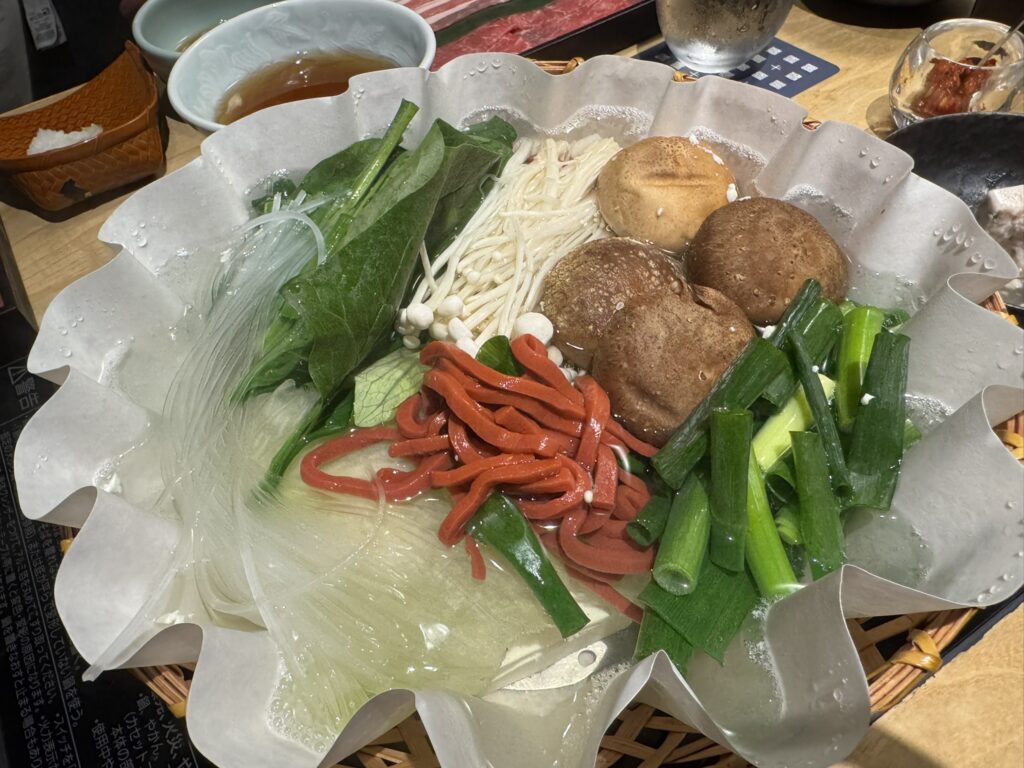
We each have a plate of finely sliced meats, which we dunk into the hot pot until they turn white.
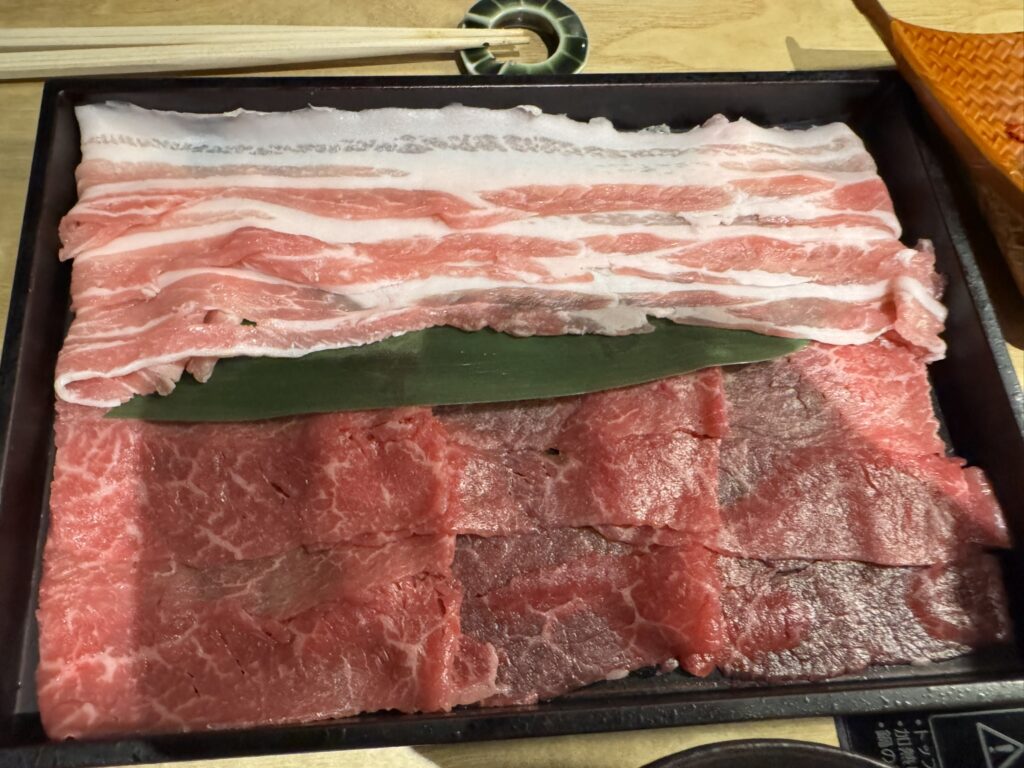
We then dunk the meat (or noodles, or vegetables) into a soy broth, and enjoy.
Thankfully, they also have a handy infographic to explain the process:
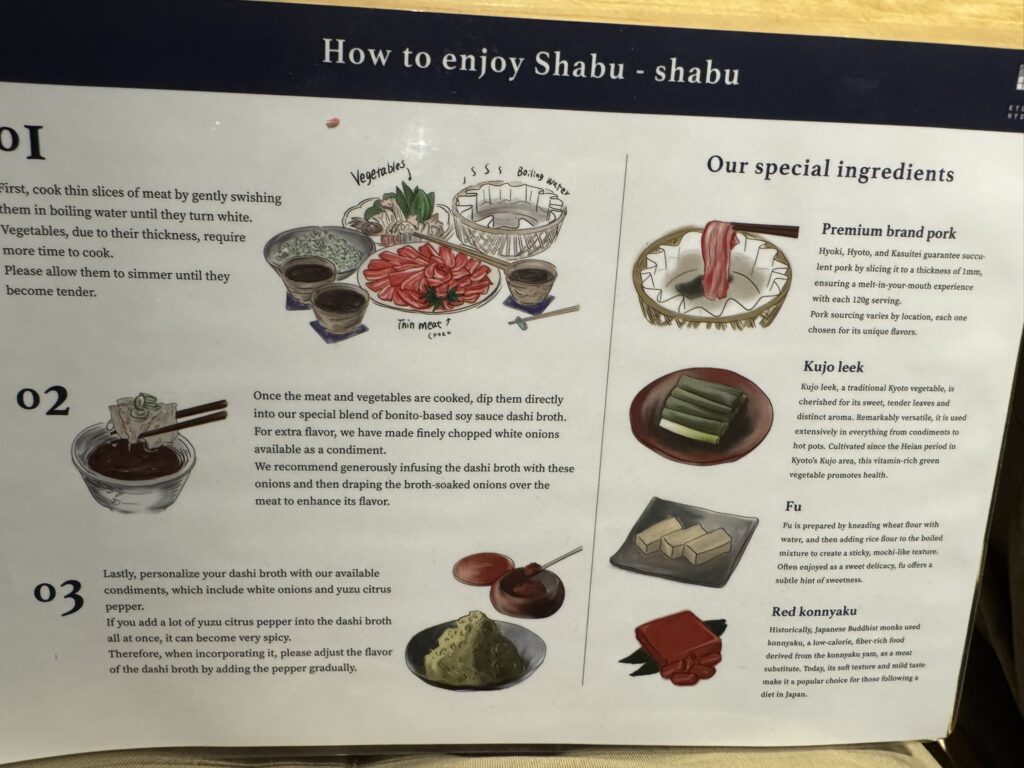
It’s delicious, but it’s an absolute ton of food. We are heading out when our server informs us that there was another noodle course yet to come – which we decline, as we just do not have any more room left.
It’s not terribly cheap, clocking in at around USD$60 per person (more or less depending on whether you go for wagyu) but I’m glad we’ve done it.
Then back to the rooms. The kids head off to bed, while the adults go out to enjoy some more free drinks at cocktail hour.
During free drinks, I am informed that one is not permitted to remove alcohol from the lounge area. (As I might have done the previous night.) Oops!
Then back to the room to finish our own packing – and I make one final nighttime excursion to the Iconic’s onsen.
No photographs of course as none are permitted, but I had wanted to visit an onsen and it seems ridiculous to skip this when Iconic has their very own.
And – well, I can’t say I’m 100% comfortable getting naked while in a public facility, but the hot water is more than welcome after all the sitting, walking, and working on my laptop.
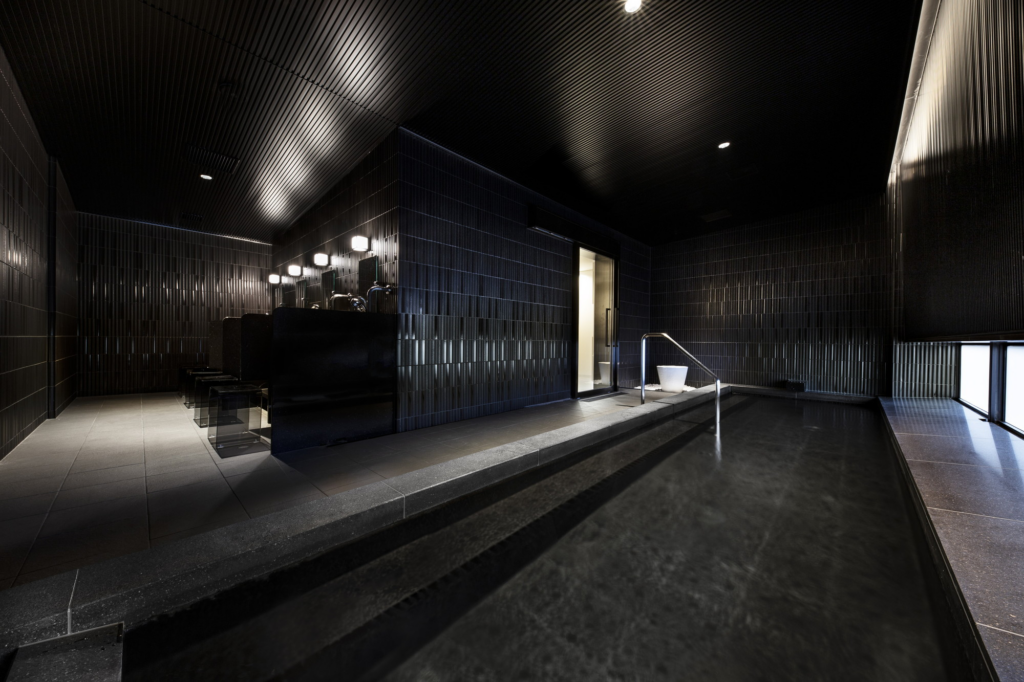
Photo Credit: Hotel Royal Park Iconic Kyoto
But by the time I wrap up, it’s a mere 5 hours til we wake up for our early morning flight – so it is most definitely bedtime.
One small wrinkle, however. It seems our first and last names are reversed on our ANA booking. So the question is – will we be allowed to board the plane?