Tasmania to Tokyo – Kyoto – Day 72 can be found here.
Here we are, on our last full day of tours. It’s 6 am, so my ability to wax philosophical is at a minimum. Frankly, I’m lucky that I manage to consume my apple, yoghurt, and 7-11 chocolate chip scones without injuring myself or others.
We’re down in front of our hotel shortly before 7 am, and our guide Dice arrives precisely on time. He has a large, luxurious van – but no so large and luxurious that we aren’t glad that we shipped some of our bags to Club Med Kiroro Grand in advance.
Dice has very kindly put together a package regarding our tour today. We’re surprised to learn that Japan is larger than Germany and that it straddles four separate tectonic plates.
We drive for perhaps half an hour, and then make our first stop where we’ll visit Arashiyama bamboo forest, Tenryu-ji Zen Garden, and the Iwatayama Monkey Park.
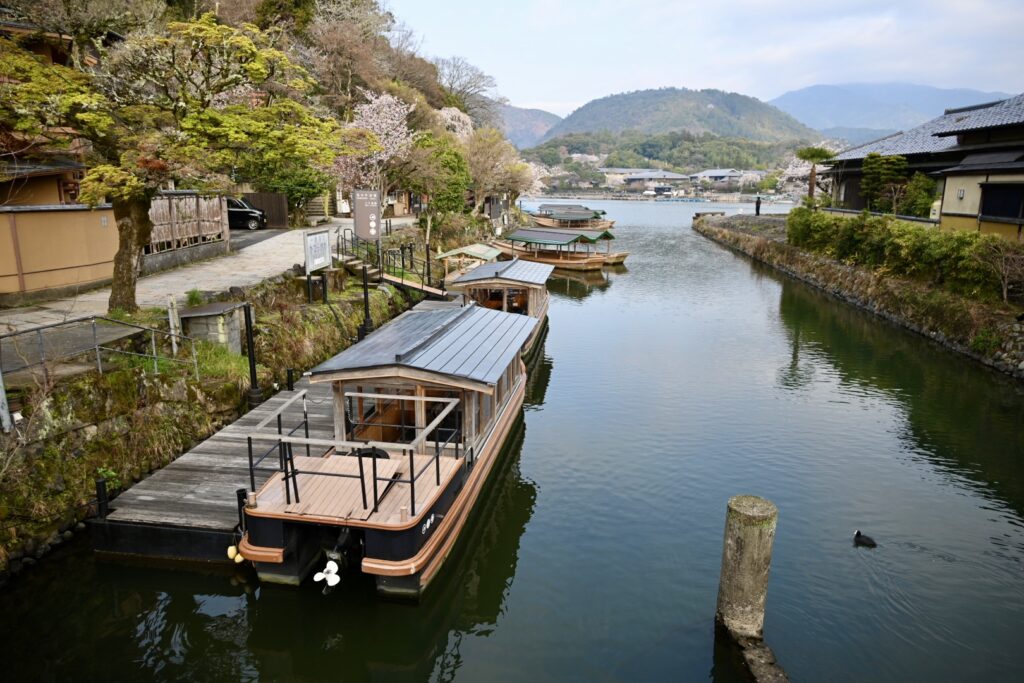
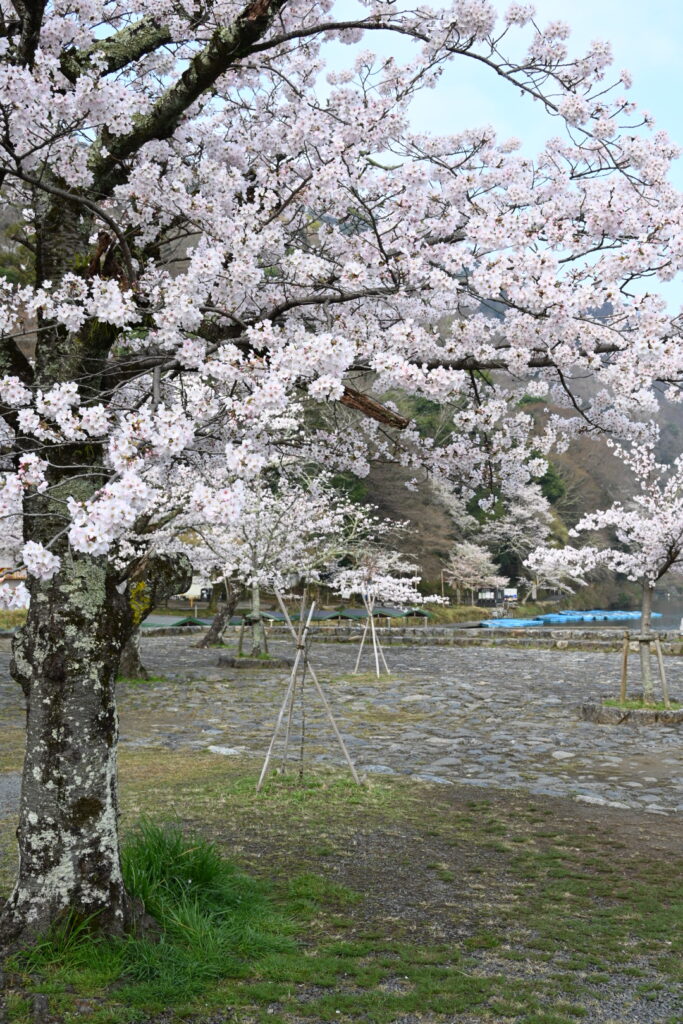
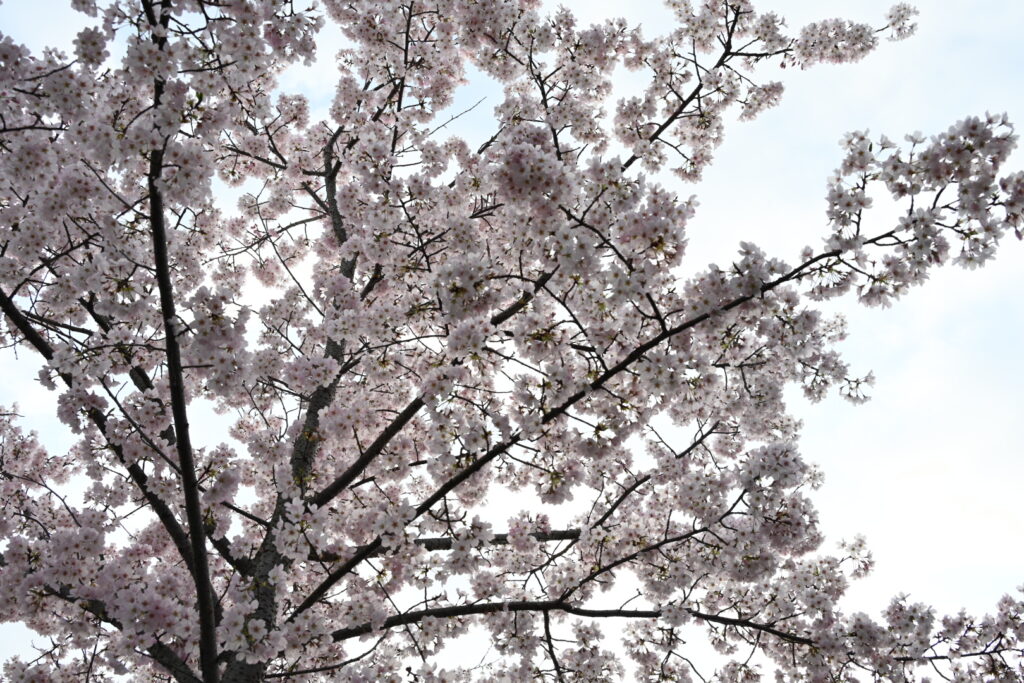
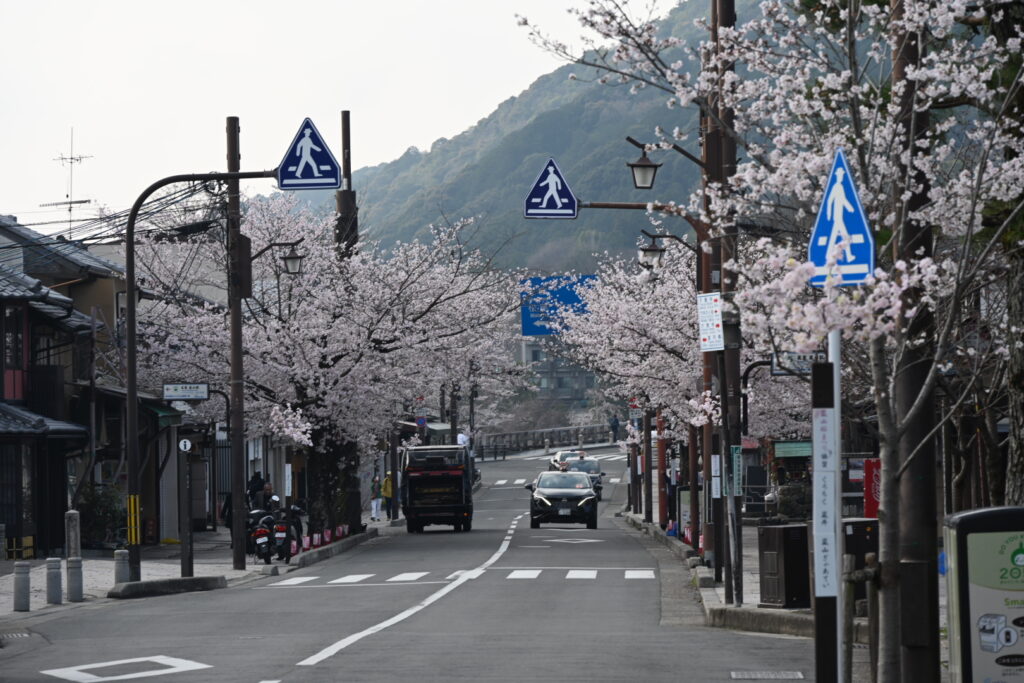
It’s a short walk from the car park to the bamboo forest. We pass some more sakura along the way and Dice recommends we get our photos now as it will be extremely busy in about an hour:
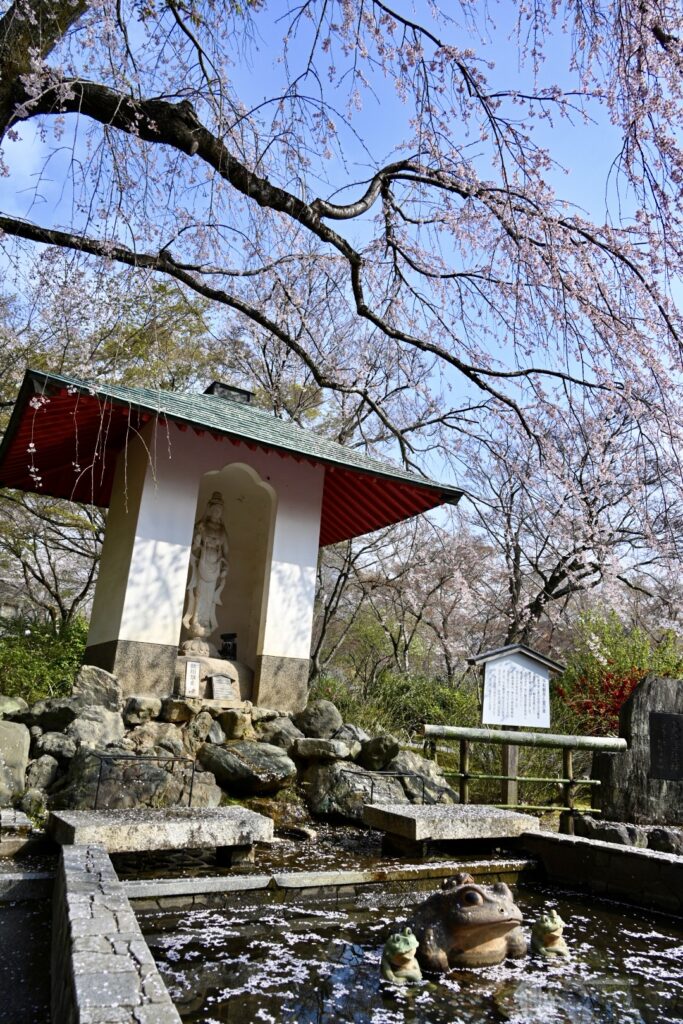
We stop briefly at a shrine where people stop to pray for academic success:
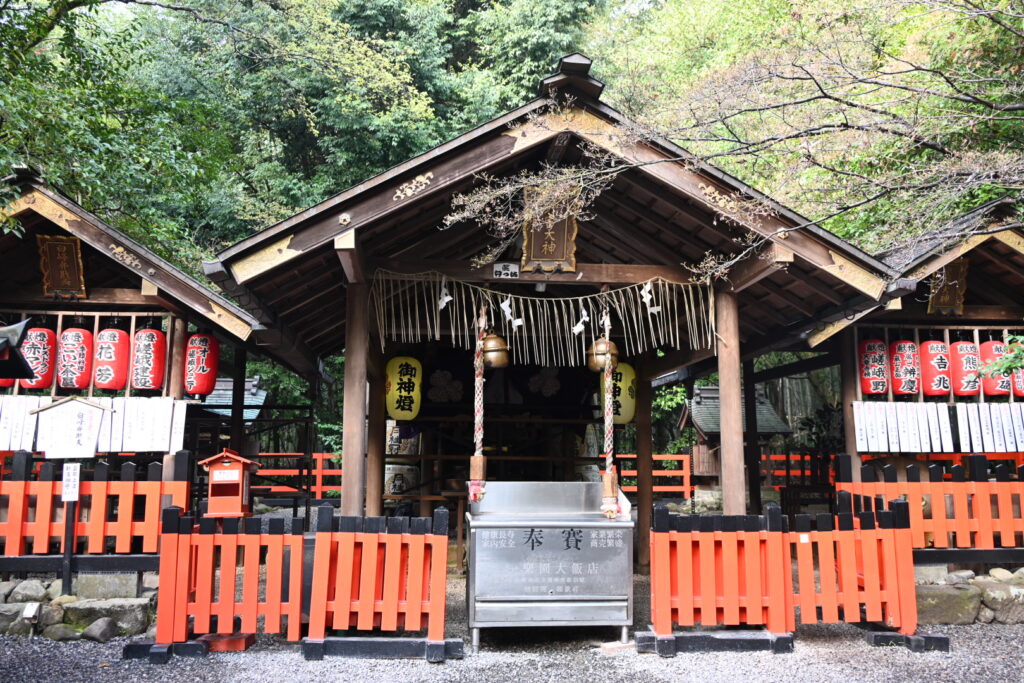
Our kids bow extra deep this time around.
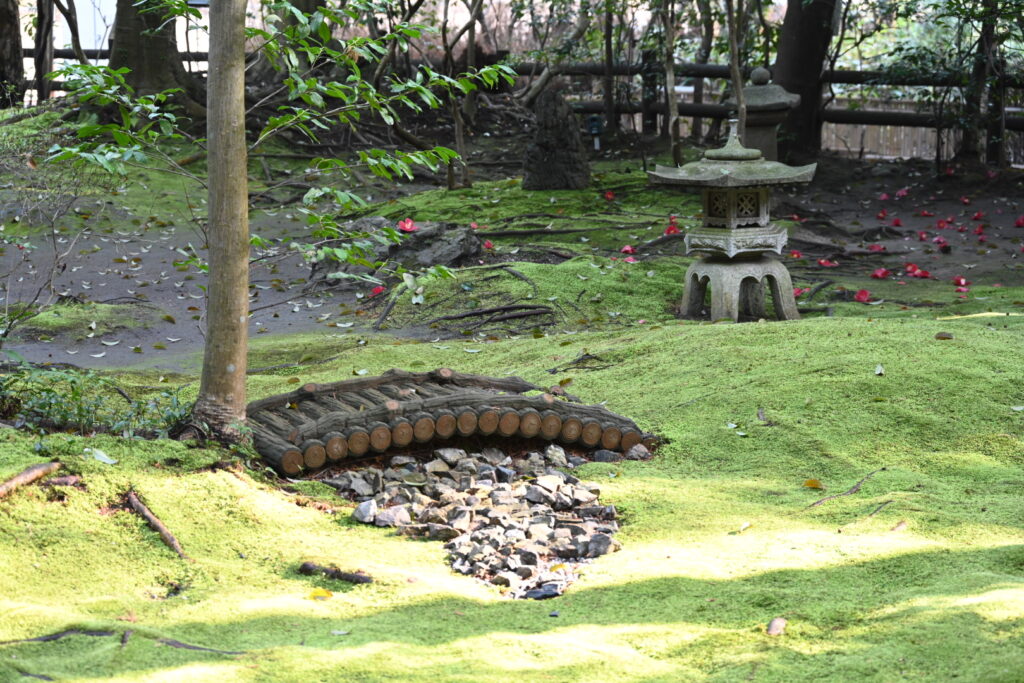
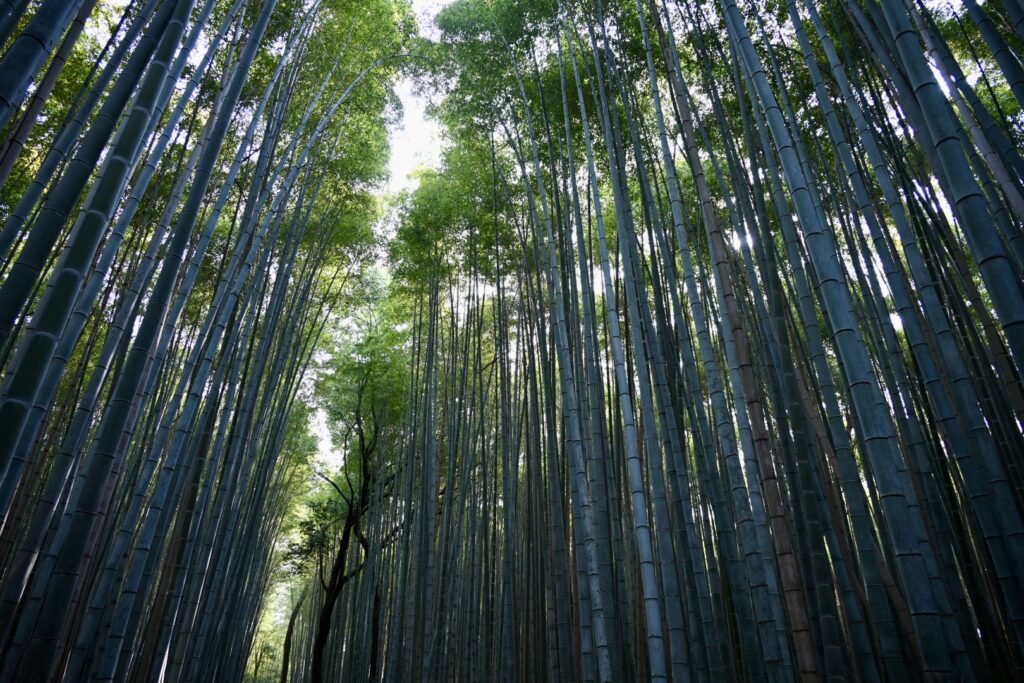
We soon reach the park itself:
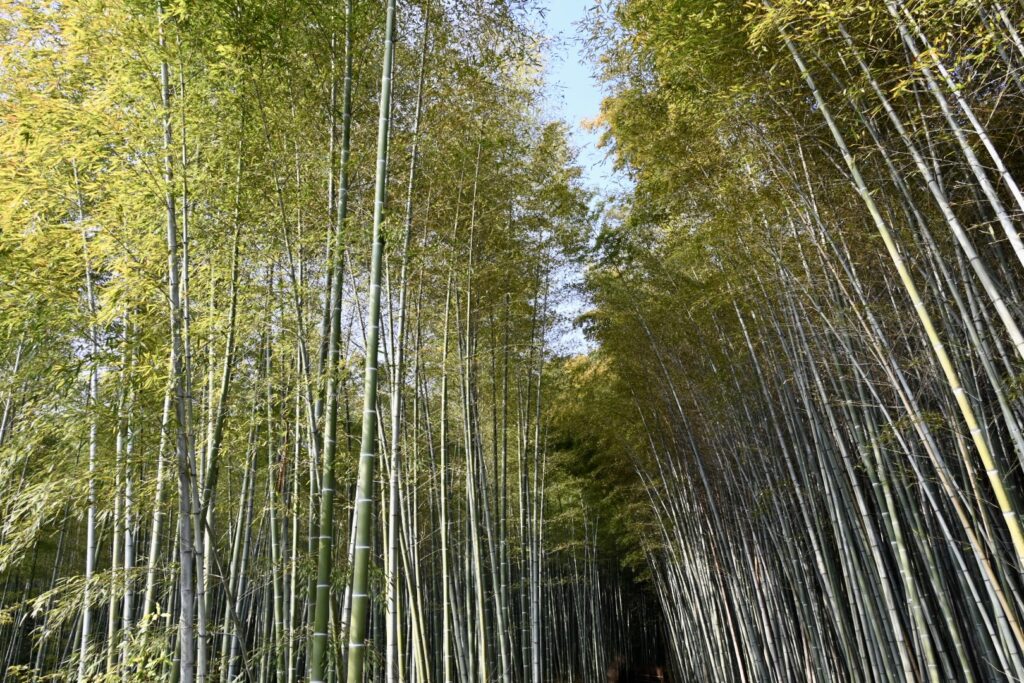
It’s crowded, but nothing like it will be later in the day.
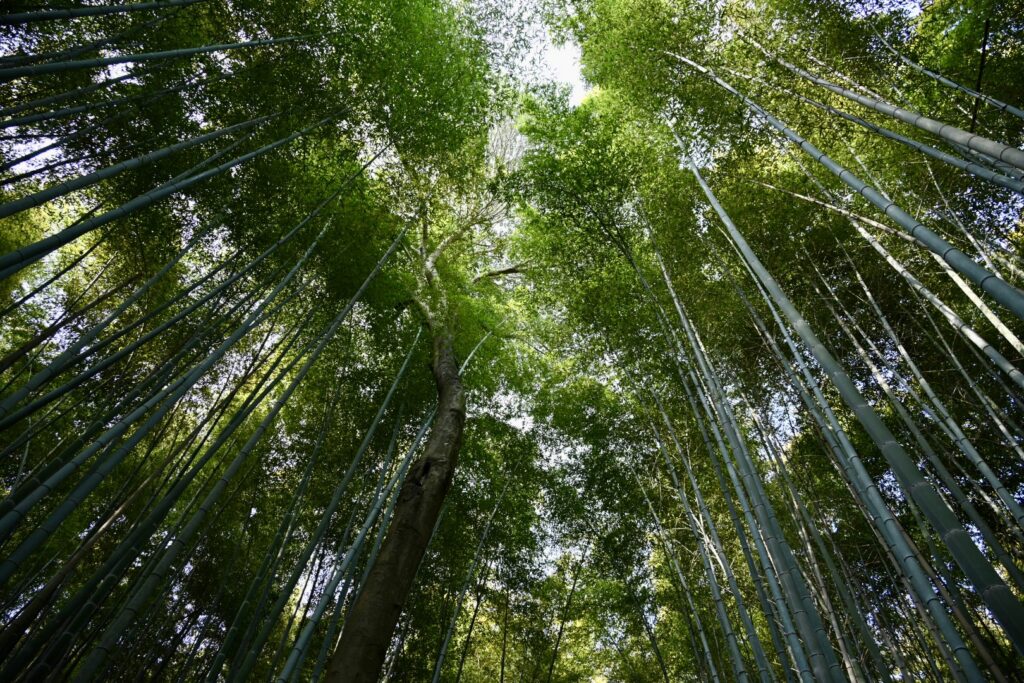
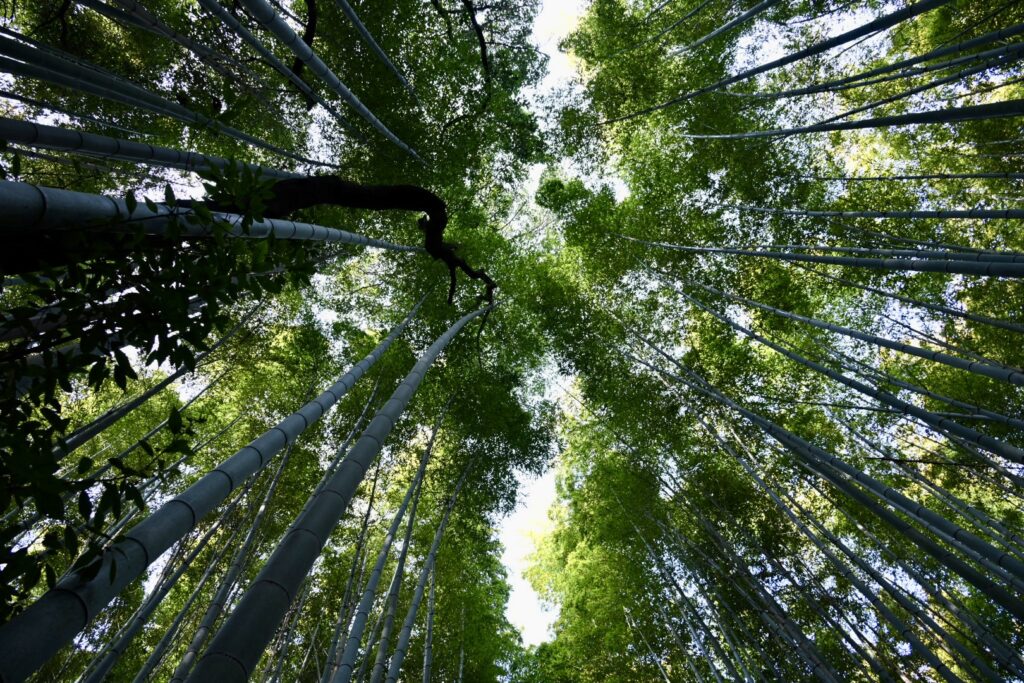
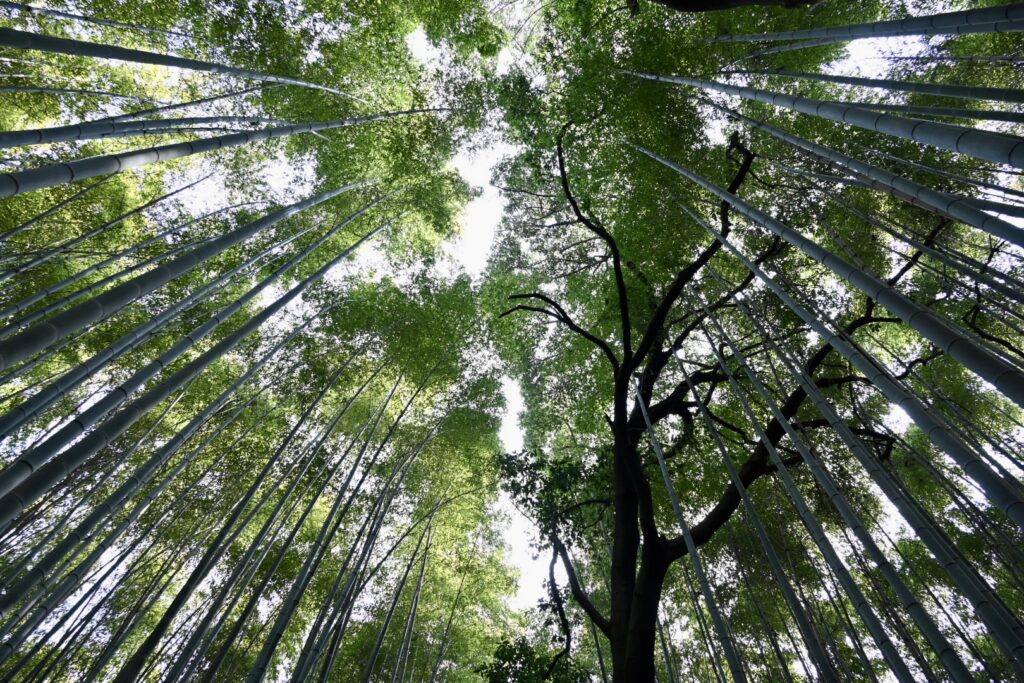
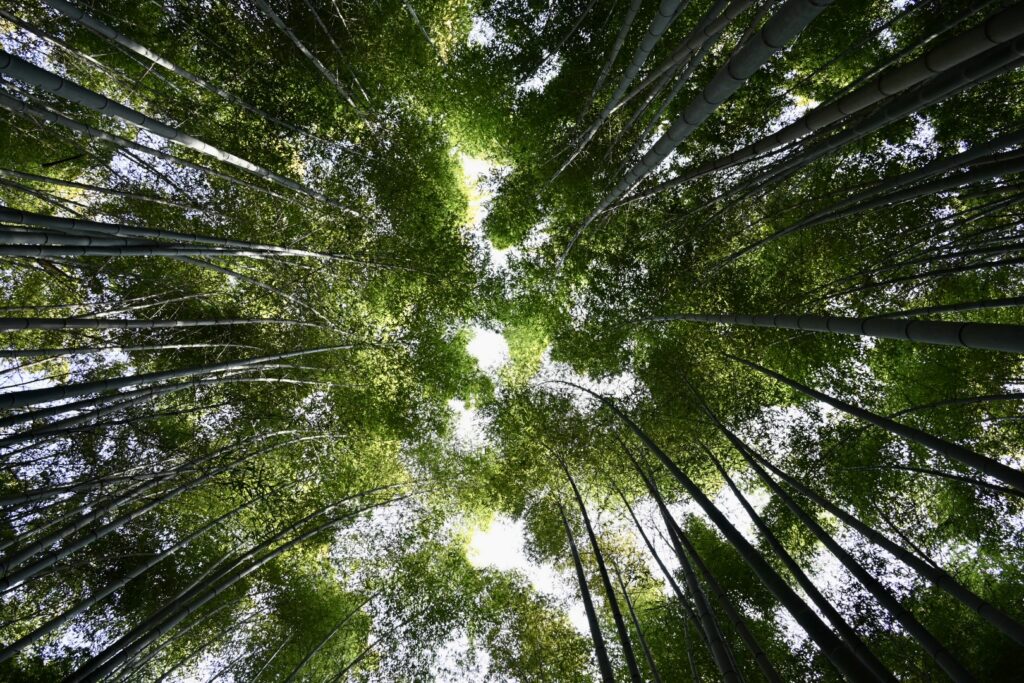
On the bright side, you get the best view by looking up:
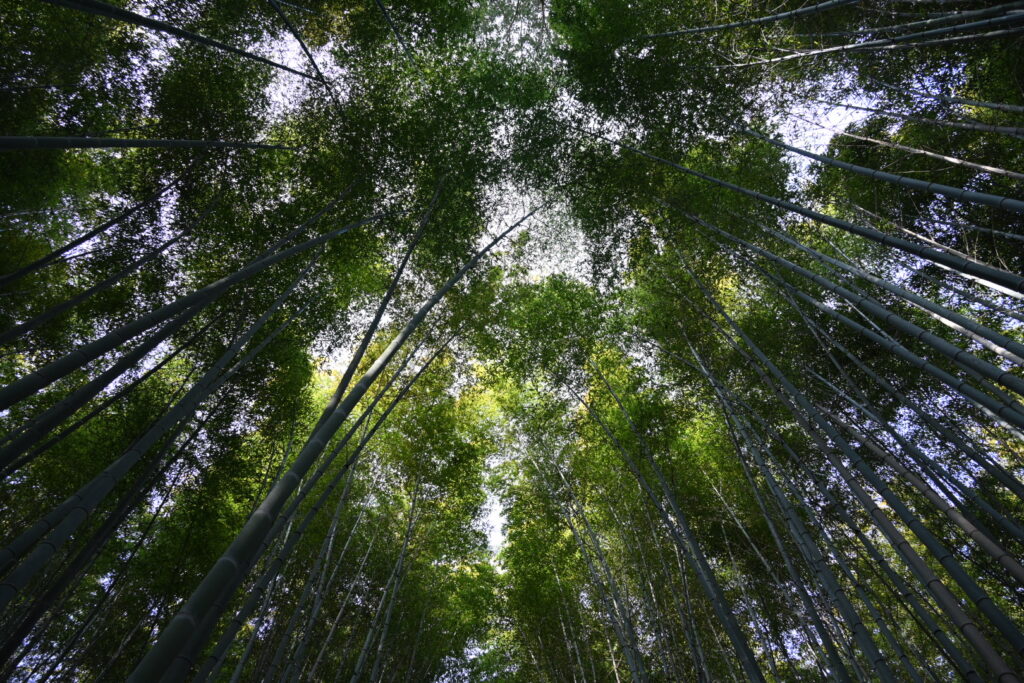
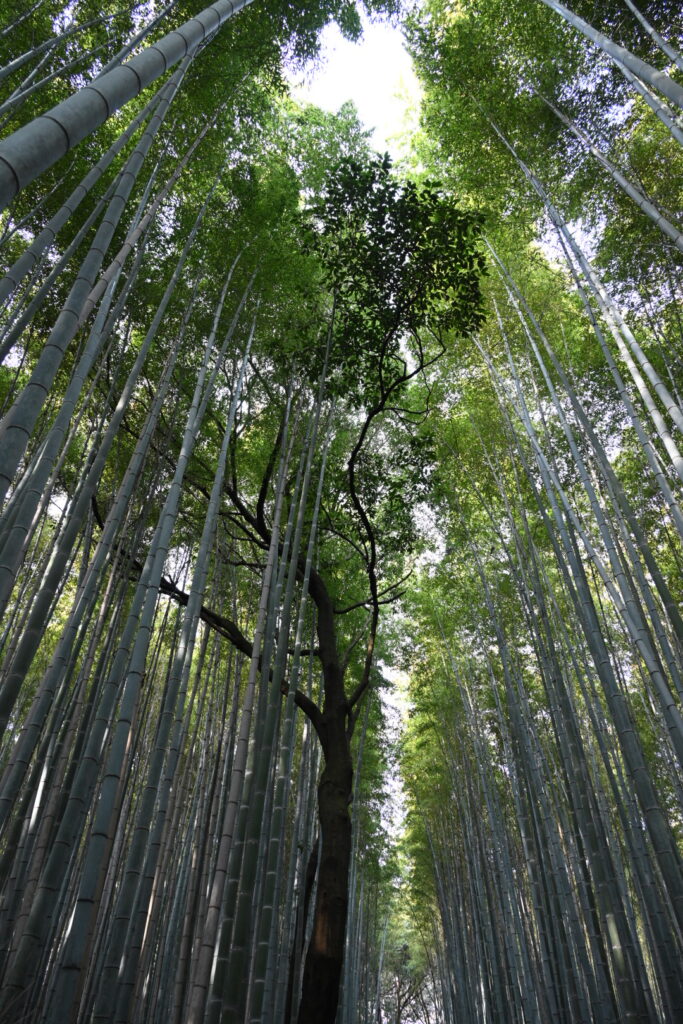
It’s easy to see why bamboo is such a commonly used material in Japan. It grows here readily, and develops remarkably quickly.
From here we continue up a hill, and stop at a lookout point over the river:
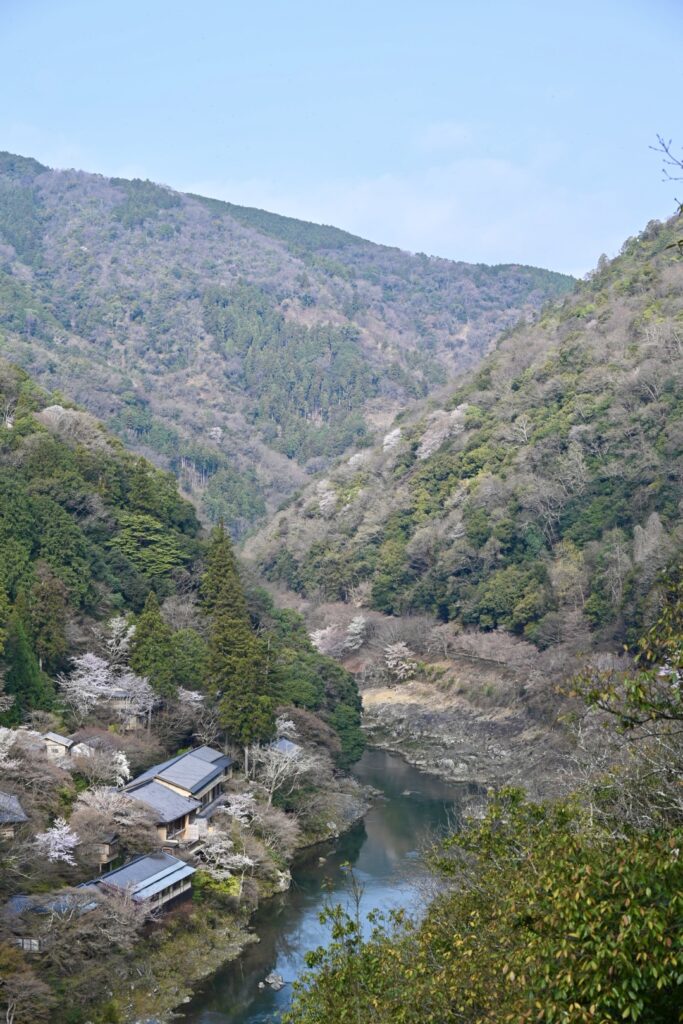
With the sakura blooming in the distance:
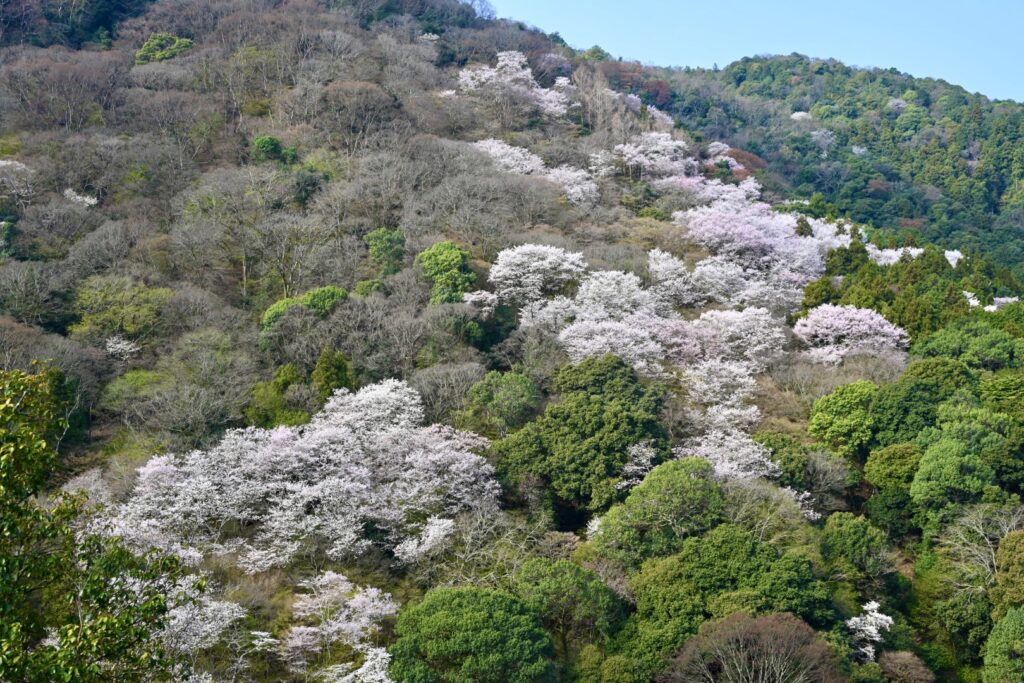
All of those bare trees will bloom in time.
We spot a monastery in the distance:
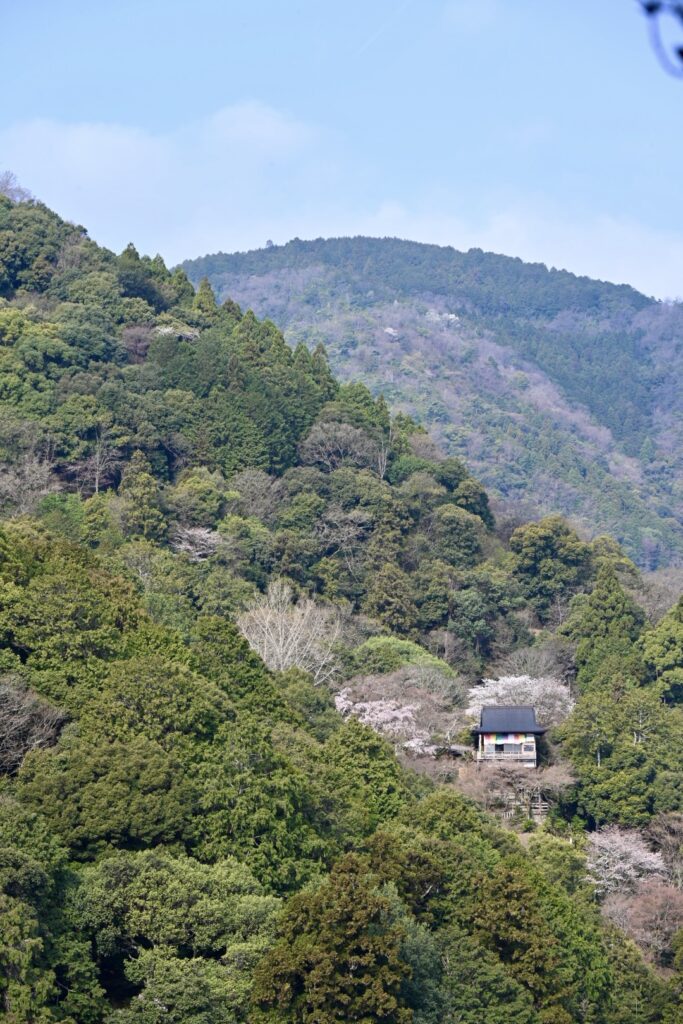
There’s a monk who lives there and maintains the property, but it’s unclear whether anyone is prepared to succeed him once he can no longer manage on his own.
Dice notes that it can take 45 minutes to reach the monastery from the hotel below it and an additonal 45 minutes into town. He does have a scooter permit for the path into town which is helping him stay on.
Back down through the garden:
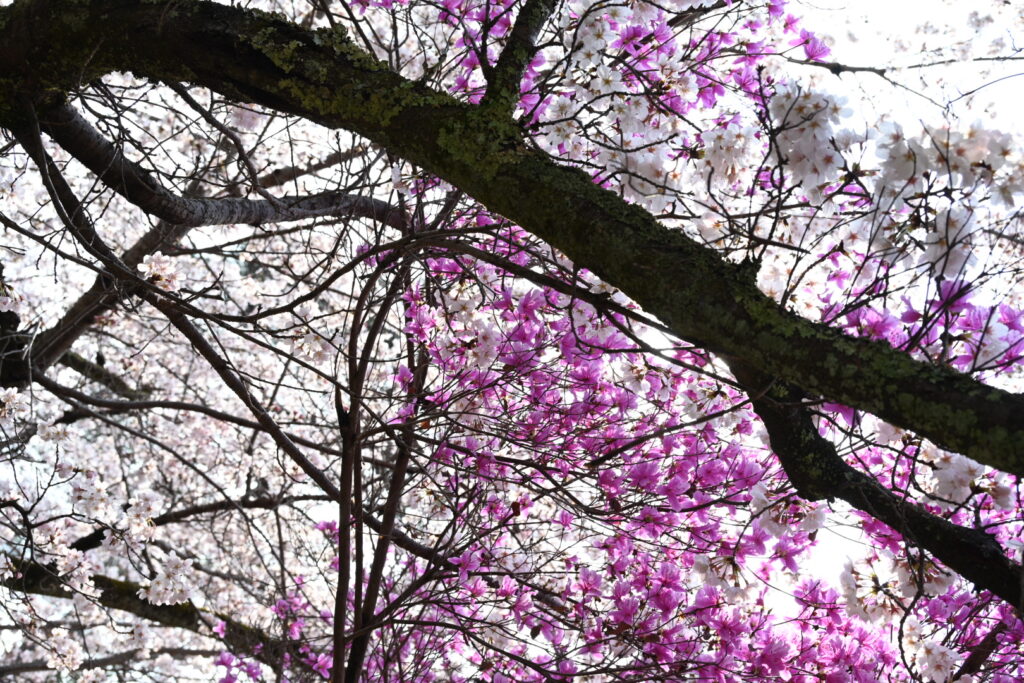
Then we double back through the bamboo forest:
And enter into Tenryu-ji Zen Garden:
From the Tenryu-ji website:
“Tenryu-ji was established in 1339 by the shogun Ashikaga Takauji (1305-1358) in memory of Emperor Go-Daigo (1288-1339), with the eminent Zen master Muso Soseki (1275-1351) appointed as founding abbot.
“Landed estates were donated to the new temple to help fund its construction, but as the resulting revenues proved insufficient Muso Soseki and Ashikaga Tadayoshi devised a plan to send two trading ships to China and use the resulting profits to complete Tenryu-ji’s construction. This plan was a great success, and the temple was officially consecrated in 1345.
“It was designated first among Kyoto’s Five Mountains (the city’s five major Zen temples), a ranking it maintains to the present day.”
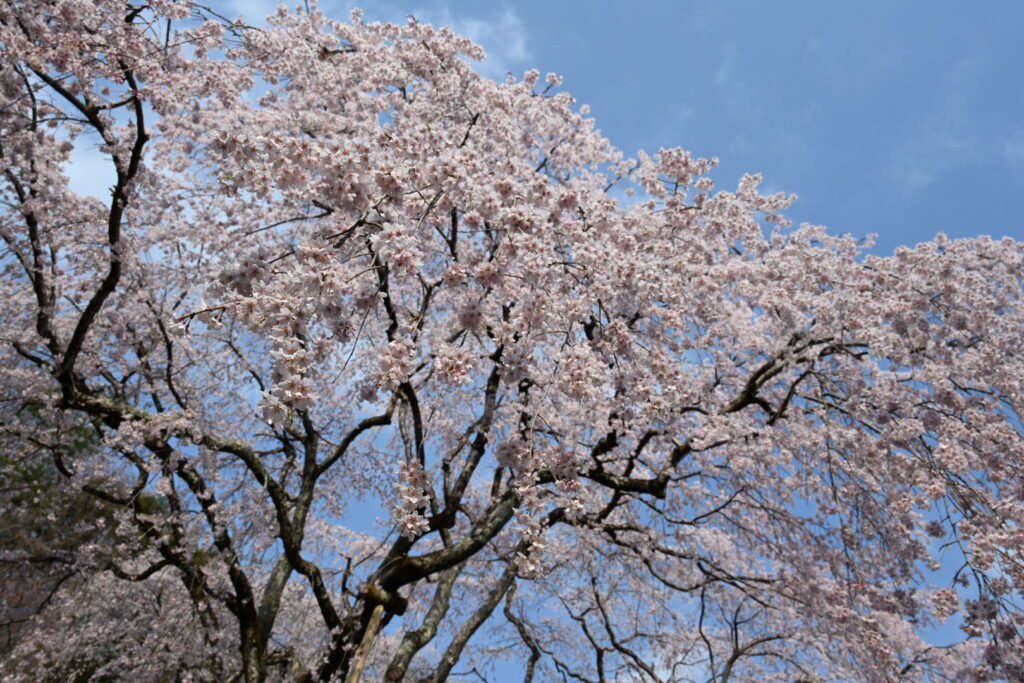
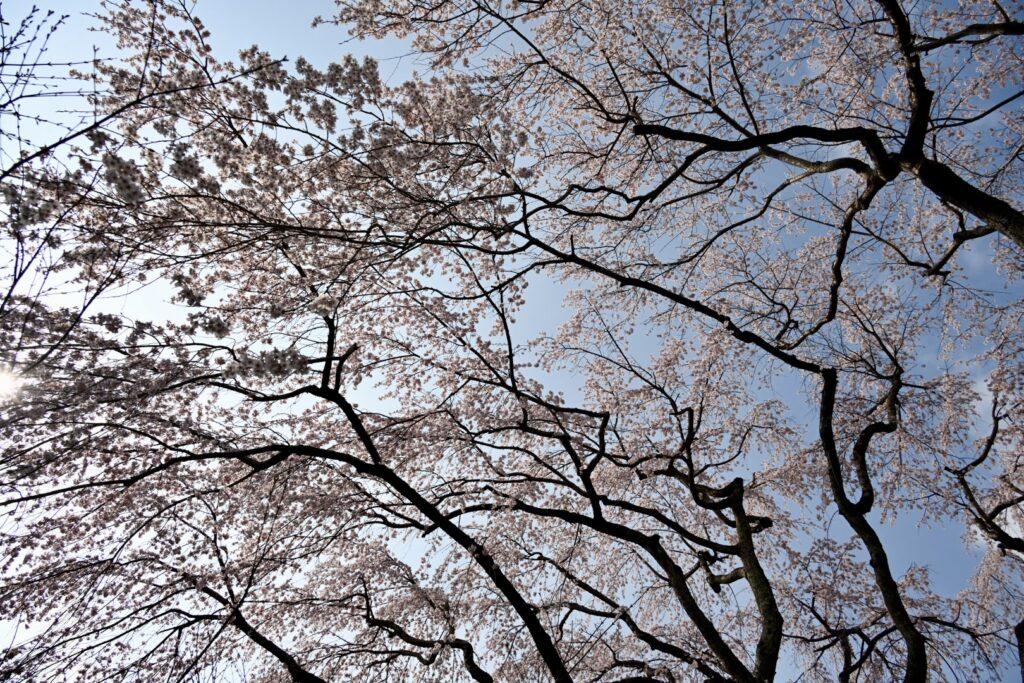
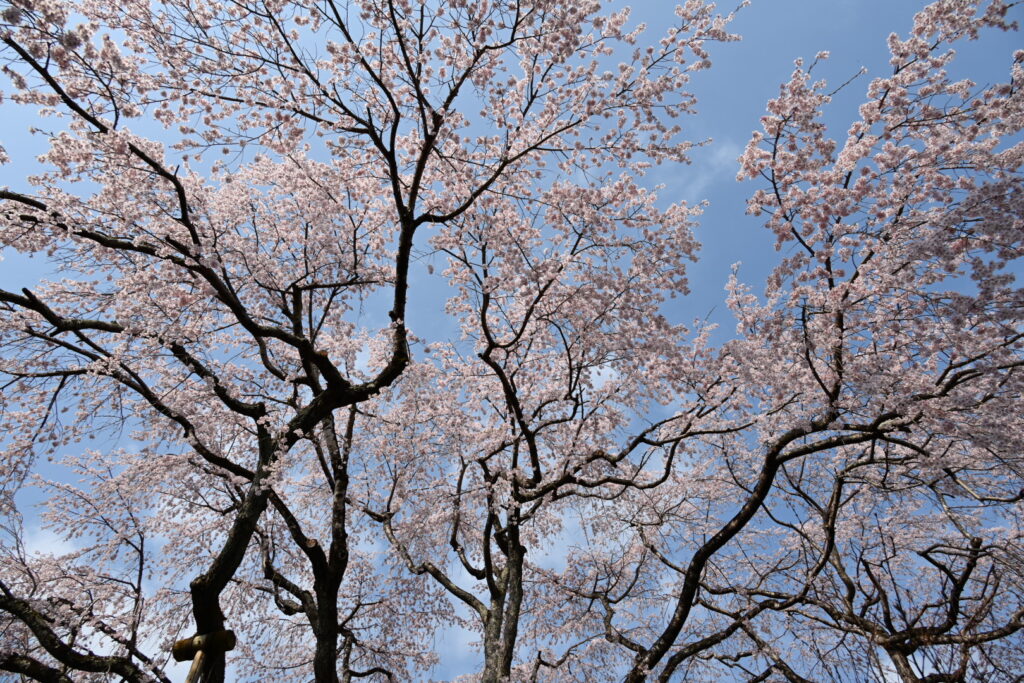
The signs note that this is the best time to see the weeping cherry trees:
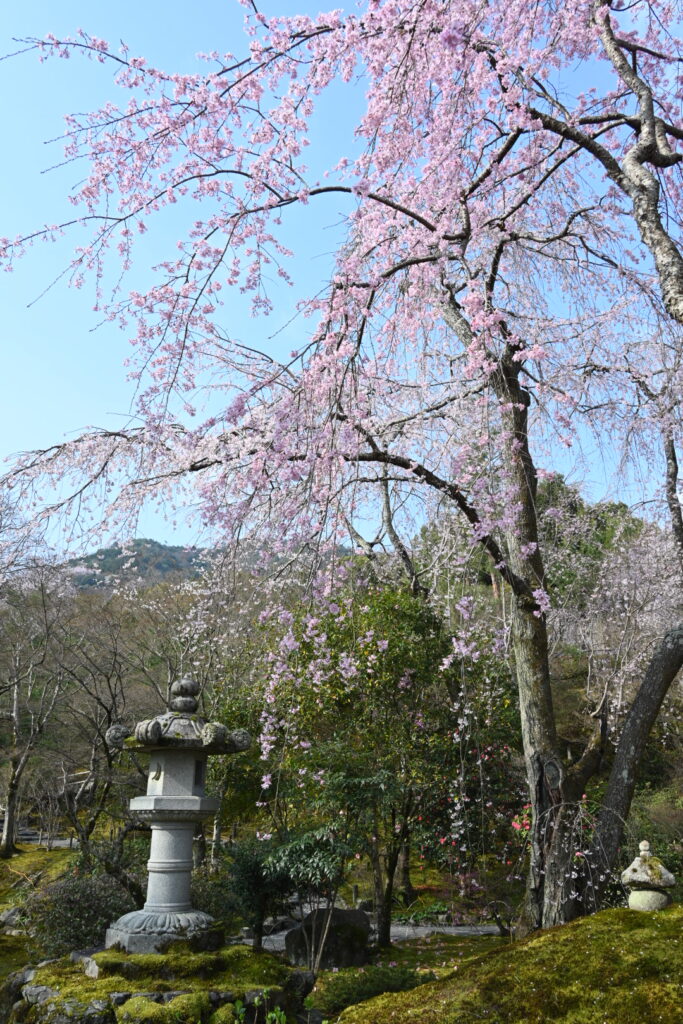
They are not kidding, not one bit.
It doesn’t help that heavy rain is expected for tomorrow so Dice has warned us that this is it for peak bloom in Kyoto and to maximize our enjoyment (and photography) now. There will of course be other pockets that bloom later but this is the “official peak.”
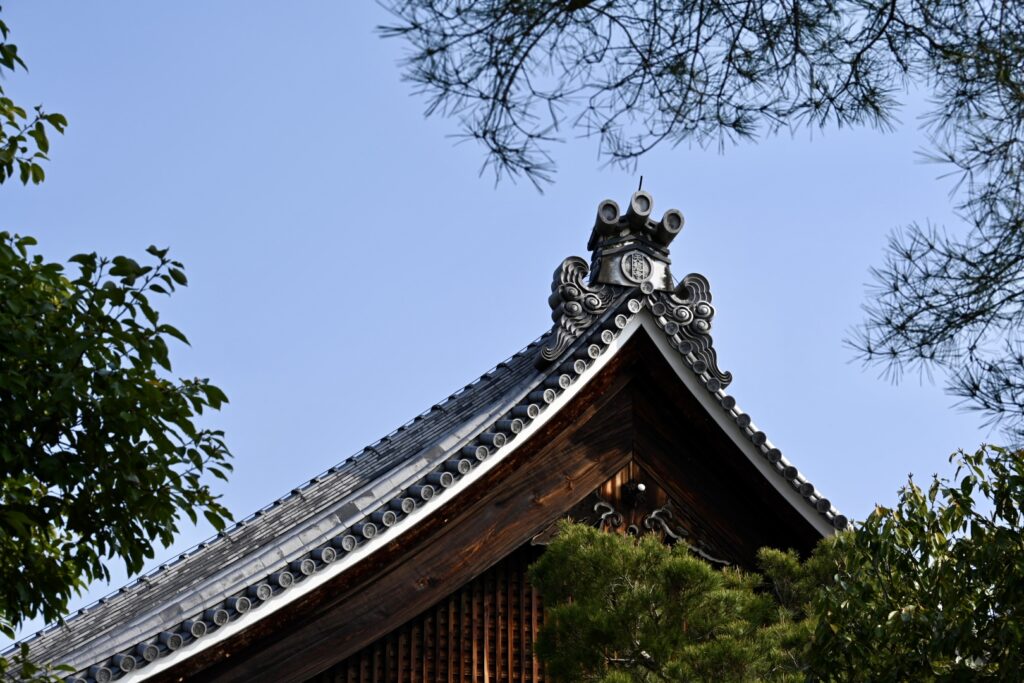
The gardens here are absolutely lovely, as is the koi pond:
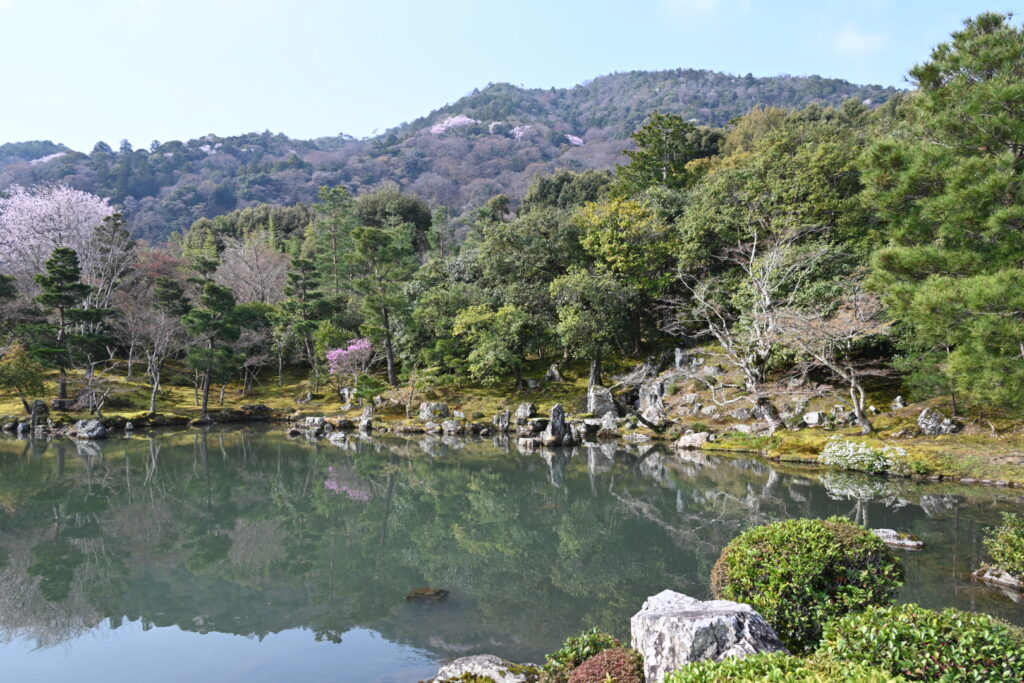
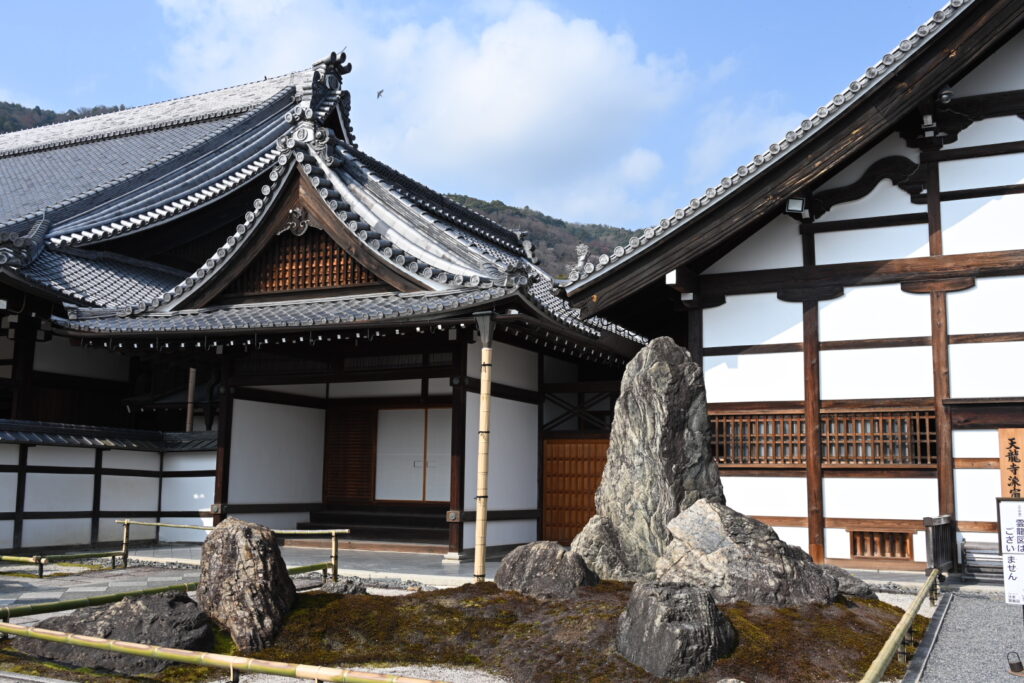
We bid farewell to Tenryu-ji:
And we hike up to the Monkey Park, walking back along the river on the way:
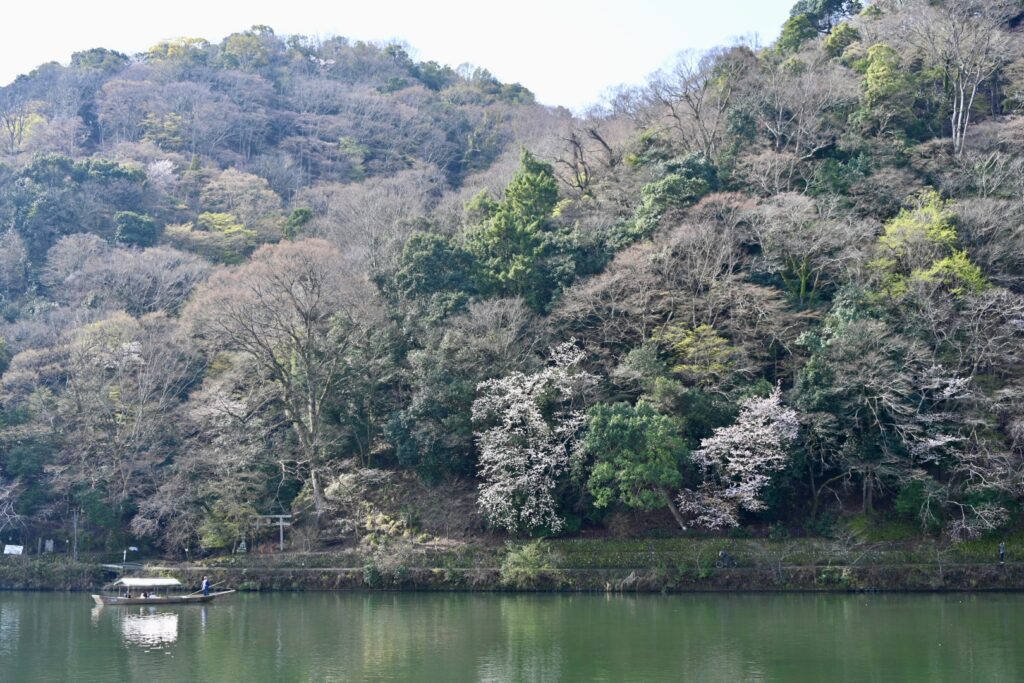
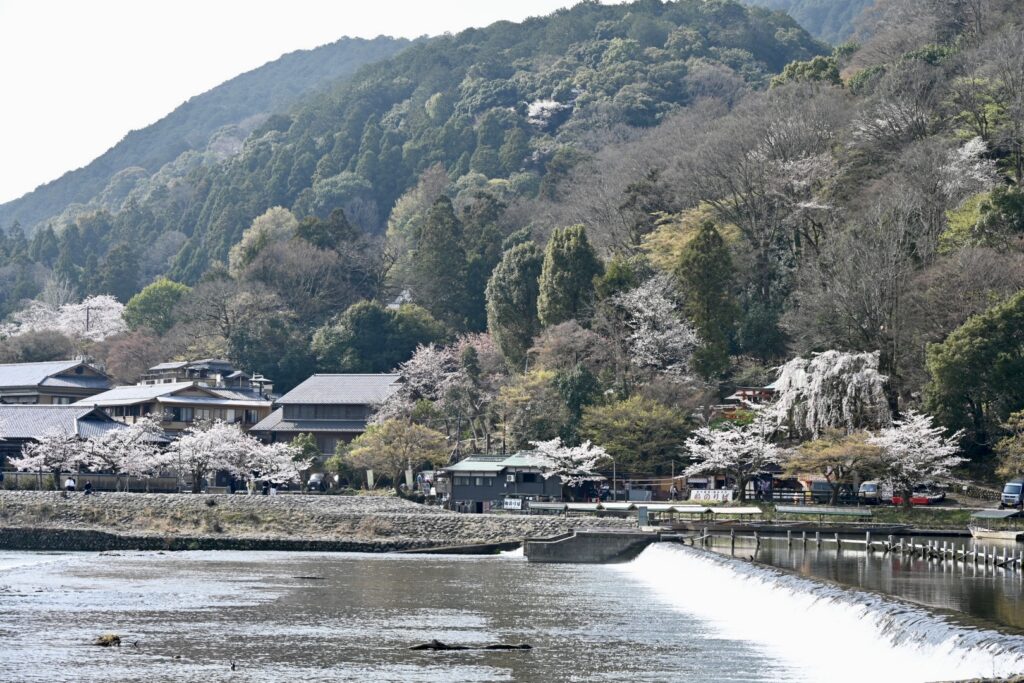
And spot some cormorants diving for fish:
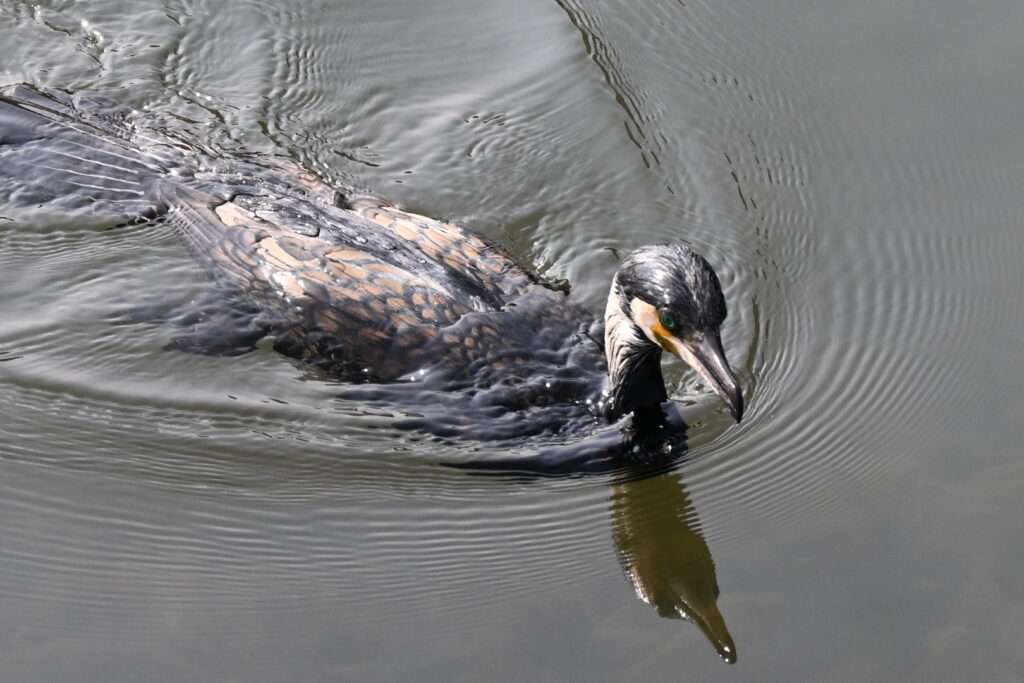
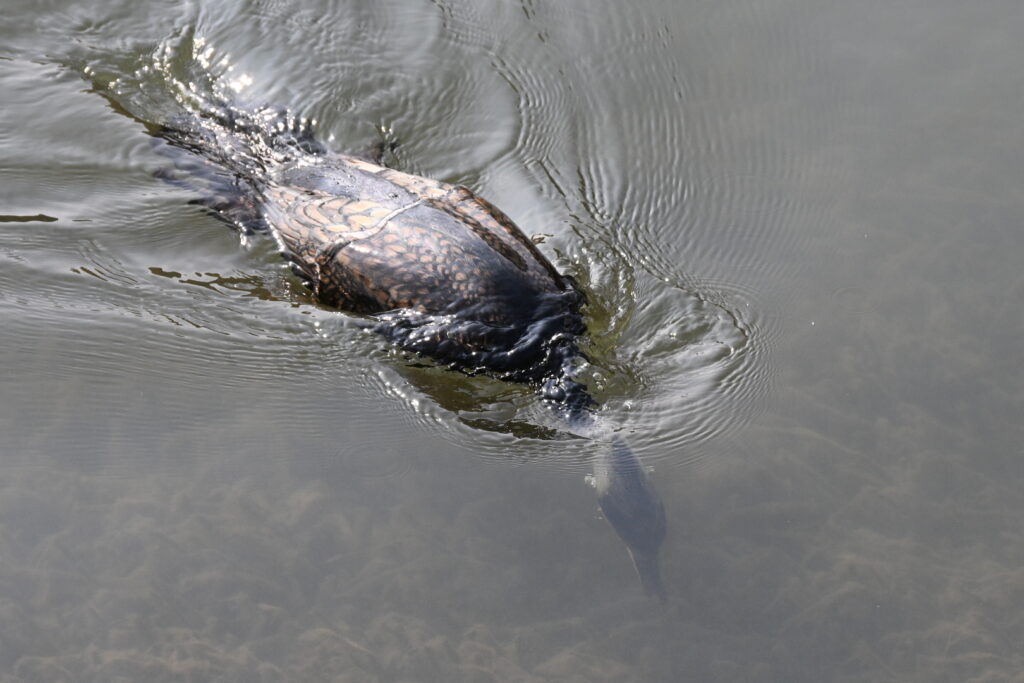
Dice notes that some of the fishermen will ‘borrow’ the cormorants on occasion for traditional cormorant fishing. There is increasing pressure to stop this practice, however, as it’s viewed as cruel to the cormorants.
There’s also an egret:
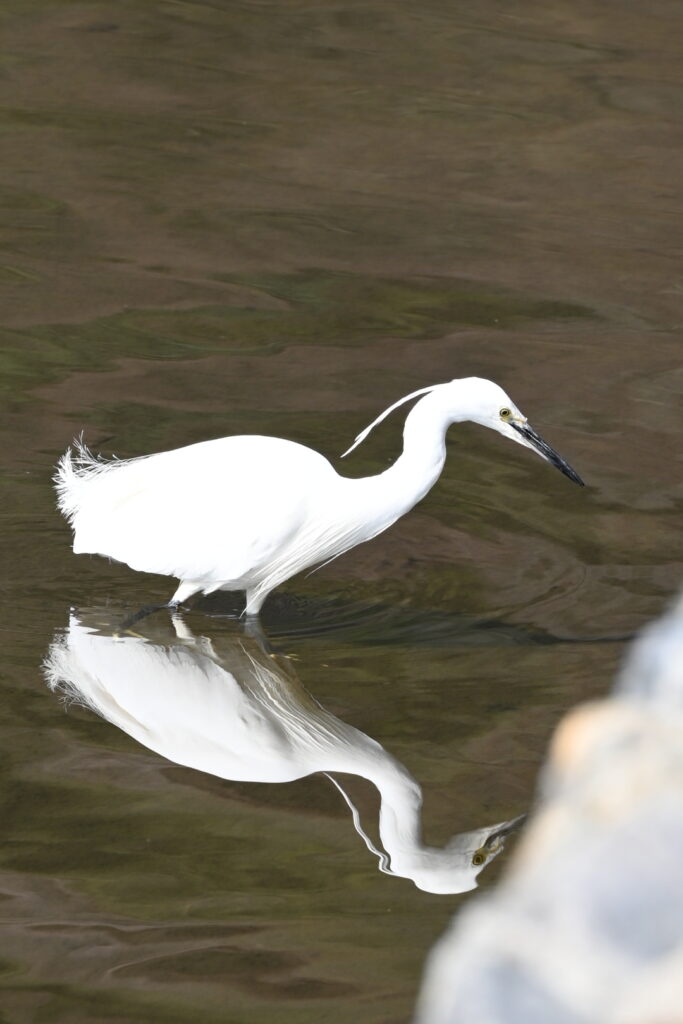
Back across the bridge we go:
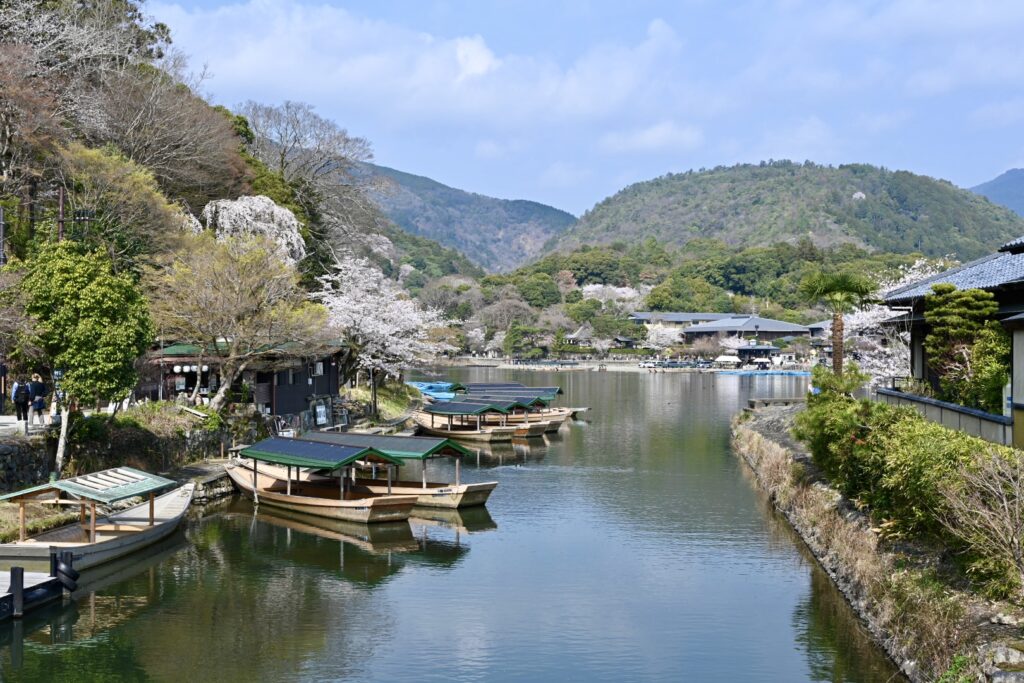
We soon reach the Monkey Park. The sign advises that it’s a mere 20 minute hike, but most of that is vertical. It’s not overly challenging, but it’s not trivial either.
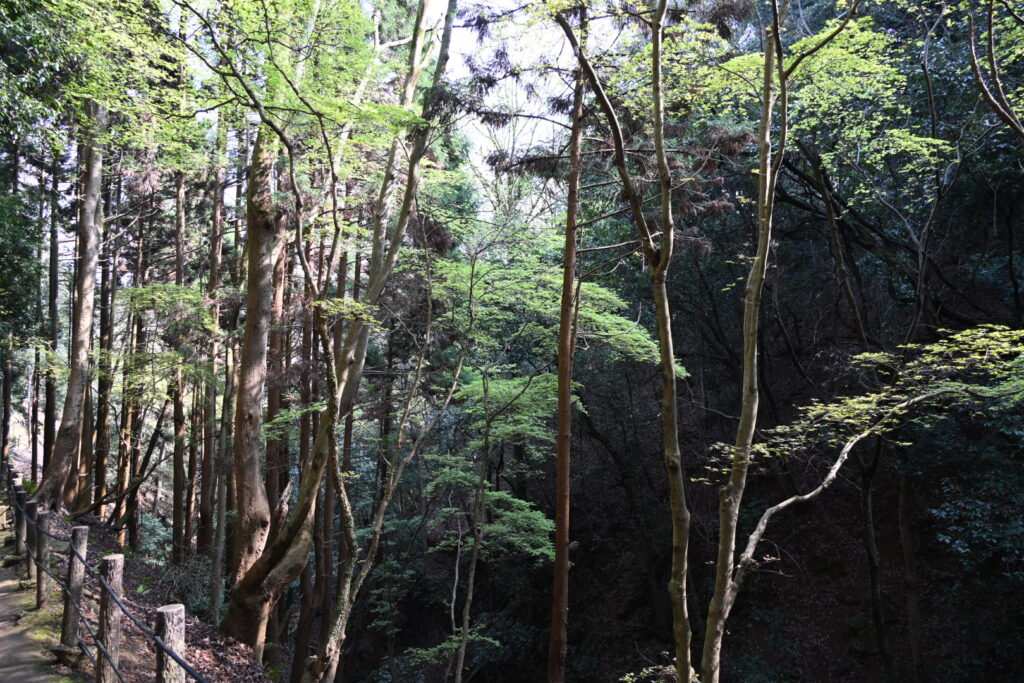
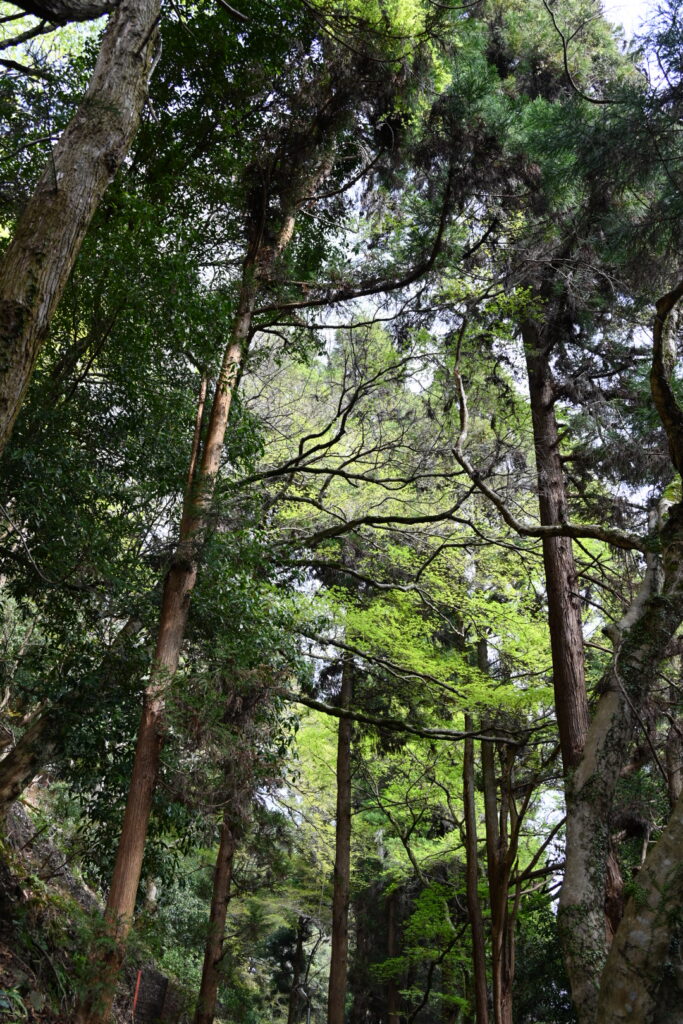
There are only one species of monkey in Japan – the Japanese macaque – so this is the same species that one might see bathing in one of Japan’s hot springs, aka “snow monkeys.”
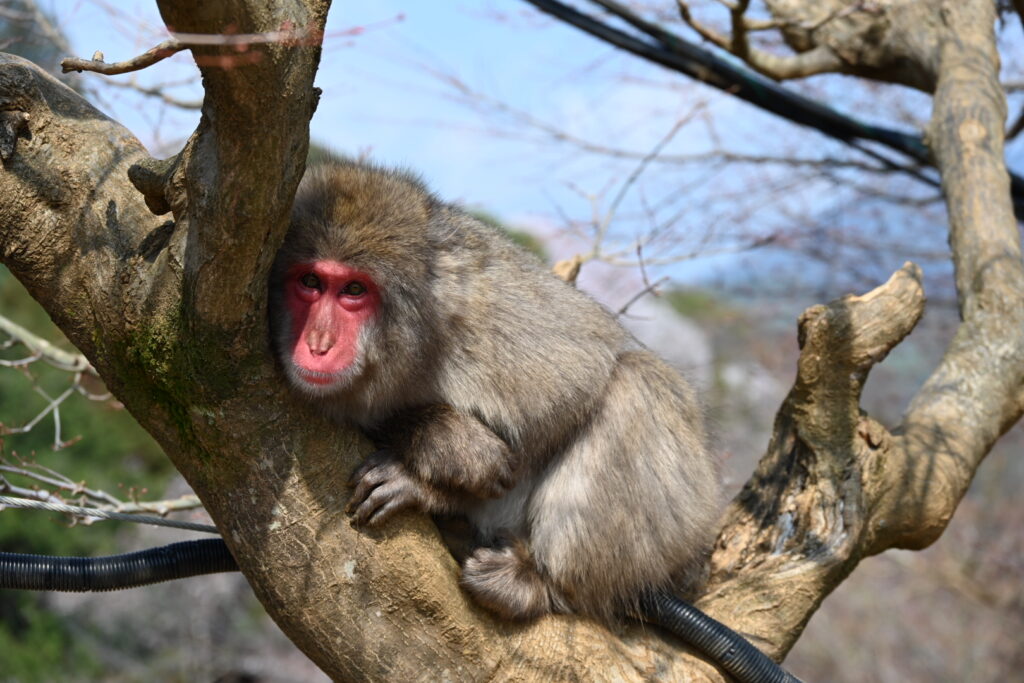
Iwatayama Monkey Park has strict rules as to how close you can get to the monkeys, and effectively ‘cages’ any visitors who want to feed the monkeys. (As opposed to caging the monkeys.)
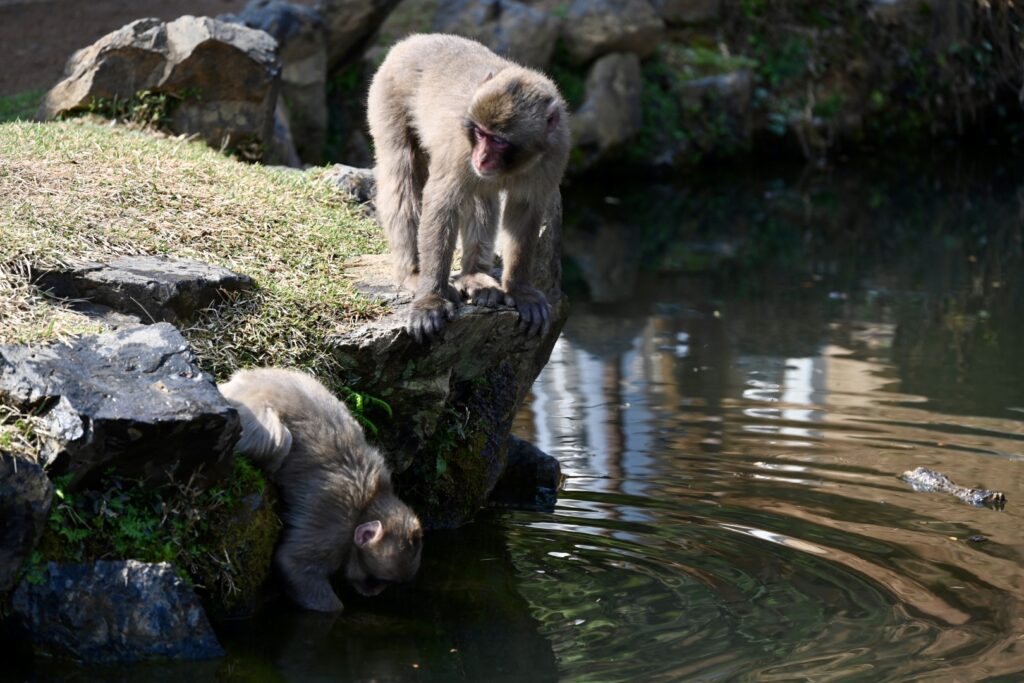
The park maintains that the monkeys are wild. We’re not wildly in favour of feeding wild animals, but at least there are strict rules to control what the monkeys are fed, and how.
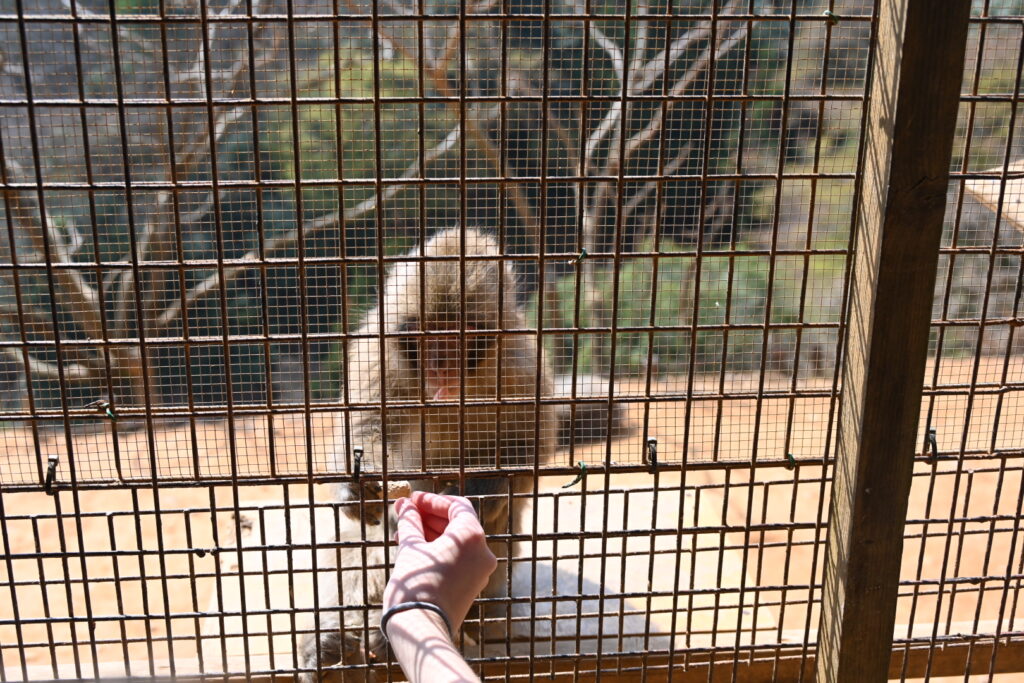
After feeding the monkeys roughly 20 grams of food (only peanuts and apple purchased from their store are allowed), we return to the pool once more to watch them bathe and play:
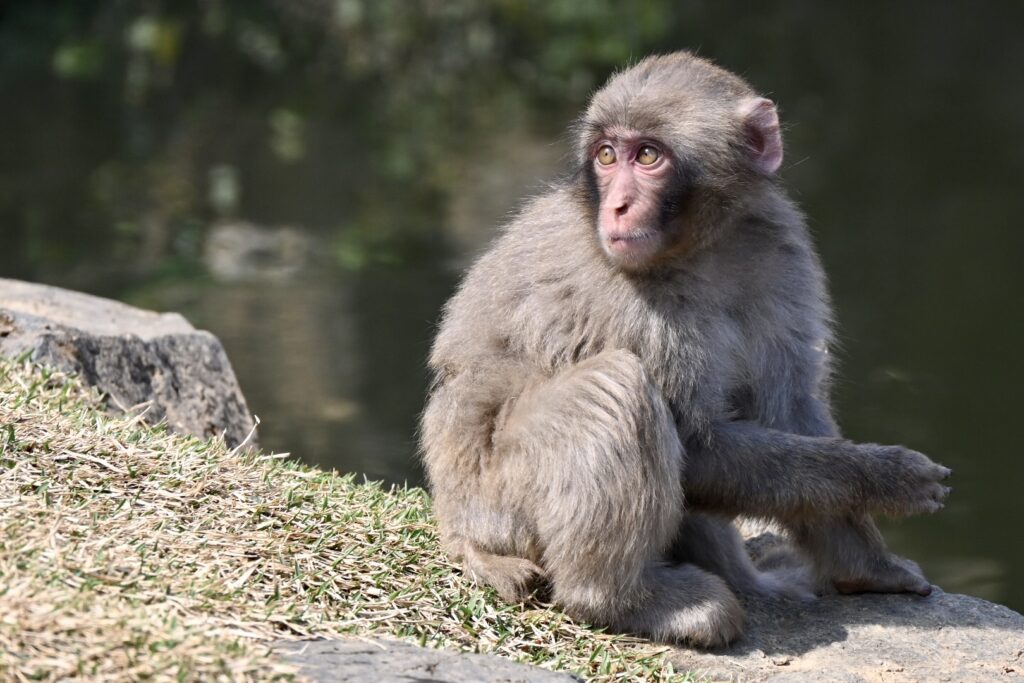
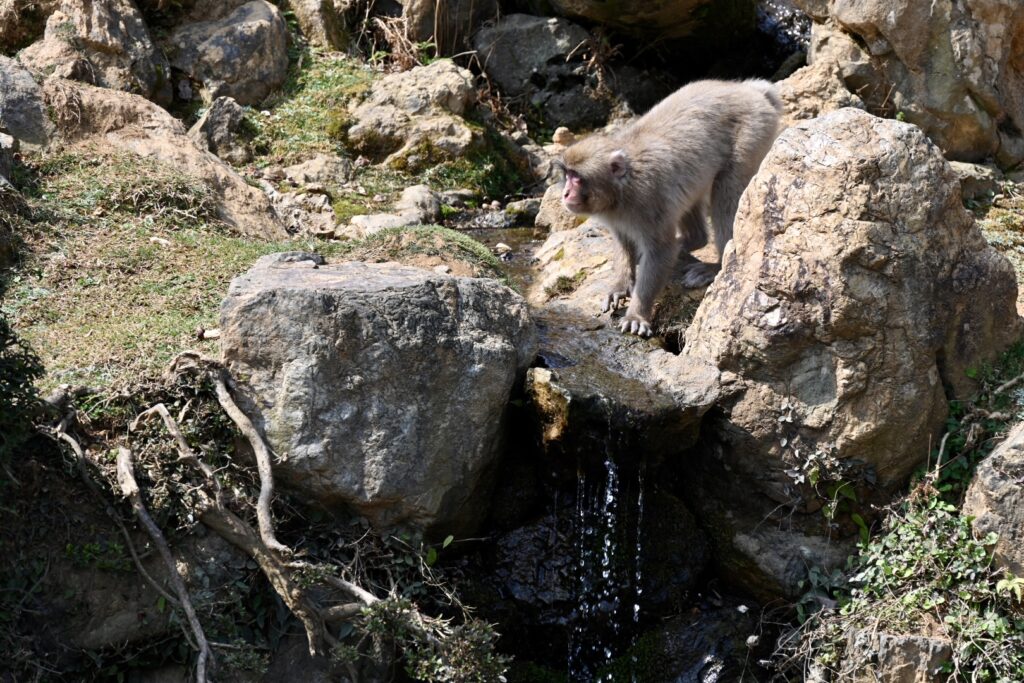
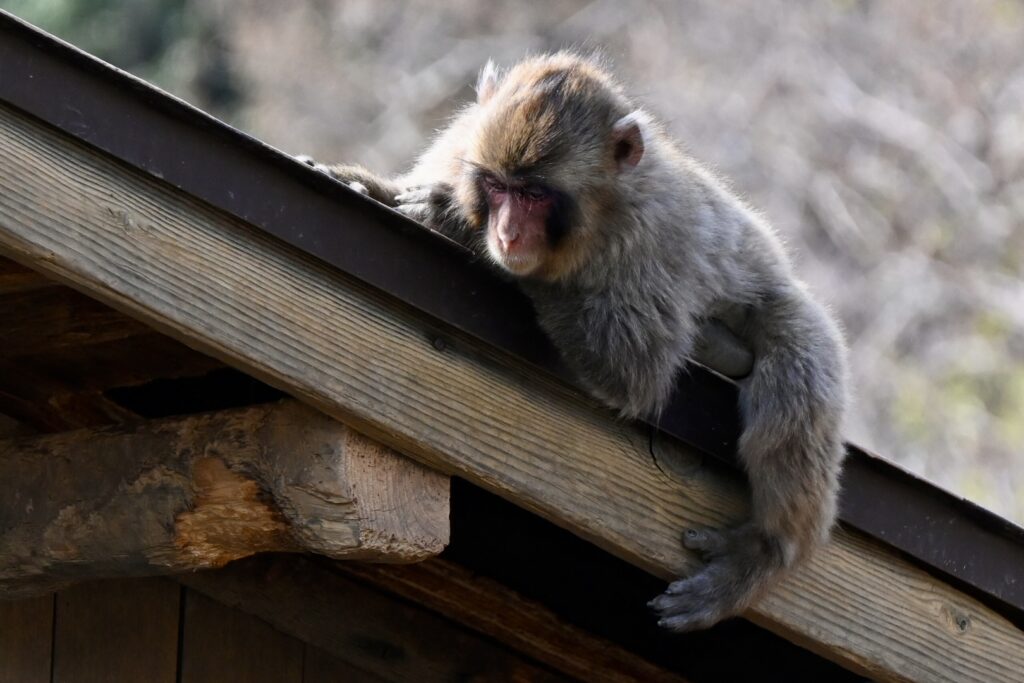
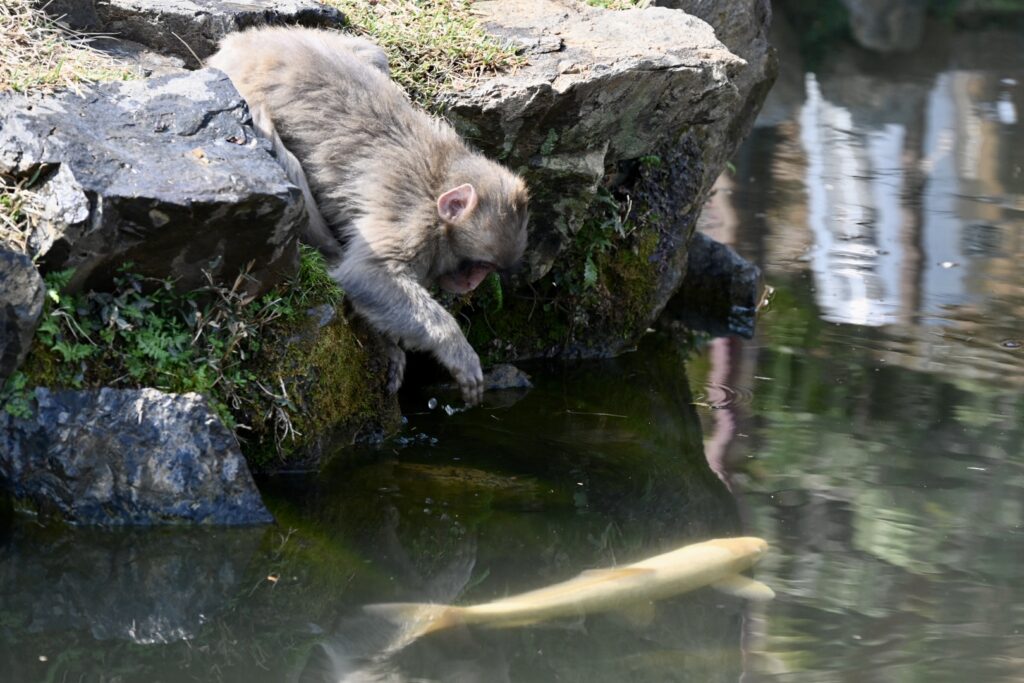
We spot at least six minders who seem equally split between ensuring the visitors follow the rules and that the monkeys don’t gang up on anyone. One male in particular is much more of a nuisance than the rest. (But try as I might, I can’t remember if that was a monkey or a human…)
We return to Dice’s van and drive roughly 20 minutes to Ramen Mugyu Vol. 1 Main Shop:
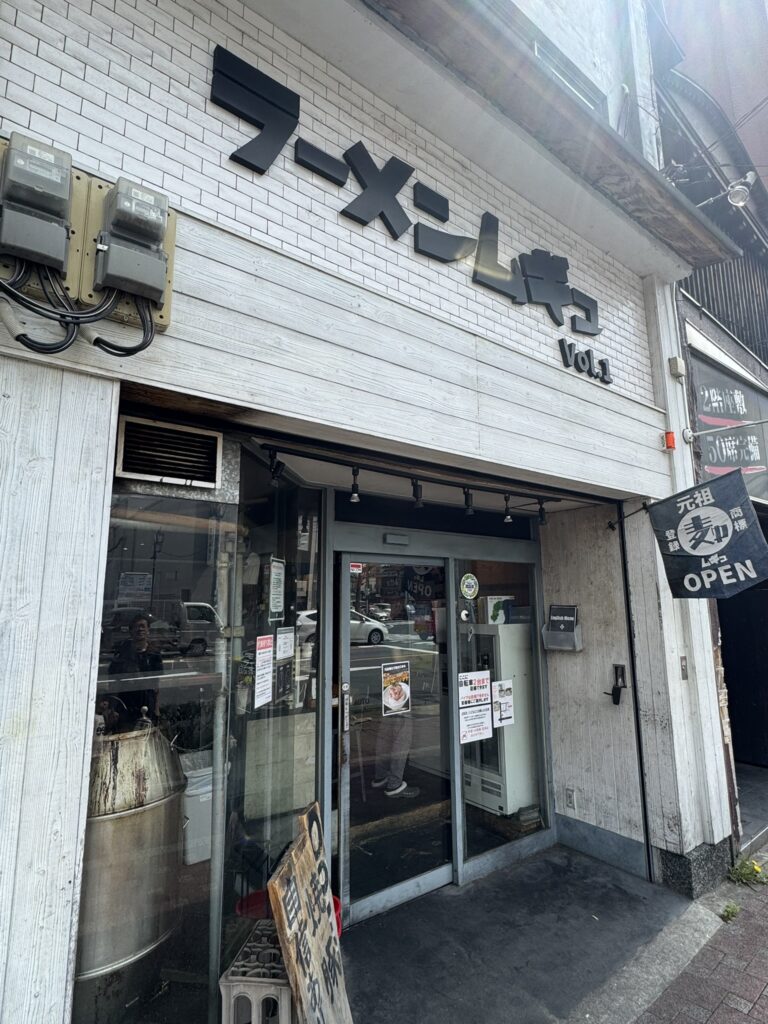
This restaurant has other locations, but this is the original – hence why it’s called Volume 1.
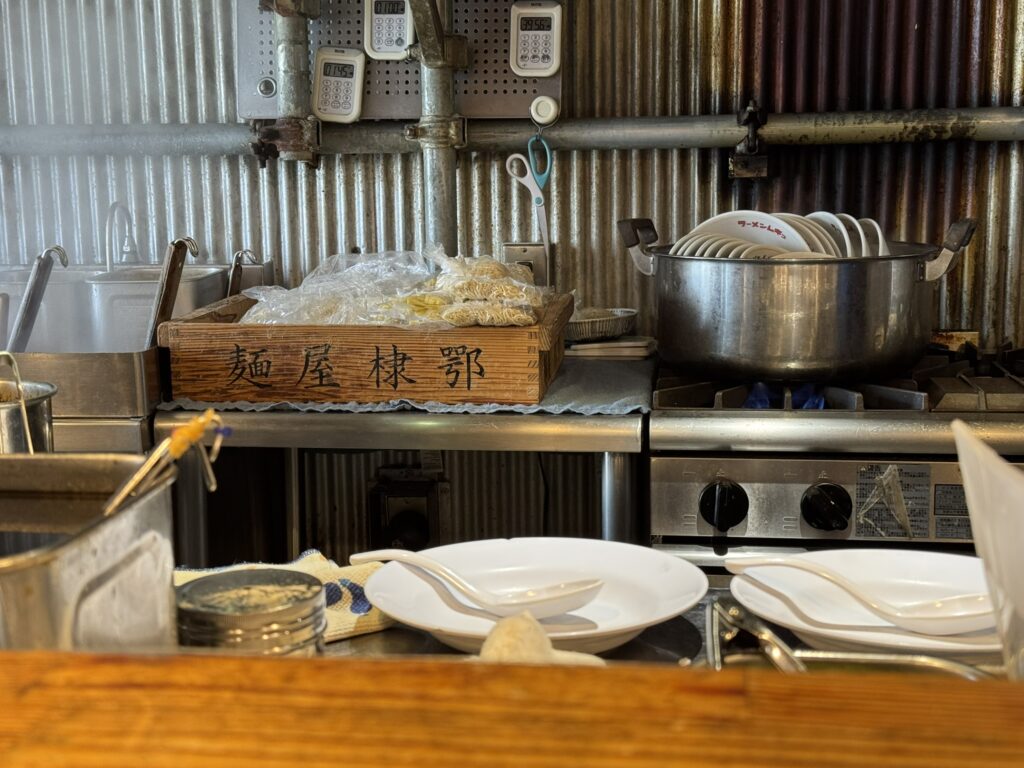
We actually dash the last few steps to get there, as it’s quite a popular restaurant and lines of up to 100 metres in length often build around lunchtime. We manage to arrive exactly at open (11 am) to discover three people have beat us but thankfully there are five seats left. And only five seats. Plan accordingly.
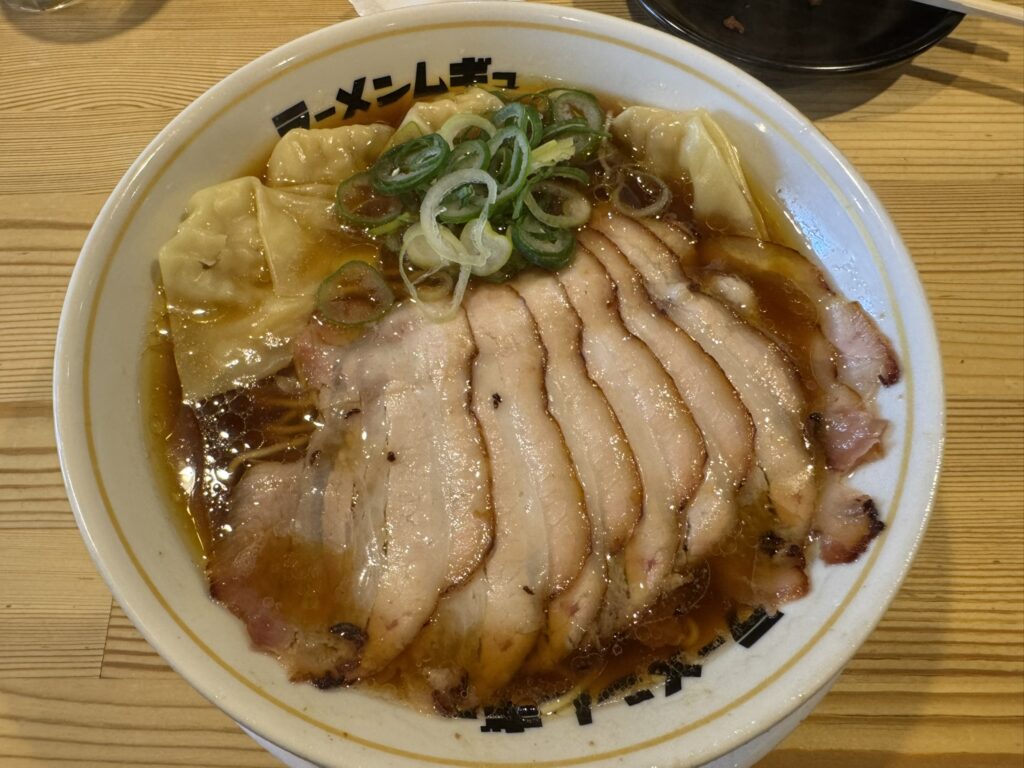
We get some ramen:
And fried chicken:
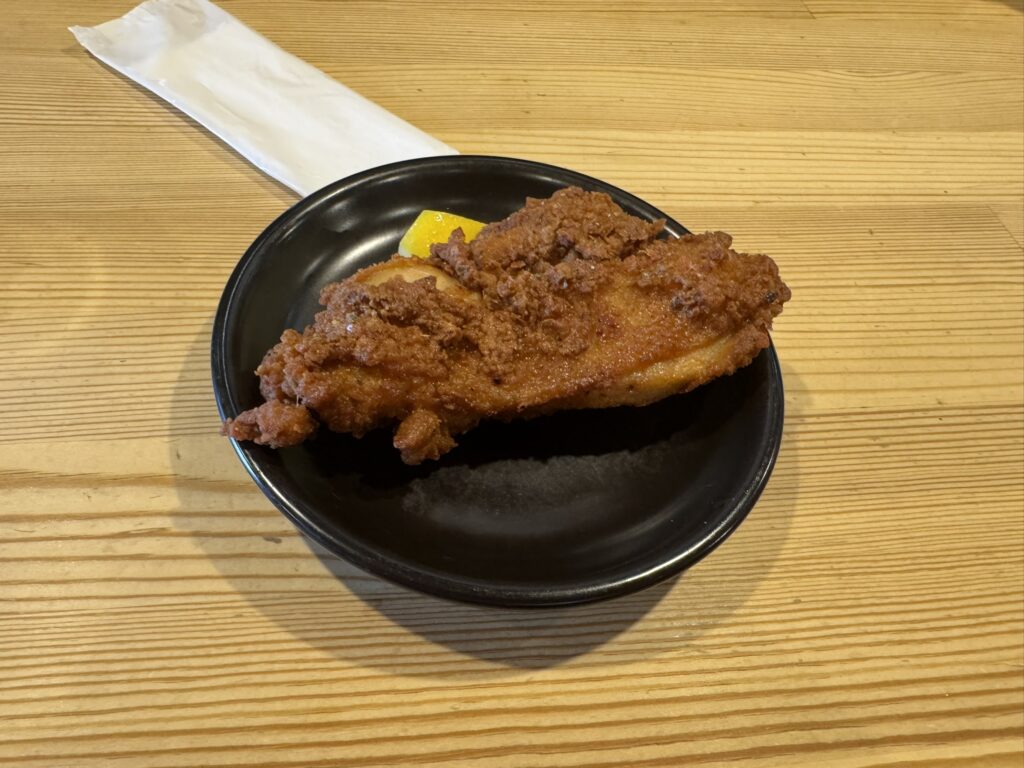
I think this is the best ramen we’ve had thus far – even better than any we’ve had in Tokyo. The fried chicken is so good that we end up placing additional orders.
From here, we head to Nijo Ji – the only existing Shogun’s palace in Japan.
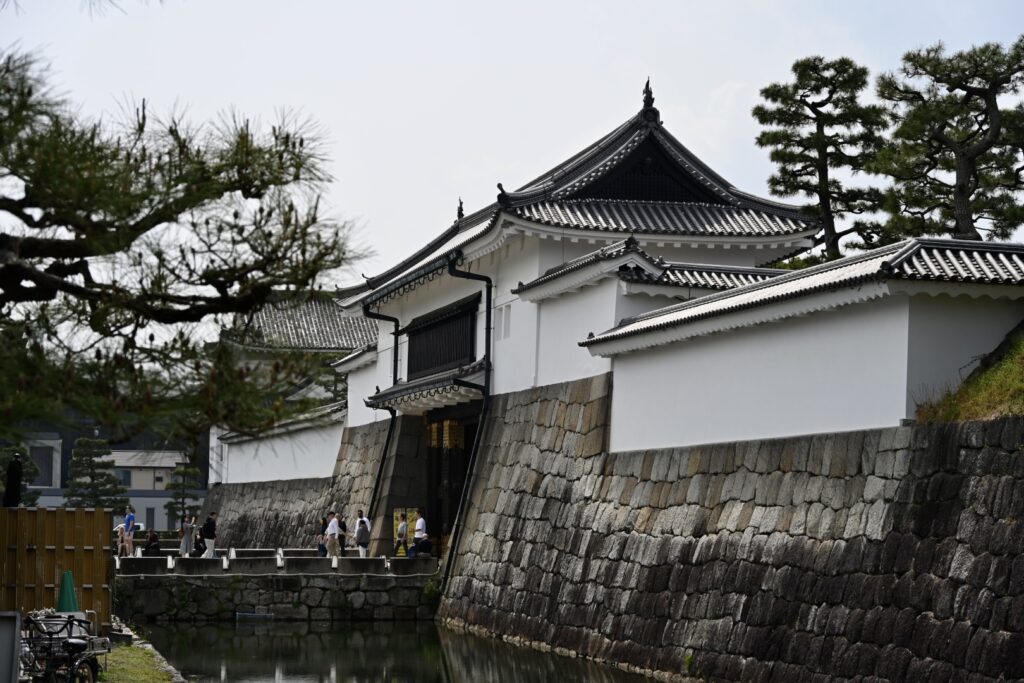
This is in contrast to the only castle, which we saw in Kochi – the difference being that a castle is a fortified structure, where this is more of a seat of government. (Though it also has some moats and other minor fortifications.)
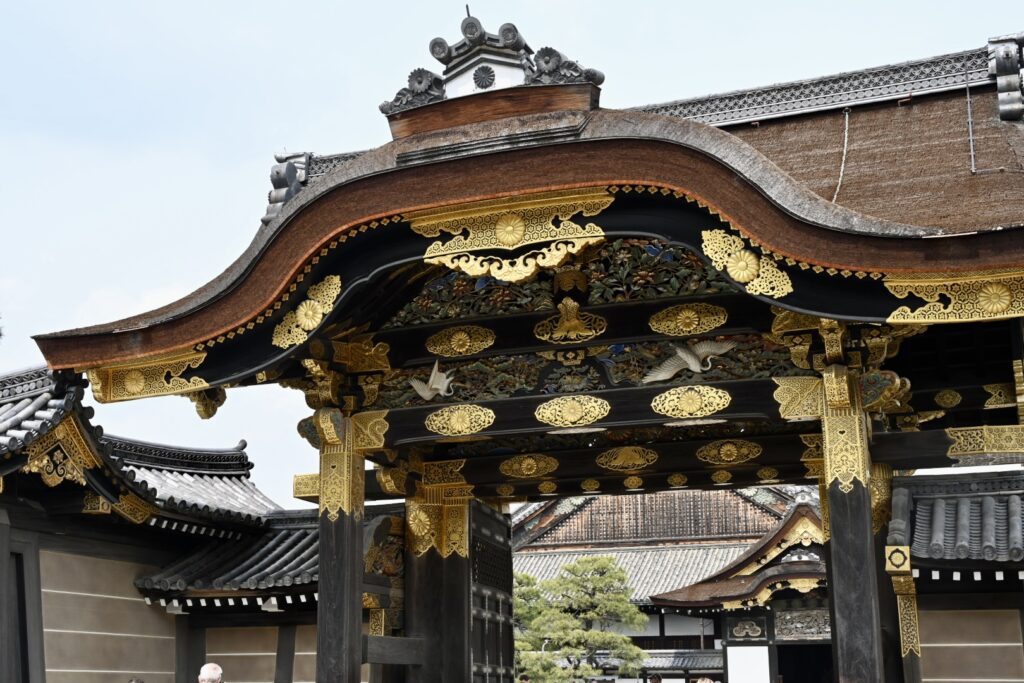
Construction on Nijo castle began in 1603 by Tokugawa Ieyasu, the first of the Edo Shogunate. The major expansions were completed by 1626. There will be a celebration to mark 400 years since the Kan’ei Gyoko (Imperial visit).
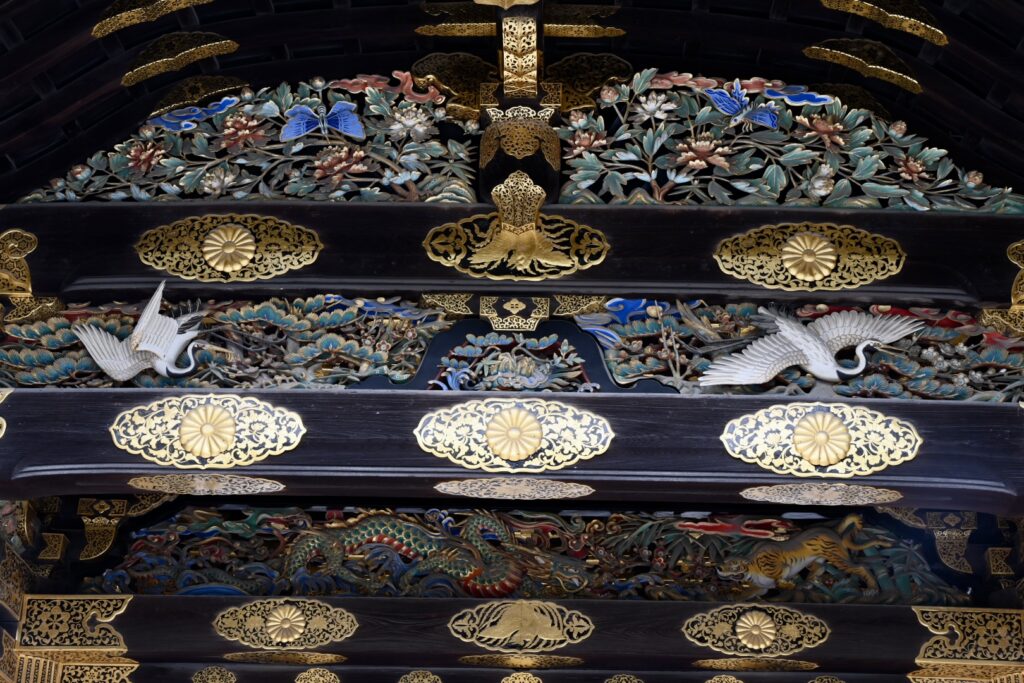
Special tickets are required to see inside the palace itself, and no photos are permitted. So I will intersperse photos from the rest of our visit throughout some of the historical facts that Dice provided.
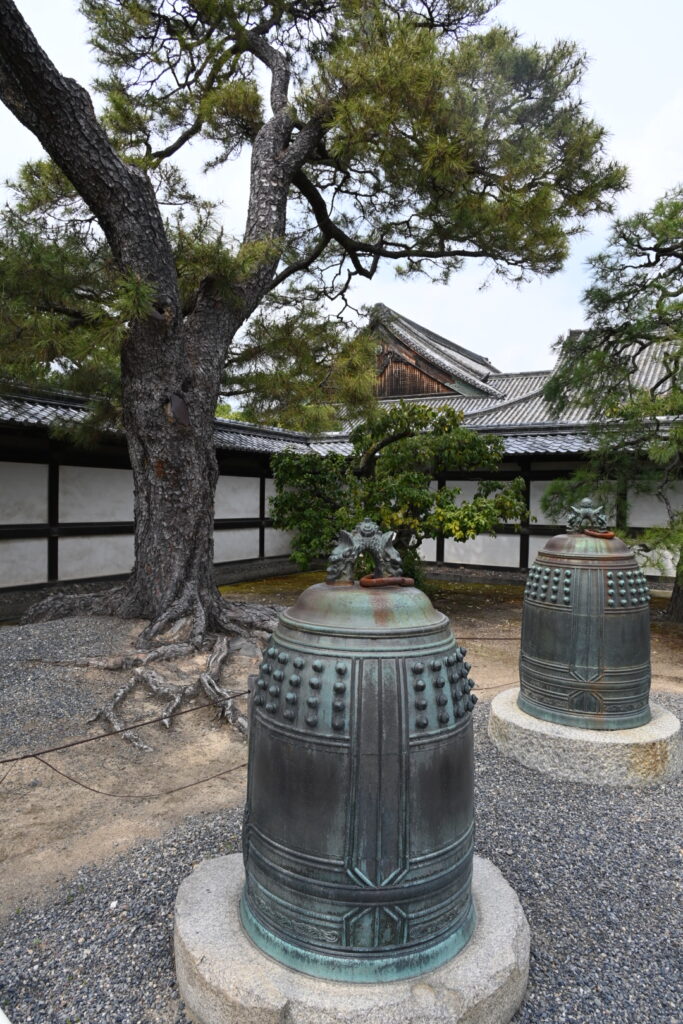
The palace was a functional property, rather than a residential one. It was from here that the Shogun and his samurai effectively governed Japan under a strict caste system and military dictatorship. The imperial family had limited powers during this period, and functioned more as figureheads.
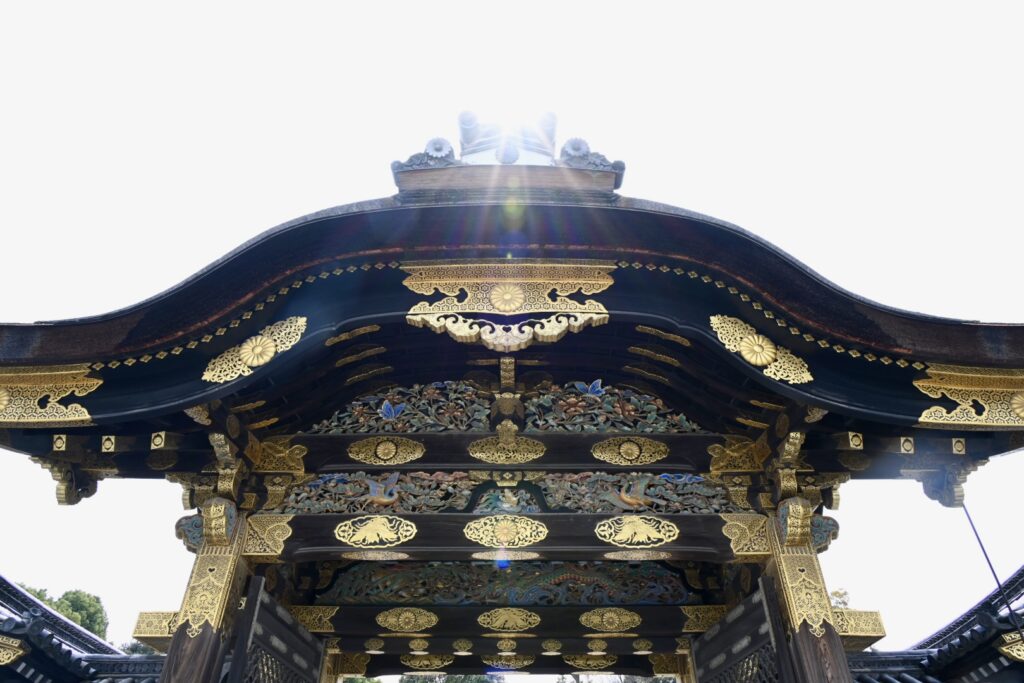
Samurai were warriors, but they also acted as civil servants – collecting taxes, resolving disputes, and managing government buildings such as jails.
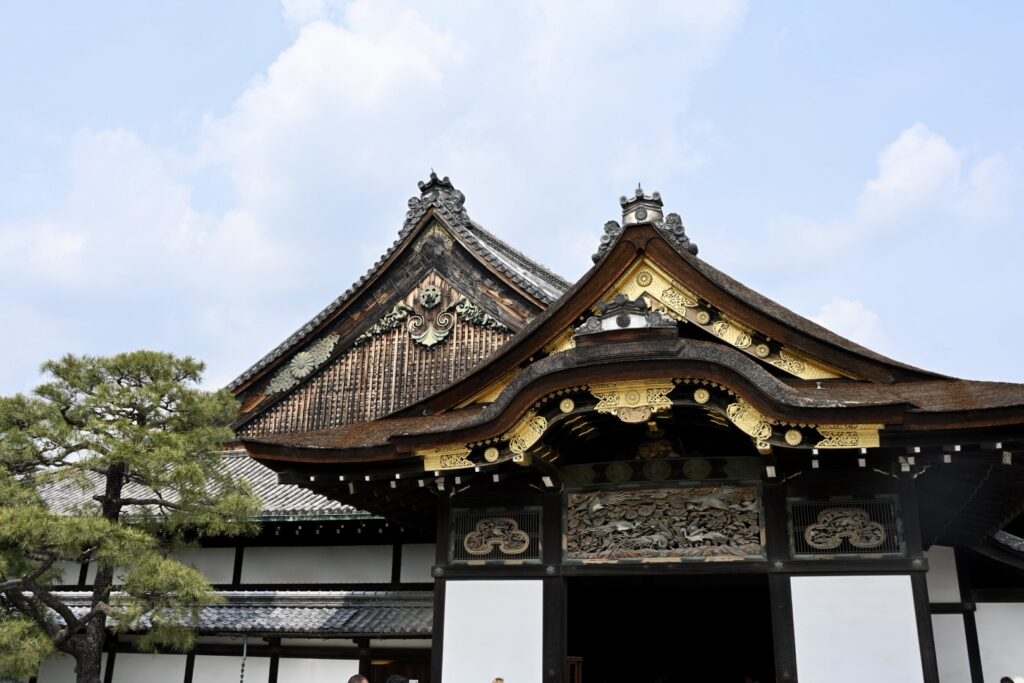
The floors in the palace are referred to as “nightingale floors,” which squeak or ‘chirp’ when walked upon and serve as an effective security measure against those who might try to sneak inside or eavesdrop on conversations.
We all had enormous fun, and no sucess, trying to silently creep along these corridors. Sadly, ninjas we are not. Unlike in Osaka there is no ninja house here – only speculation as to how or if their services were used. (Likely yes.)
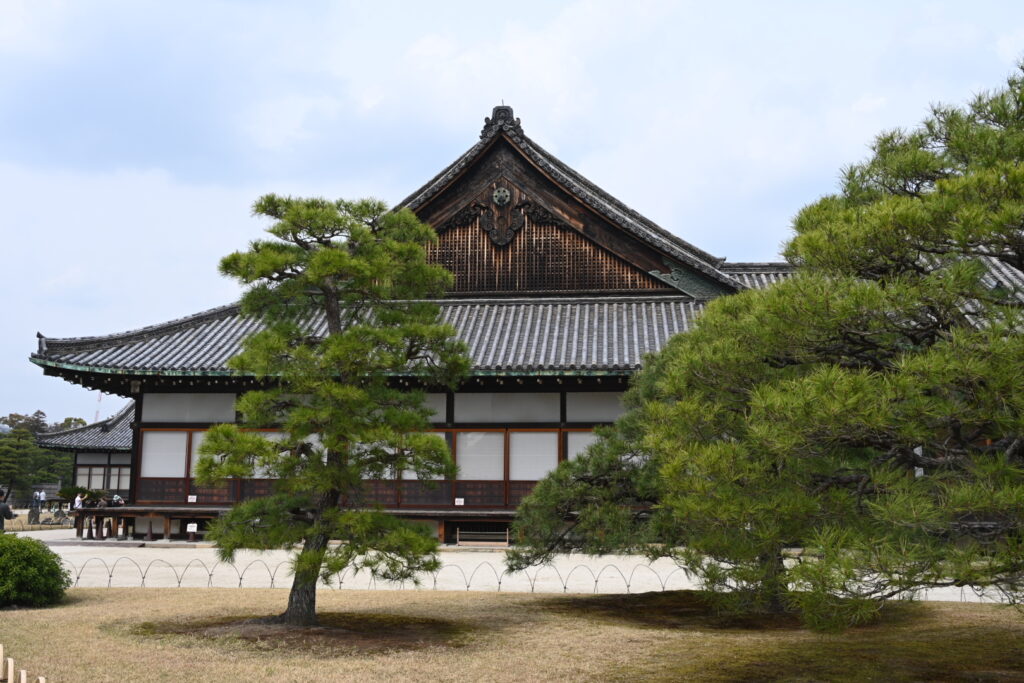
The screens in the rooms are reproductions – most of the originals are in the gallery, though some of the ceilings are still original as they would have been impossible to remove.
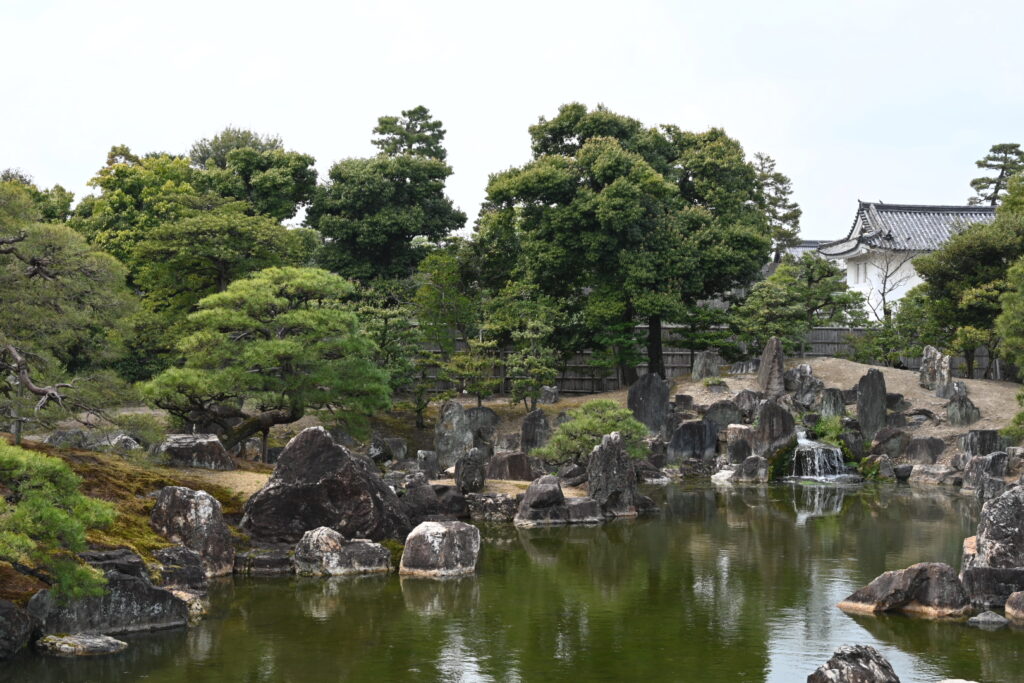
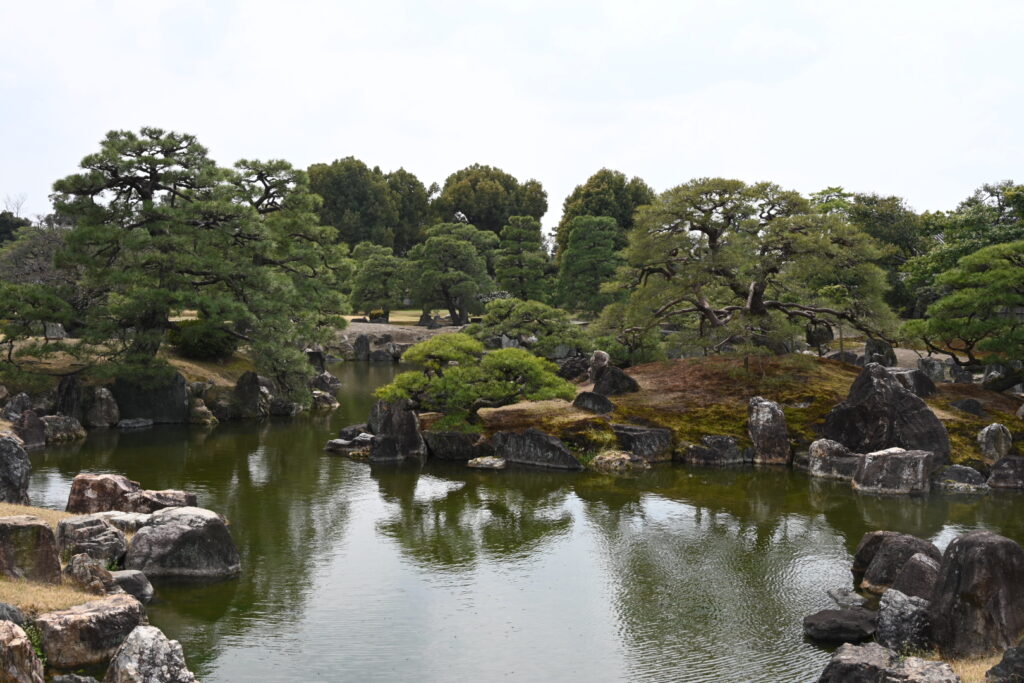
The Shogun’s gardens behind the palace
There are stylized pictures of tigers and leopards throughout the castle – though there are no tigers or leopards in Japan. They were seen in a book from China, and reproduced from there. One of the regularly repeating motifs featuring these animals is a young one learning from an older one.
The pine tree – a symbol of longevity – features prominently in many of the rooms. It’s softened with background images like rivers and mountains in rooms that were used to receive familiar guests. But when power needed to be displayed – like in the main room – it displays the tree alone as a symbol of the shogun’s power.
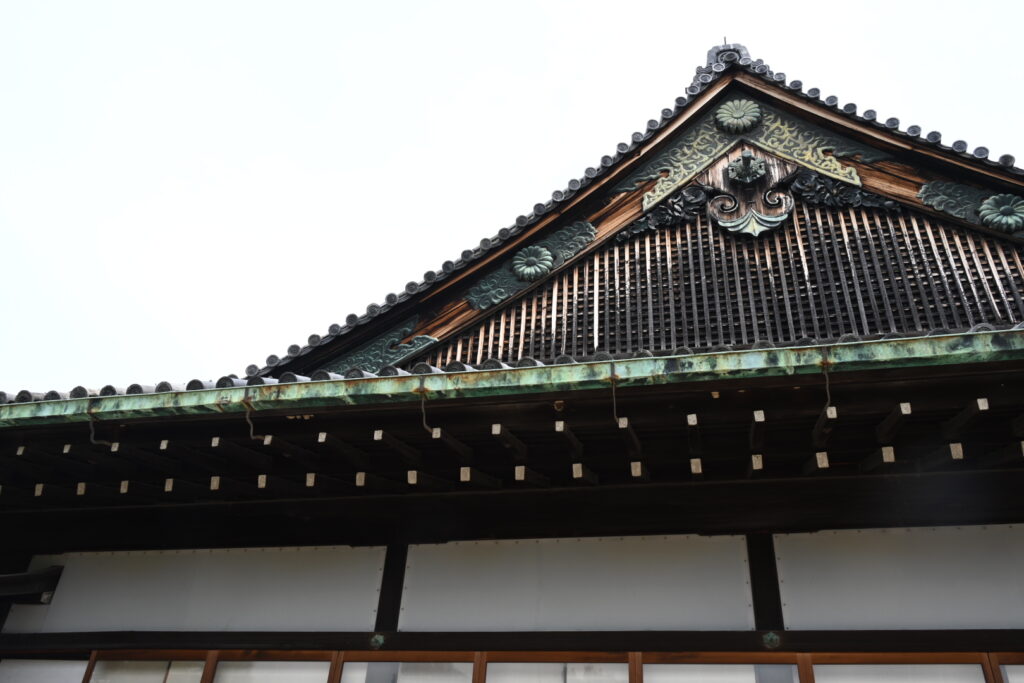
There are rooms for the four seasons, but the seasons are defined as early spring, spring, summer, and autumn. There is no winter as that would symbolize a potential end to the shogun’s reign.
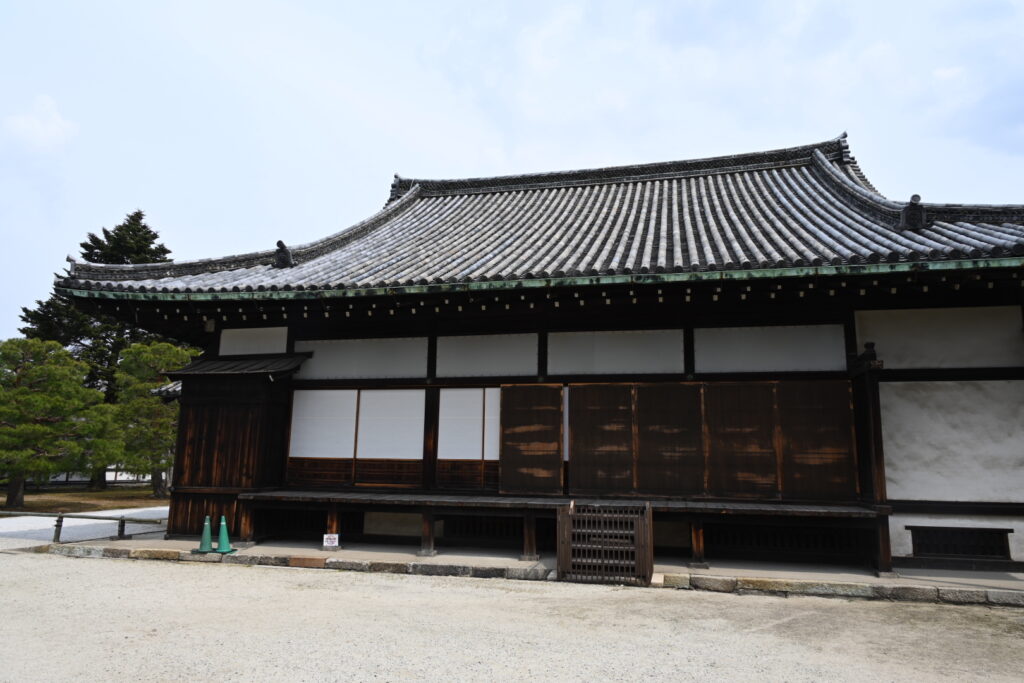
There was no glass in Nijo. Windows were made with paper, while mirrors were made of burnished bronze.
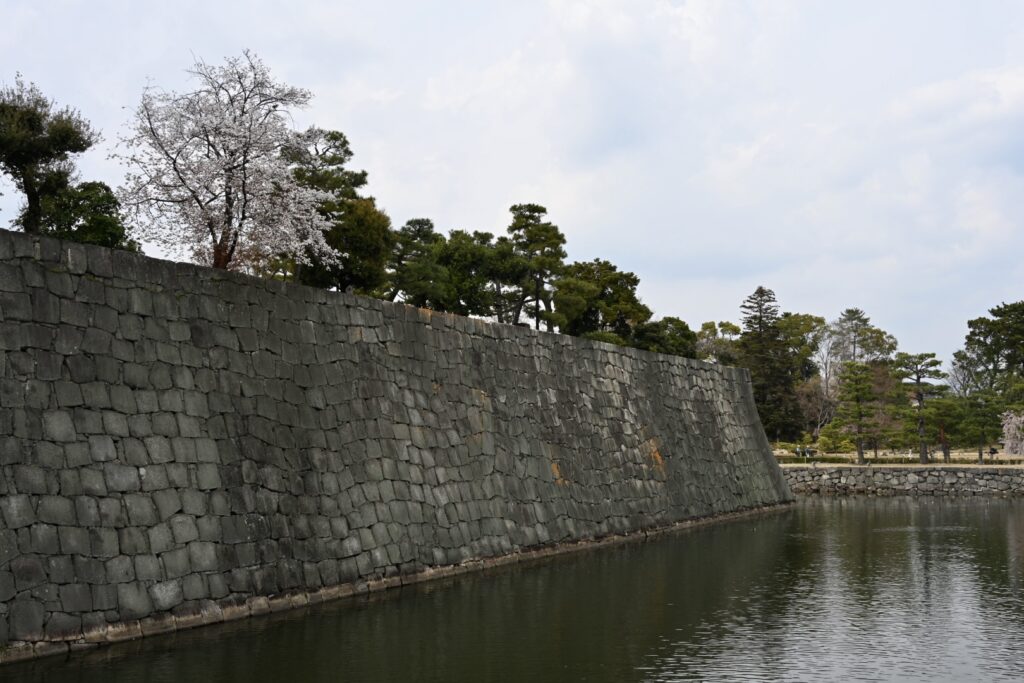
The Tokugawa reign came to an end in 1868 when the shogun Tokugawa Yoshinobu ceded power back to the emperor, sparking a rapid modernization. One of the major sources of pressure was the arrival of Western powers – including the Americans, who showed up with gunboats intent on opening new trade routes and inspiring the term ‘gunboat diplomacy.’
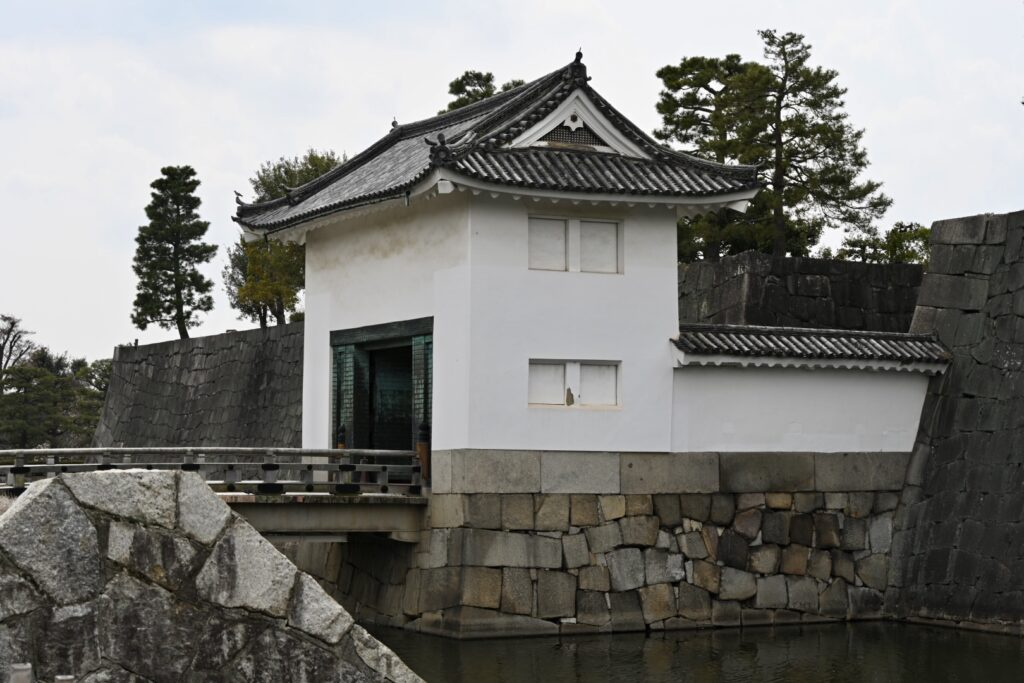
There were many samurai who resisted – for a range of reasons – but they were eventually defeated following the Boshin war that ended in 1869. (This is all a gross over-simplication of a complex period of time – highly recommend the Britannica entry on the subject.)
As for Tokugawa himself – he took up new hobbies including bicycling and photography, which seems incongruent with the samurai age but indicative of the lateness-and-rapidity of Japan’s modernization.
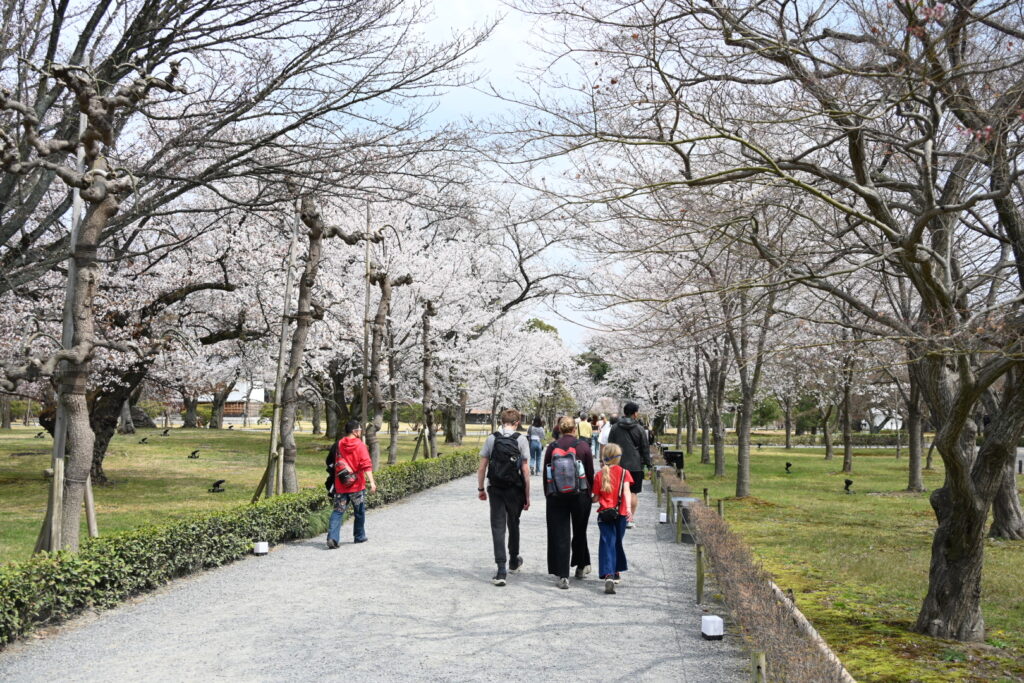
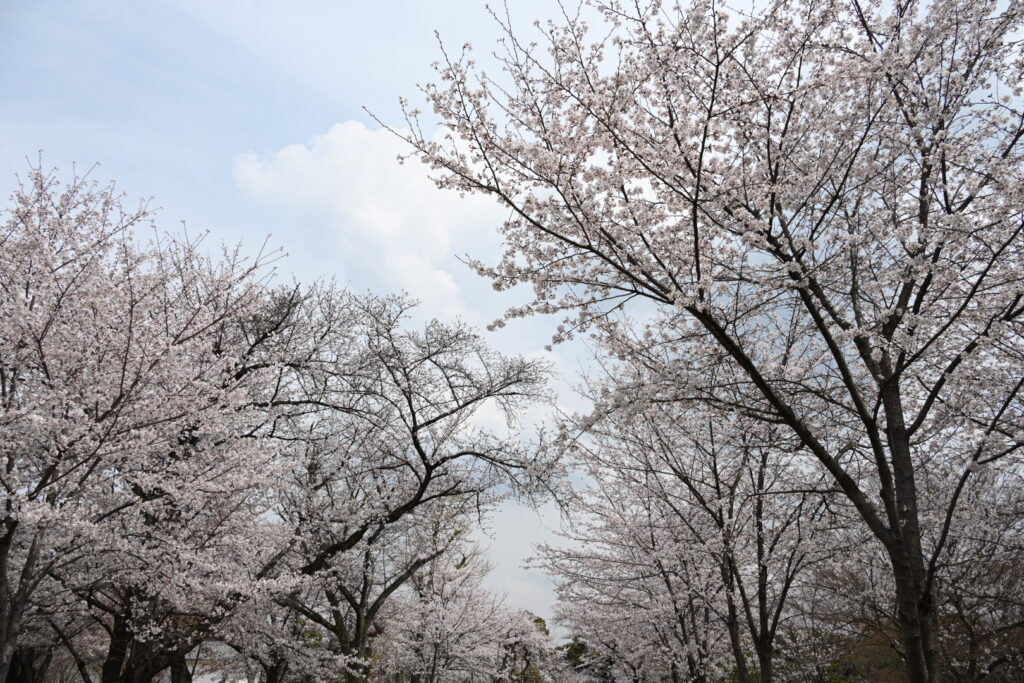
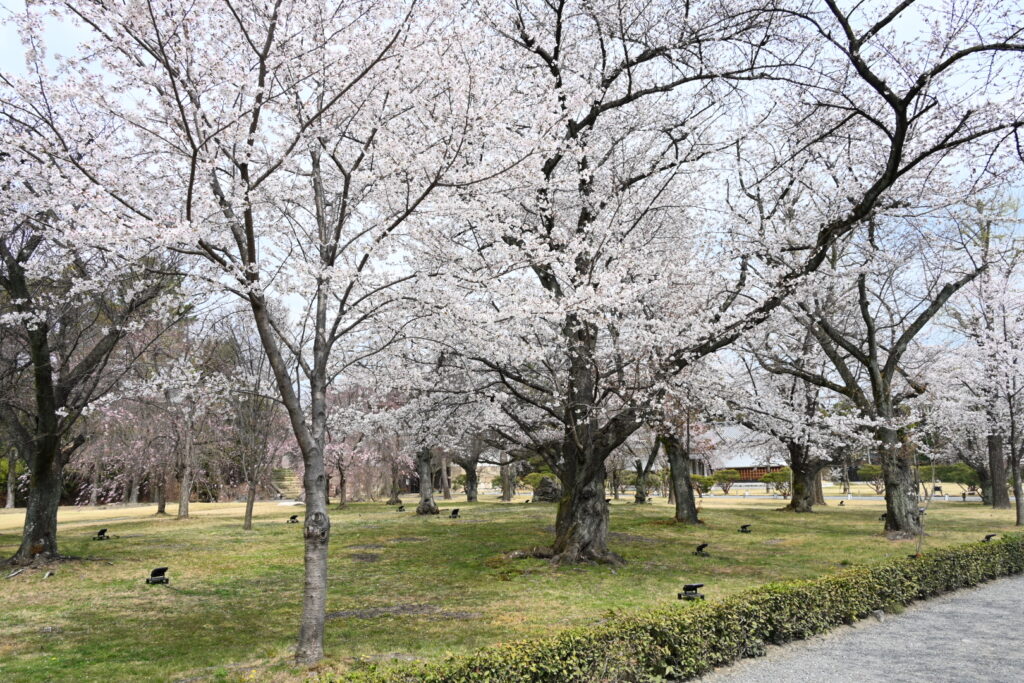
One more ramble through a beautiful, sakura-filled garden:
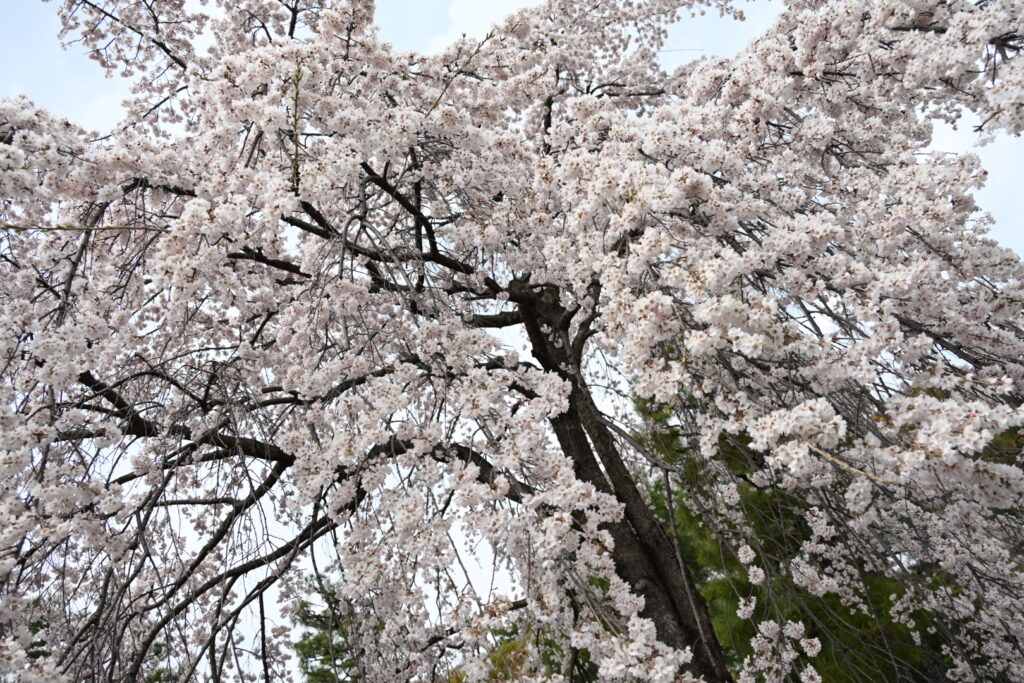
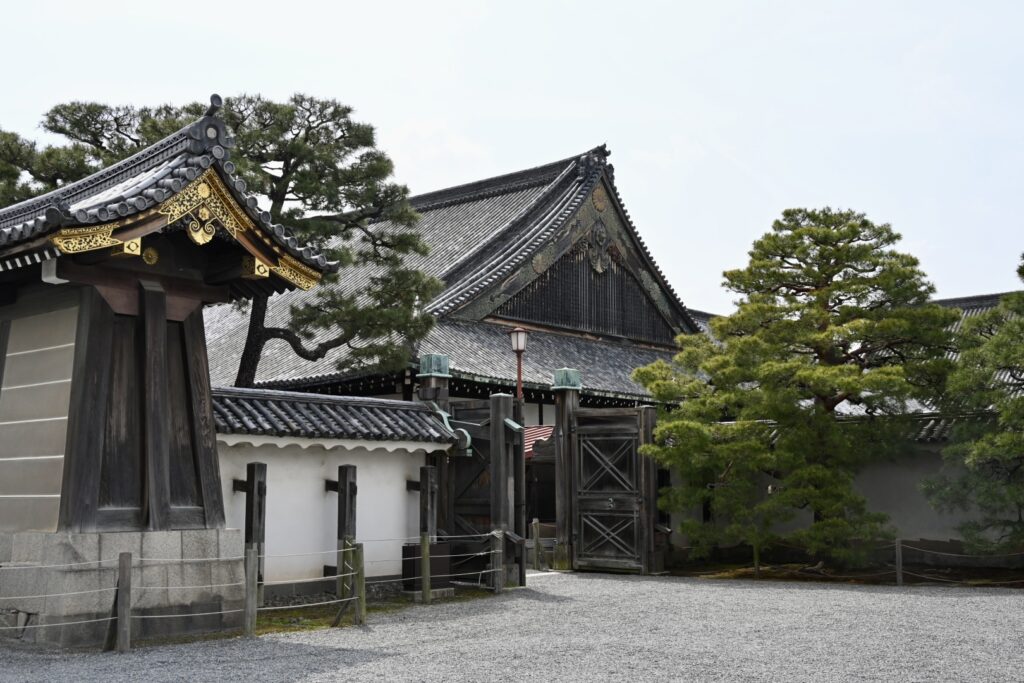
And past the other side of the palace:
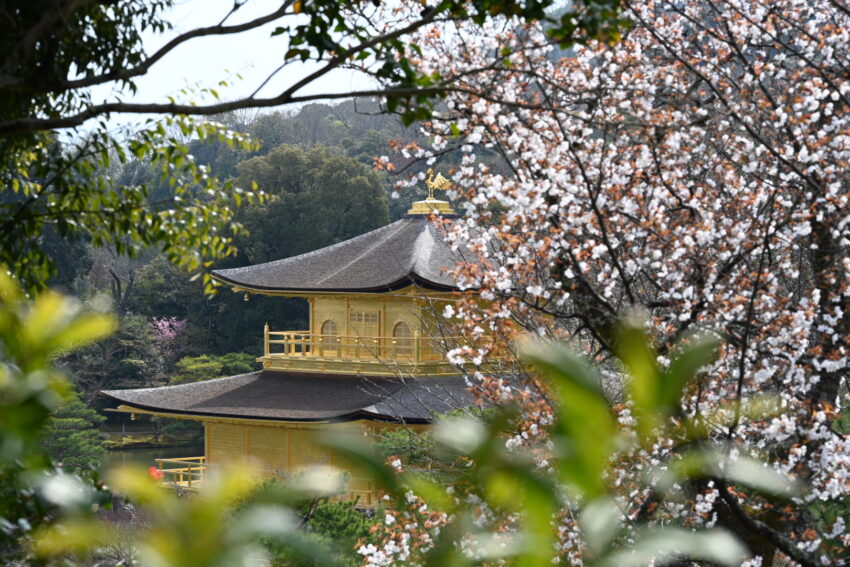
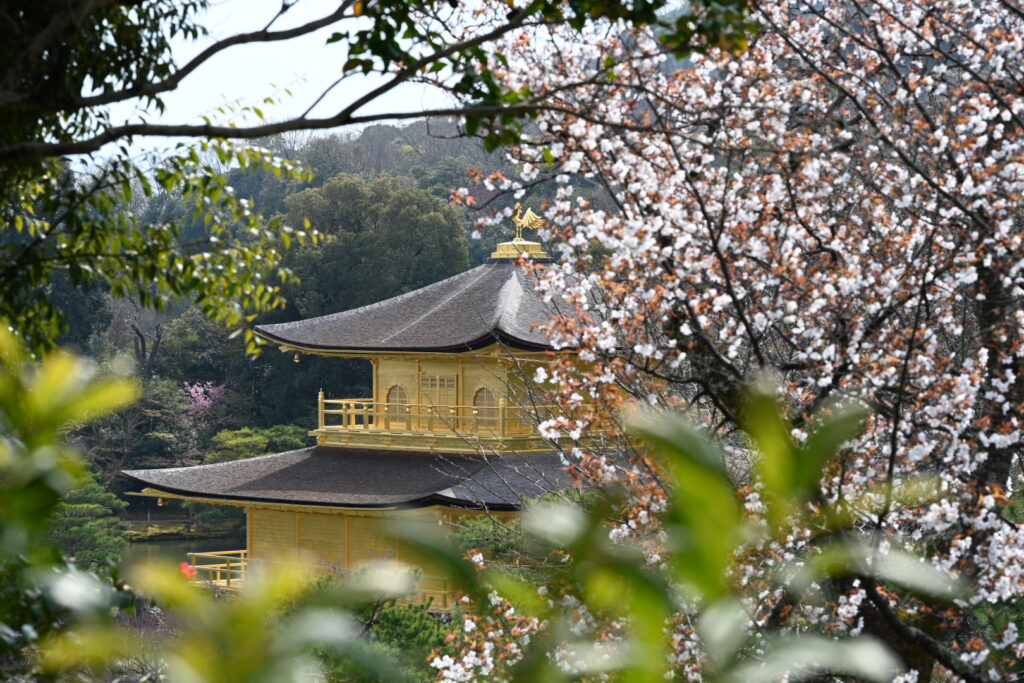
And we reboard the van to head to Kinkaku-ji, also known as the Golden Pavillion – a pagoda made to house sacred relics of the Buddha:
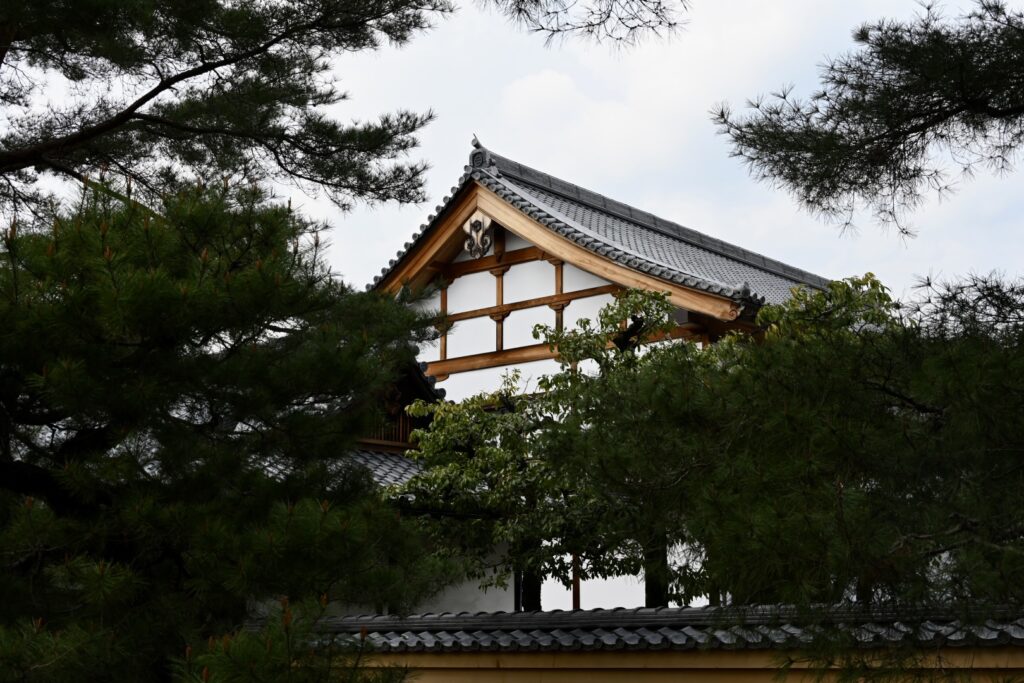
From the Kinkaku-ji website:
“During the Kamakura period (1185-1333), this land was the site of a villa of the aristocrat Saionji Kintsune, known as Kitayamadai. During the Muromachi period (1392-1573), however, it caught the attention of the third Ashikaga shogun Yoshimitsu (1358-1408), who took over the site from the Saionji family in order to build his own villa, which he called Kitayamadono.
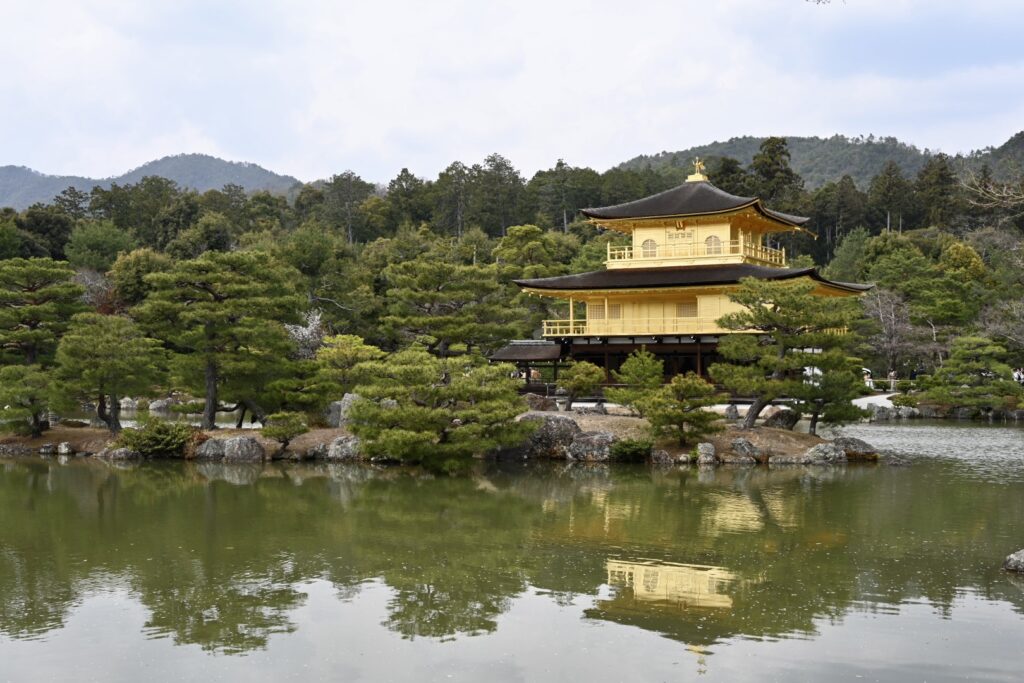
“This complex, whose gardens and architecture focused around a central Golden Pavilion, was said to evoke paradise on earth and was the destination of such esteemed visitors as Emperor Gokomatsu (r. 1392-1412), father of the Zen priest Ikkyû. The estate also became the center of the so-called “Kitayama culture,” which was central in importing various aspects of Ming-dynasty Chinese culture into Japanese society, thanks to increased trade relations with Japan’s continental neighbor.
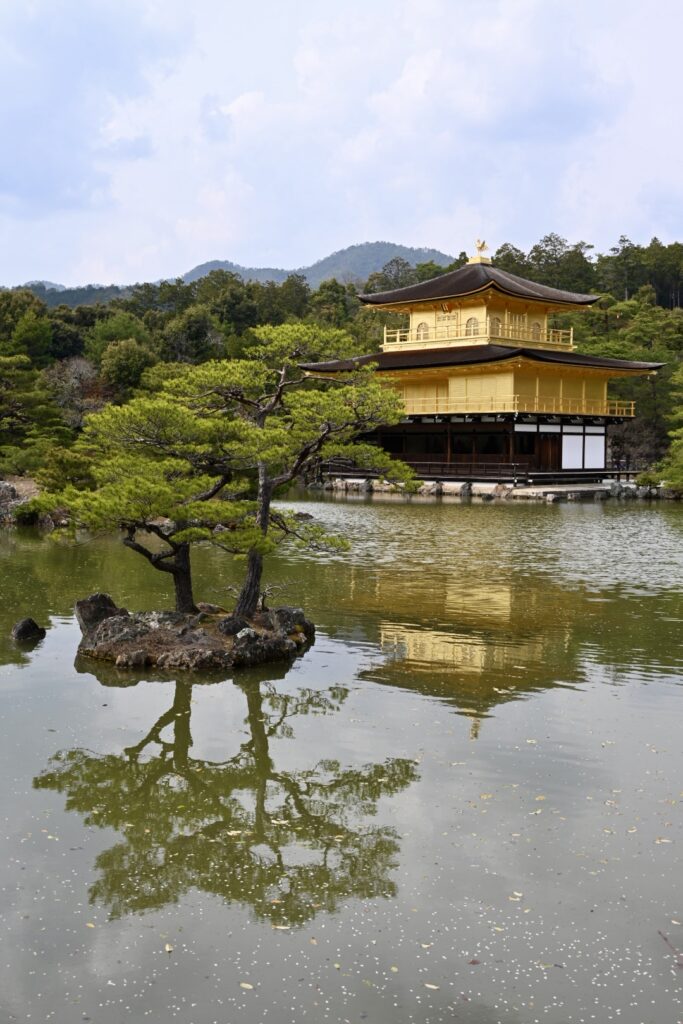
“After Yoshimitsu’s death, the villa was turned into a temple according to his will, with Musô Sôseki (also known as Musô Kokushi, 1275-1351) becoming its first abbot. The name Rokuon-ji was taken from the first two characters of Yoshimitsu’s posthumous name.”
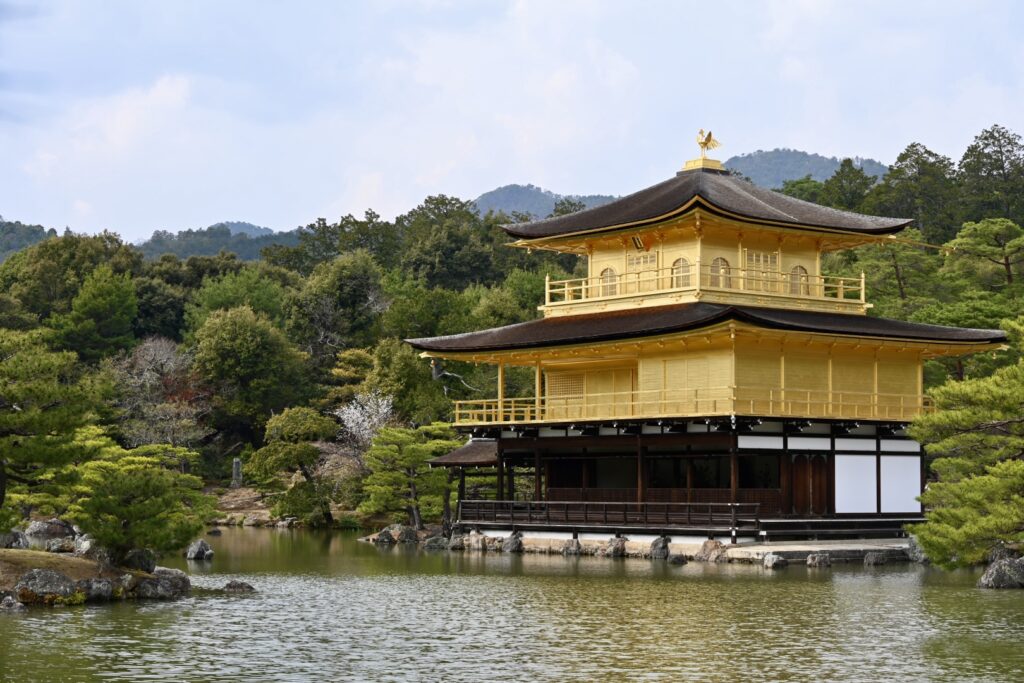
The original structure was burned down in 1950 by a novice monk named Hayashi Yoken who suffered from a ‘hatred of beauty’ and internal turmoil.
The monk attempted suicide by setting the building on fire but ultimately changed his mind and made it out alive. He then ran into the nearby forest and had another crisis about what he’d done and stabbed himself repeatedly in the gut. Ultimately he survived and was imprisoned for 7 years.
Only the phoenix atop the building remained.
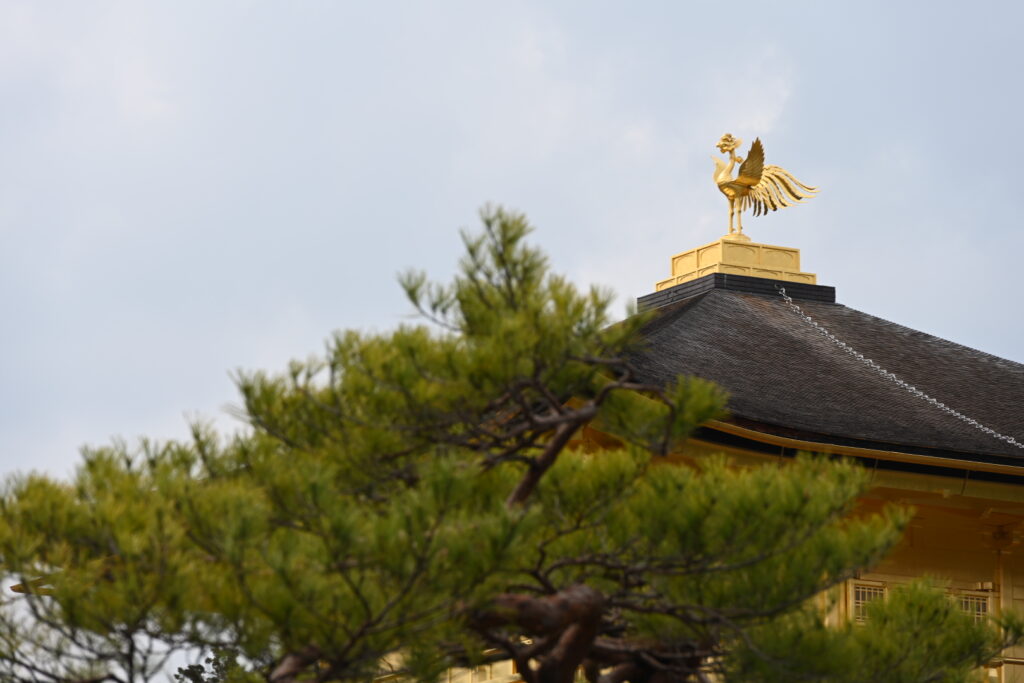
The pavillion was accurately reconstructed in 1955.
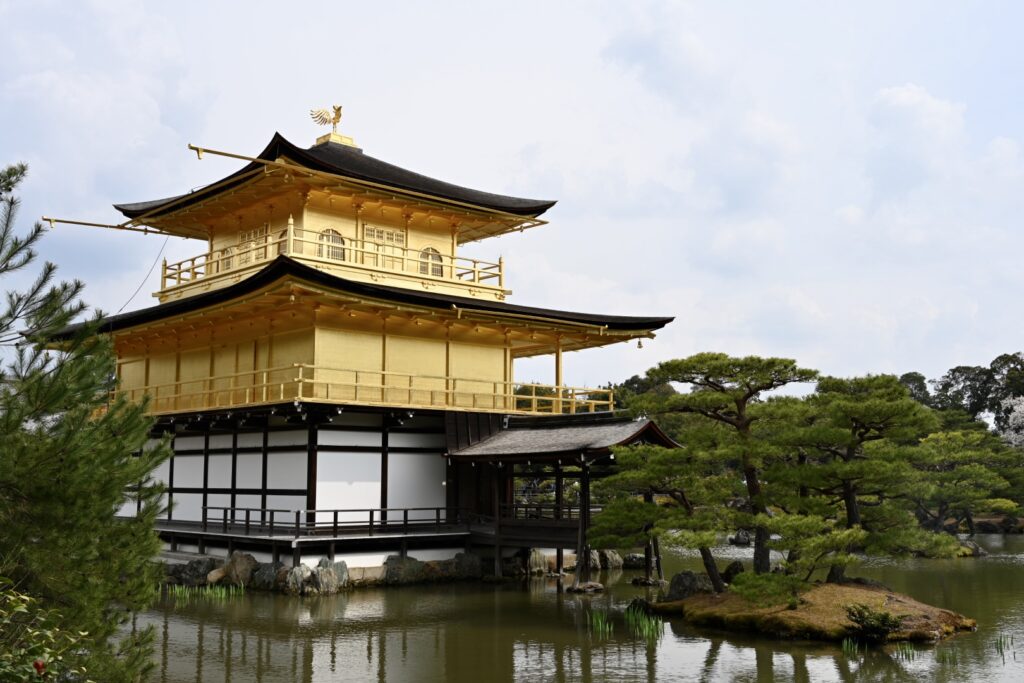
The final application of gold leaf took significantly longer due to its expense. The building is covered in more than 20 kilograms of gold, plus significant amounts of resin – which is worth almost as much as the gold!
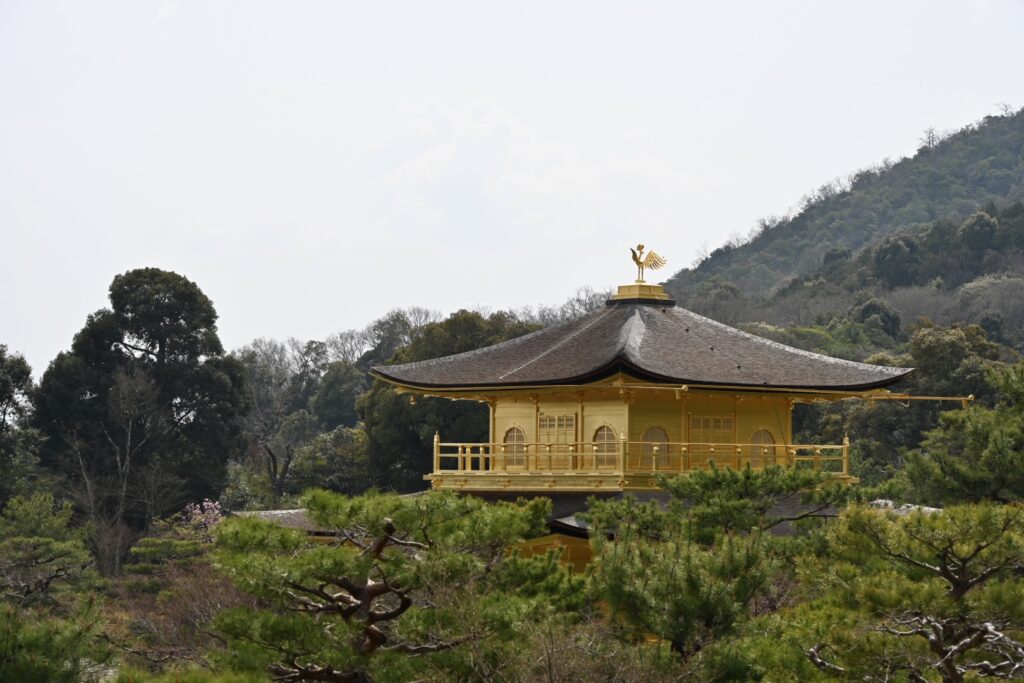
Dice kindly points out some novel points of view from which to photograph the pavillion and other sights:
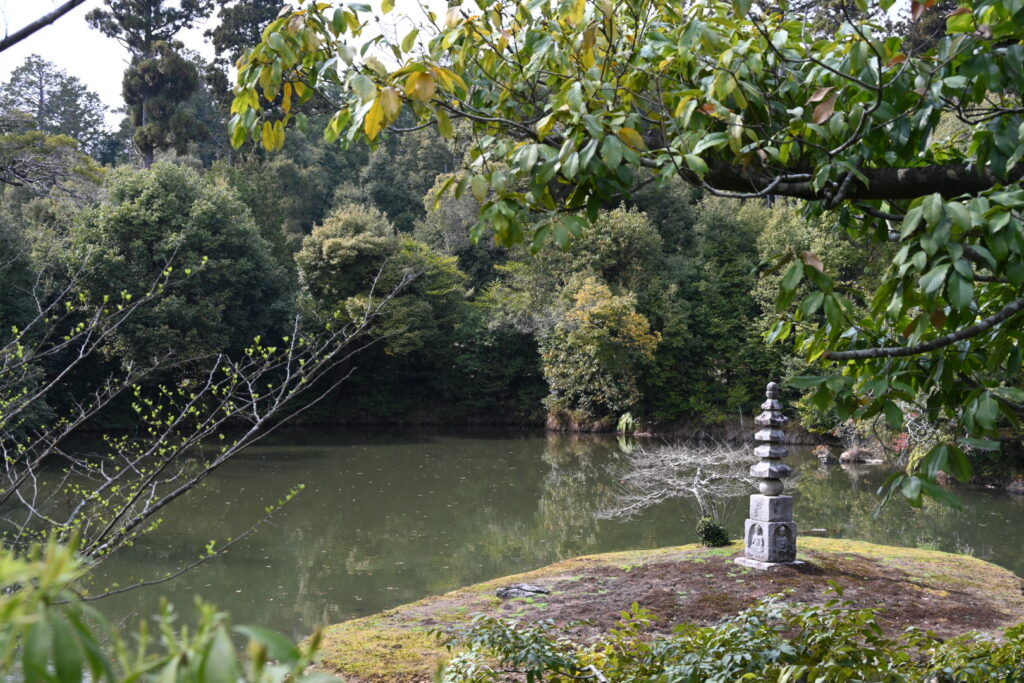
And then it’s time to go.
We are slightly ahead of schedule, so Dice very kindly offers to take us elsewhere or drop us at the Philosopher’s Walk – another prime sakura spot. And this may be our last chance for sakura.
We refuse. We are toast.
Back to the hotel, where we again take afternoon tea and I run one last load of laundry.
Then time for dinner at the most Japanese of institutions – a pizza place.
But not just any pizza place – Pizzeria Osteria e.o.e:
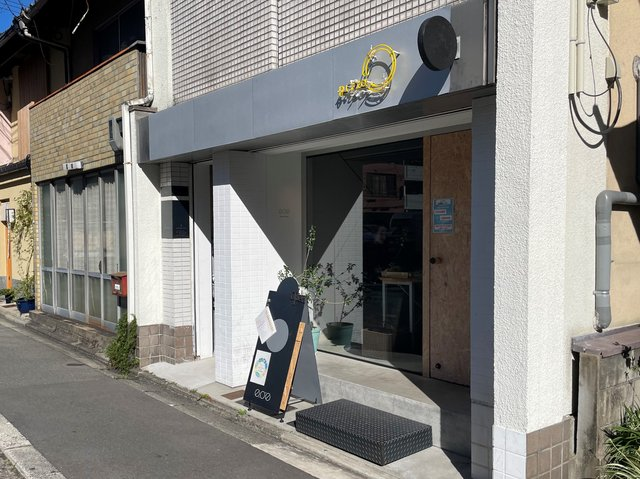
Photo Credit: Kyotopi.jp
We debated making reservations, but decided against it given that it’s Monday night – but we arrive to find the place already full, and people are being turned away.
Or are they? We ask for ourselves, and it seems like that we need to be leaving by around 7:50 pm, not that we need to wait until 7:50 pm. Looks like the previous group left due to a misunderstanding. (That, or they were keen on a long, leisurely dinner.)
We’re not aiming to stay long, so we go ahead and grab a seat. Our son and daughter each get the pizza margherita:
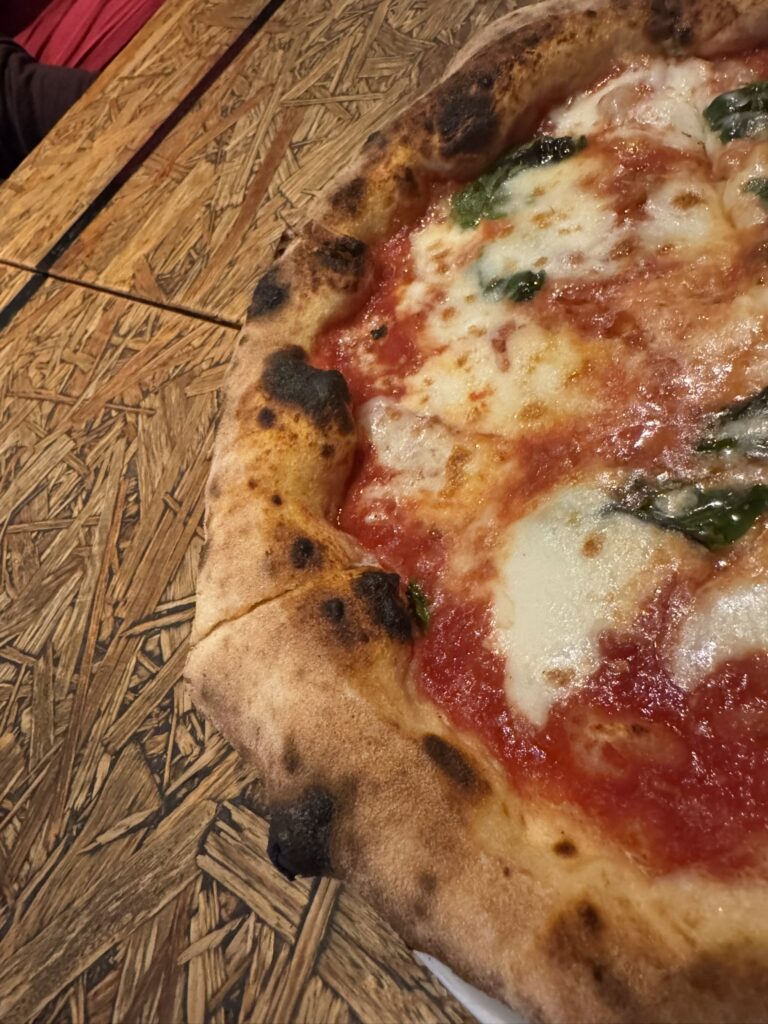
Artfully shot to hide the missing pieces
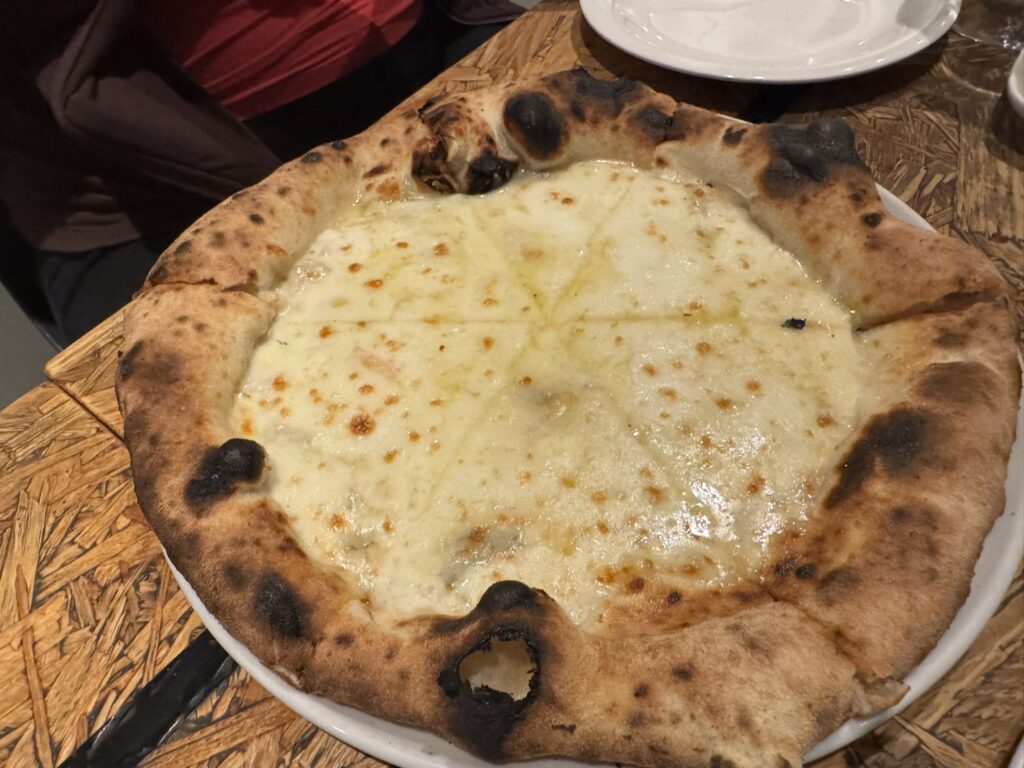
While my wife gets the four cheese with hot honey:
And I get the meat-loving Macellaio:
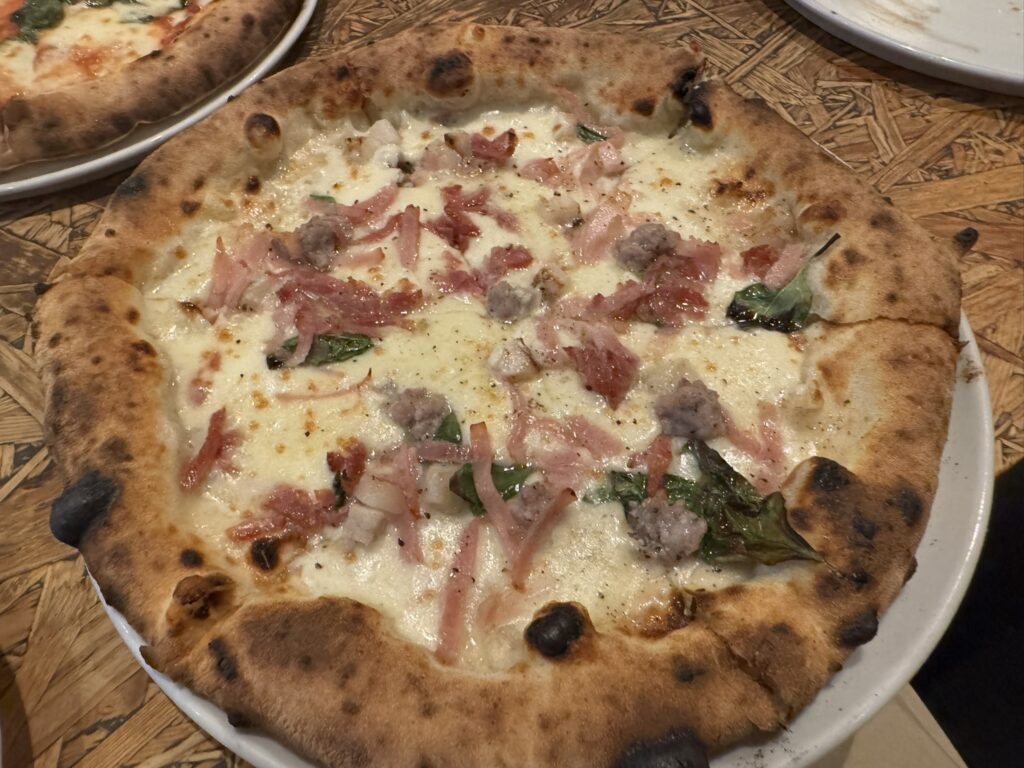
As we wait for our pizzas to emerge from the flaming wood-fired oven, a steady stream of guests arrive seeking either seats or take out. Every time, the server goes back to check with the chef – who either seats people or refuses them depending on how their workload is looking at that particular point in time.
Bottom line – reservations are recommended! Even during the week and at their opening time of 5:30 pm. And even if you’ve checked the reservations calendar in advance and it looks completely open.
After a fabulous meal, we wander back to the hotel and once more go out for free evening cocktails. It’s only now that I notice the three litre pump-bottle of Japanese whiskey they keep salted away in the corner of the bar.
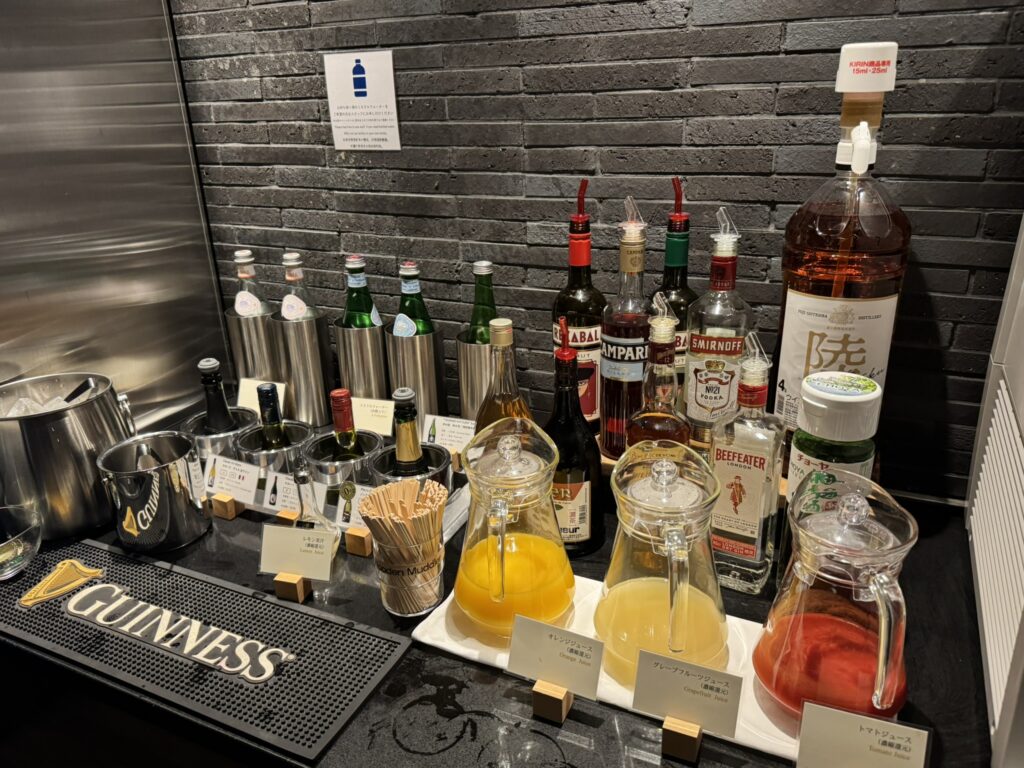
It’s another reason that we have really enjoyed the Royal Park Hotel Iconic. Someone clearly said, “You know what our guests would like? A free lounge where they can take afternoon tea and have free drinks.”
They absolutely could have made more money by converting this space into extra hotel rooms or a special club members only lounge instead. But they didn’t – and for that we are very glad indeed.
9 pm eventually rolls around, and the lounge closes for the evening – and after our early start today, it is most definitely time for bed.
Tomorrow marks our last full day in Kyoto, albeit with a later wake-up. But what we lack in ambition we intend to make up for with both speed and violence.
Stay tuned to learn more…
Continue reading Tasmania to Tokyo – Kyoto – Day 74.