Tasmania to Tokyo – Tokyo/ Kyoto – Day 71 can be found here.
Our first full day in Kyoto dawns full of hope – and with a cautious mix of careful plans and the freest of time.
My wife and I have been to Kyoto before on our Aound The World Honeymoon, more than 15 years earlier. We hadn’t made many plans before arriving. Instead we figured we’d head out on our own, see some gardens and do some hiking. We expected we would need some nature time after our prior experiences in China and Tokyo.
We were right about the nature time, and our lack of planning worked out fine – particularly when we received unexpected tickets to a Buddhist throat singing performance at Chion-in – but we left with the sense that it would have gone better if we’d been better prepared. So we resolved to plan more carefully this time around.
One of the first items on that agenda was booking ourselves in for a proper Japanese tea ceremony with Camellia Tea Ceremony. You can take part in group ceremonies, but they recommend that you book a private ceremony for groups of four or more as the cost is roughly equal. We further elect to book at the Camellia Flower tea house as it offers the better location in East Kyoto, close to Kiyomizu-dera, Maruyama Park, Yasaka-jinja, Gion, and the city centre.
But first – breakfast. The Royal Park Hotel Iconic’s Oike Terrace offers breakfast at a much-more-reasonable 3,850 yen per person – 2,000 yen for our daughter.
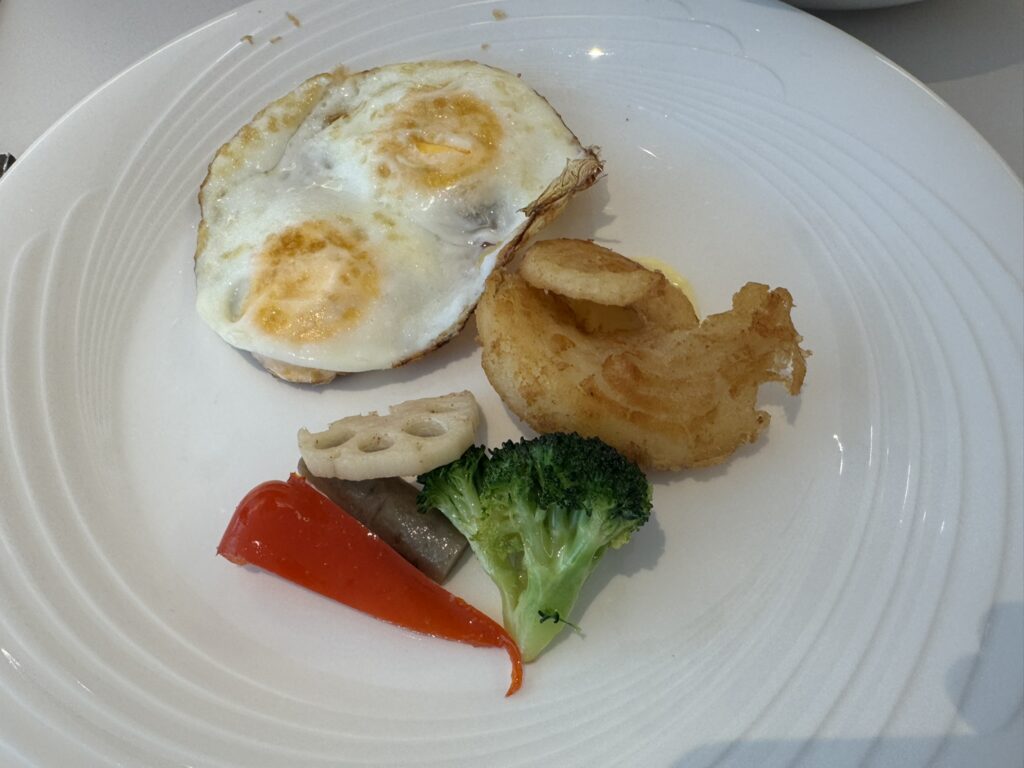
And it’s quite good. We get some fried eggs:
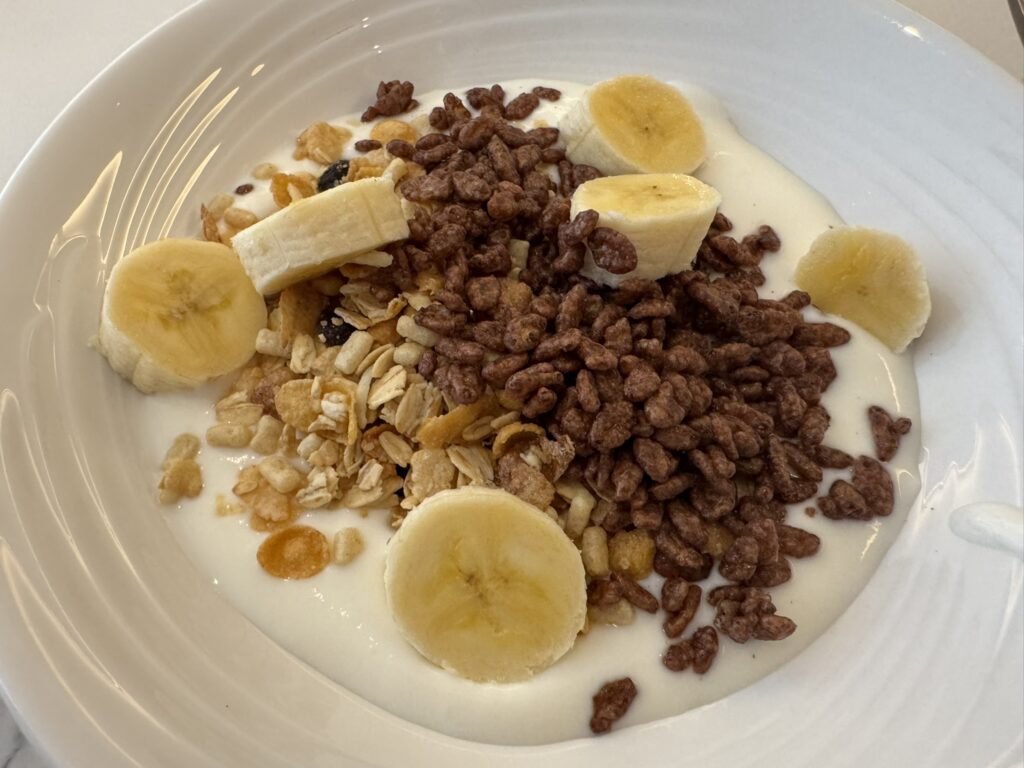
As well as some fruit and yoghurt:
They don’t have quite the same selection as mesm, but we won’t complain when it’s almost half the cost.
Our tea ceremony starts at 10 am, so after breakfast we grab our bags, open up the Go app, and catch a taxi to the other side of town.
We soon find ourselves in Kyoto Old Town:
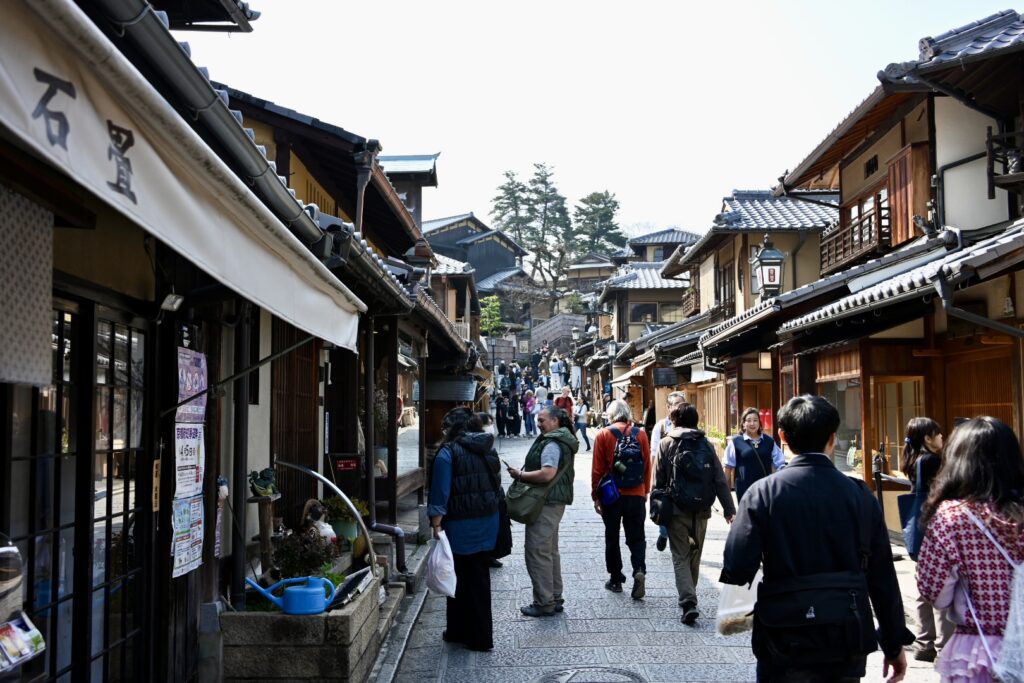
Well, the mostly-old town – they do have a Starbucks:
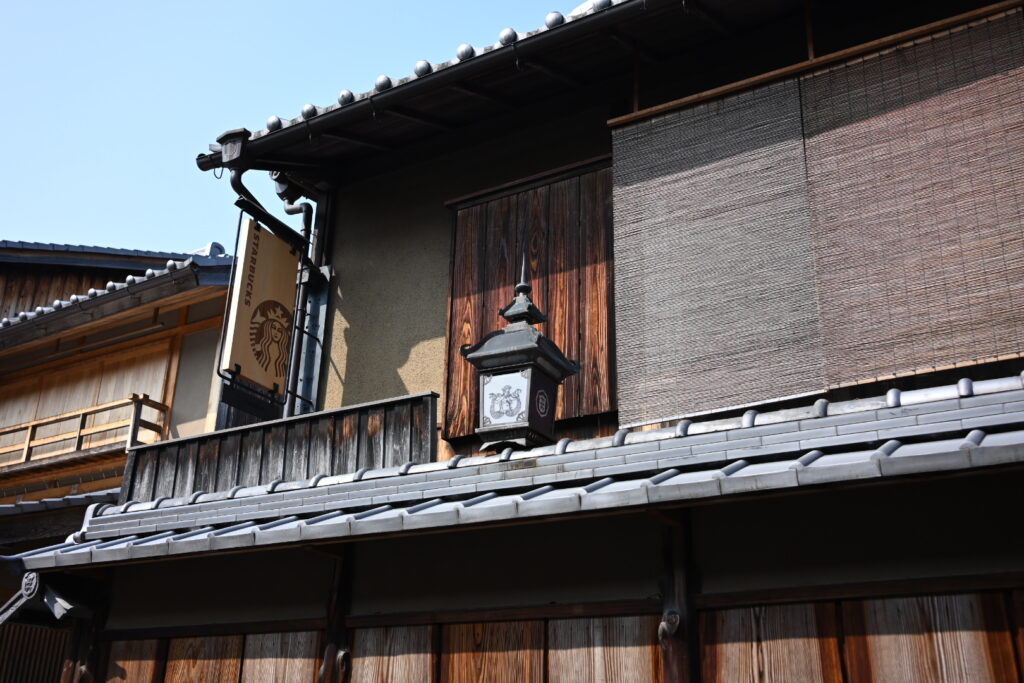
The Camellia Flower teahouse is down a narrow side street, but it’s well-signed. They have bathrooms available before the ceremony, and a waiting room. Guests are asked to remove their shoes prior to entering. Photography is allowed.
They also offer the chance to be dressed in an kimono if you so choose – at an extra cost of 6,000 yen, but you can wear the kimono for the full day. We opted to just stick with just the private tea ceremony at a cost of 40,000 yen, or roughly USD$250.
Our group and one other group both go up at roughly the same time. Our hostess Atsuko provides some fascinating information at the ceremony before she gets underway.
The ceremony itself is done without speaking, as it’s considered a chance to focus on the present and escape the stresses of ordinary life. Participants are encouraged to heighten their senses and focus on the trickle of water, the click of the utensils, the stirring of the matcha, and so on. When conversation is held amongst the guests, it typically does not touch on stressful matters like business or politics.
Atsuko starts by circulating the matcha so we can see it. Rather than steeping individual leaves, matcha is a finely ground powder of green tea leaves. A single gram of matcha can contain up to 10 tea leaves, and two grams are typically used to brew a single cup.
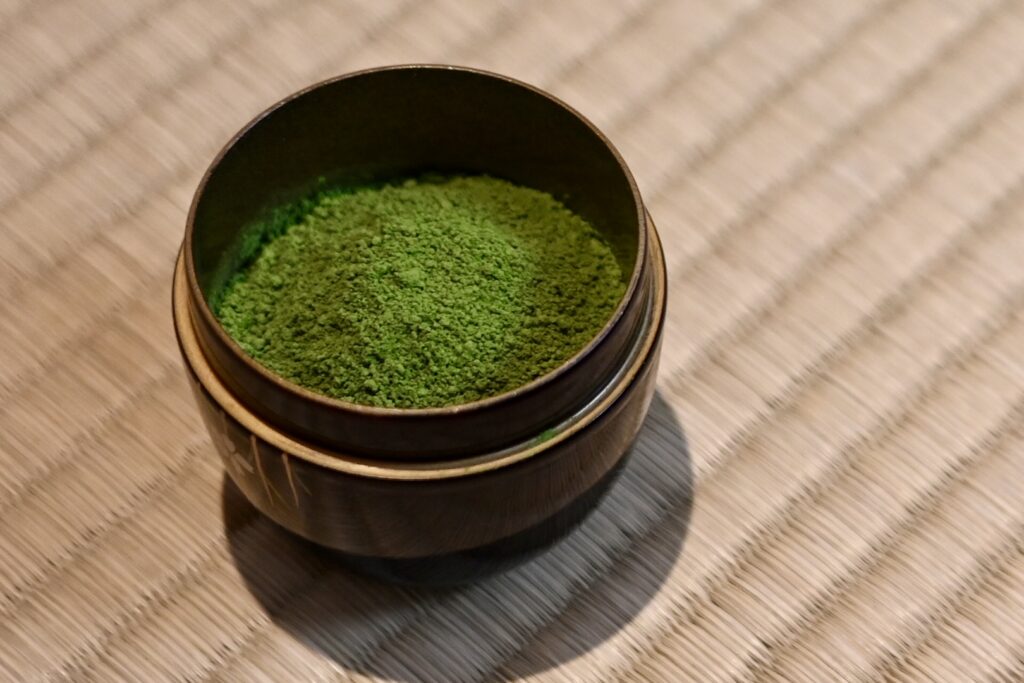
High quality matcha should be bright emerald green in colour.
The tea ceremony first emerged roughly 450 years ago by Japanese tea master Sen no Rikyū, and was quickly formalized into Japanese culture.
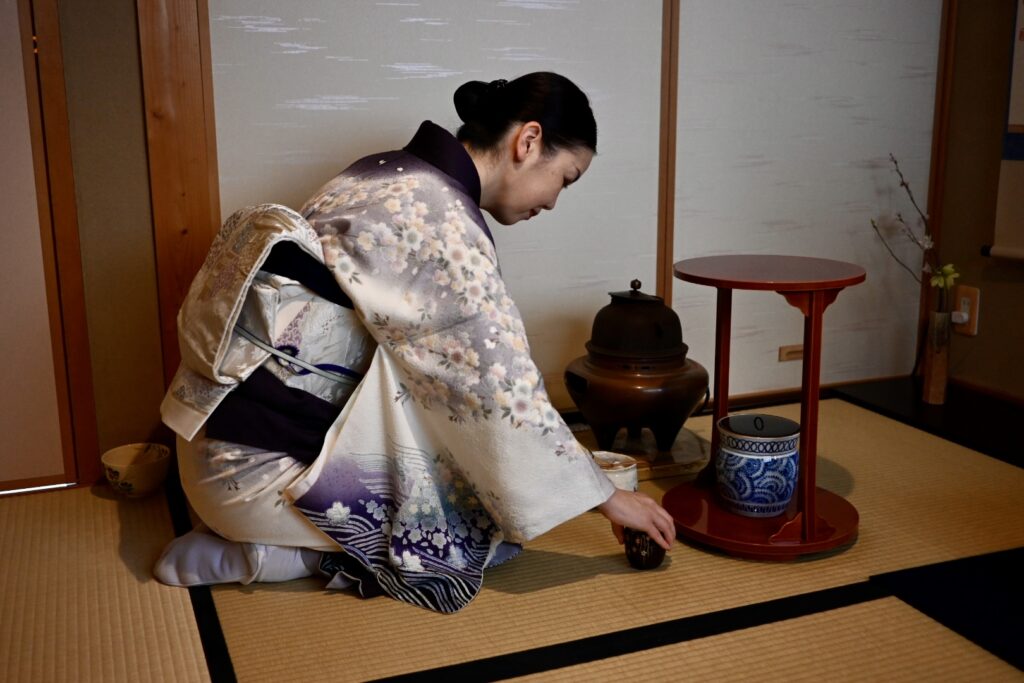
The skills needed to host a tea ceremony are taught by a master, as opposed to being passed down within families. It can take 10 years of training to become a master.
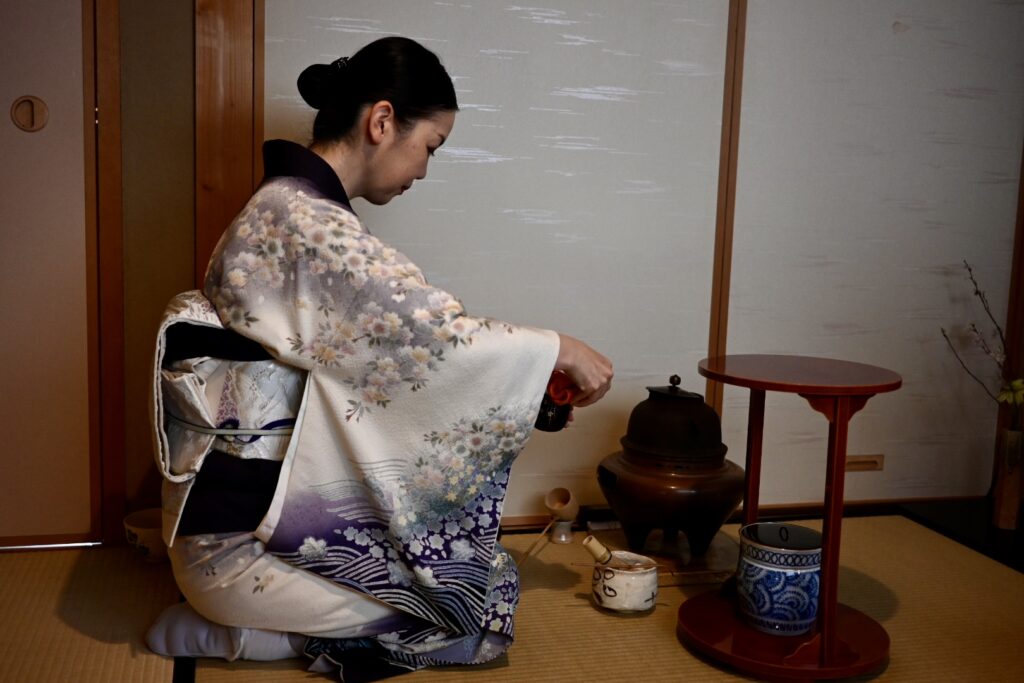
Participants are encouraged to purify themselves prior to the start of each ceremony. This is consistent with the Shinto principle of misogi.
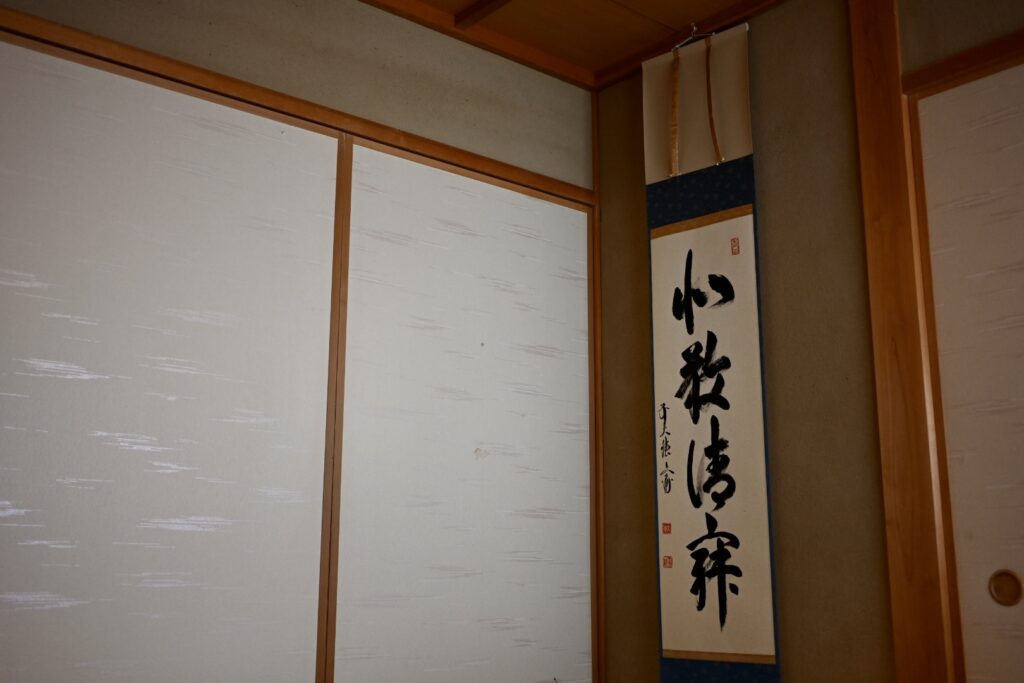
Four characters are displayed in the tea ceremony room – Wa: peace and harmony, Kei: respect, Sei: purity, and Jaku: tranquility.
Tea ceremonies are held perhaps once a month amongst friends as they require significant preparation.
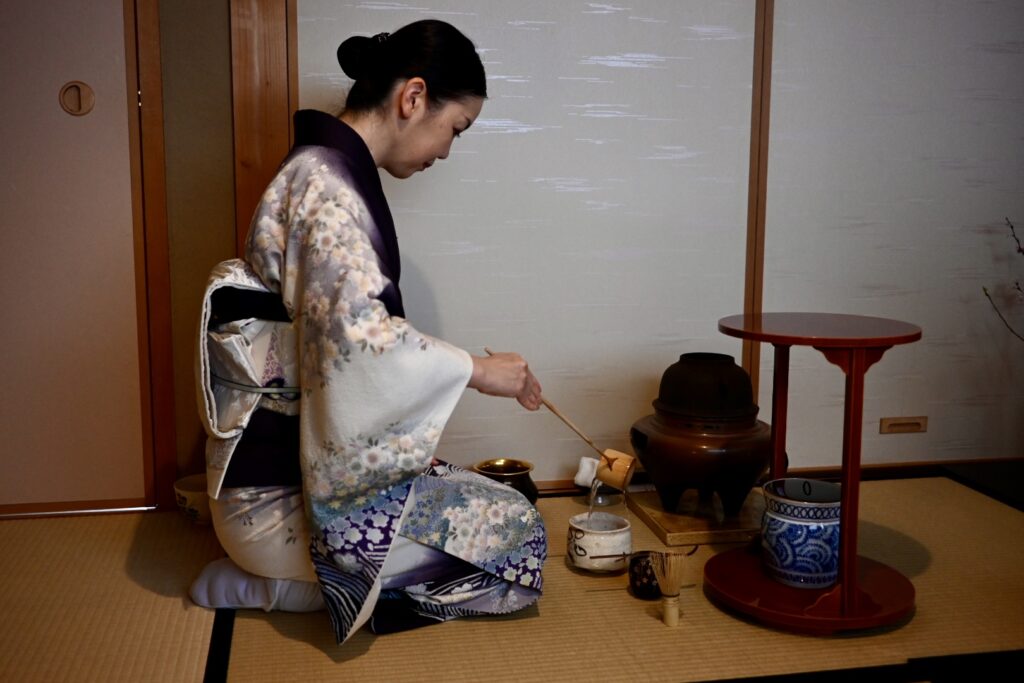
Bamboo is prized as a material for making tea implements, both due to its straight lines and its simplicity.
Also of note – the ceremonies for both ourselves and the party in the other room start at essentially the same time so as to ensure all senses can be focused on the details of the ceremony itself.
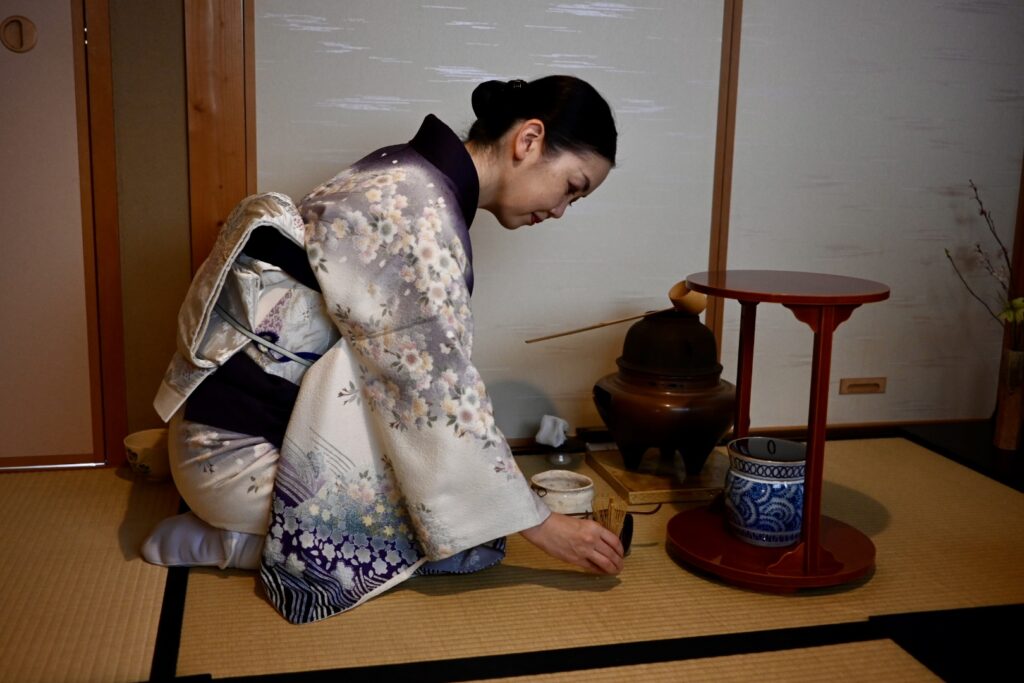
A specialized hand-made tea whisk is used to froth the matcha. The whisk is made by splitting a piece of bamboo. This method used to be a family secret in Nara, Japan, but now most whisks come from China or South Korea. However, Japanese tea whisks are still made in Nara. Atsuko particularly fond of those made by Tango Tanimura.
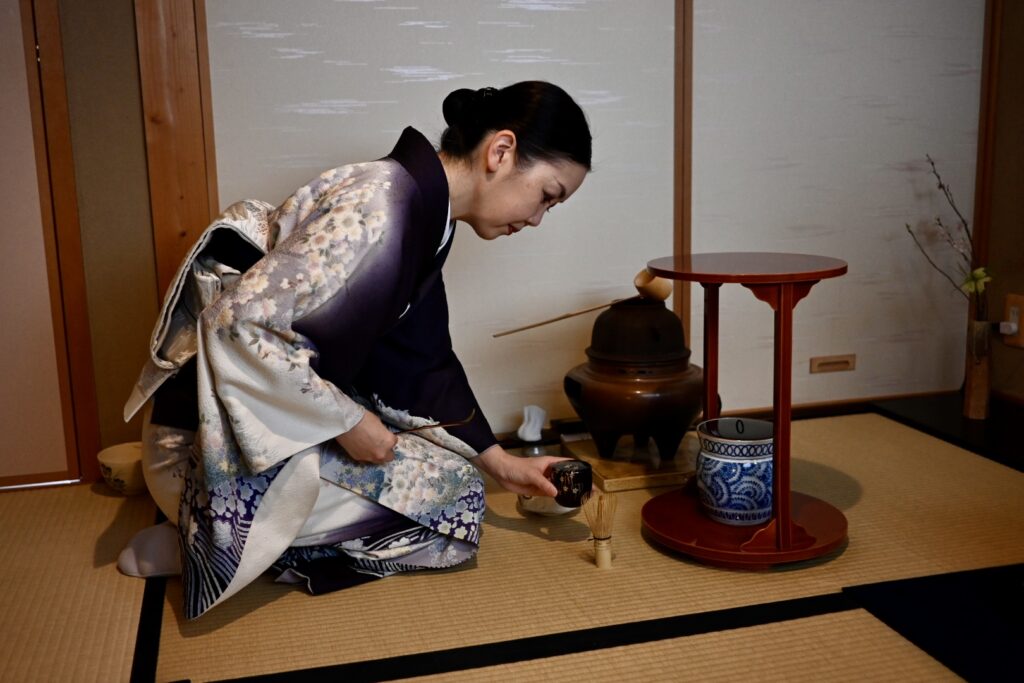
The tools used in the tea ceremony often reflect the seasons. In this case, Atsuko has chosen to use a sakura-decorated matcha container and to wear a secura kimono.
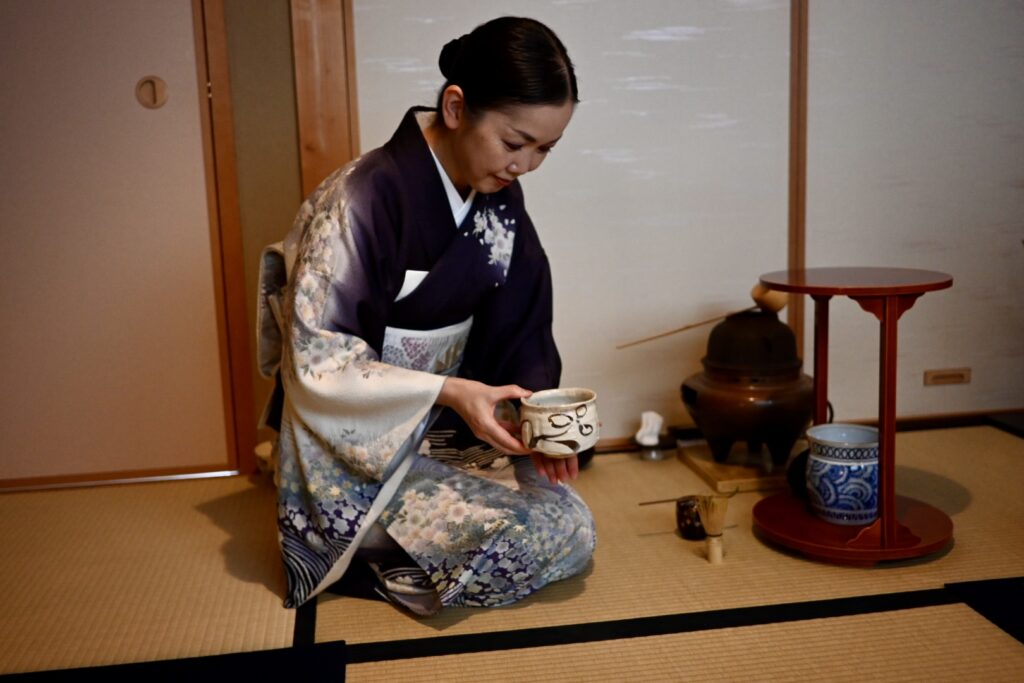
There are also formal tea ceremonies with a meal which last upward of three and a half hours. These would typically be done to celebrate the new year. A regular tea ceremony takes roughly an hour and a half.
Matcha should be brewed with water that is 80 Celsius (175 Farenheit). The frothing makes the matcha taste milder.
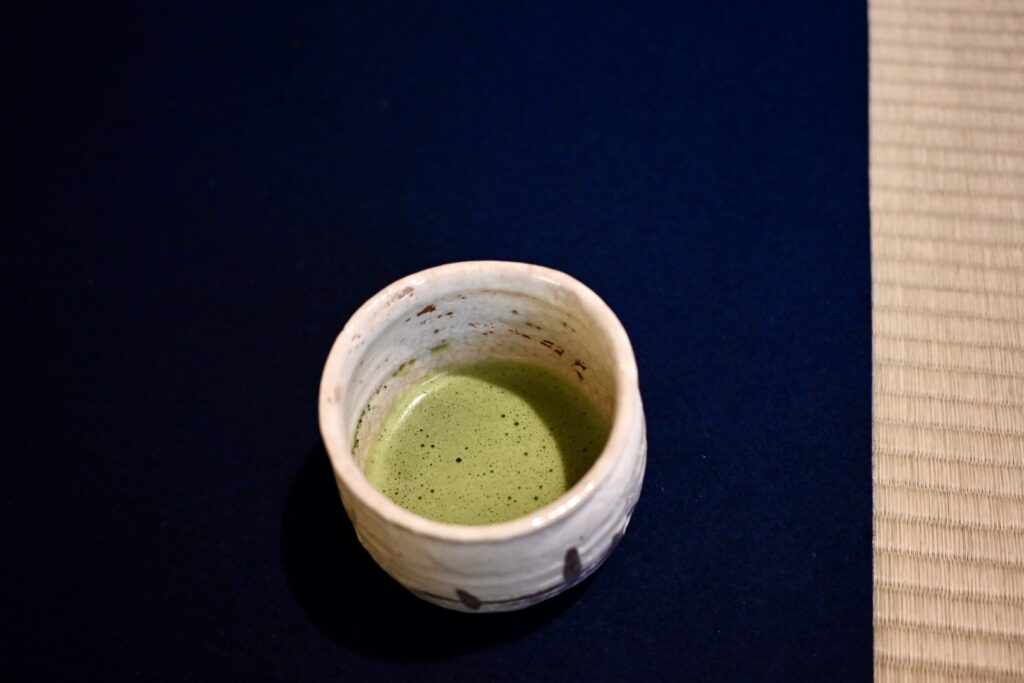
Each cup of tea takes 10 minutes to prepare formally – so we are given the chance to sample the one formally-prepared mug and then prepare our own. Atsuko notes that I have excellent whisking technique!
We are also have the chance to try a sweet:
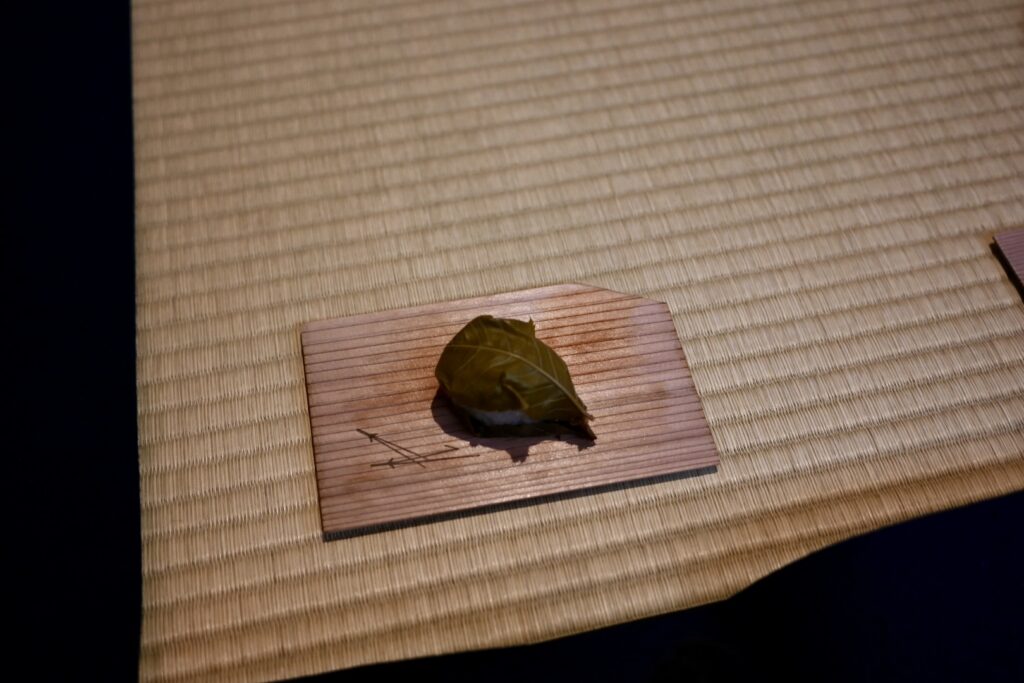
This is sakura mochi with a salted sakura leaf. The salted leaf is a bit strong to my taste, but the mochi is delicious.
And the verdict? This was a great activity to do with the kids – we all learned a ton, and it provided a welcome addition to our understanding of Japanese culture. Highly, highly recommended – but book early!
Also – it’s only while writing this blog post that I learn that Atsuko is actually the owner of Camellia Tea Ceremony. She did such a fabulous job of answering our questions.
Back out onto the mean streets of Kyoto…
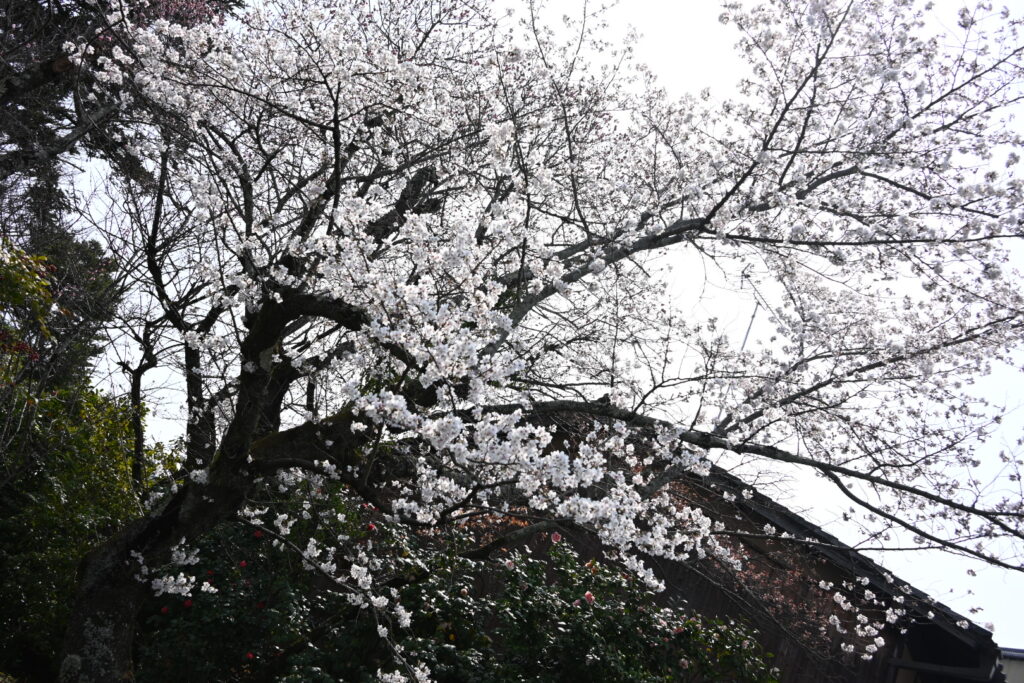
… Where I sneak in some more sakura snaps while no one is watching.
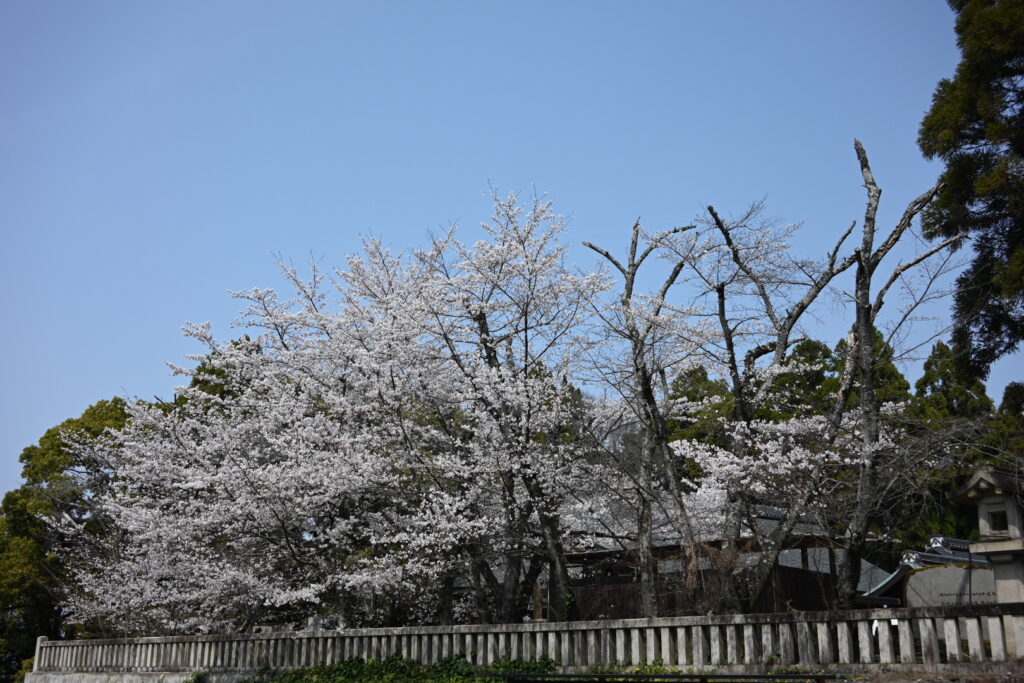
Atsuko had also mentioned that the grave of Japanese samurai Sakamoto Ryōma is nearby, so we go in search of it at the Kyoto Ryōzen Gokoku-jinja Shrine.
And also in search of sakura:
Combined with some beautiful architecture:
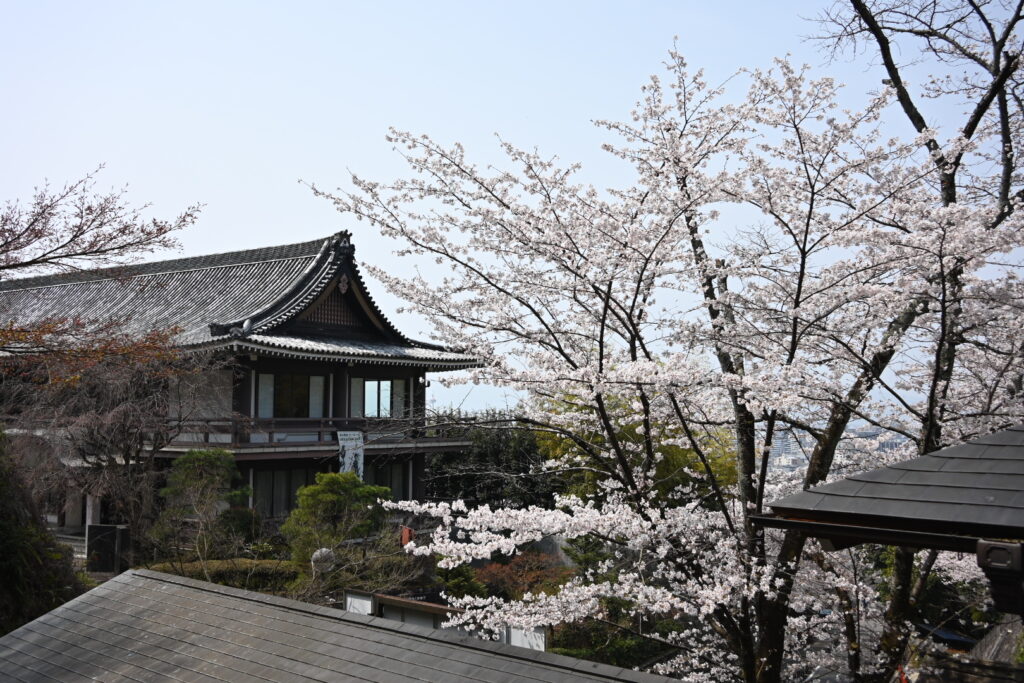
There’s a modest cost for admission, which needs to be paid in 100 yen coins. Thankfully there is a money changer on site, and it neatly works out to 1,000 yen for all four of us. (Adults are 300 yen, kids are 200 yen apiece.)
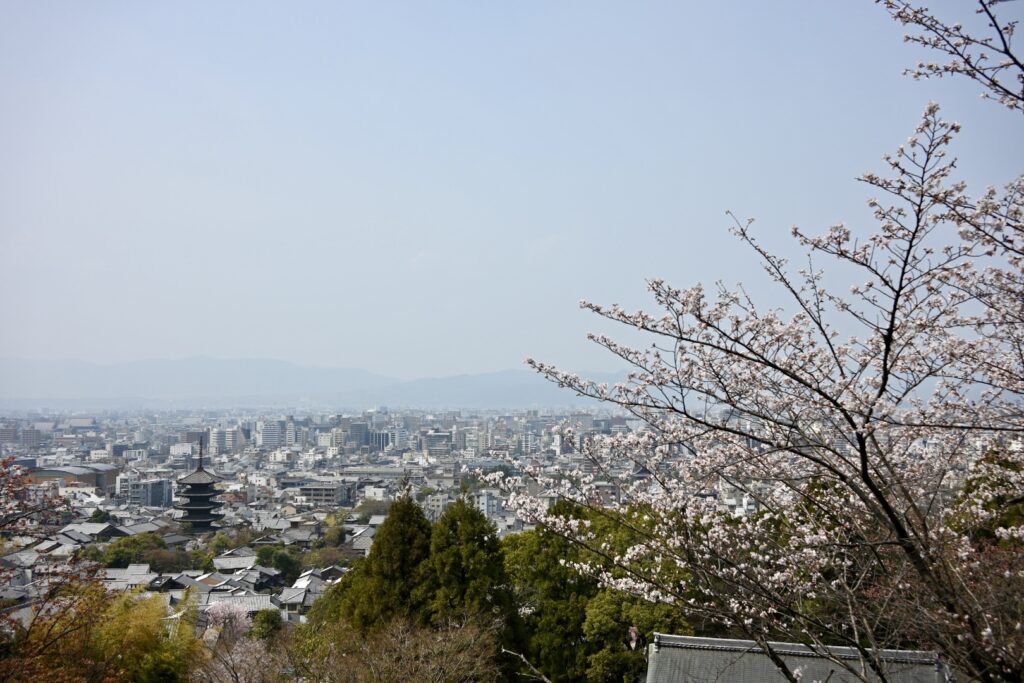
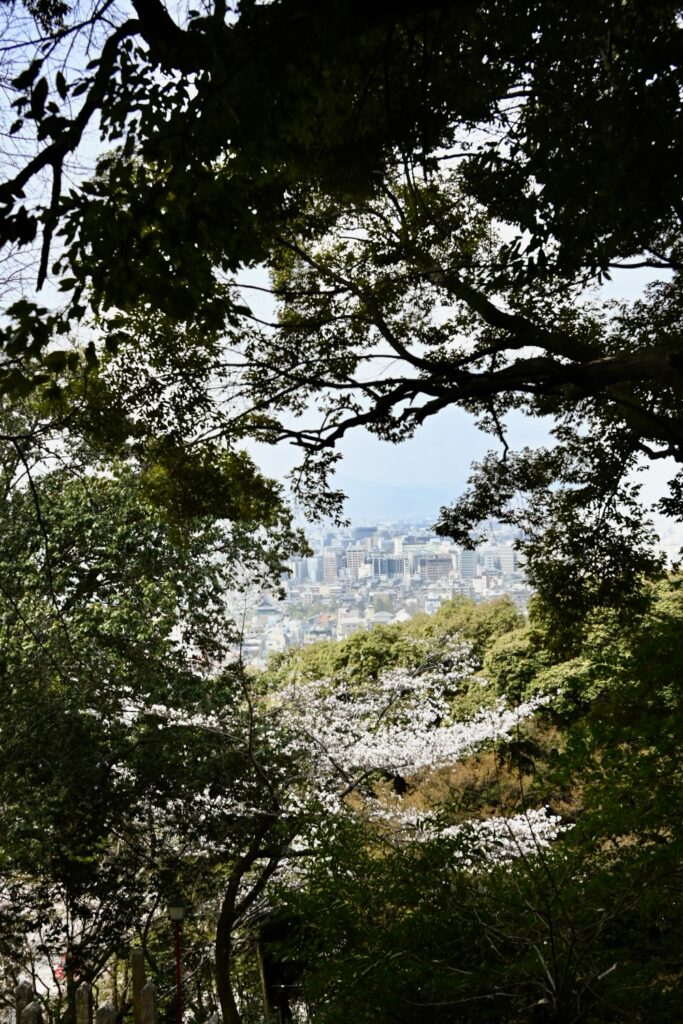
We climb upward through the cemetary, earning some far-reaching views of Kyoto in the process:
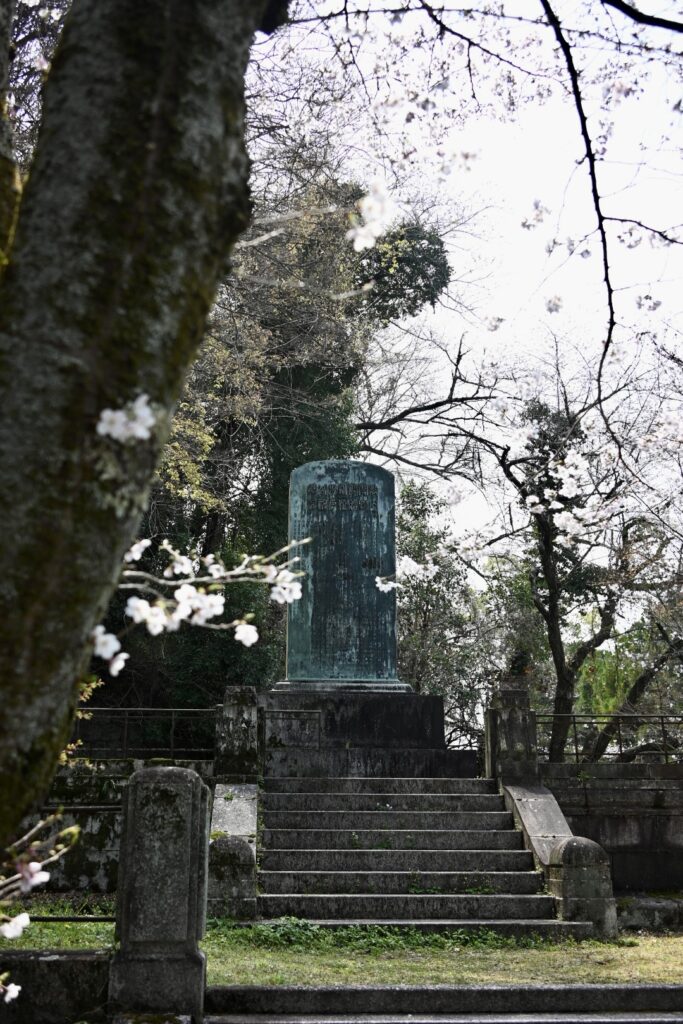
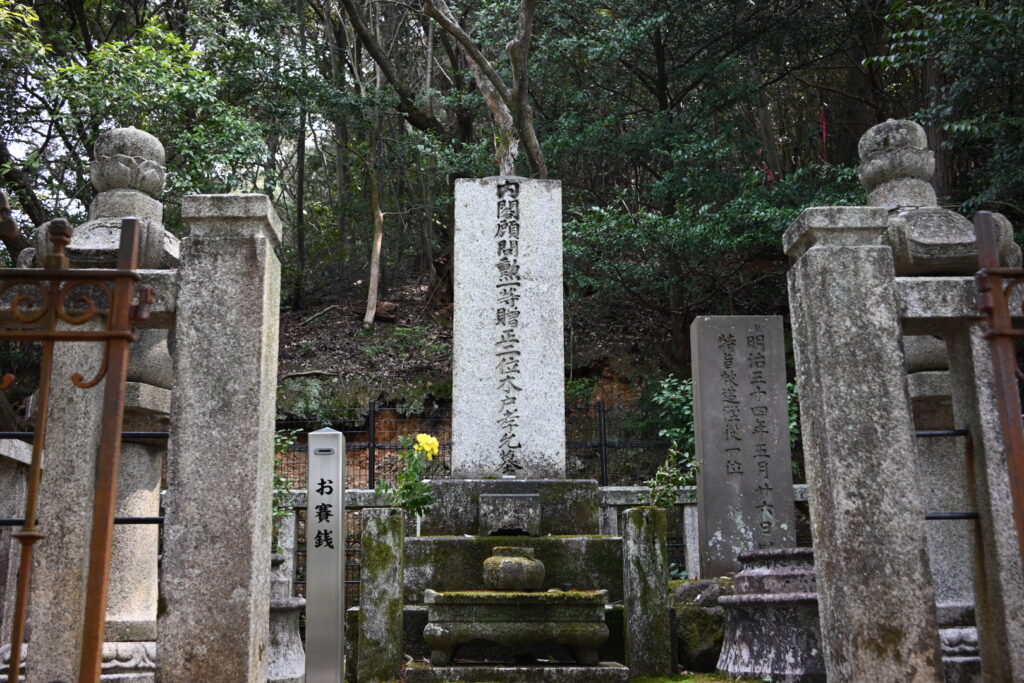
And eventually we reach Ryōma’s tomb:
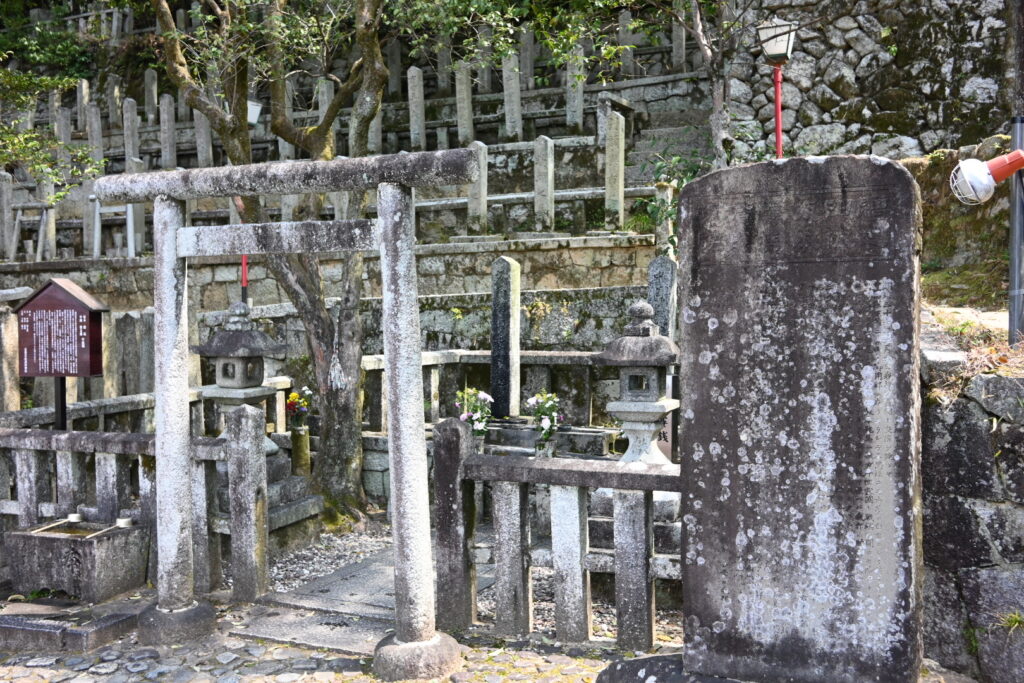
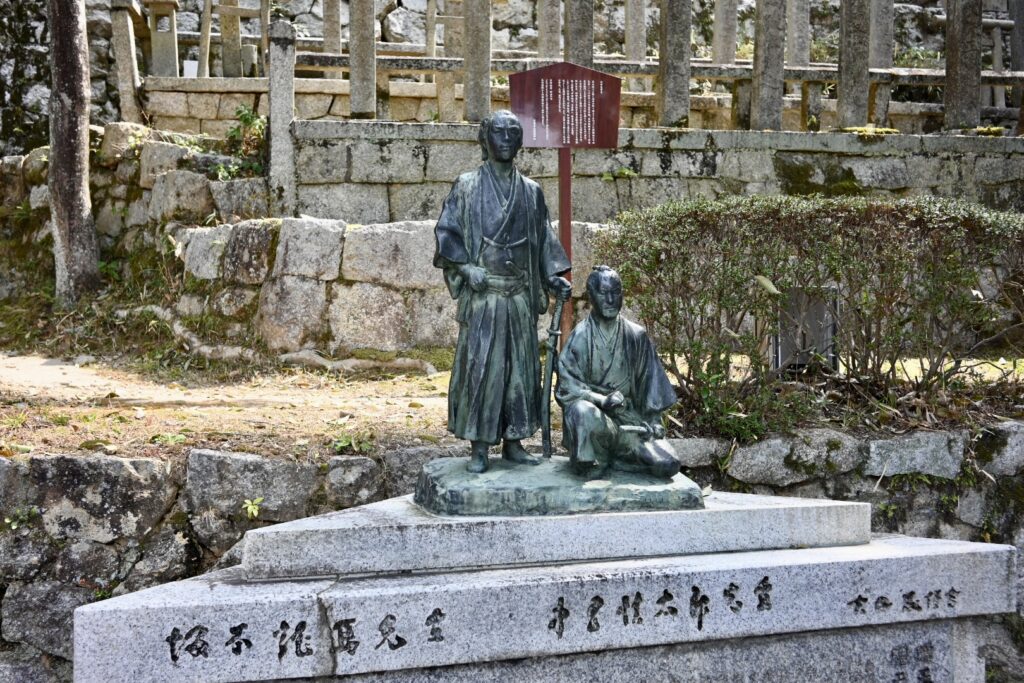
For those not familiar with Sakamoto Ryōma – from the Visit Kochi website:
“Despite being born into a samurai family himself, Ryoma ended up playing a major role in ending the era of samurai and shogunate control. He was a key figure in creating the opportunity to overthrow the Tokugawa shogunate. At the time there were many groups wanting to take down the shogunate by military force, but Ryoma proposed a more peaceful option for political reform.
“This proposal was eventually accepted by the shogunate, ending over 650 years of military reign. In 1867 power was restored to the Meiji Emperor, making way for the formation of the Meiji government whose aim was to create a more modern Japan.”
There’s history around every corner in Kyoto.
We continue our climb upward:
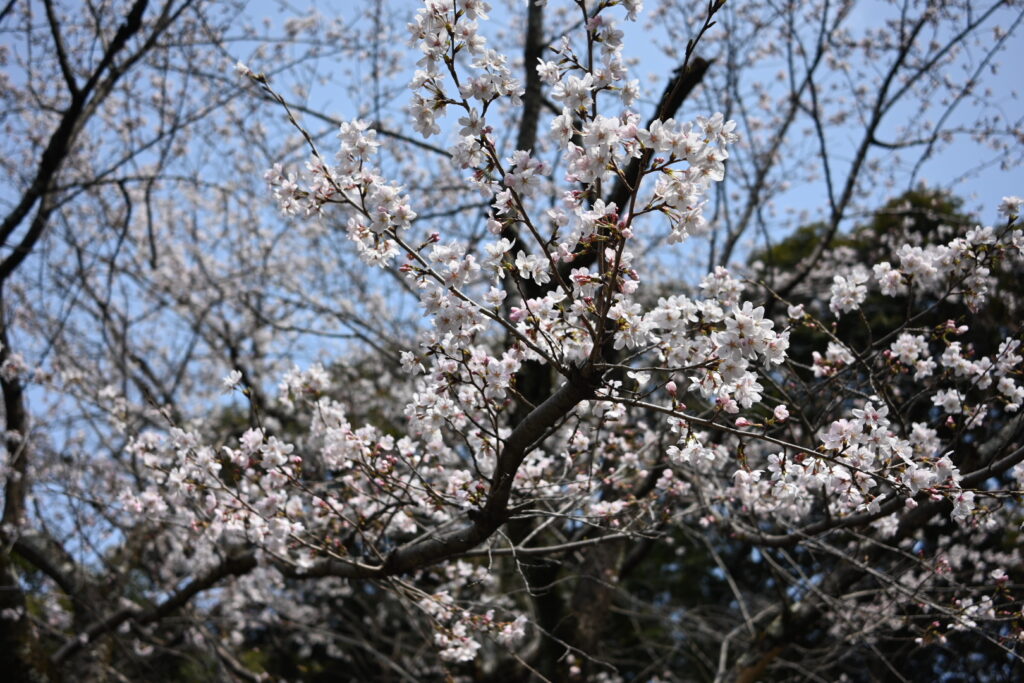
Until we reach the top of the cemetary:
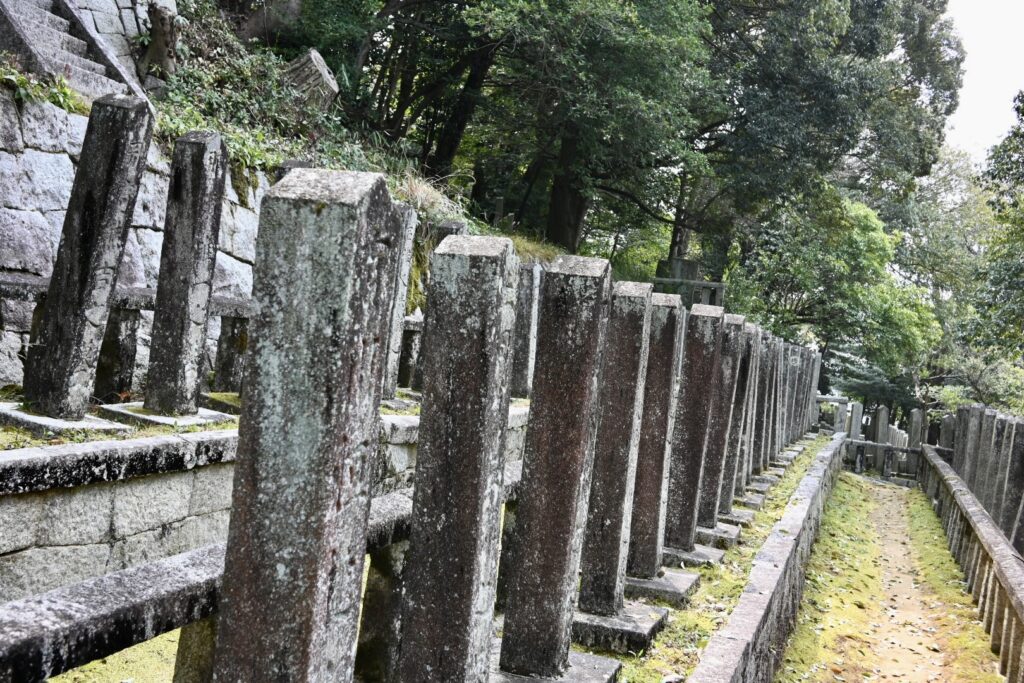
We admire the view:
Pay our respects:
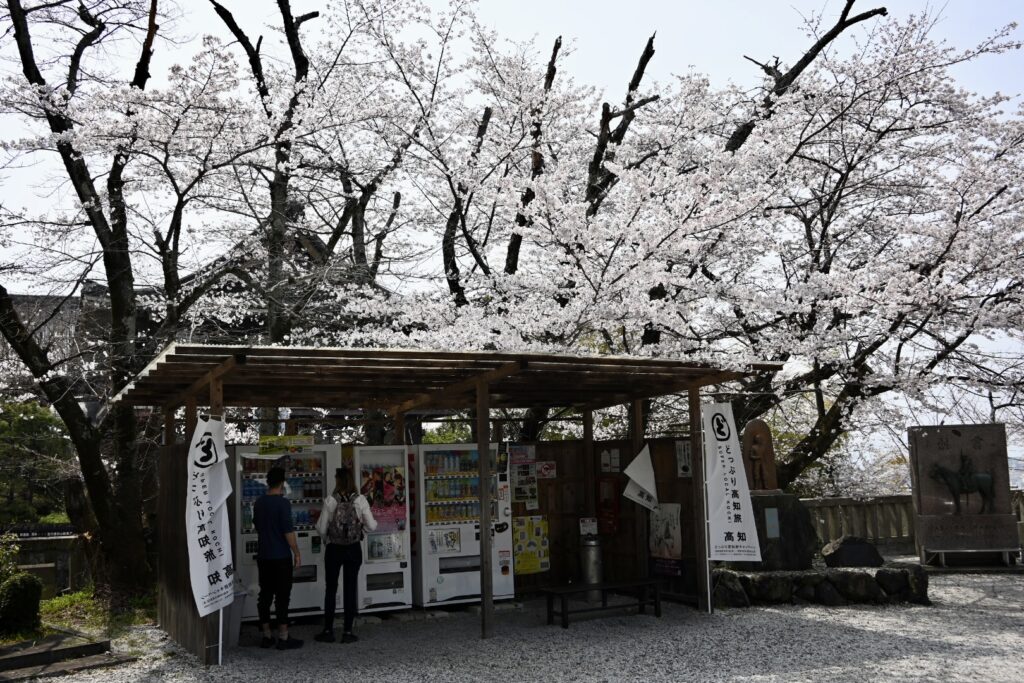
And we head back down – passing the world’s most scenic vending machines along the way:
From here we return to the main parking area, where we consider picking up lunch.
But the restaurant is slammed, so we decide to carry on to our next destination instead – Fushimi Inari Taisha, the head shrine of the kami Inari.
We try to just pick up a cab here but after the second or third driver makes the sign of an X with their arms to indicate their lack of availability, we use the Go app instead. Our cab arrives almost immediately.
The first phase of the drive goes well, but it immediately bogs down as we approach Fushimi Inari. Still, we stick it out and the driver drops us just a few feet away from the shrine.
Or so we think – the driver then grabs me back a few minutes later. I have a hard time understanding what he wants until I turn on the ‘Conversation’ feature on Google Translate. He explains that online payment hasn’t worked, so I will need to pay in the car instead.
I check the Go app, and it says everything has gone through smoothly – but the driver is insistent, so I pay him again via credit card. I figure that I can always reverse the charges if needed.
This goes through, and we are able to head out. Next stop – lunch at Vermillion:
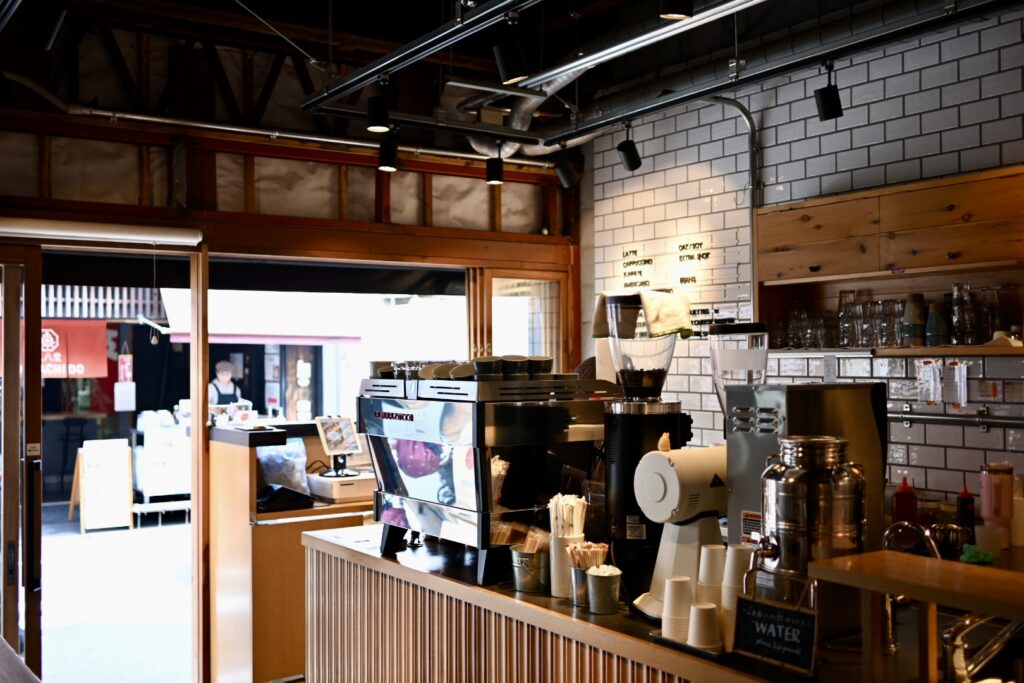
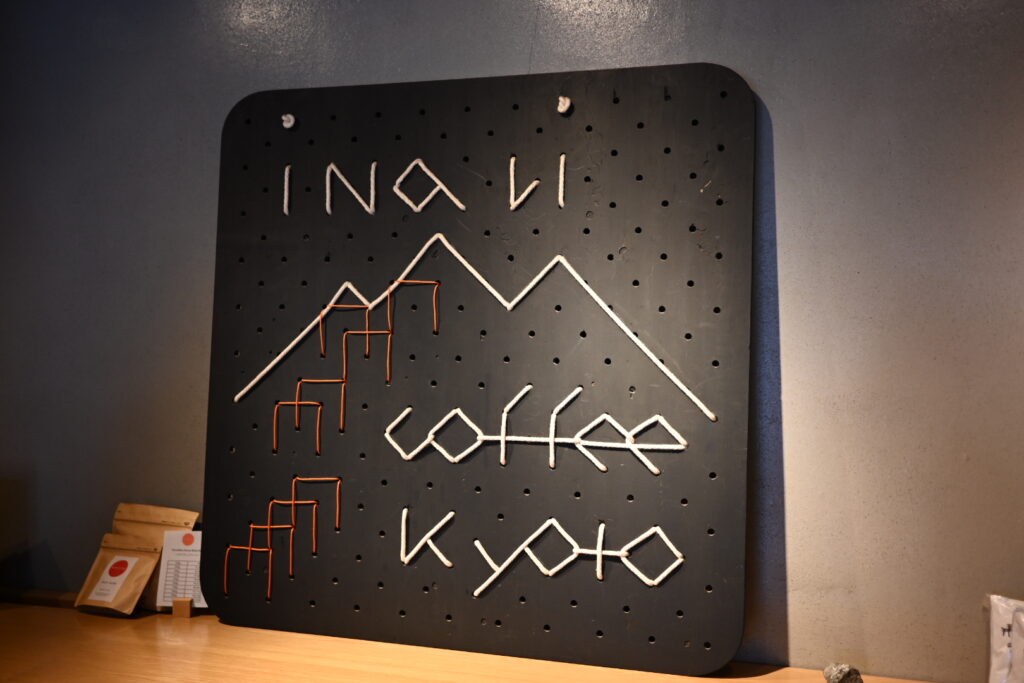
Vermillion is little more than a coffee and sandwich shop, but that’s just what we need at the moment.
My wife and I each get a pastrami with camembert:
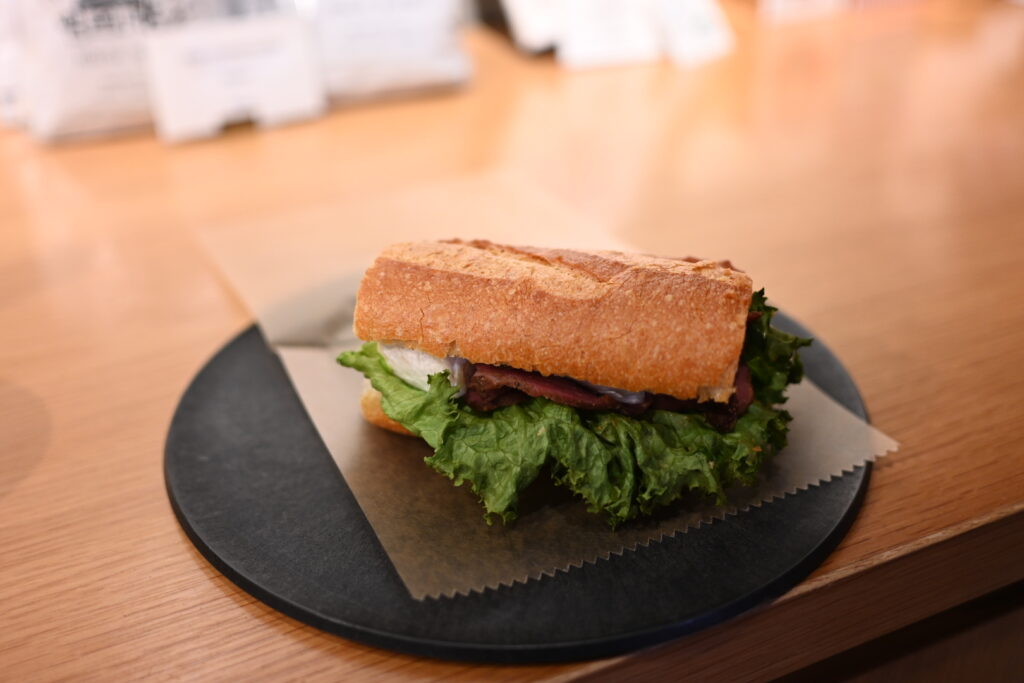
While the kids get English muffins with ham and cheese. Everyone leaves happy.
Well, mostly happy – I check my credit card and see that both the charge from Go and the charge from the taxi company seem to have gone through. I hope I didn’t get caught up in some kind of scam. No time to do anything about it now, though.
From here we head into Fushimi Inari:
From Japan Guide:
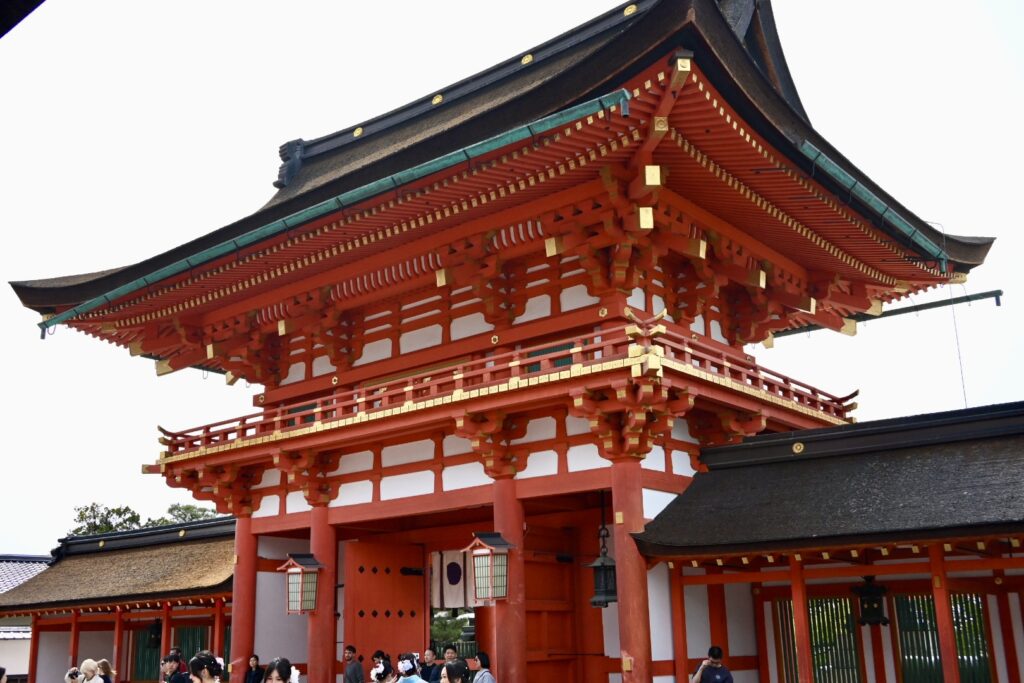
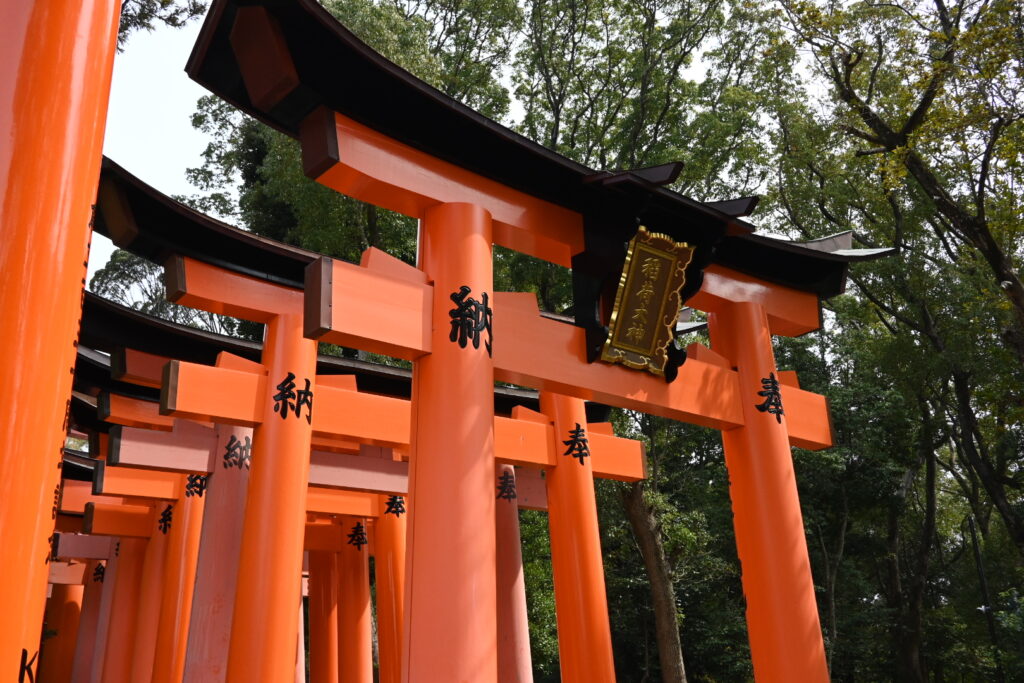
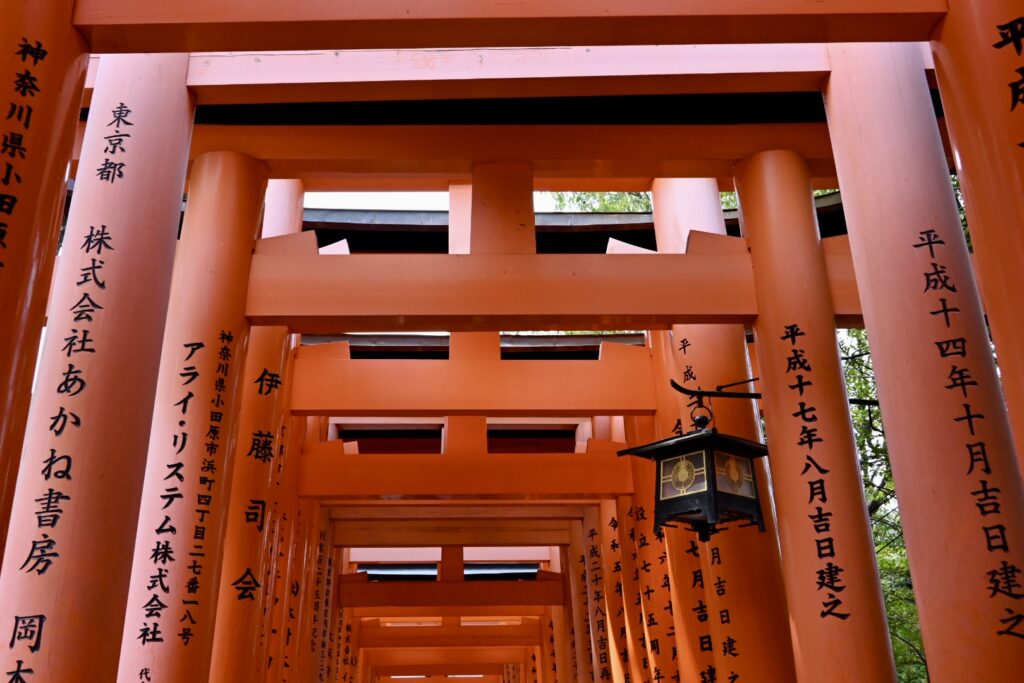
“Fushimi Inari Shrine (伏見稲荷大社, Fushimi Inari Taisha) is an important Shinto shrine in southern Kyoto. It is famous for its thousands of vermilion torii gates, which straddle a network of trails behind its main buildings. The trails lead into the wooded forest of the sacred Mount Inari, which stands at 233 meters and belongs to the shrine grounds.
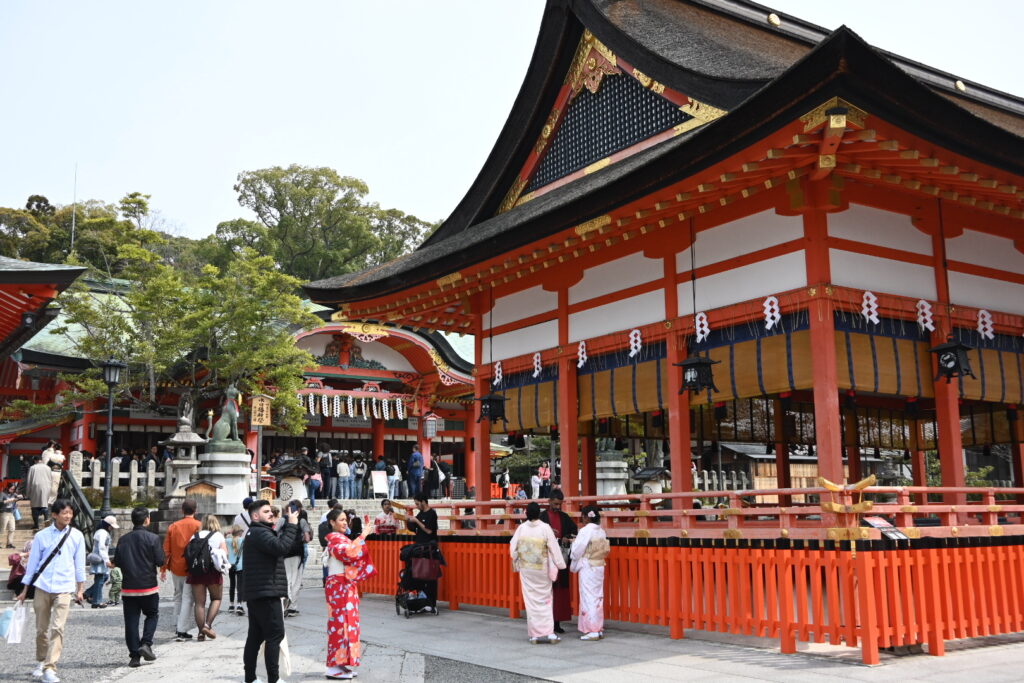
“Fushimi Inari is the most important of several thousands of shrines dedicated to Inari, the Shinto god of rice. Foxes are thought to be Inari’s messengers, resulting in many fox statues across the shrine grounds. Fushimi Inari Shrine has ancient origins, predating the capital’s move to Kyoto in 794.”
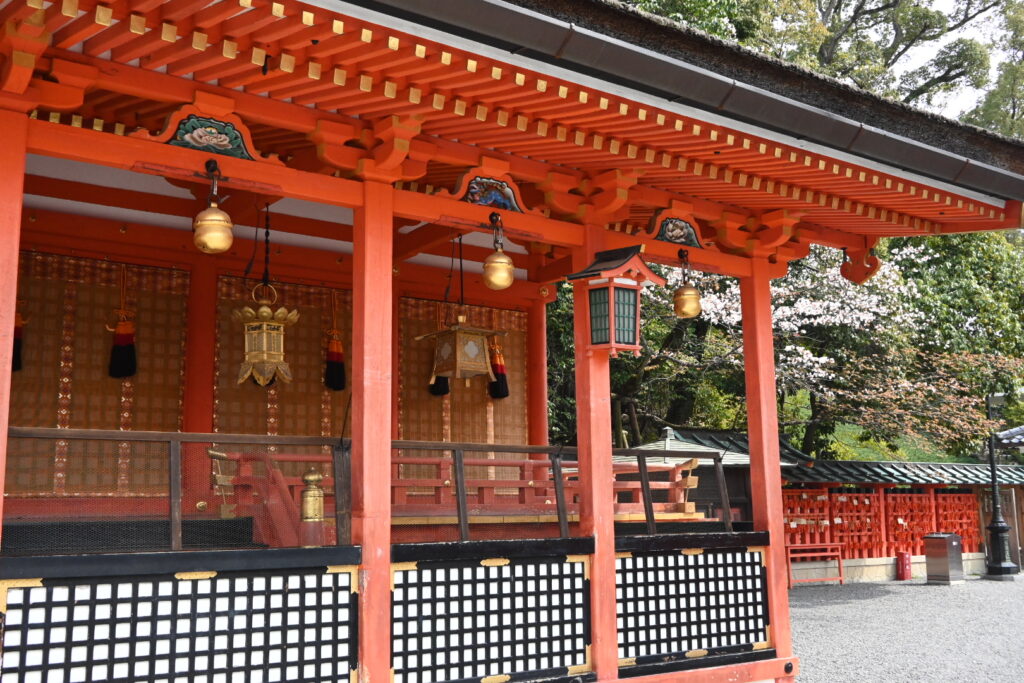
This is one of the major sites around Kyoto, which is immediately apparent from the number of visitors here:
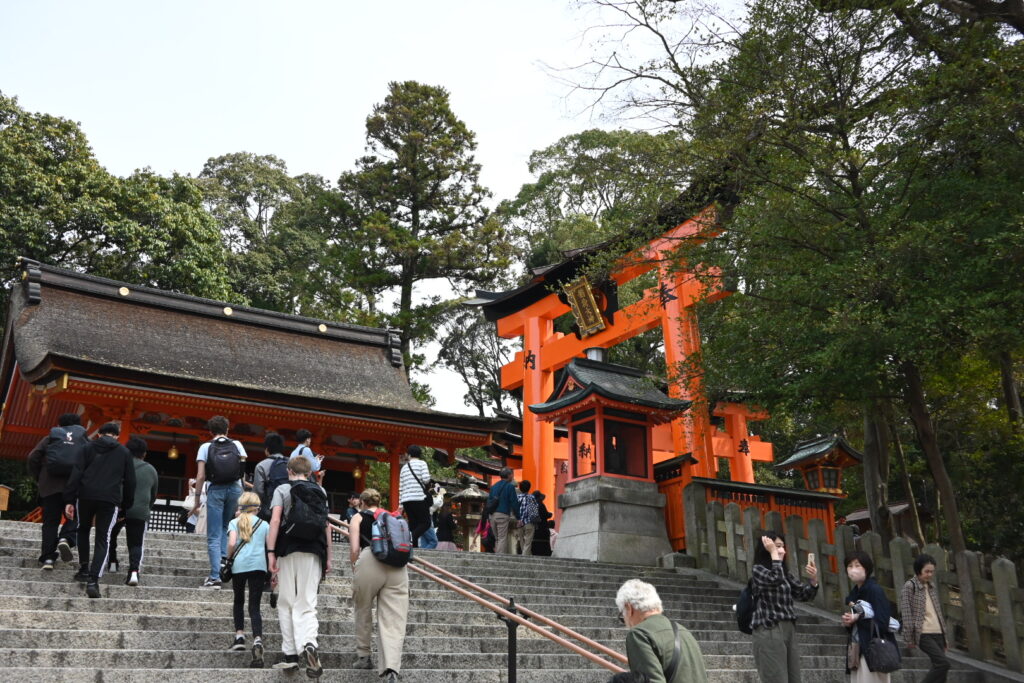
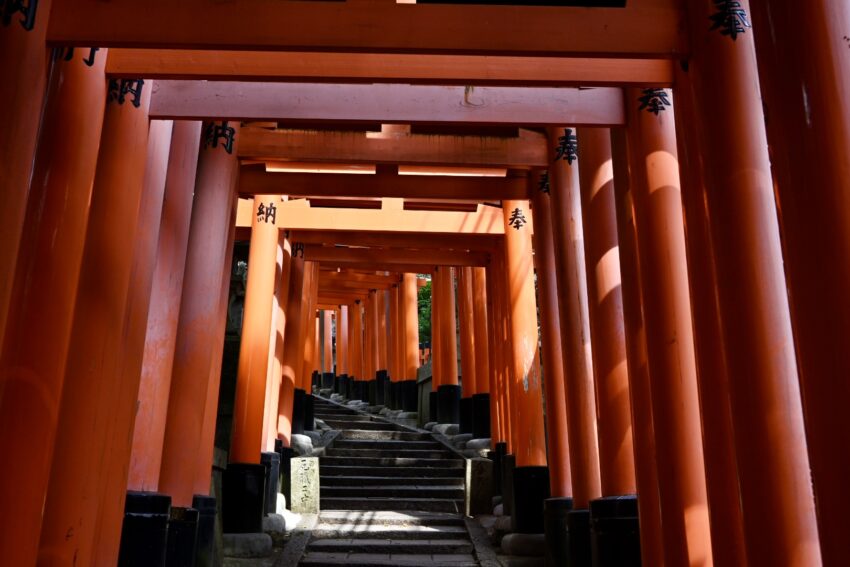
But the long series of interlocking torii is striking and well worth the visit:
The fox statues associated with the kami Inari are immediately apparent:
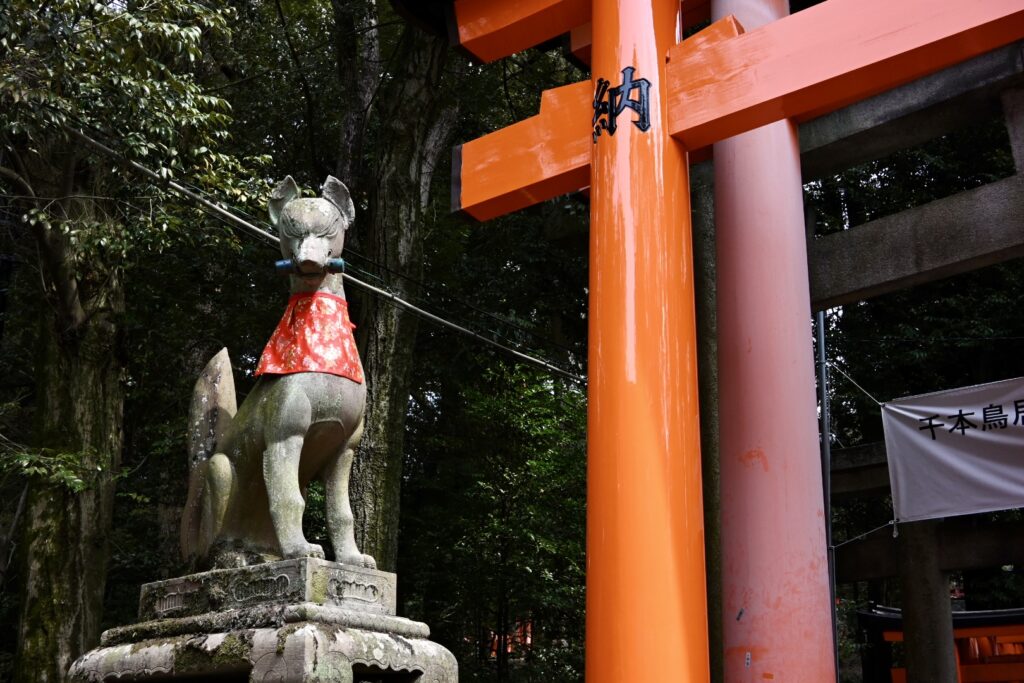
But soon we decide to leave the torii behind:
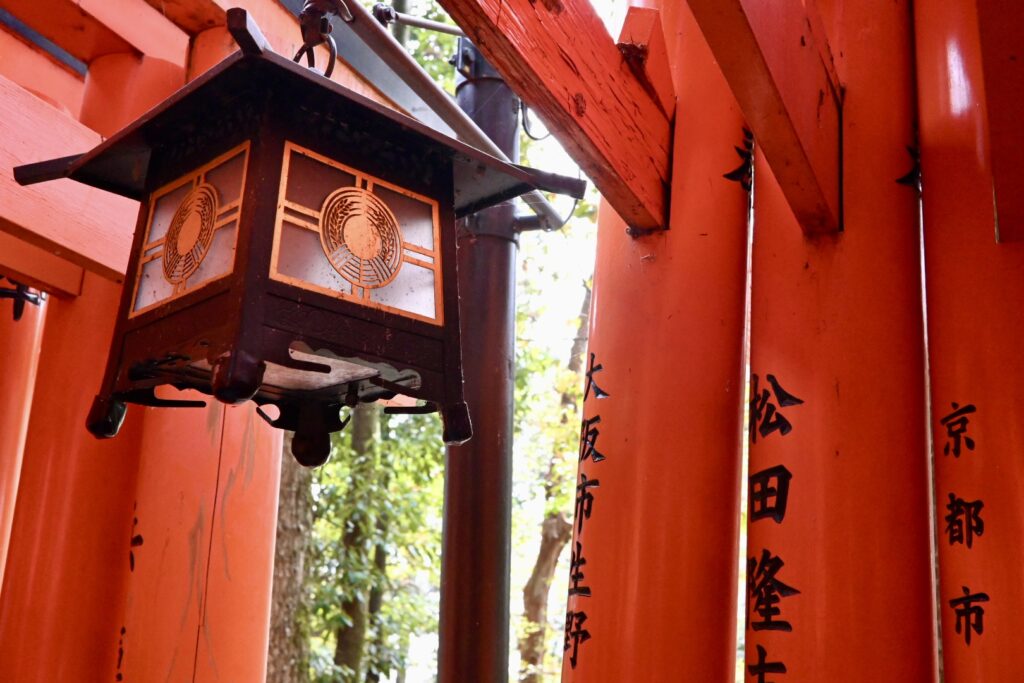
And head along one of the side paths that lead to the top of Mount Inari:
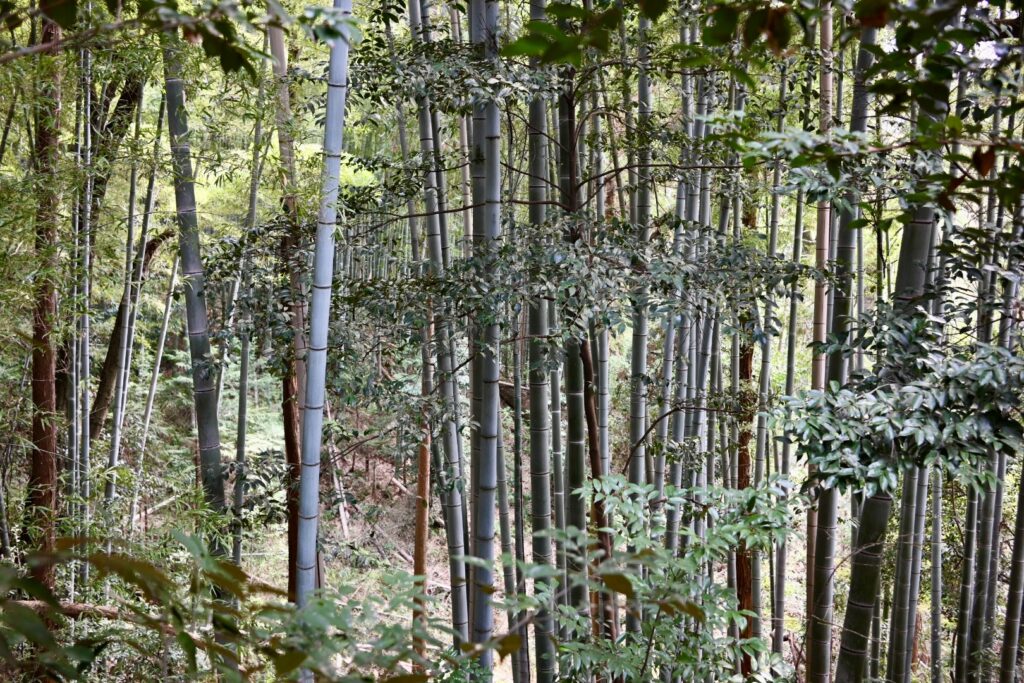
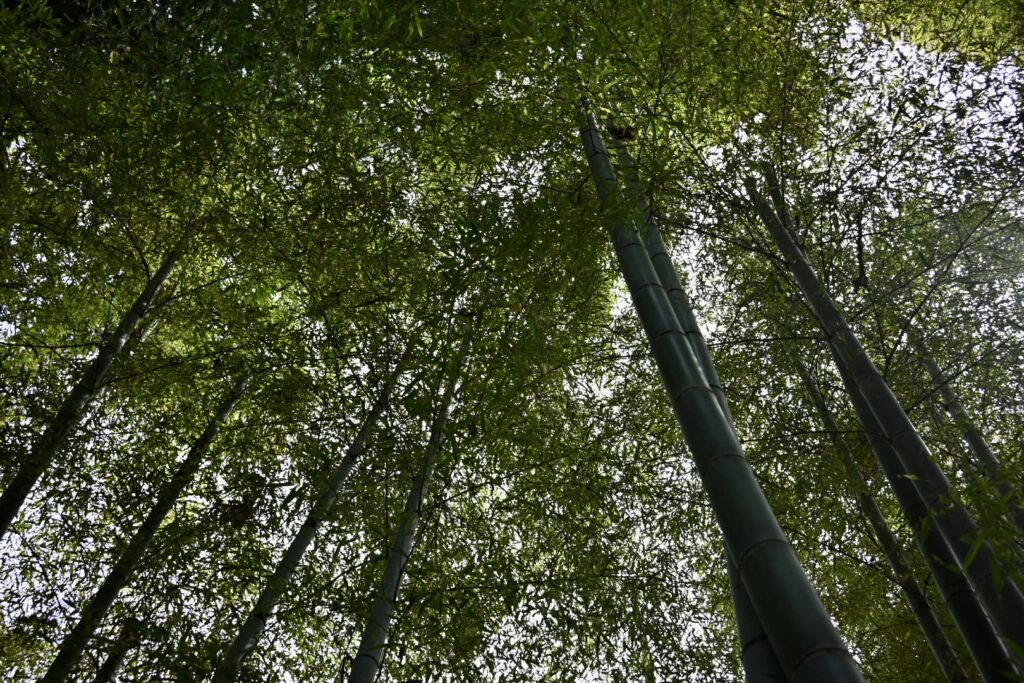
We pass through a bamboo forest:
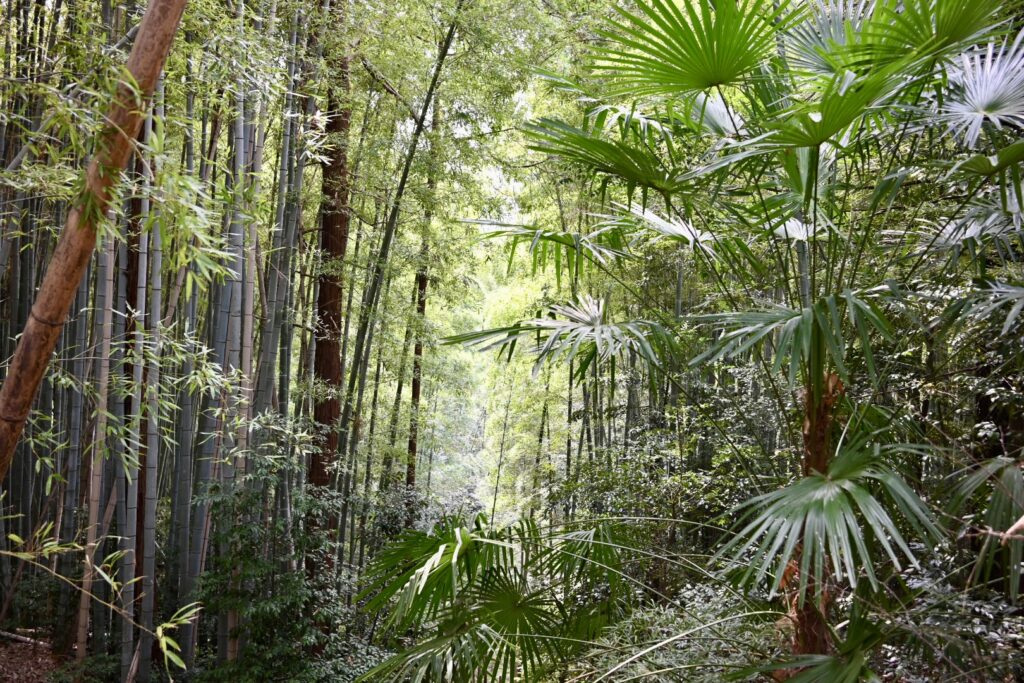
And past several of the Inari shrines:
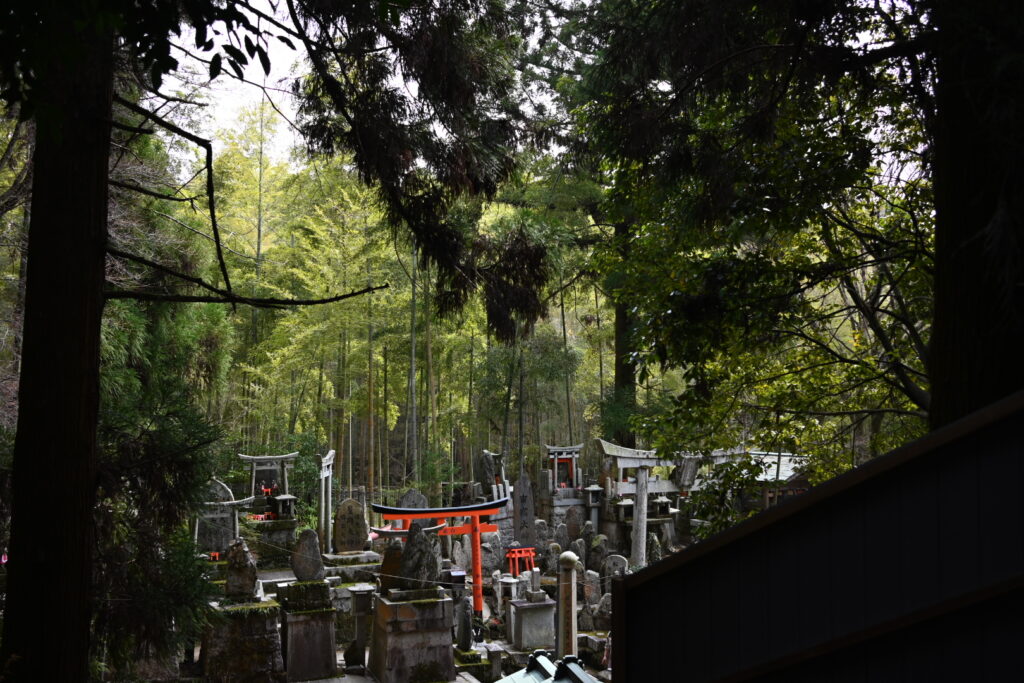
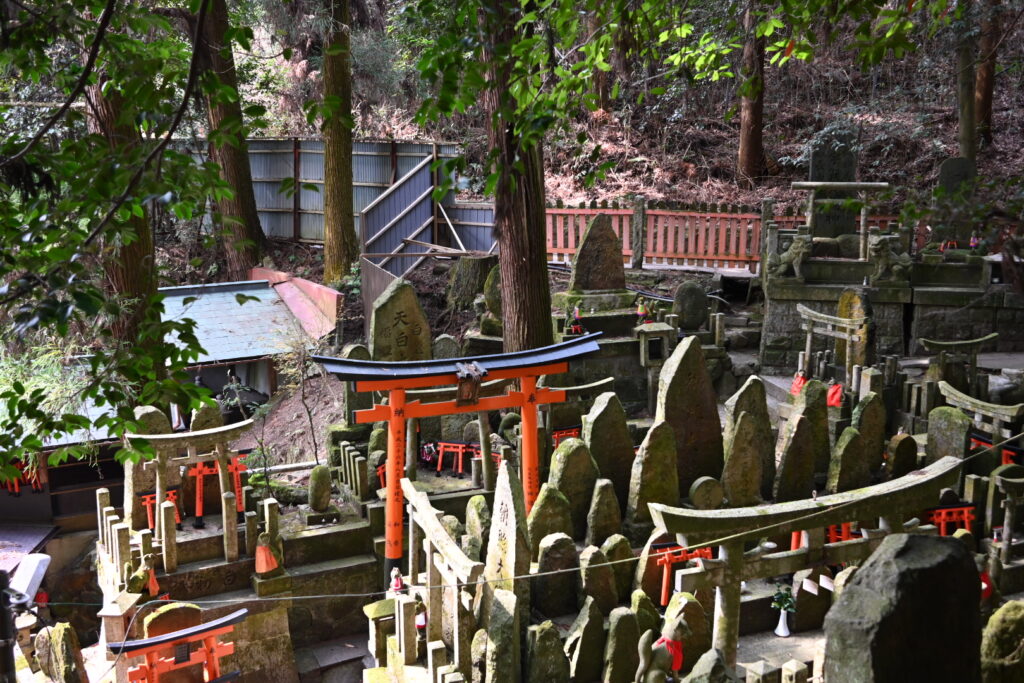
The quiet of the forest is welcome after the hustle and bustle of the main path:
One gentleman seems to want to stay close with us. I’m initially concerned that he might be one of the scammers mentioned in the signs on the front gates – who apparently ask visitors for help with their ‘medical bills.’
But then we spot some signs warning us to be wary of bears and wild boars, and we figure he’s simply looking for a bit of company on the trail. Fair enough!
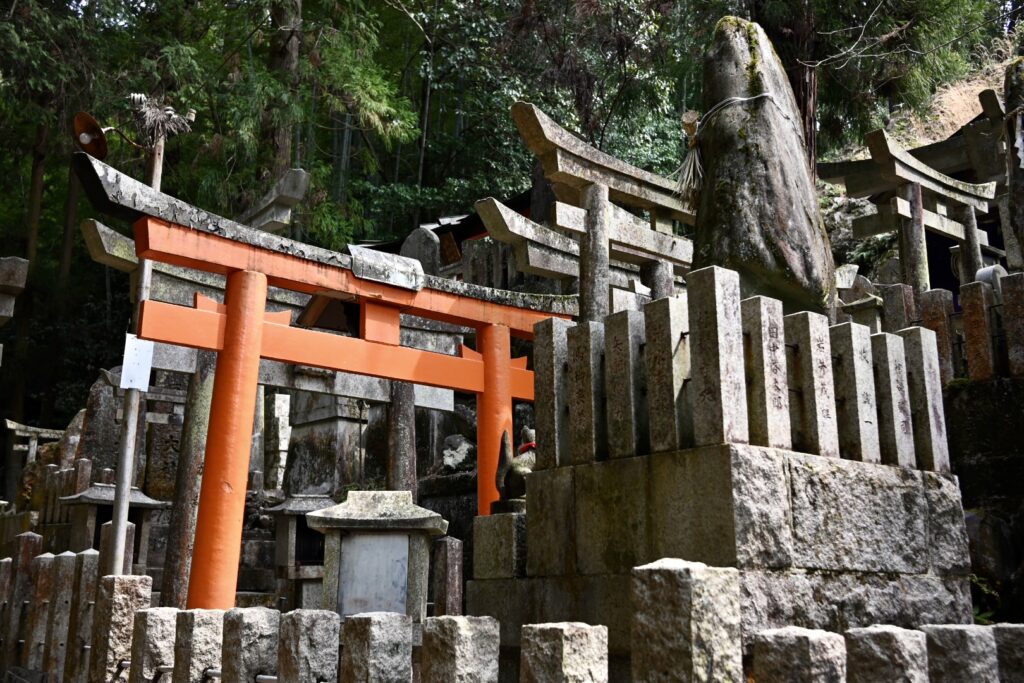
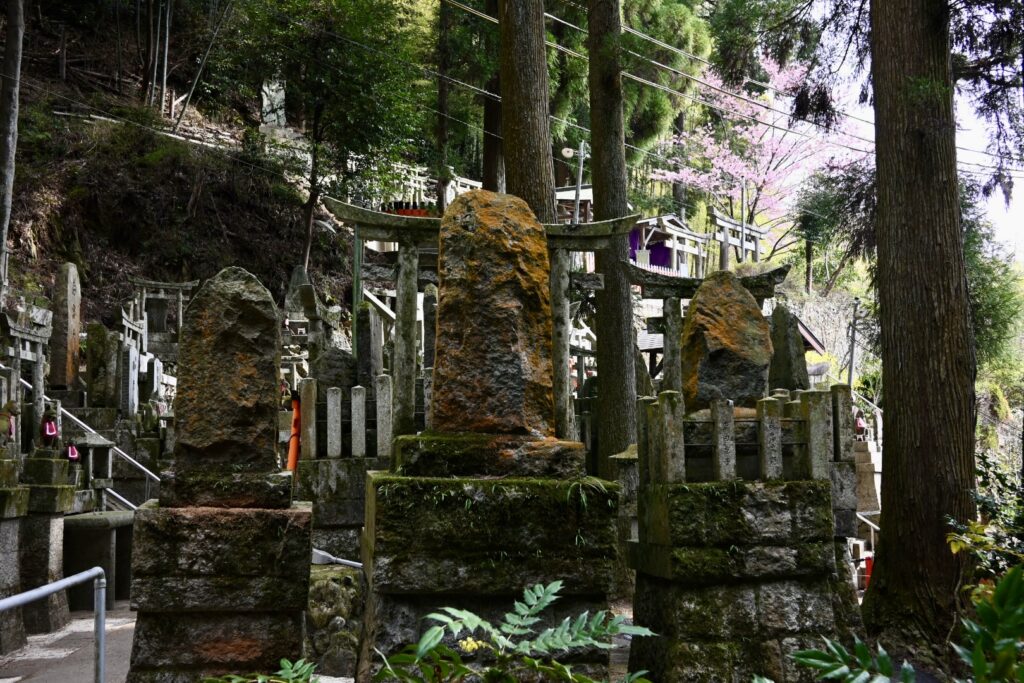
Eventually our backwoods trail reunites with the main route – but with one important difference:
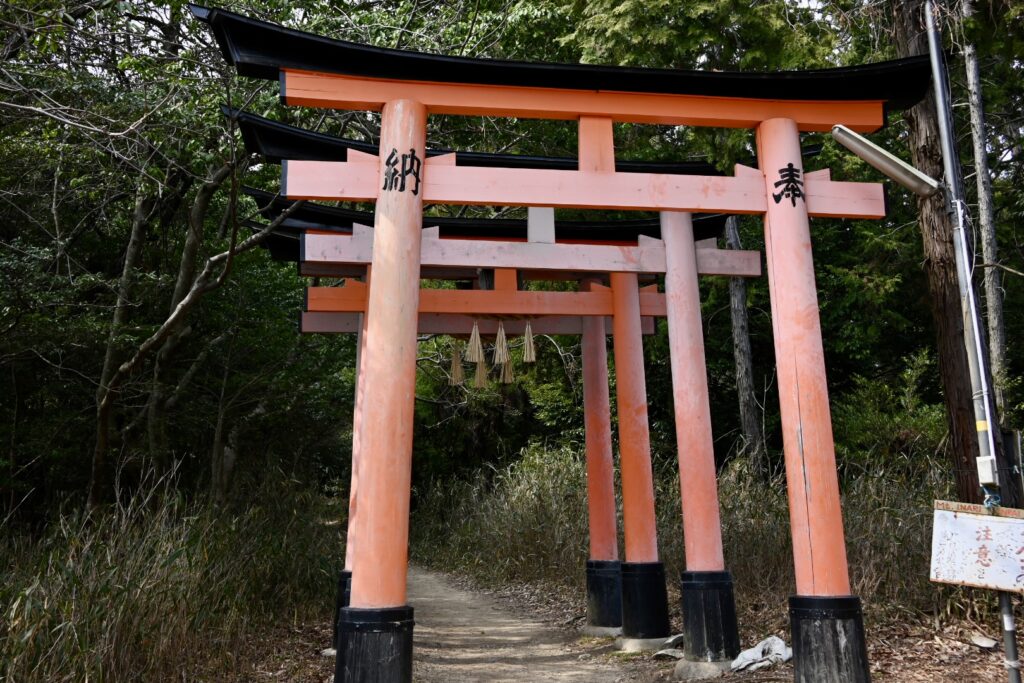
No people!
We visit the shrine at the very top of Mount Inari:
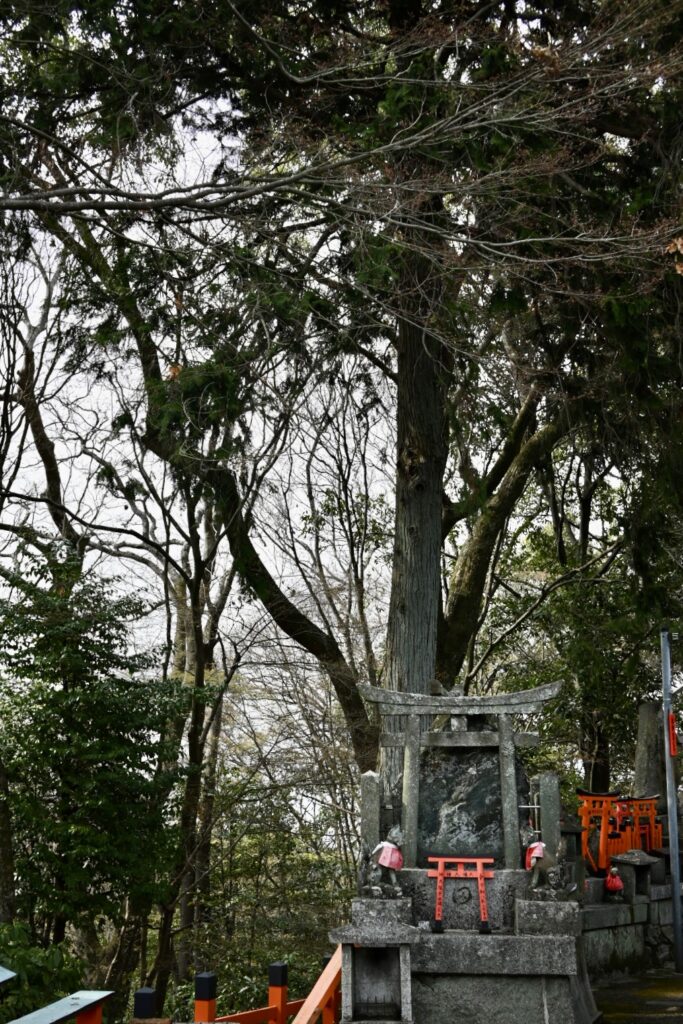
But at this point we’re looking for a taxi – so I go in to inquire at the nearby shop. I type in a long and convoluted message into Google Translate, then delete it and ask: “Taxi?” The proprietor motions for us to continue in the direction we were headed.
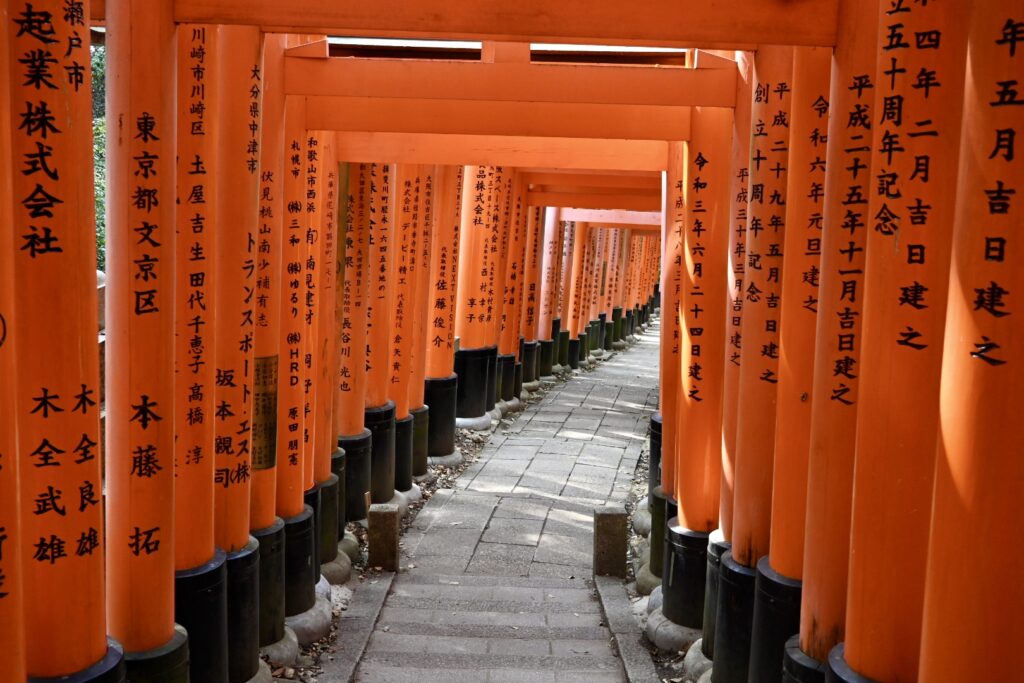
And what a direction it is:
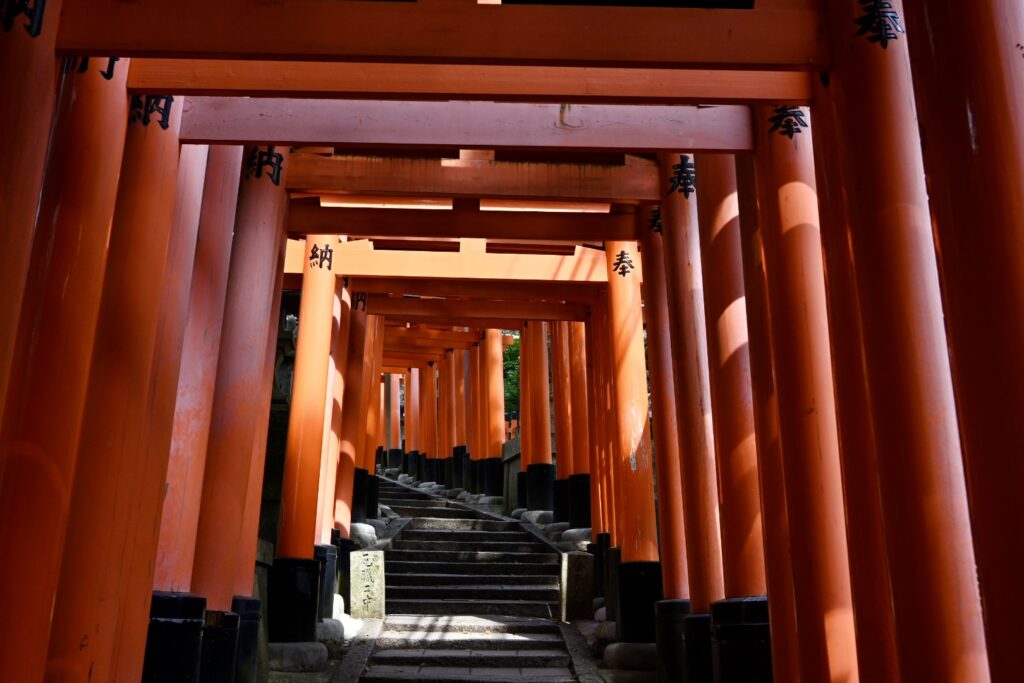
What a treat – no one in sight in either direction:
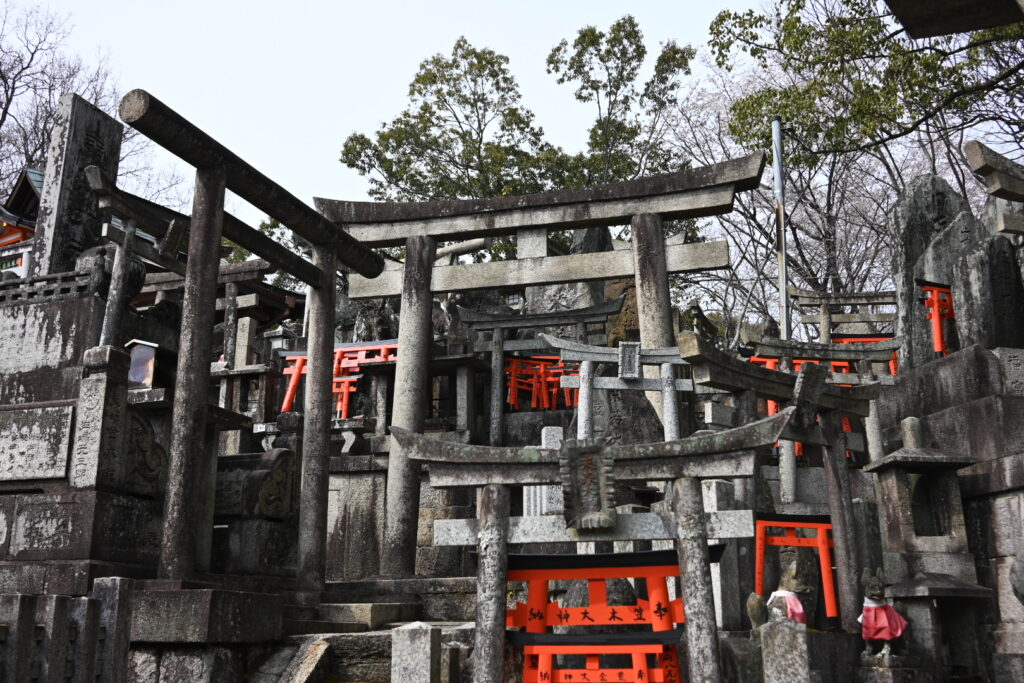
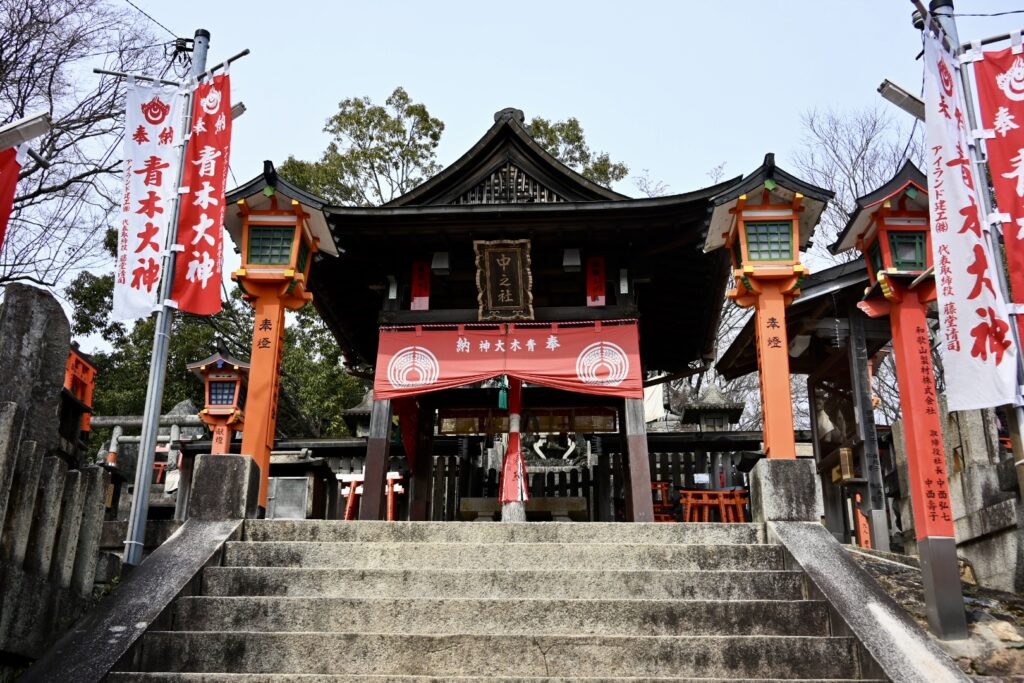
We carry on past further Inari shrines, each a little different from the last:
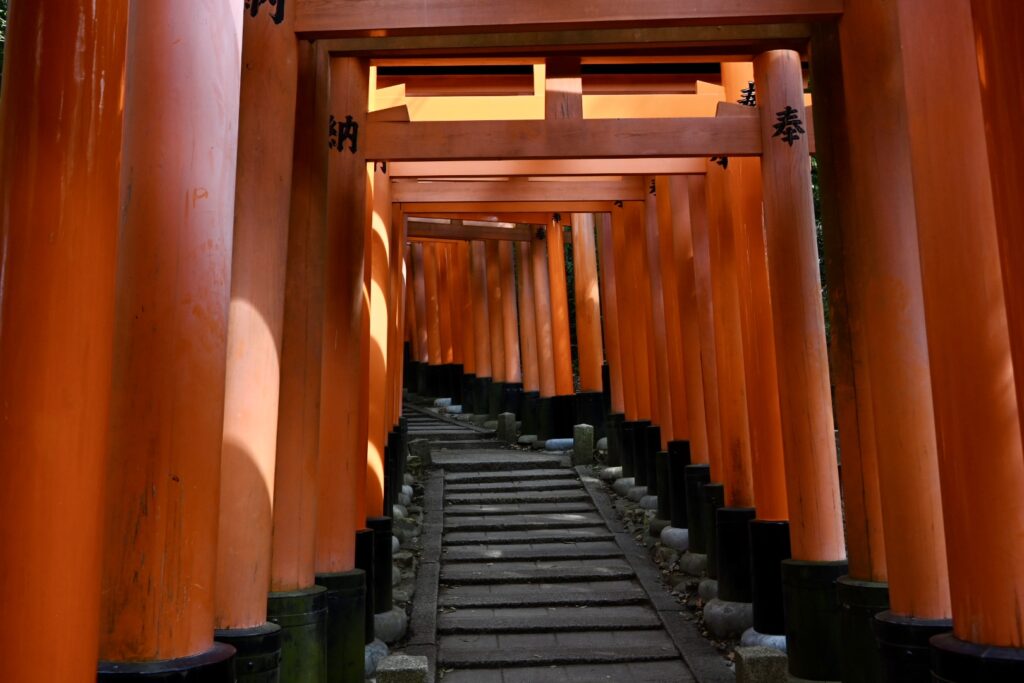
Enjoying our nice, quiet torii-filled path:
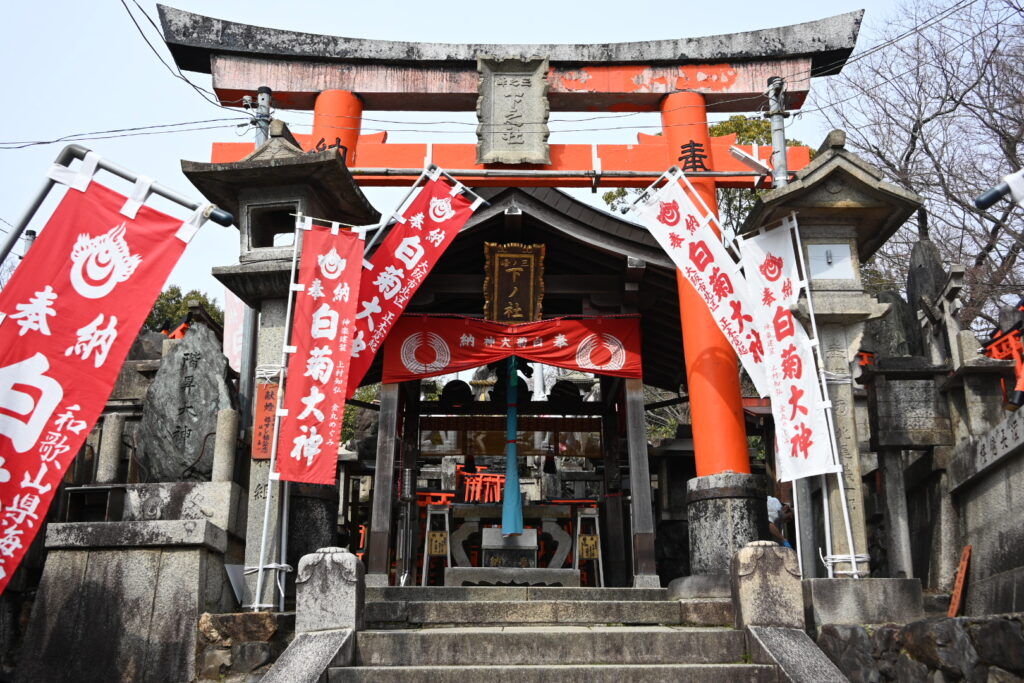
The route gets busier again, but even that has its upsides – such as ice cream:
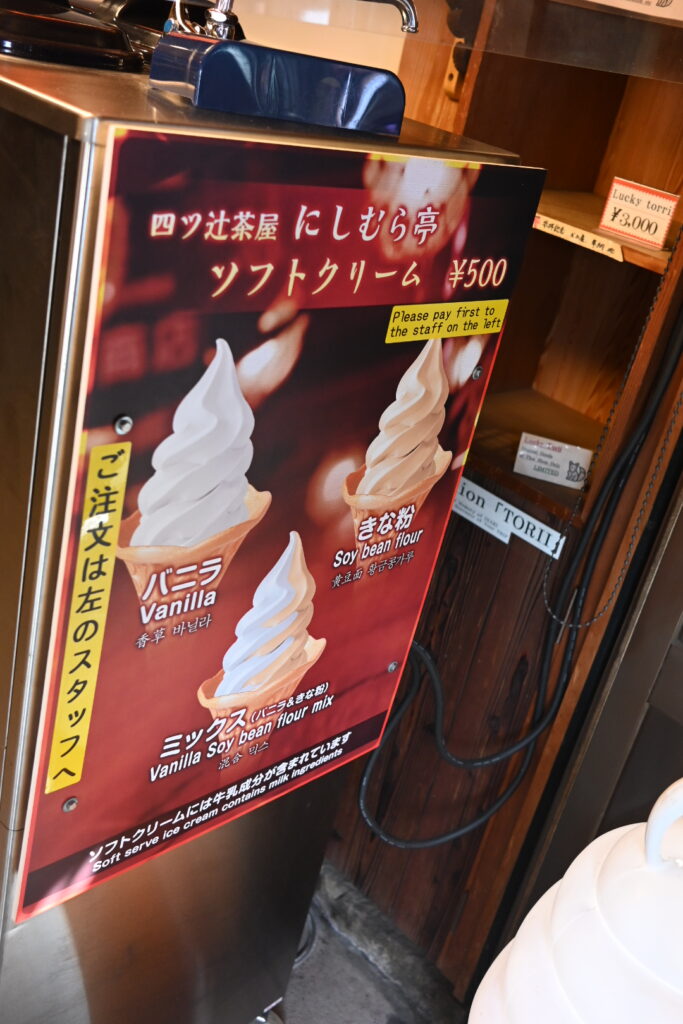
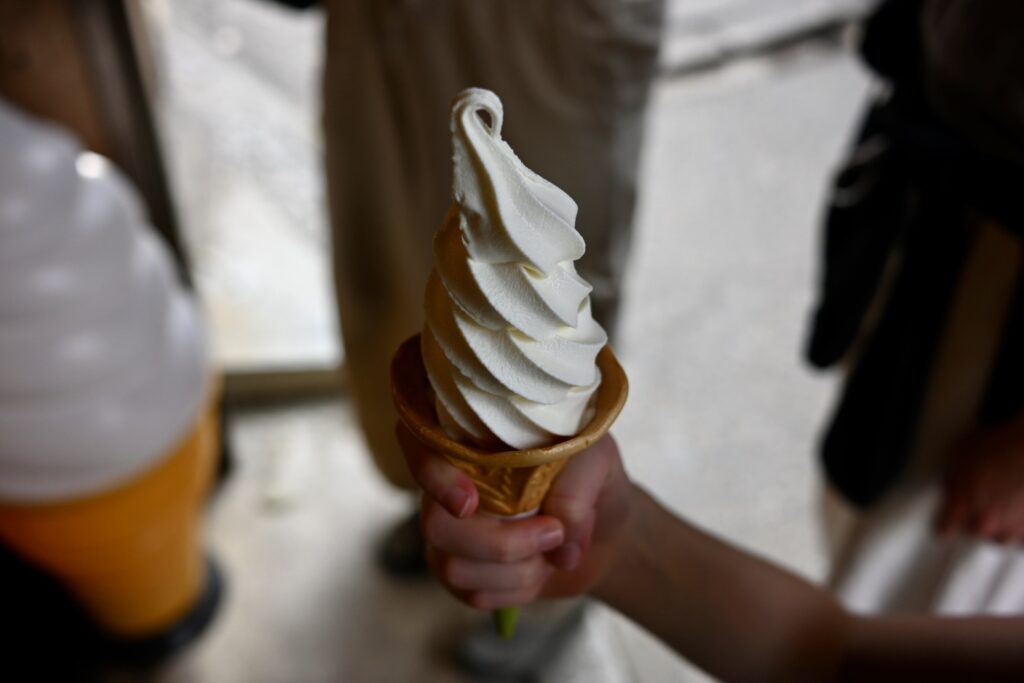
It’s delicious – and so cold it makes my teeth hurt. Perfect after a long hike.
The trail becomes flat:
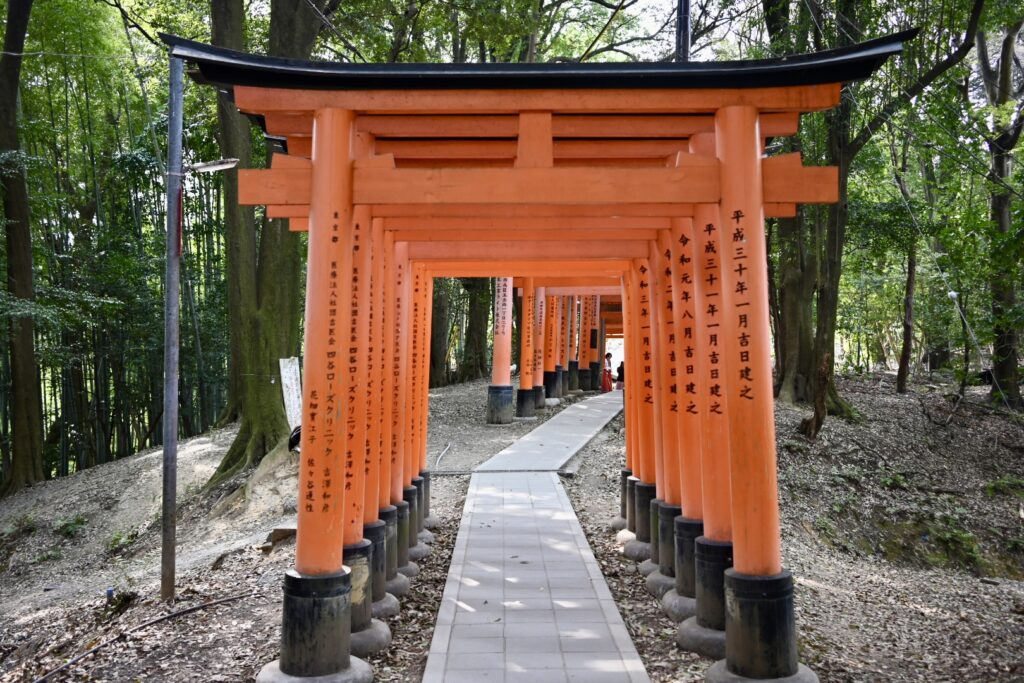
And soon we’re back out on some random Kyoto side street – but that’s a problem we know how to solve. We page a taxi, and back to the hotel we go.
We return in time for our complimentary afternoon tea, and to reattempt laundry. Unfortunately, both of the hotel’s machines are just being loaded when I walk in. But my wife has another option in mind:
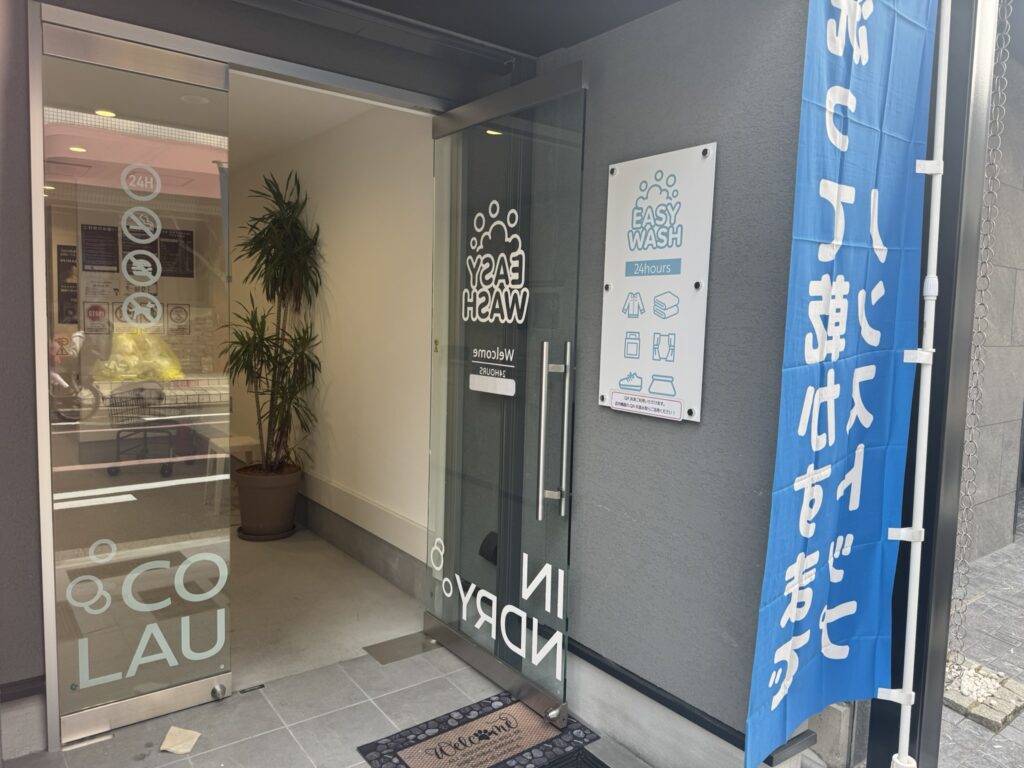
There’s a laundromat (Easy Wash) just around the corner – and there are washers available!
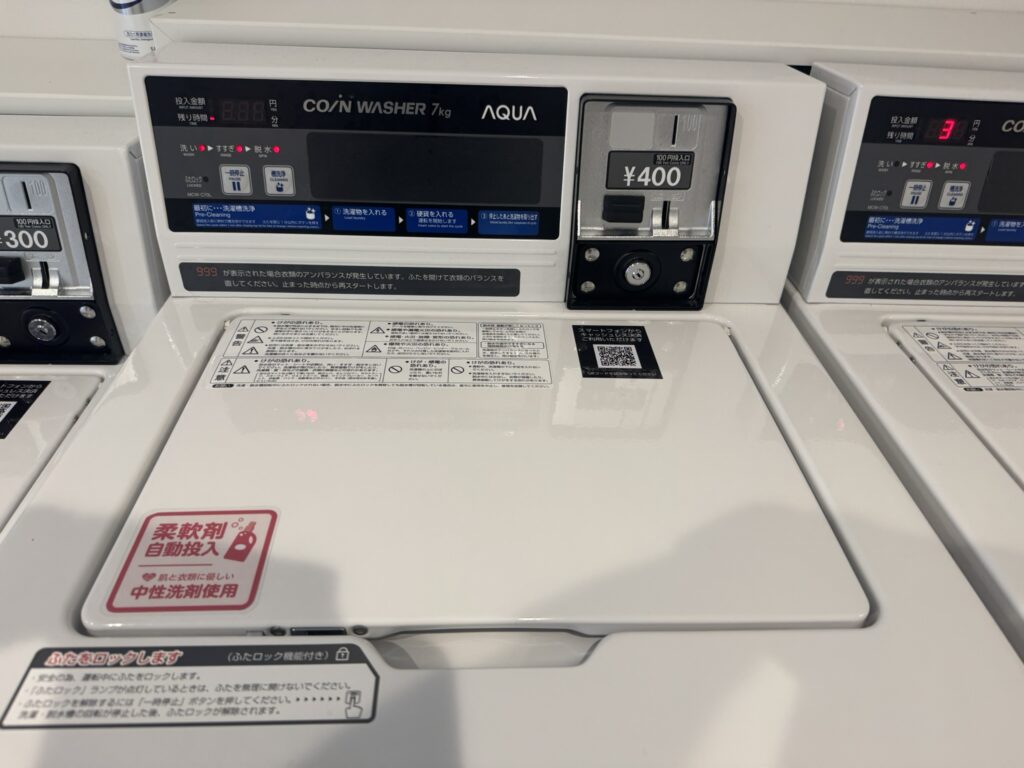
Some translation required, but well worth a foray into Google Translate to get the laundry washed and dried in under an hour…
A bit of time for reading / writing / homework – and to collect laundry – and then it’s time for dinner:
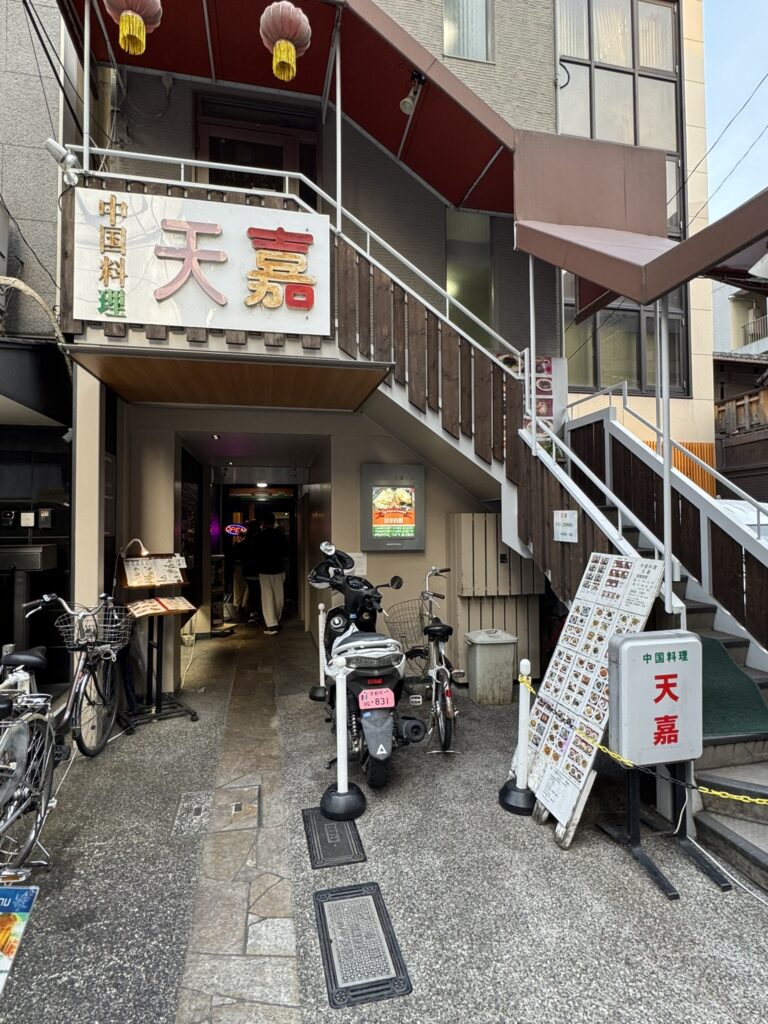
We are headed to another of the most Japanese of institutions – a curry restaurant by the name of Taj Mahal Everest Karasuma Oike.
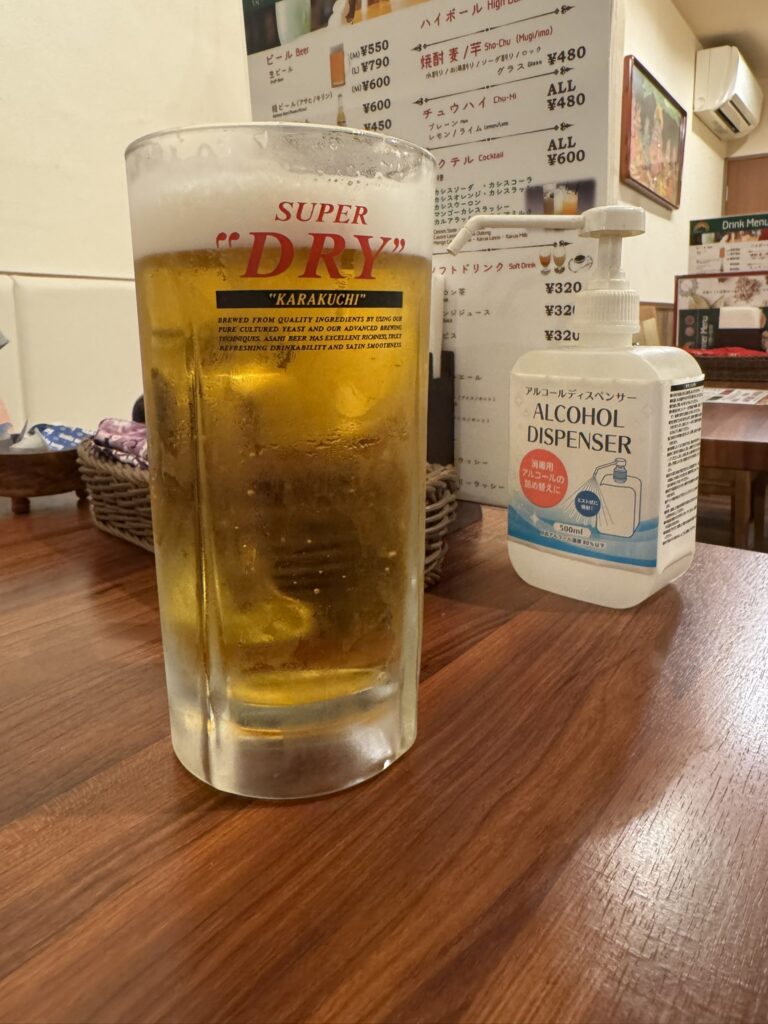
They have large beers, which is a fine start:
And then our spread arrives:
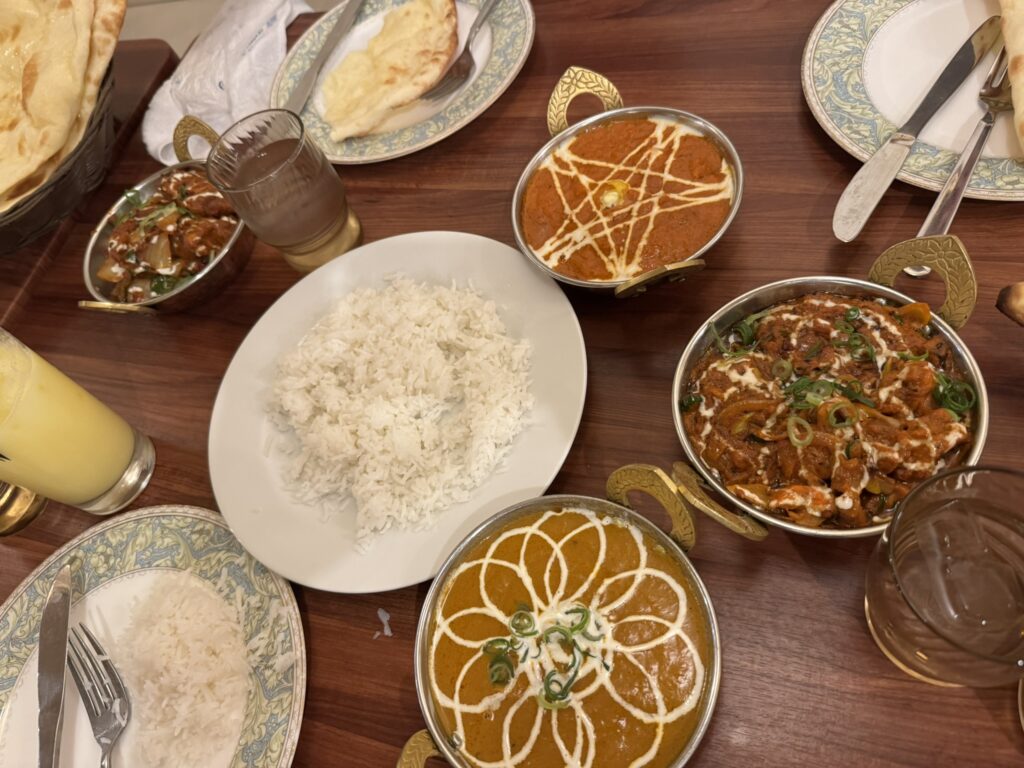
Chicken curry, butter chicken, chicken tikka masala and chicken kendai…
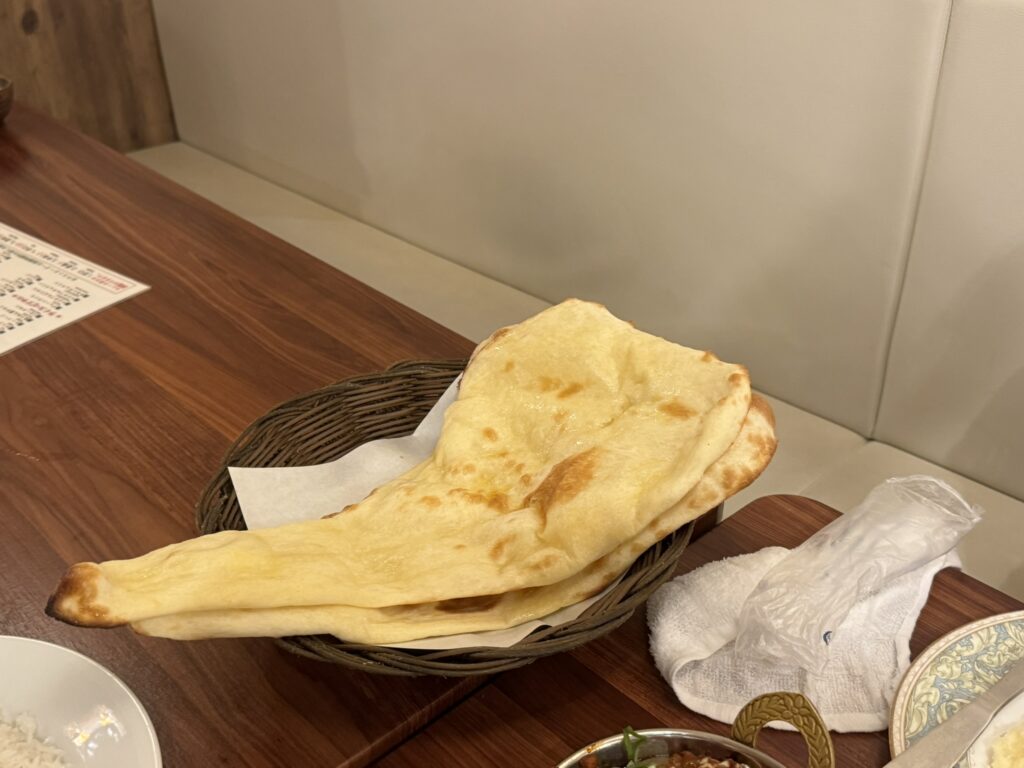
Plus some of the largest, fluffiest naan we’ve ever had
It’s fabulous. We leave absolutely stuffed.
Then back to the hotel to figure out luggage shipping for the final leg of our trip.
The phone number on the Club Med website resolves to Club Med Kiroro Peak instead of Club Med Kiroro Grand, but the clerks at the Iconic get it all figured out in no time at all. It’s more expensive at almost USD$75 for three bags, but well worth it to not have to worry about flying with all that extra luggage.
Up to the lounge for cocktail hour. We stay there until it closes at 8:30 pm, and then head down for another drink at the bar.
My wife has the ‘Jupiter’ cocktail:
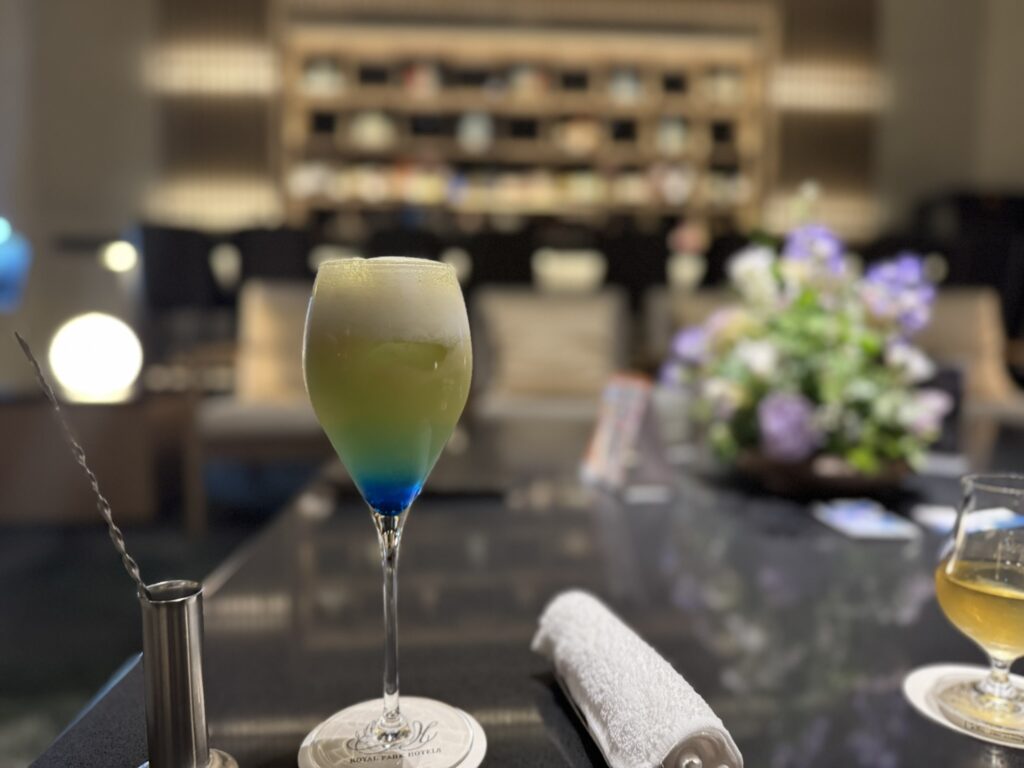
In honour of Earth Hour on March 28th
And I have a Japanese whiskey from Osaka:
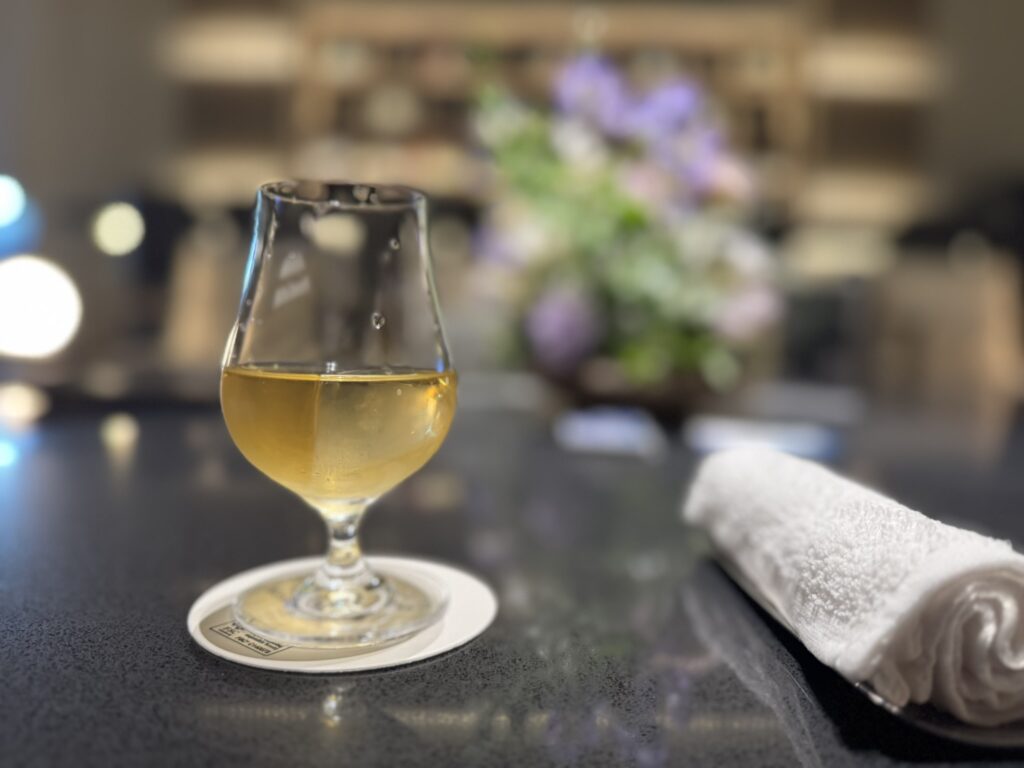
Best of all, my credit card is now showing that the one round of Go app charges were removed – so the taxi driver was quite correct to stop me and insist on payment.
It’s the perfect end to a fantastic day – though will we be saying the same when we have to wake at 6 am tomorrow morning for our eight-hour tour?
Continue reading Tasmania to Tokyo – Kyoto – Day 73.