Tasmania to Tokyo – Fremantle – Day 29 can be found here.
Up at oh-dark-stupid this morning (5:45 am) so that we can make our ‘Fremantle’s Convicts and Maritime History’ tour.
That means room service:
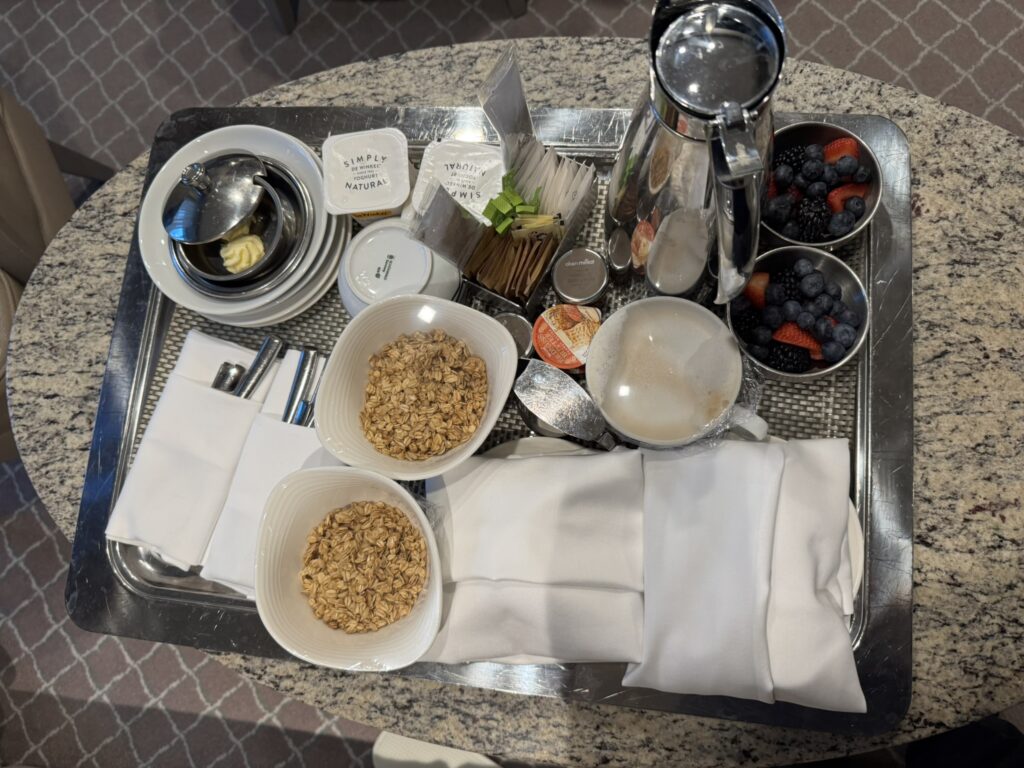
I’m tired this morning. Not only do I pour my berries into my granola without first removing the cling film – causing the berries to bounce off the film and fall onto the floor – but my first thought is ‘force field’ instead of ‘cling film.’
Clearly we are in need of a sea day or three. Which we shall have, starting at noon. Until then, caffeine.
But first – our tour. This one has been a point of concern for us over the past few days, as we are now officially ‘bussed out.’ We had checked the hours for the prison, and noted that it does not open until 9 am while the maritime museum opens at 9:30 am.
Which begs the question – what are they going to do with us between the hours of 7:30 and 9:00 am?
We’d asked at the excursions desk, which informed us that Silversea had arranged for the Fremantle prison to open early. Yes, there would be a bus tour portion later on but it should simply be a matter of getting on the bus that was headed to the prison first, and we would be able to break from the tour as it left the prison. We had Official Permission to do so.
Easy peazy, right?
Cue this morning, as we are waiting for our bus to arrive. We have shown up early so that we can argue – ahem, ‘negotiate’ – with the tour operator if needed. But despite Silversea’s request that we show up 10 minutes early, the bus is pulling into its bay right at 7:30 am, the notional departure time.
The Silversea rep goes over to talk to the tour operator, and we soon reach a final verdict – which is that they are going to do a 90 minute bus tour before the prison opens.
Nope. No, thank you. Off we go to explore Fremantle on our own.
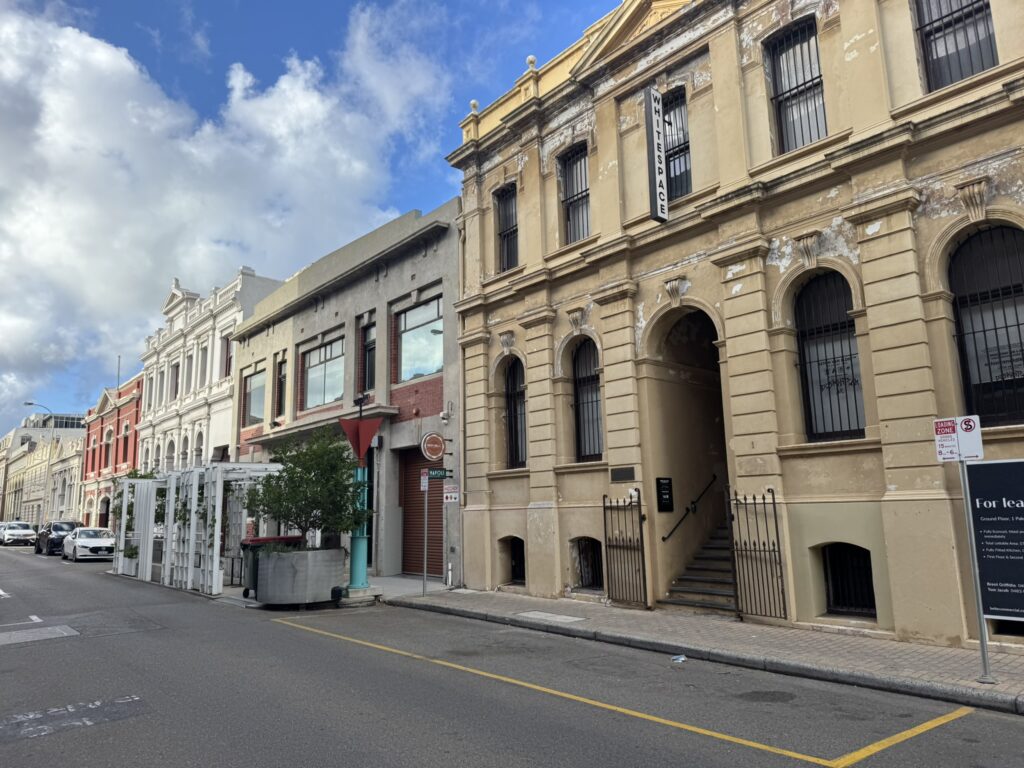
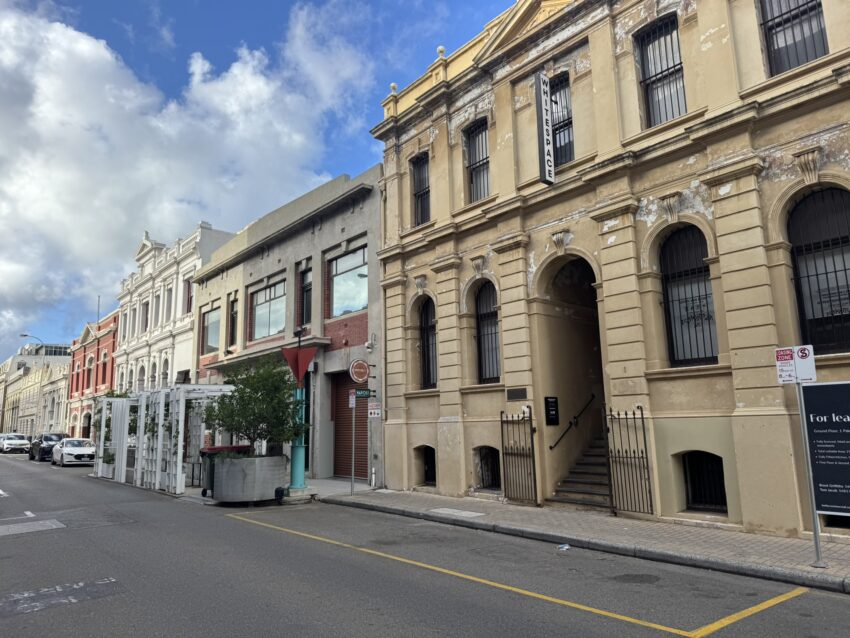
We stop in briefly at a 7/11 in search of stamps for our postcards. No luck.
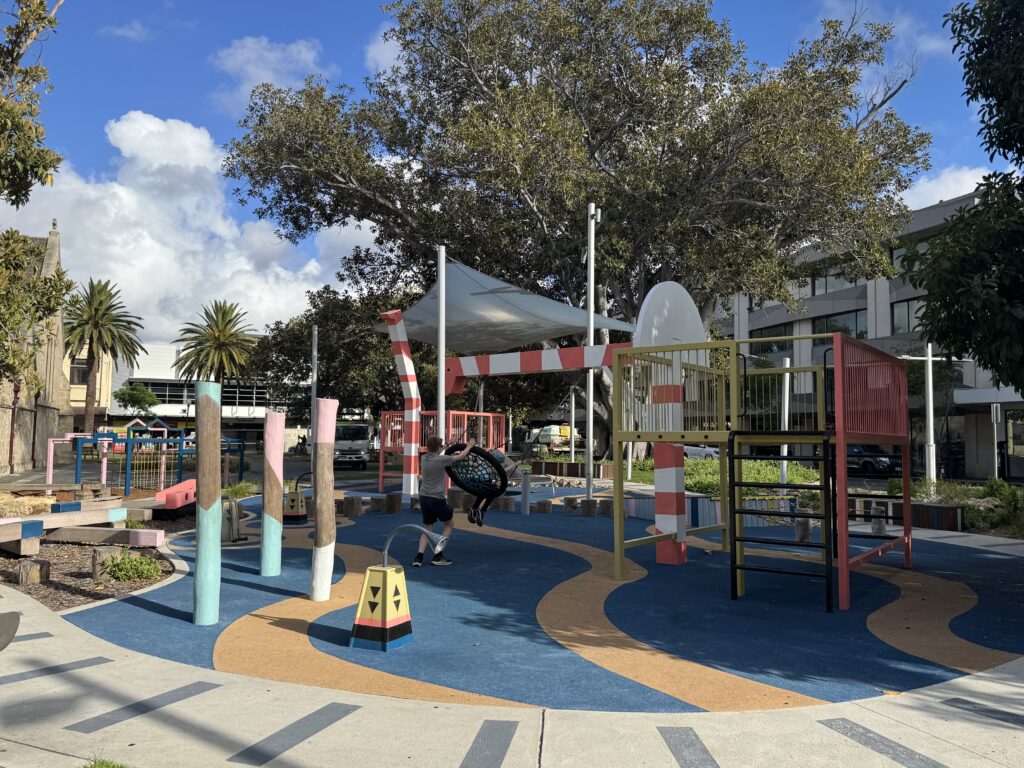
We then find a playground for the kids to play at:
We also try for stamps at the IGA. No dice.
We head toward Gino’s, part of the Cappuccino Strip.
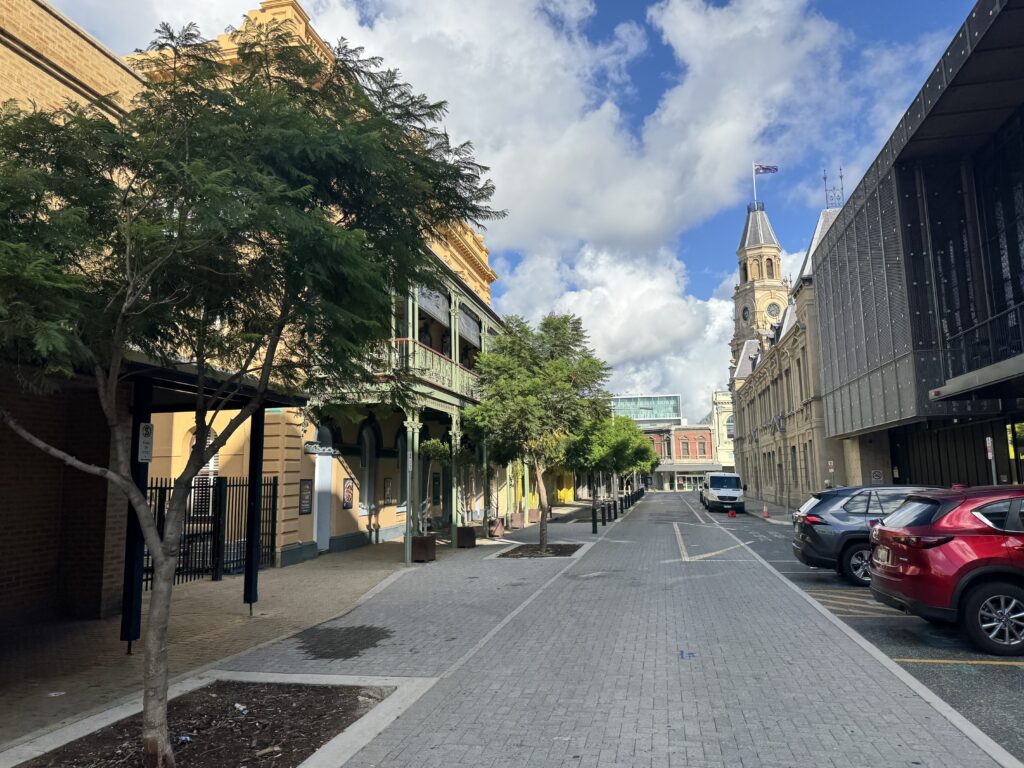
Walking along the quiet Sunday streets of Fremantle
The kids get some epic iced mochas, and split a plate of pancakes:
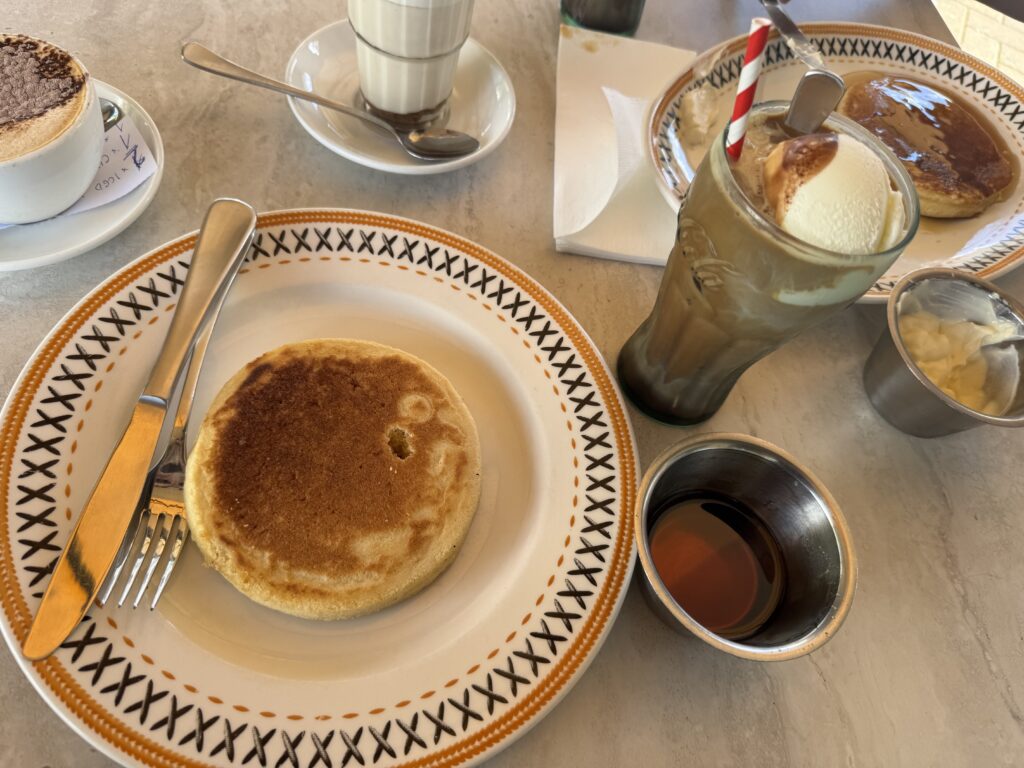
This place feels like a real institution. Plenty of locals meeting to catch up over a coffee.
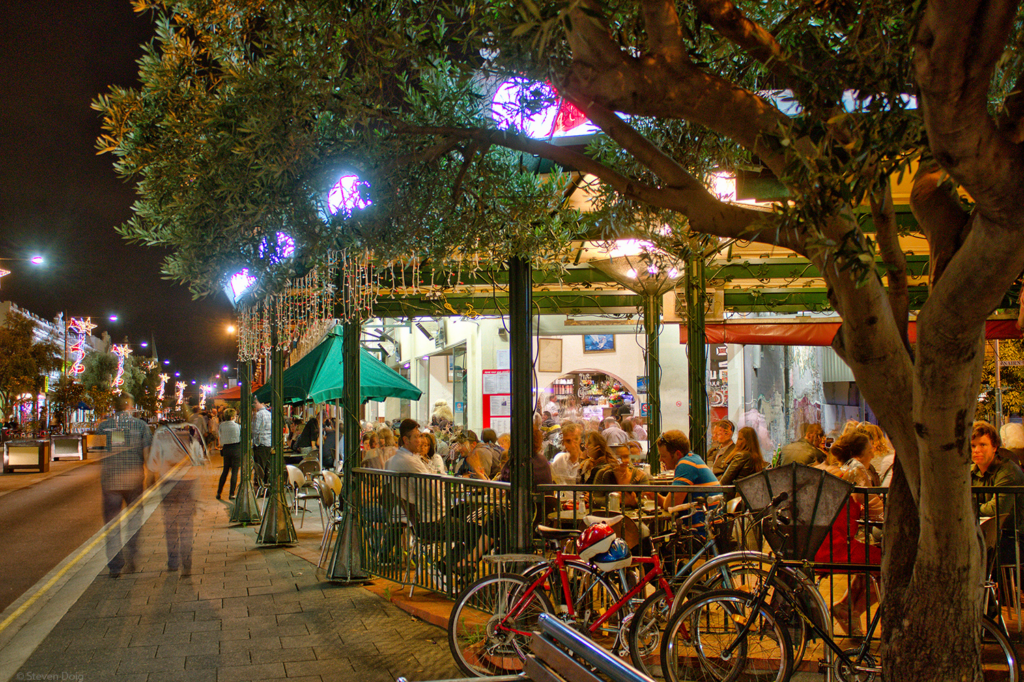
Photo Credit: Gino’s Cafe and Trattoria
The Silversea tour bus drives by at some point. We wave.
The prison will open in roughly half an hour, so we still have a bit of extra time to explore. We head to a nearby park, and the kids sample another playground:
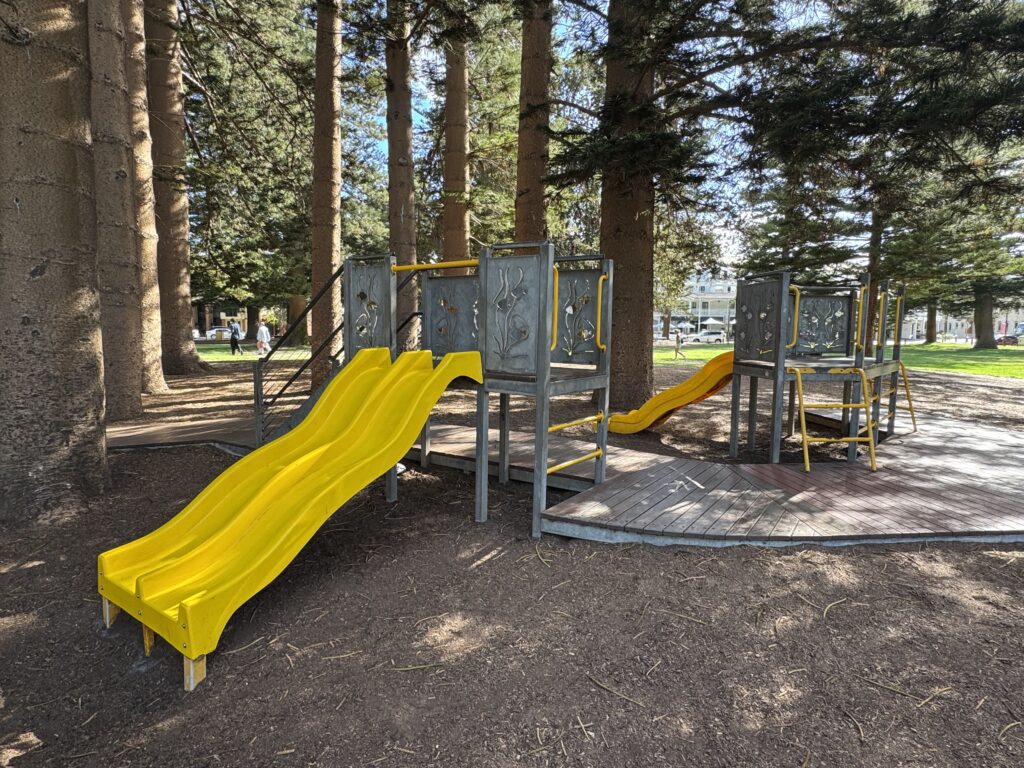
We then make our way to the prison, passing through the Fremantle Market along the way:
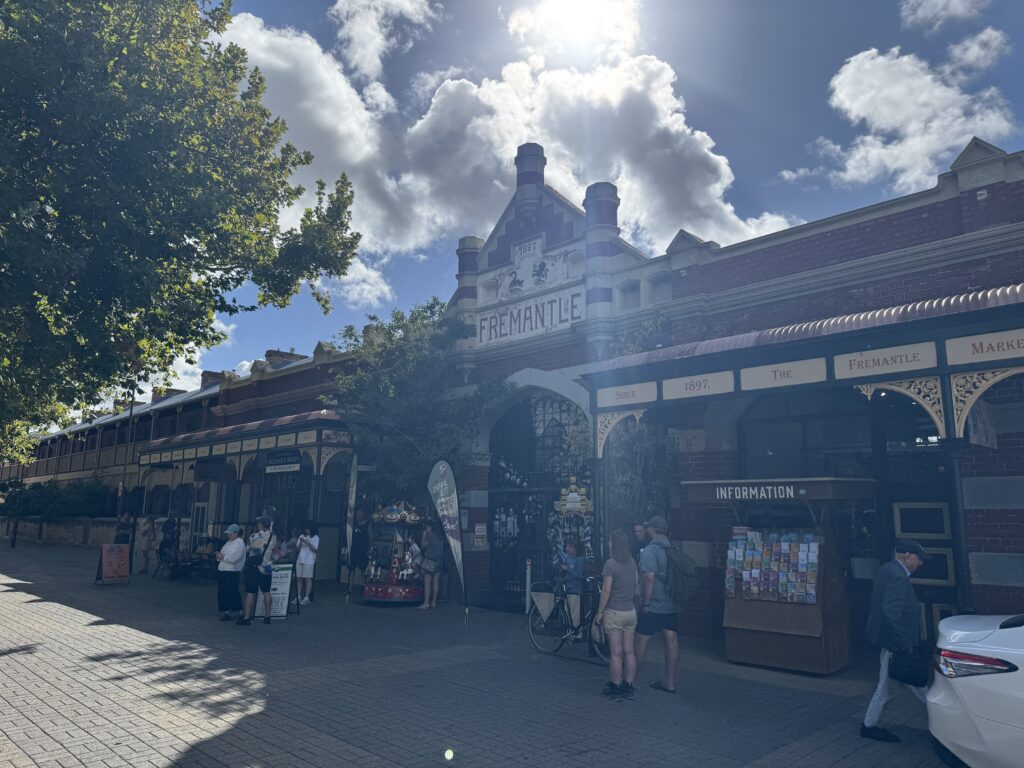
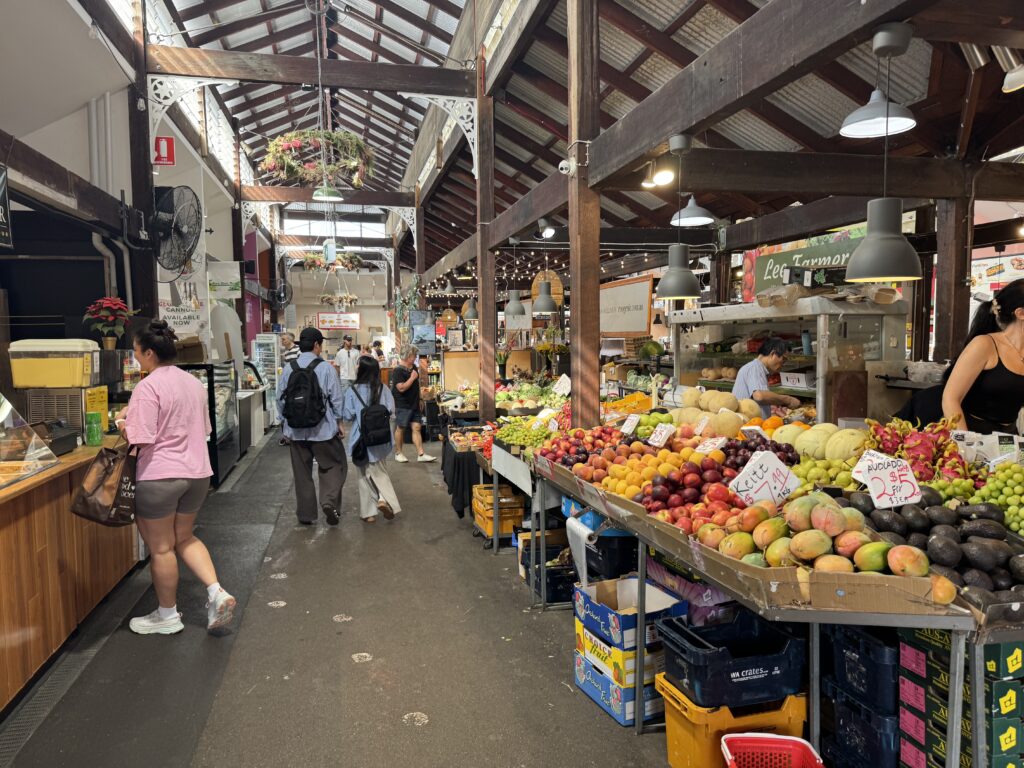
It’s a lovely place – lots of shops and vendors. I’m really glad we found time to swing by.
We reach the prison right as it opens. We have two options – we can either explore a very limited portion of the prison, or we can wait until 10 am for the full tour.
Having already visited Port Arthur and seen some of the former prisons of Rottnest, we feel like another full prison tour would be a less-than-efficient use of our time, particularly as we need to be back aboard by noon. So we opt to explore the limited portion.
Though small, the visitor’s centre still provides vital insight into life in the prison with videos, photos and quotes:
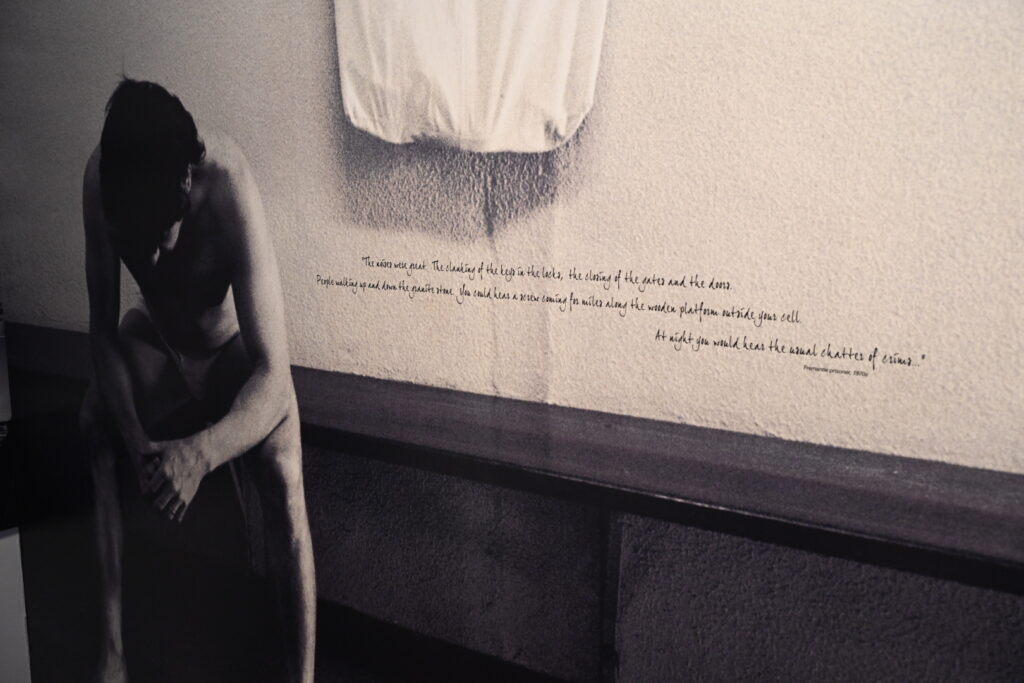
The caption reads: “The noises were great. The clanking of keys in the locks, the closing of the gates and the doors. People walking up and down the granite stone. You could hear a screw [guard] coming for miles along the wooden platform outside your cell. At night you would hear the usual chatter of crims.”
I will rely on the excellent Fremantle prison website to provide an overview:
“Fremantle Prison was built as a convict barracks in the 19th century and remained in continual use until 1991. The Prison was a place of hangings, floggings, dramatic convict escapes and prisoner riots. Inmates included imperial convicts, colonial prisoners, enemy aliens, prisoners of war and maximum-security detainees.
“The first convict transport sailed into Fremantle Harbour in 1850. The Convict Establishment, as the prison was first known, was built by convict labour between 1852 and 1859 using limestone quarried on the site. The first prisoners moved into the main cell block in 1855.
“The Establishment was renamed Fremantle Prison in 1867. Transportation ceased the following year when the Hougoumont carried the last convicts to Fremantle. Nearly 10 000 convicts passed through the ‘establishment’ between 1850 and 1868.
“At first only imperial convicts were confined at Fremantle Prison. By 1886 less than 60 convicts remained inside a prison built to hold 1000 men. Perth Gaol closed and Fremantle Prison became the colony’s primary place of confinement for men, women and juveniles. With the population boom of the 1890s gold rush, Fremantle Prison became busy once again.
“More space had to be found for a burgeoning prison population. After the Rottnest Island Aboriginal Prison closed in 1903, prisoners from Fremantle Prison were sent to the island to carry out public works. New Division was built and opened in 1907. During the Second World War, the Australian Defence Department sequestered part of the prison as a military detention centre. A large number of Italian Australians, identified as ‘enemy aliens’ were incarcerated at Fremantle during the war.
“Following a series of prisoner riots and growing concerns with prison conditions, a royal commission in 1983 recommended the Prison’s closure. Female prisoners had already been transferred to a new facility at Bandyup Women’s Prison in 1970. Fremantle was decommissioned on 8 November 1991 and its prisoners transferred to Casuarina Prison, replacing Fremantle Prison as the state’s main maximum-security prison.
“After its closure the WA state government embarked on a long-term conservation plan to ensure the Prison’s preservation for future generations. Fremantle Prison is one of the largest surviving convict prisons in the world today.”
It was fascinating to learn that the prison was actually initially condemned in the late 1800s. There was a serious riot in 1968 due to the terrible quality of the food – which contained actual maggots. More than 500 prisoners broke doors smashed furniture and flung missiles at the guards. Three prisoners were shot during attempted escapes, and the riot came to an end – with the situation unimproved.
While we’re mostly satisfied with our quick visit, we would have loved to have done the tunnels tour.
“Feeling adventurous? Get into your hardhat, slip into your overalls, lock into the ladder system and descend approximately 20 metres below the Prison to explore a labyrinth of tunnels built by prisoners. Discover original blast holes, bores and artefacts from the days when working in the tunnels was hard labour for prisoners.
“Guides lead the trek through dry sections of the tunnels on foot, before boarding replica convict punts to explore the submerged passageways accessible only by boat.”
Unfortunately, the tunnels tour is only open to children who are 12 years or older. Maybe next time!
Next we head off in search of a maritime museum – or perhaps the Western Australia Shipwrecks Museum? It’s a fantastic find, and the kids absolutely love seeing all the various artifacts that have been recovered from shipwrecks off the coast of Western Australia.
One of the most striking displays is the museum’s centrepiece on the Batavia:
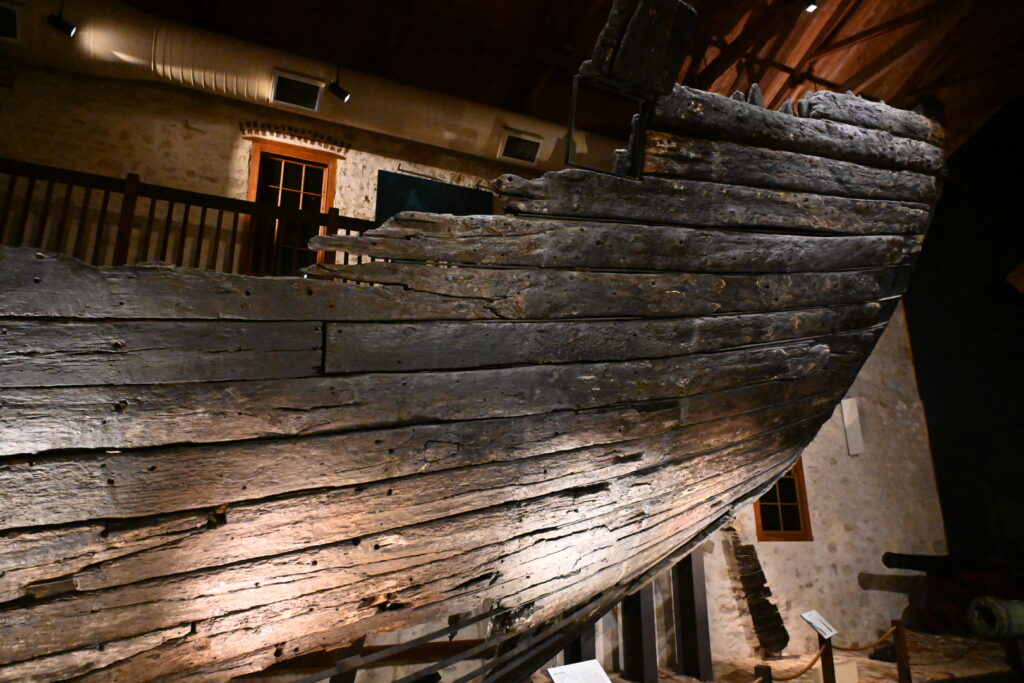
Including a significant portion of the Batavia itself
As well as its cannon:
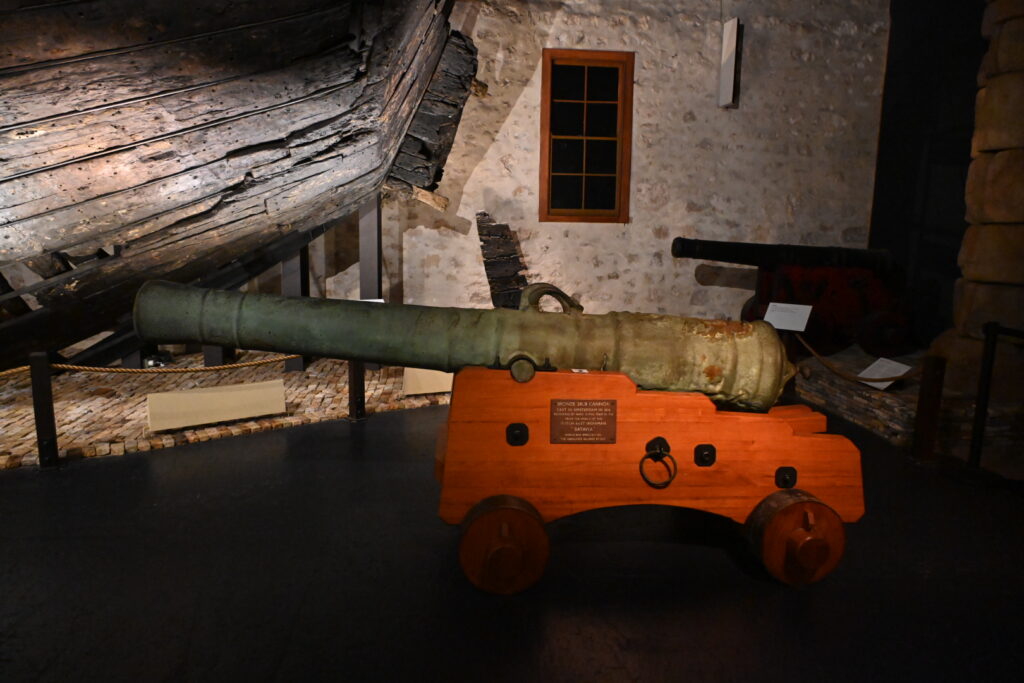
The Batavia was the flagship of the Dutch East India Company. In late 1628, it was transporting a group of colonists bound for Jakarta (then Batavia) – and a large amount of silver – when it was separated from the rest of the fleet during a storm off the Cape of Good Hope in South Africa.
A mutiny had already been brewing, its chief conspiritors being Ariaen Jacobsz, the skipper, and Jeronimus Cornelisz against the fleet’s commander, Francisco Pelsaert, who was also onboard.
The Batavia then ran aground on a coral reef near Beacon Island off Western Australia. 40 people died during the shipwreck, while 180 people used the ship’s longboat to reach Beacon Island – which had no fresh water – while the ship’s officers and crew went to other islands and Cornelisz remained with the wrecked ship.
Having searched the surrounding islands, Pelsaert and Jacobsz opted to take the longboat 3,000 km to their original destination to get help. Meanwhile, Cornelisz was forced to abandon the Batavia for Beacon Hill where he organized a group of mutineers to seize the island. He disarmed the people there and began a reign of terror that resulted in the deaths of a further 125 people.
Cornelisz attempted to kill the soldiers on a further island, but – despite their lack of weapons – the soldiers captured Cornelisz and killed several of his men.
It took Pelsaert 33 days to get reach the city of Batavia, and another 7 weeks to return. Both the mutineers and the soldiers raced to Pelsaert’s vessel. The soldiers warned Pelsaert, and the mutineers were killed or captured as a result. A trial was immediately held – Cornelisz and his closest accomplices were hanged, while a further 16 mutineers were returned to Batavia and executed.
In the end, only 70 of those left on the islands were rescued. The wreck of the Batavia wasn’t found until 1963. It’s a chilling tale, even compared to the mutiny on the Bounty and the deaths that followed on Pitcairn.
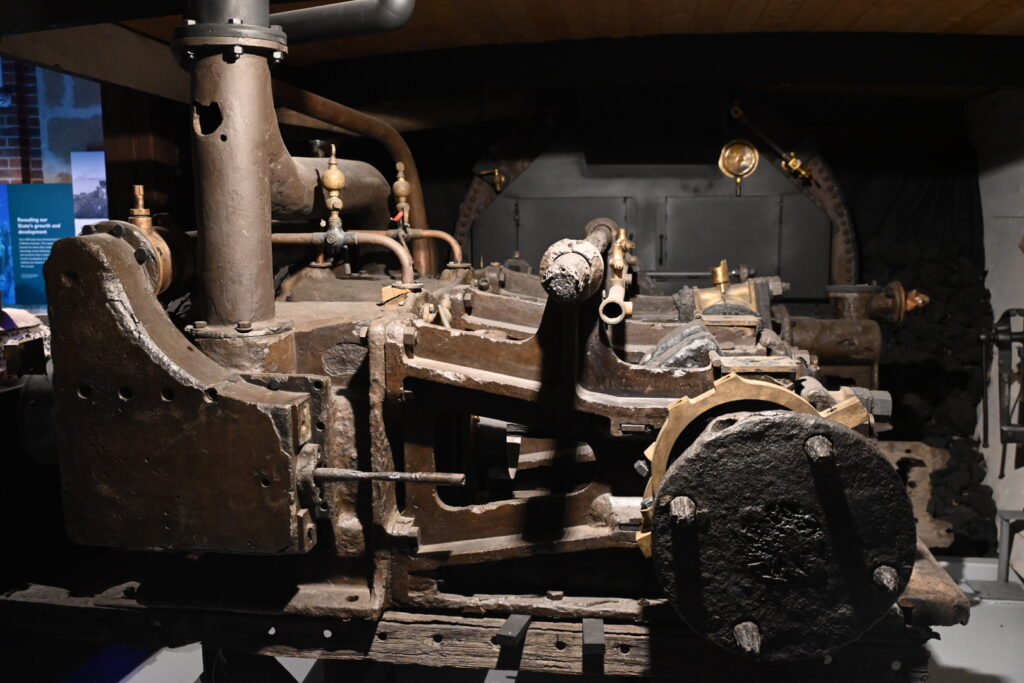
We continue to explore the museum, including the Xantho gallery. The Xantho was a paddle steamer whose engine was replaced with a Crimean War-era trunk engine, as well as a new propeller and new boiler. It was then bought by Charles Edward Broadhurst in 1871 to be used as a transport vessel and for pearling. It became Western Australia’s first coastal steamship.
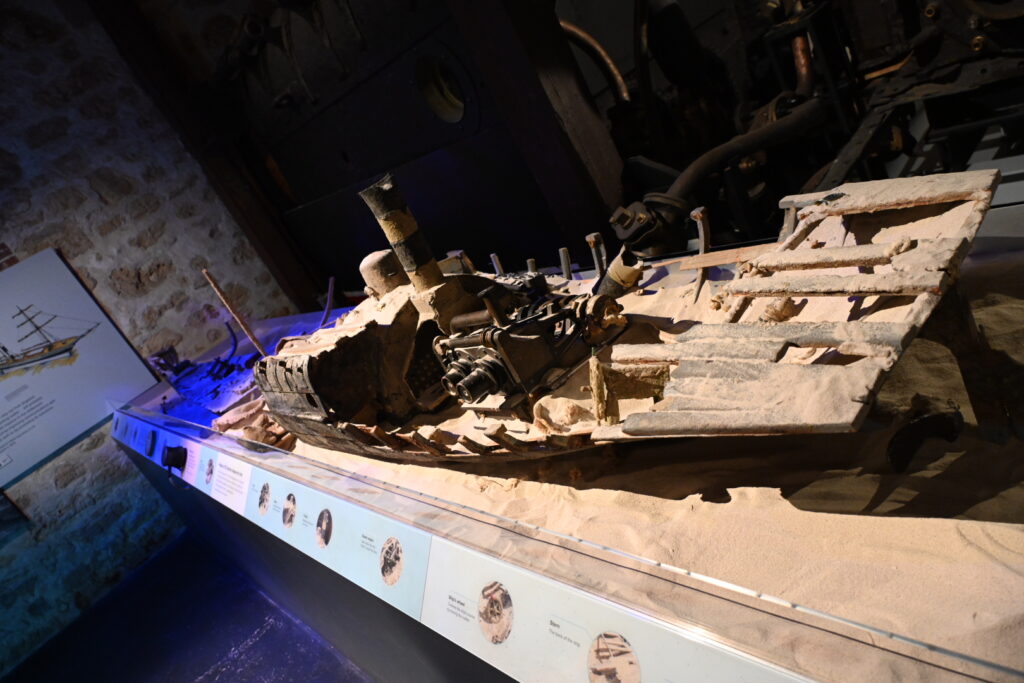
A model of the Xantho wreck
In 1872 – its hull badly corroded and its decking opened by the tropical sun – the Xantho began to take on water while transporting a cargo of lead ore. While returning to Port Gregory it sank, and it was not rediscovered until 1979. They have since removed its engine and restore it to the point where it can turn over by hand.
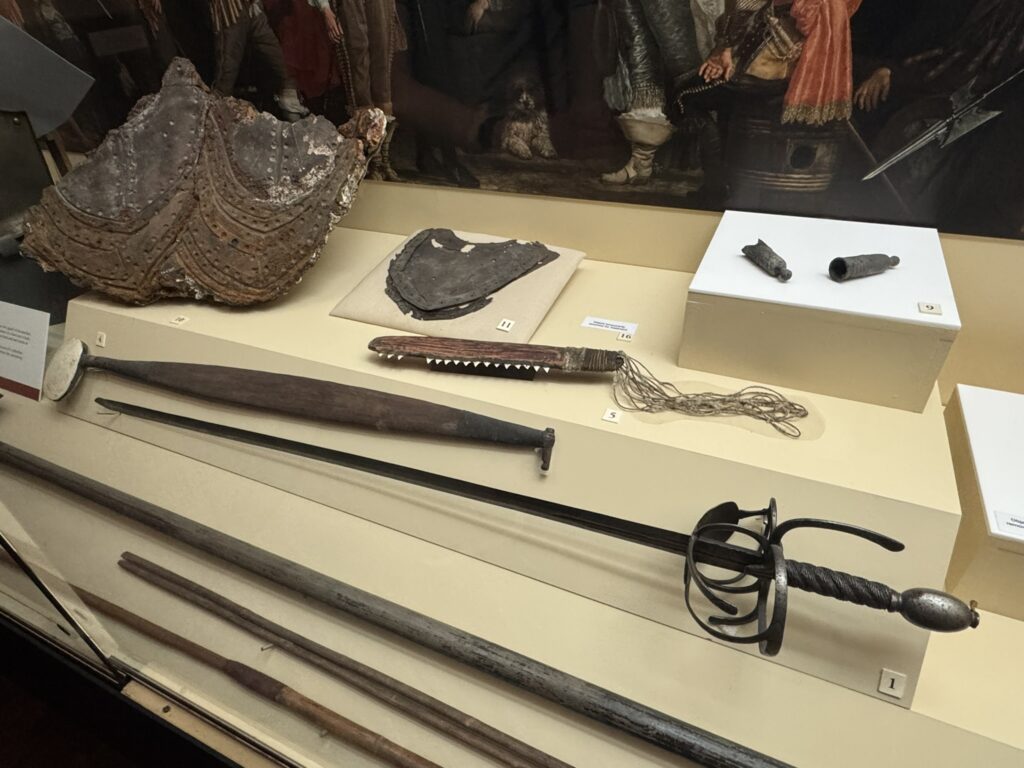
The kids are also fascinated by some of the weapons recovered from various shipwrecks, including a rapier and a shark-tooth knife:
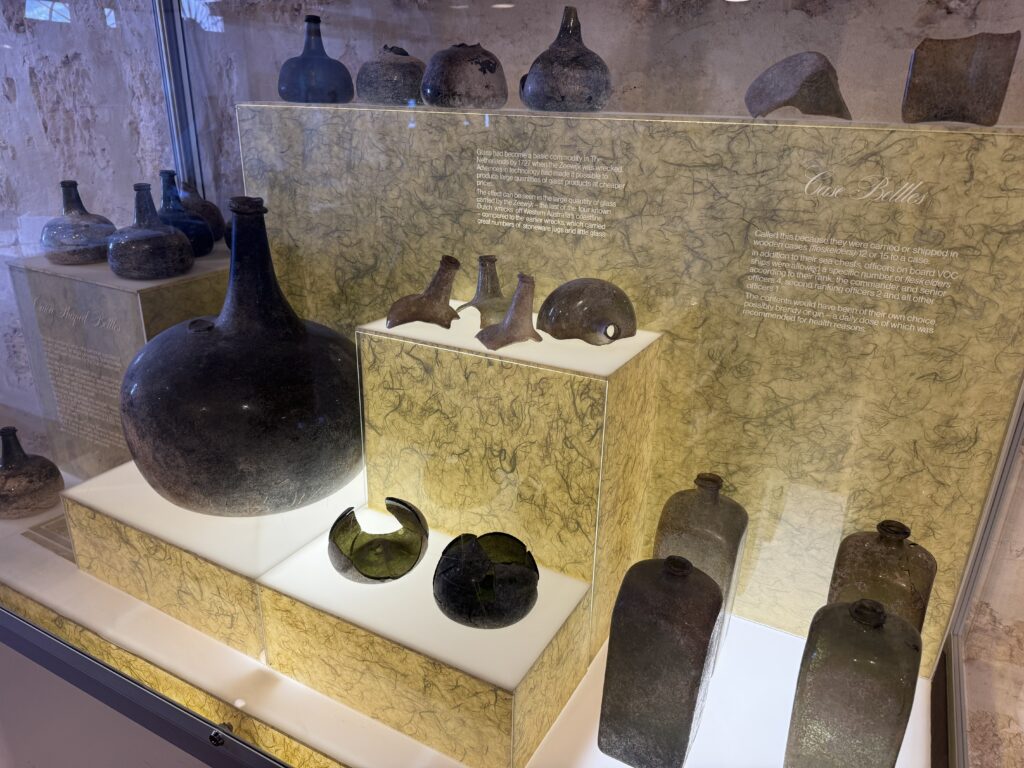
A wide range of glassware:
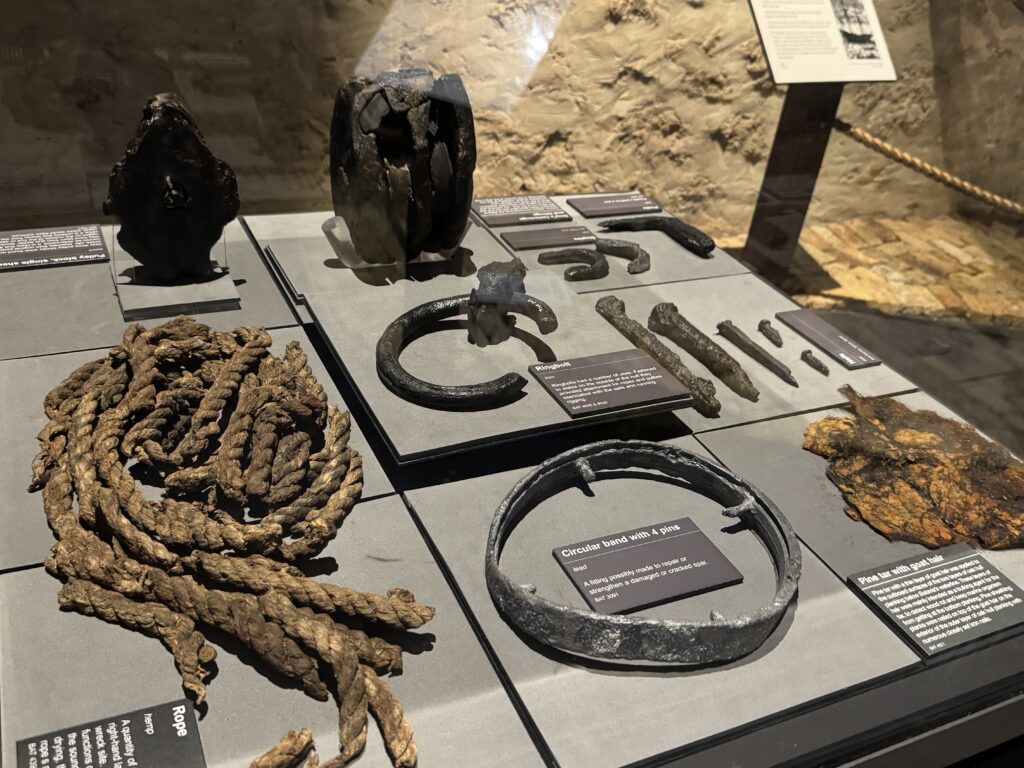
Various ship artifacts:
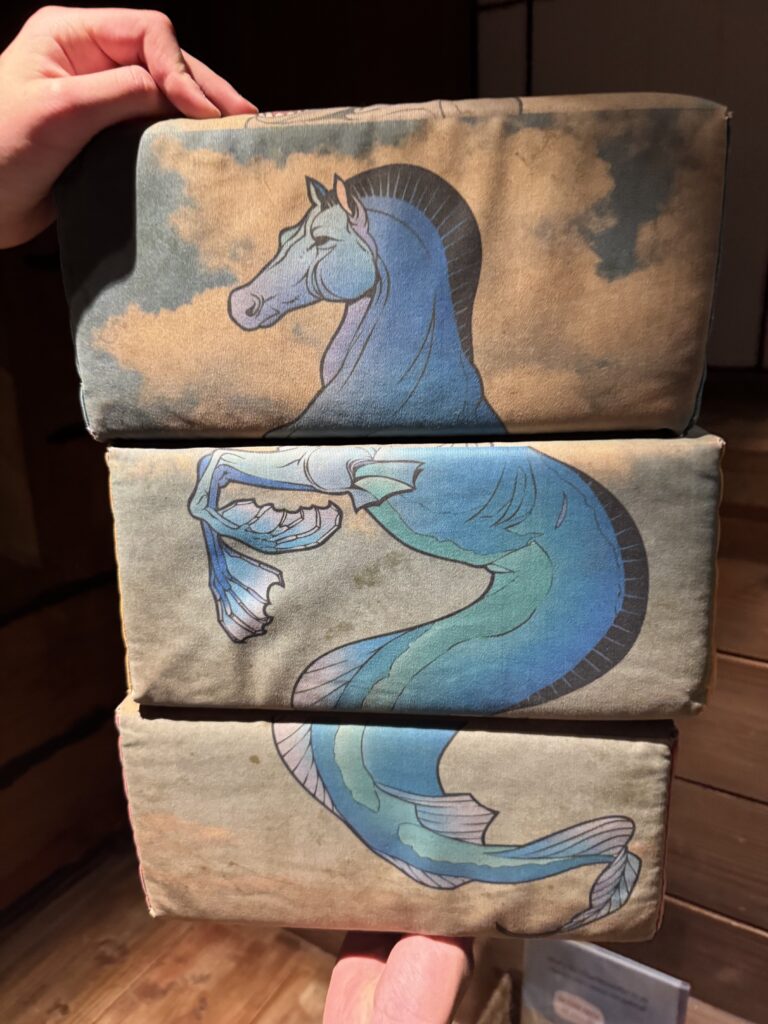
And a children’s area with some build-your-own-seacreature blocks:
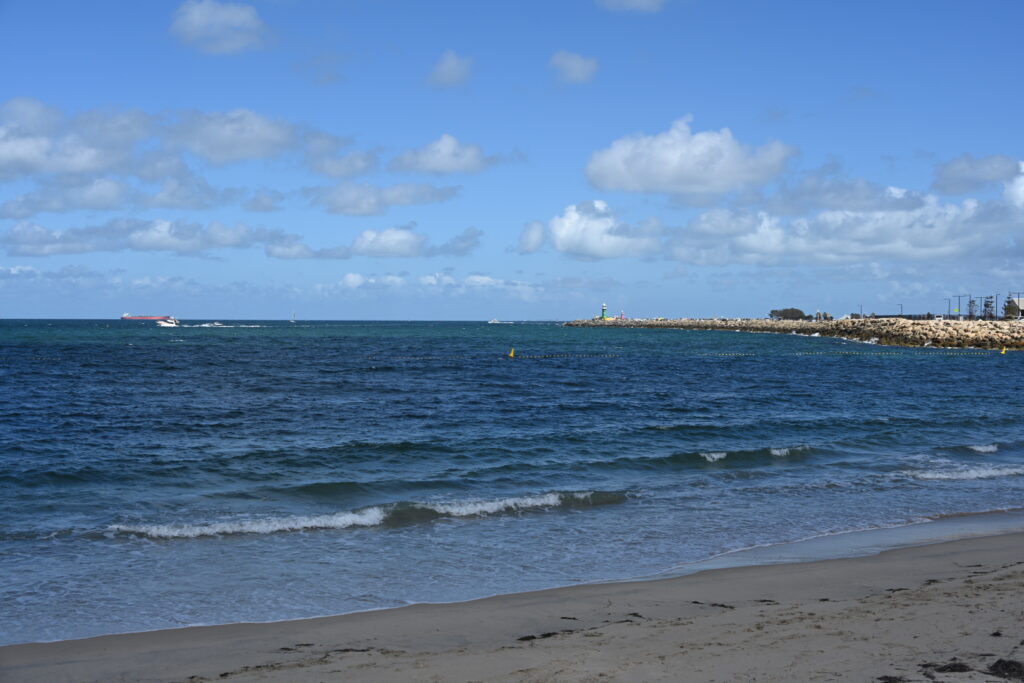
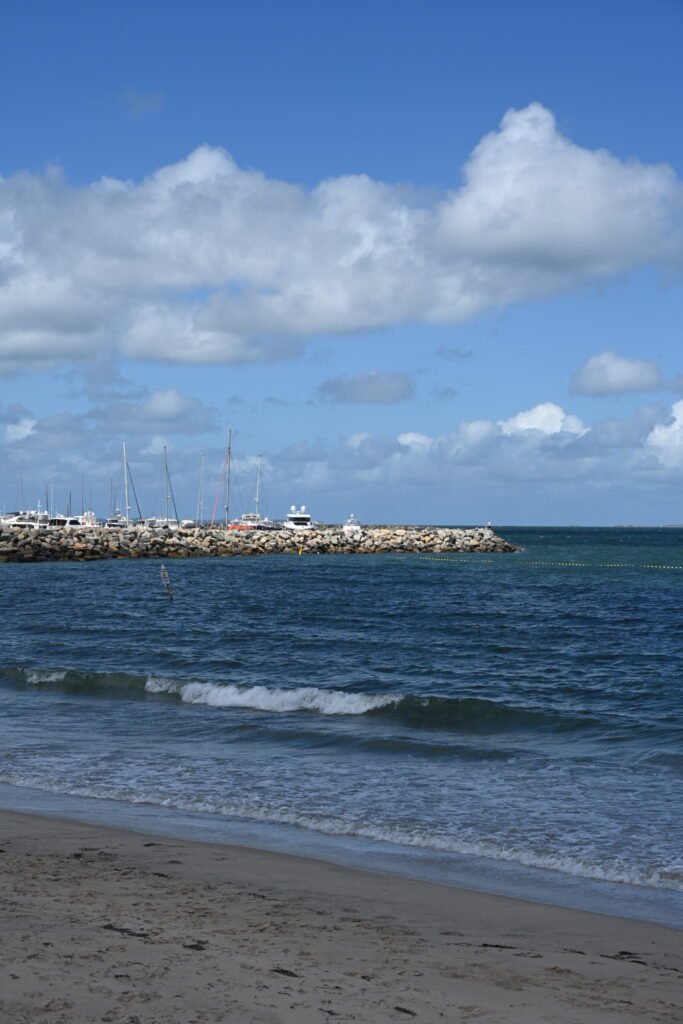
After, we spent a little bit of time at Bathers Beach:
They even have some showers and change stalls nearby.
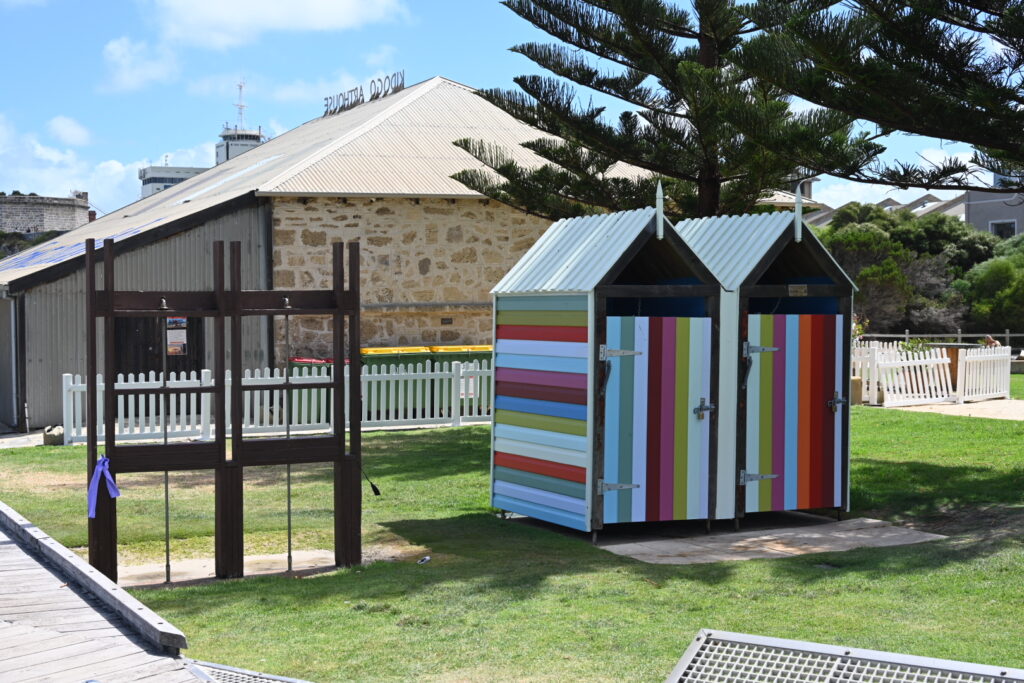
Handy!
We then once more attempt to find stamps with which to mail our postcards.
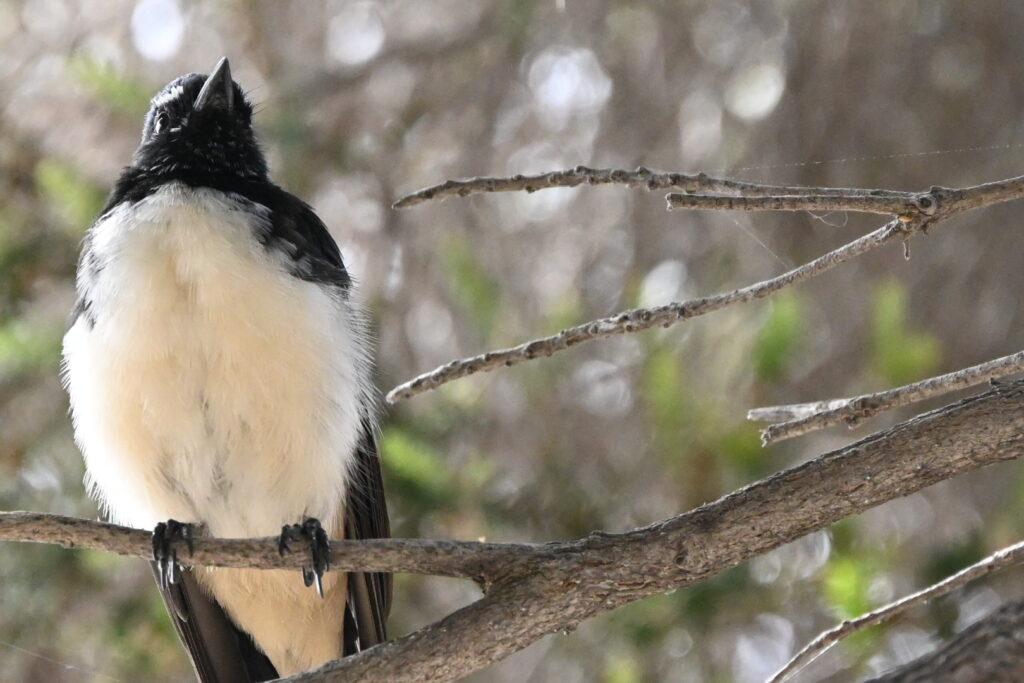
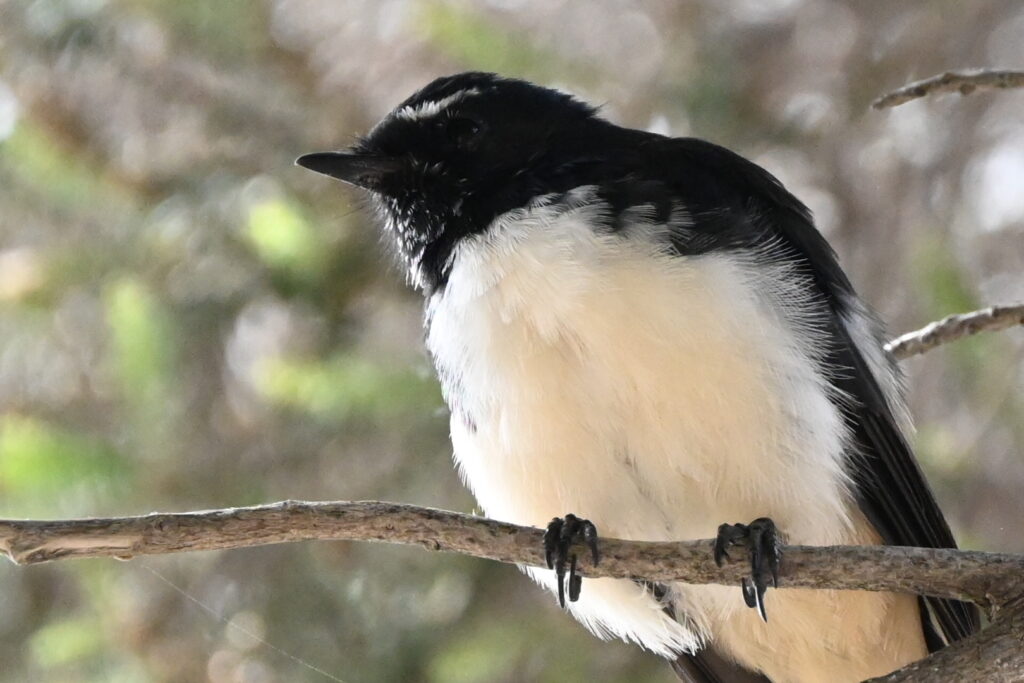
On the way we spot some birds:
And cockatoos enjoying their midday repast:
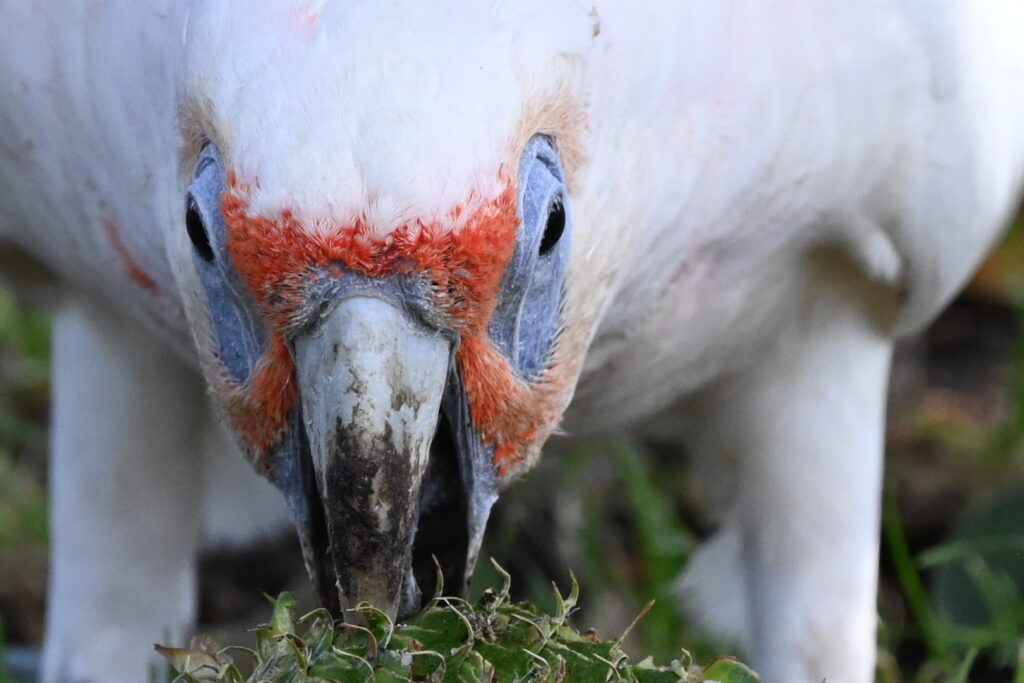
I’m not sure we were ever meant to see cockatoos this close-up
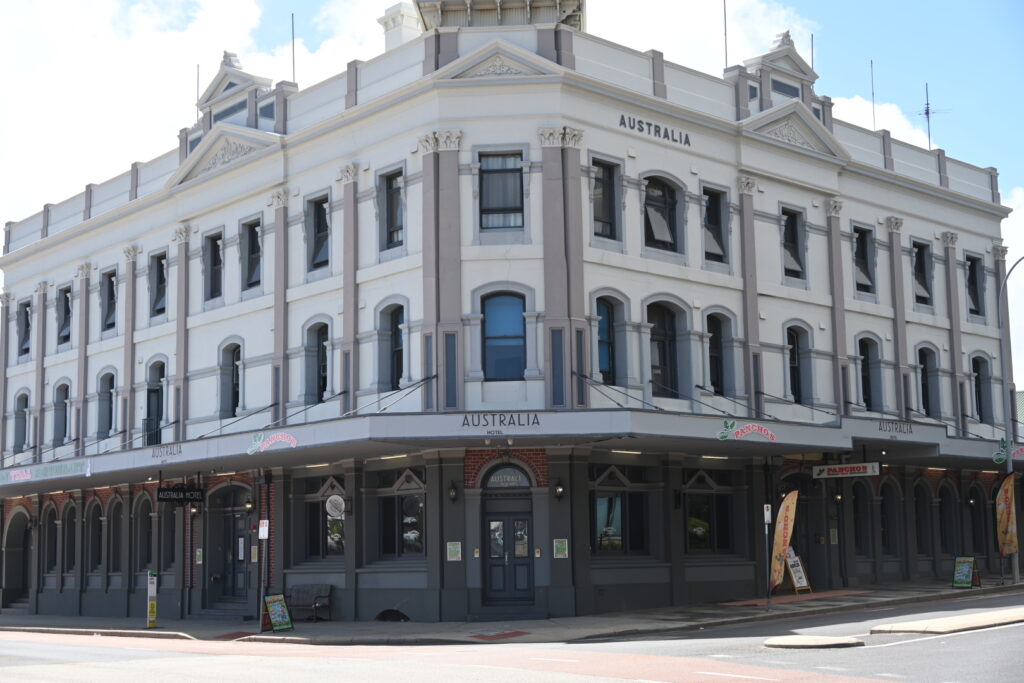
We also see some interesting architecture:
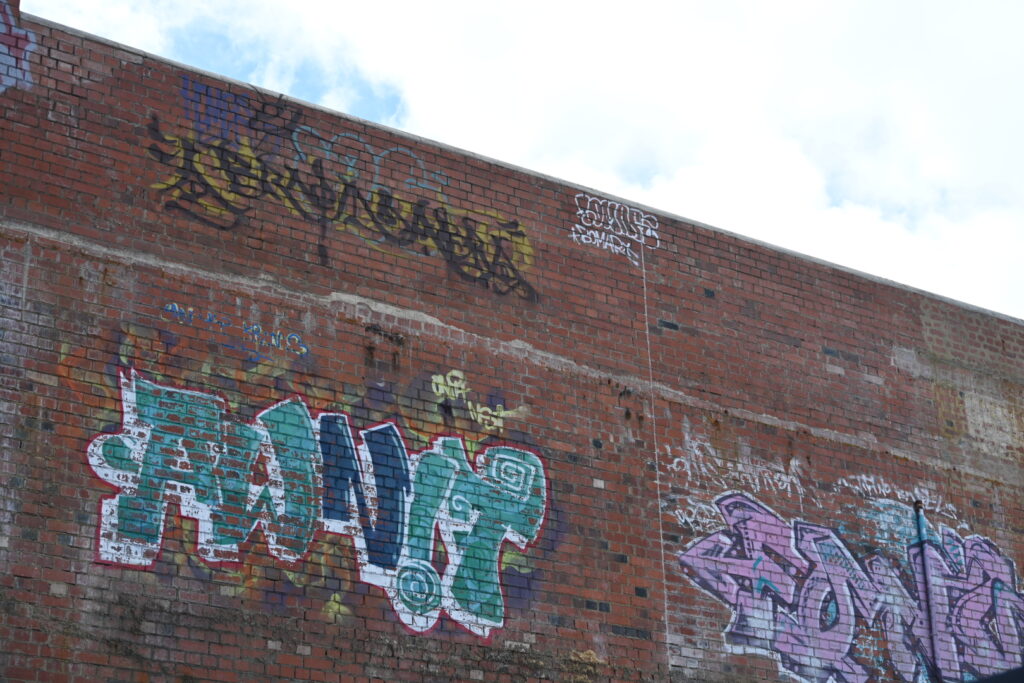
And some street art:
We try an Officeworks, which had stamps but no way of having them mailed. At this point, we gave up and decided to just mail them from Bali instead (if possible).
Back to the ship, where we had lunch at Spaccanapoli again, where I combined buffalo mozzarella with sausage:
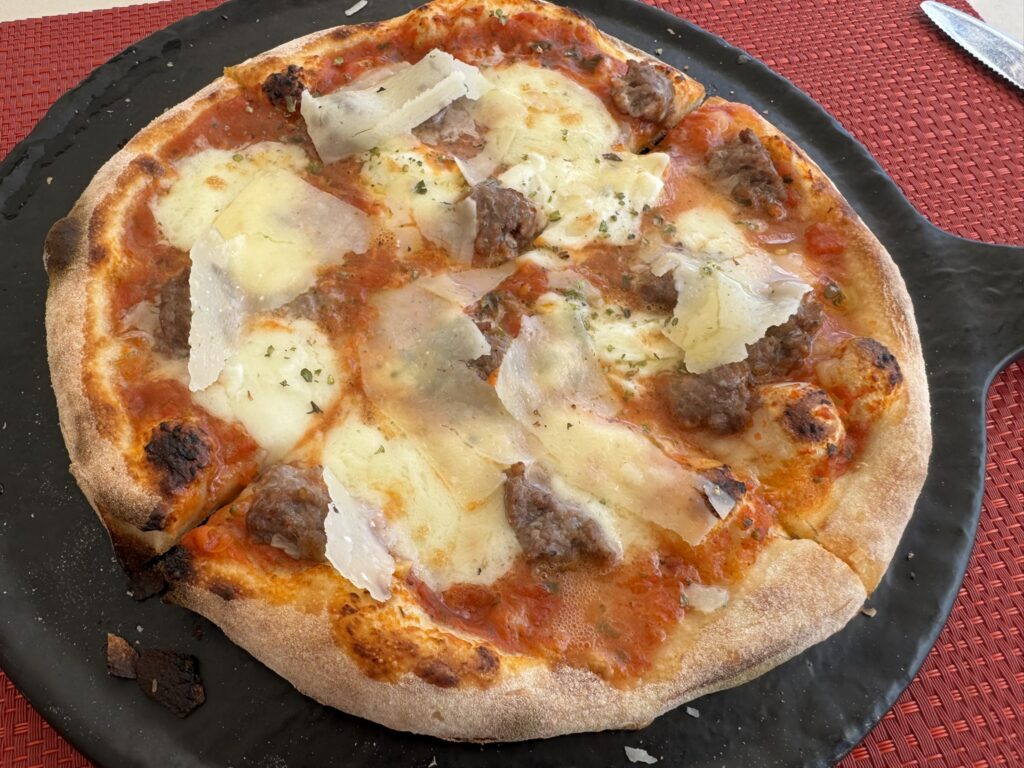
There was a sail away party with music and dancing too.
After lunch, I pop into Hotel Director Ozgur’s office to let him know of the issue with the morning’s tour, and our frustrations with not getting a correct answer as to what was happening with the prison versus the bus ride. He promises to look into it.
Back to our room for a drink on the verandah. We watch as Fremantle slips into the distance:
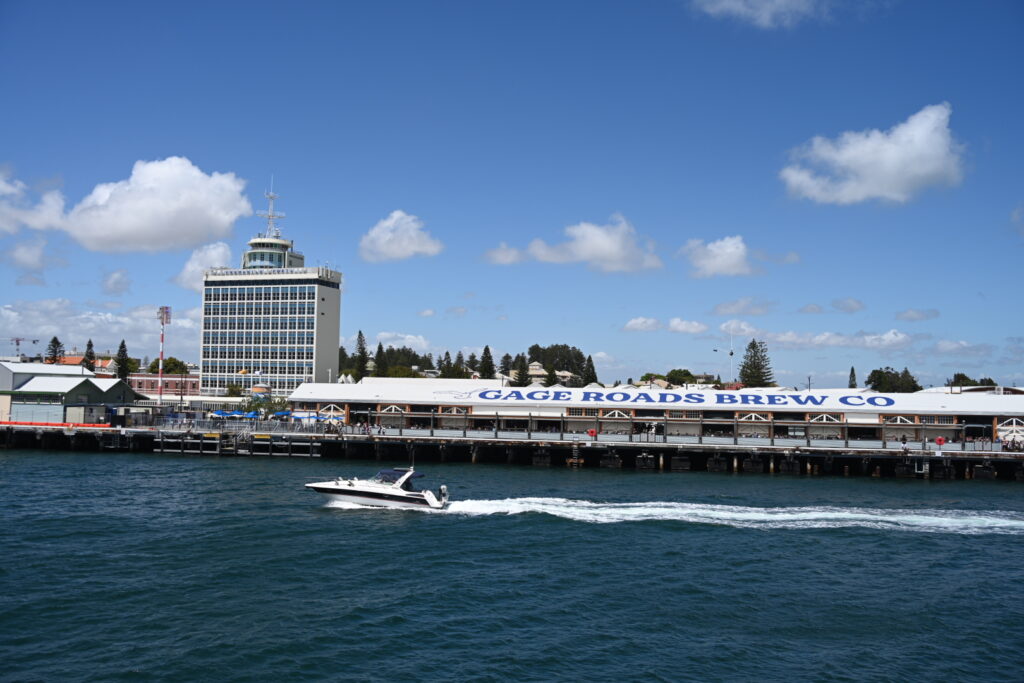
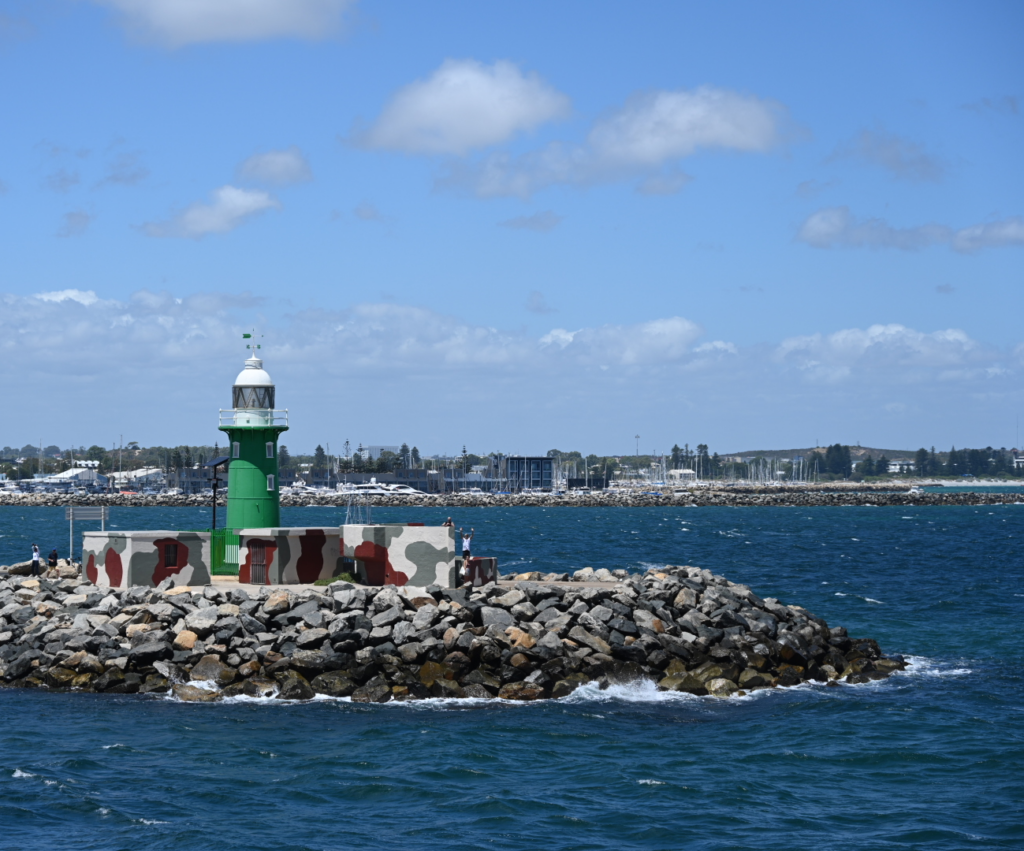
We say farewell to Australia while Australians wave farewell to us. Hard to believe we’ve been here for a month – not nearly long enough.
The pilot boat then came out to pick up our pilot:
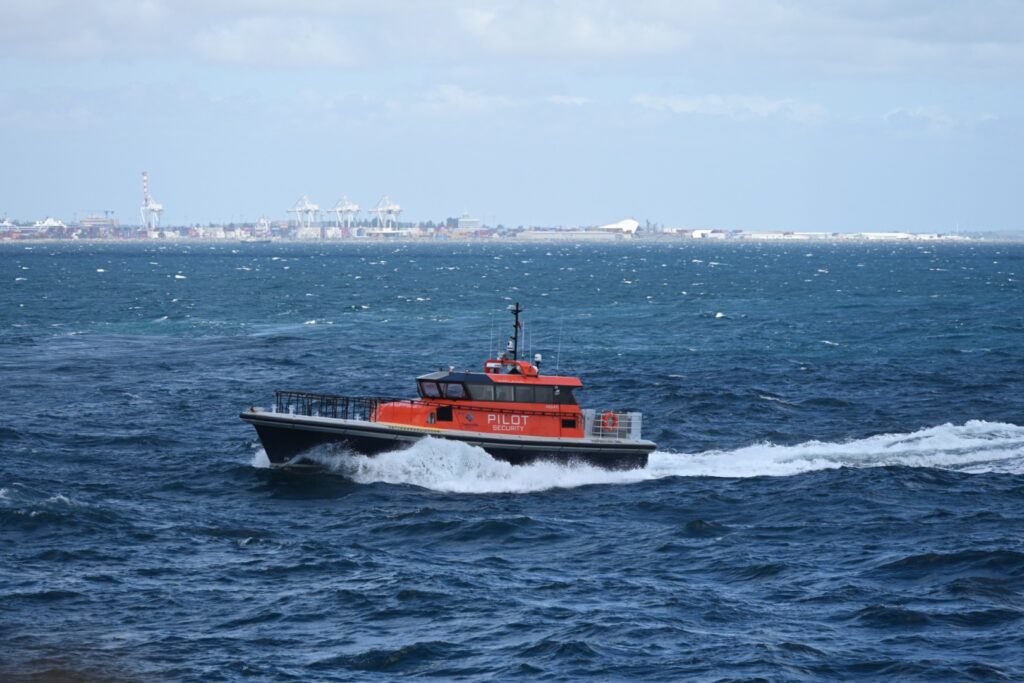
And we are on our way to Bali.
Our daughter heads off to art class, where she does pygmy possums in pastels:
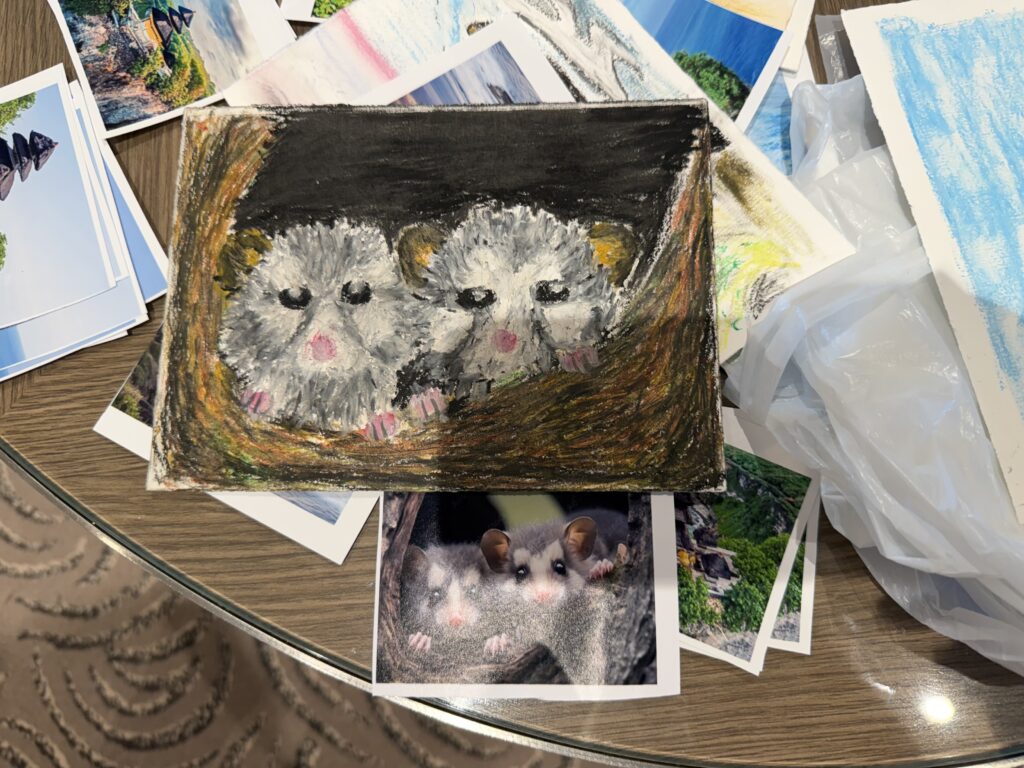
Another fabulous piece – very proud of all her hard work this cruise
Then it’s time for trivia. We correctly identify the largest island in the Caribbean (Cuba) and the name of the King of Pop (Michael Jackson), but learn that the currency of Uruguay is the peso and that Michael Jackson was born in the 1950s. We fall off the podium for the first time since the cruise started. Ah, well – we’ll sharpen our pencils for next time.
After returning to our room, I see that we have a voicemail from the excursions desk. We go to talk to Jasna, Head of Excursions, who apologizes for the issues we had with this morning’s tour. Apparently Silversea did indeed pay extra for the prison to be opened early, and she’s quite frustrated with the provider’s insistence on starting with a 90 minute bus tour. We appreciate her following up so quickly, and accept her assurances that they will work to prevent this from being an issue in the future.
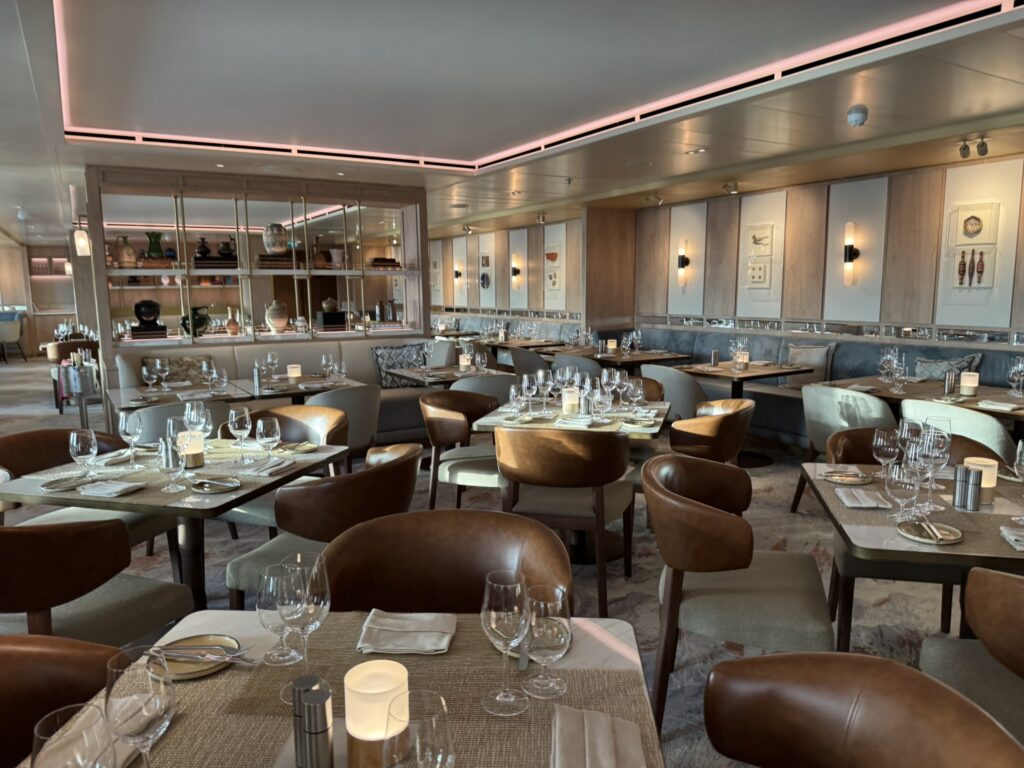
Dinnertime. We visit SALT Kitchen for the first time:
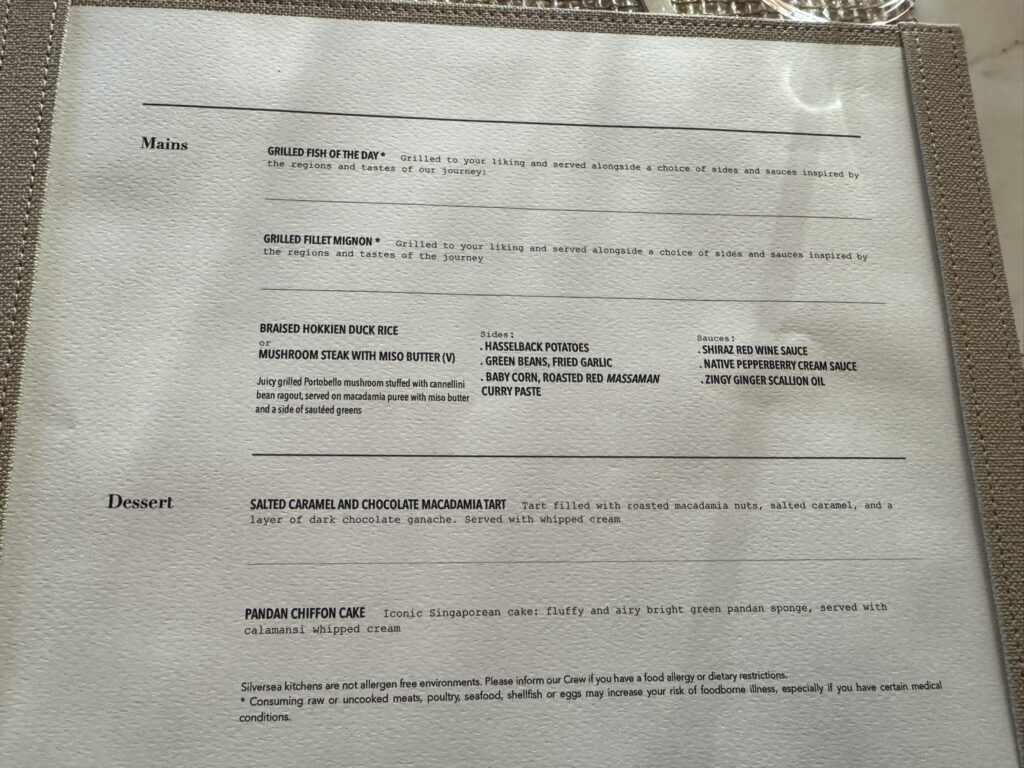
This evening’s menu:
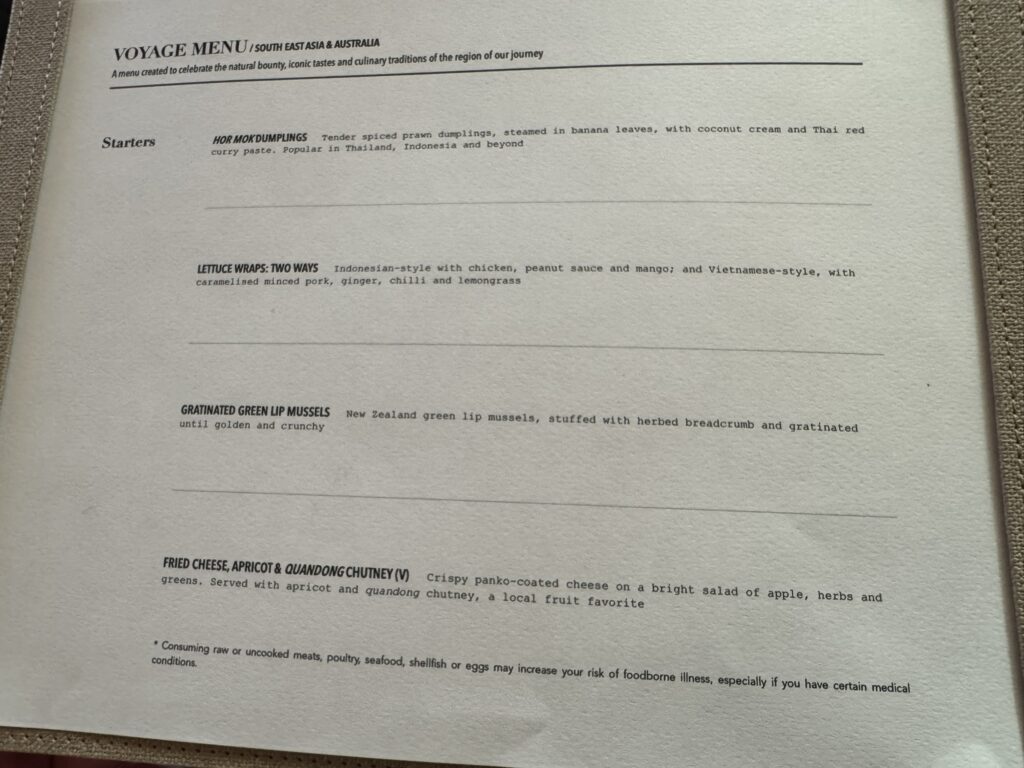
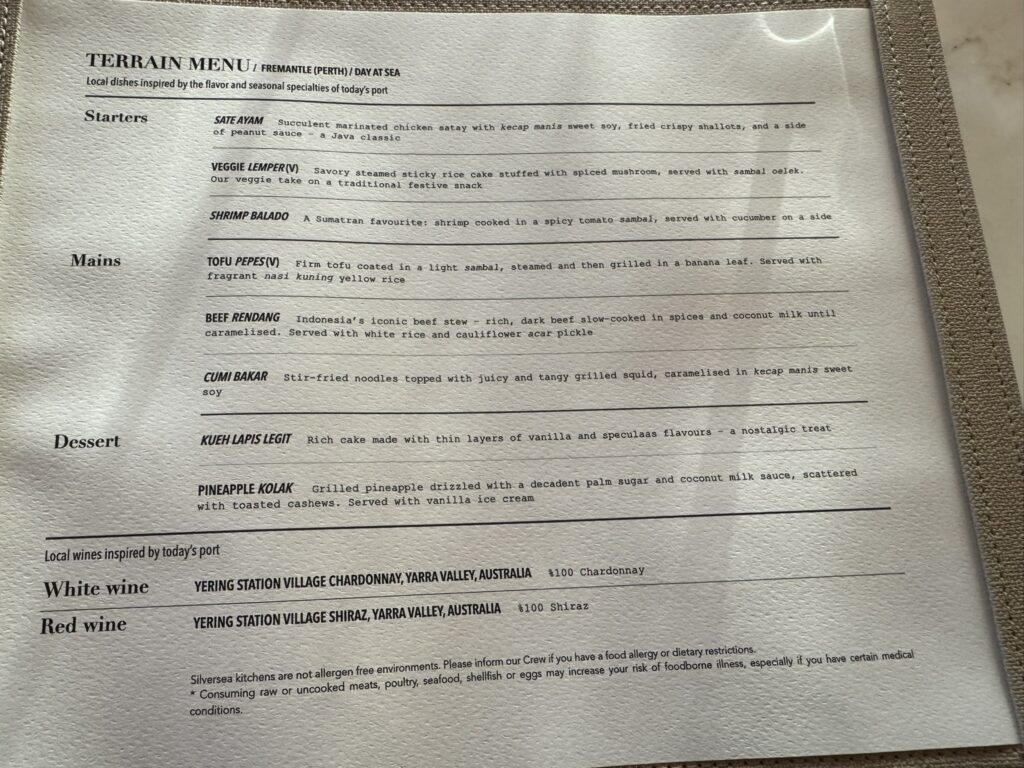
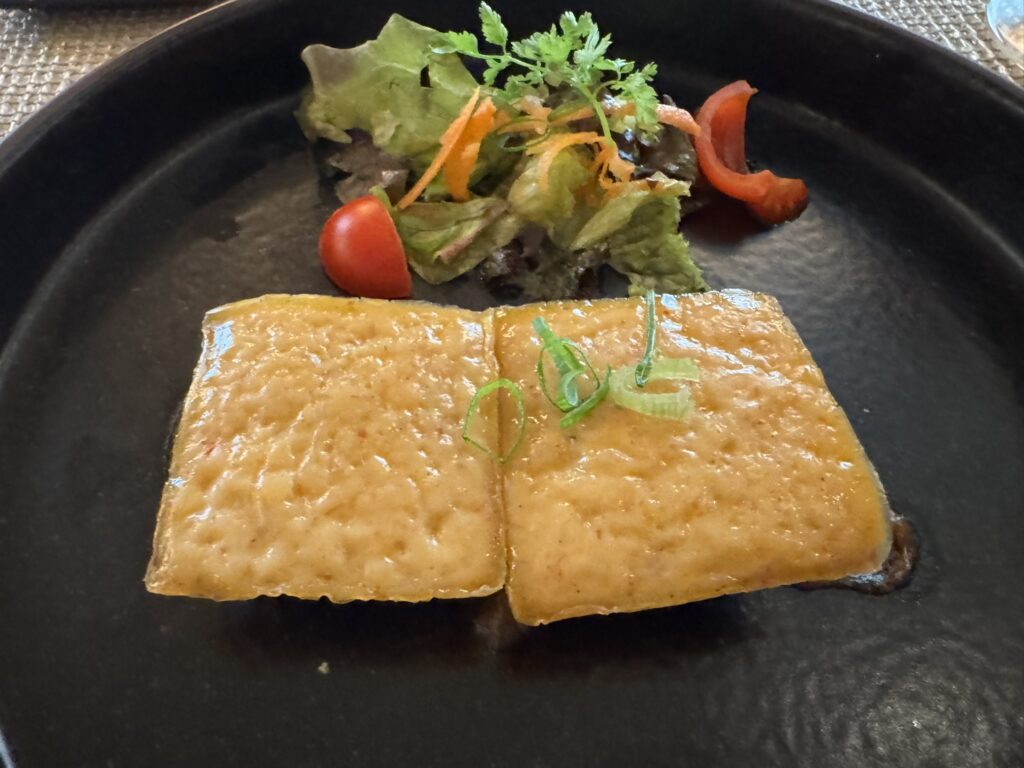
Our daughter and I start with the prawn dumplings:
While my wife and son have the chicken satay:
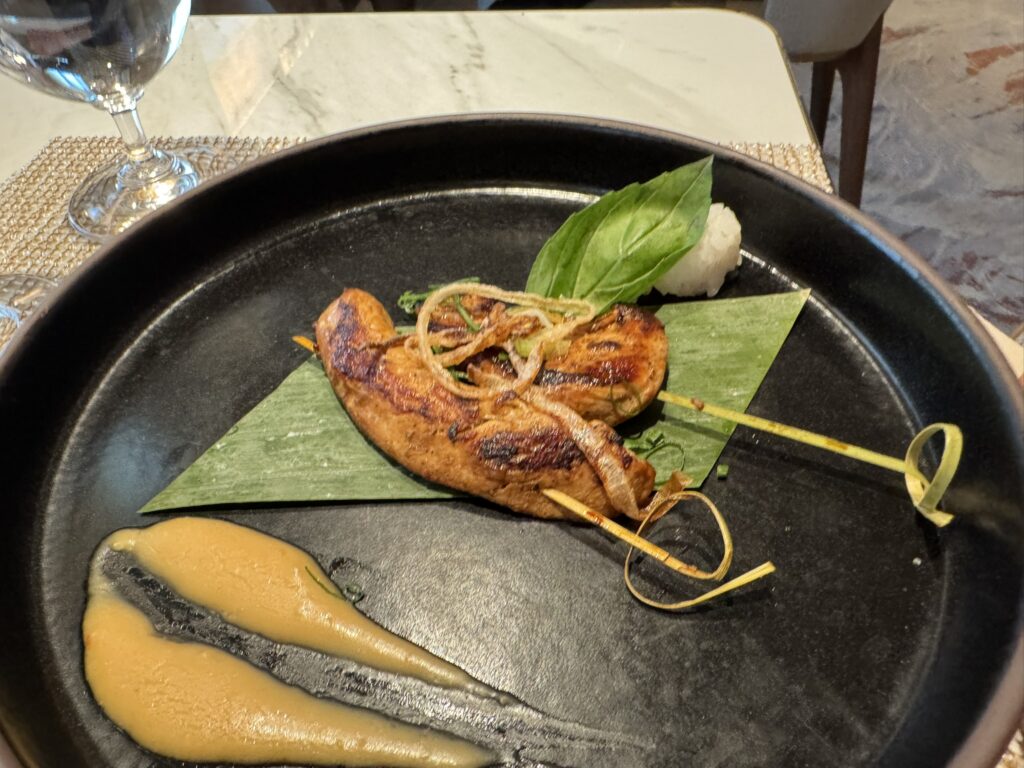
Both are good, but the dumplings are properly spicy.
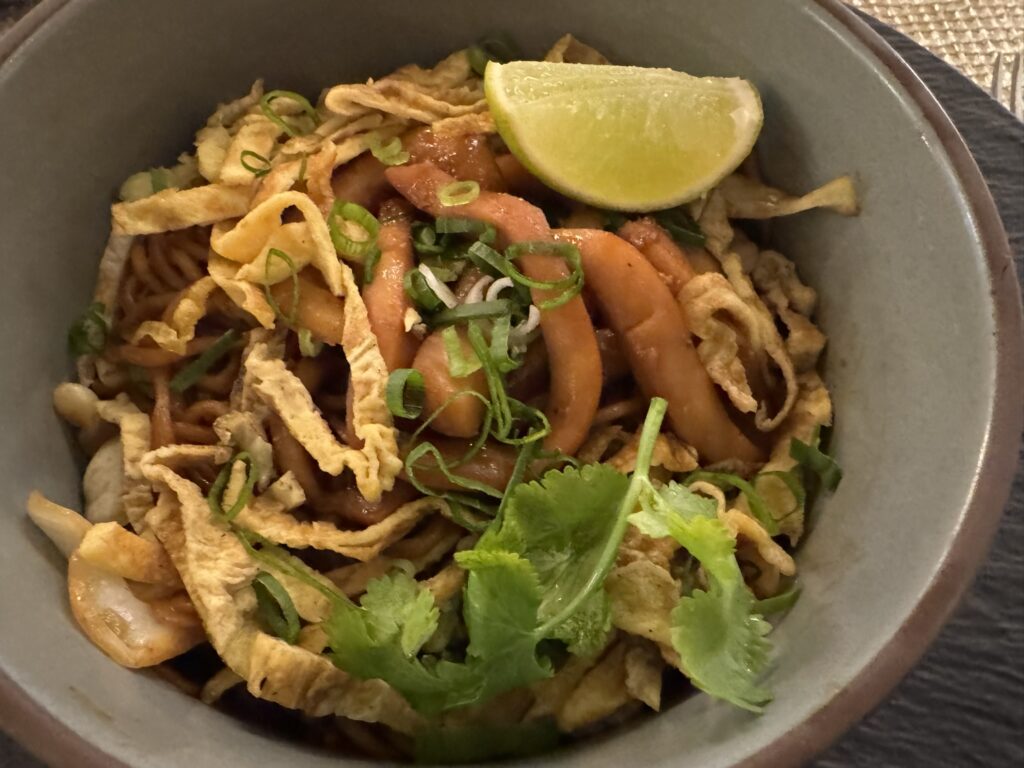
I then move on to the squid noodles:
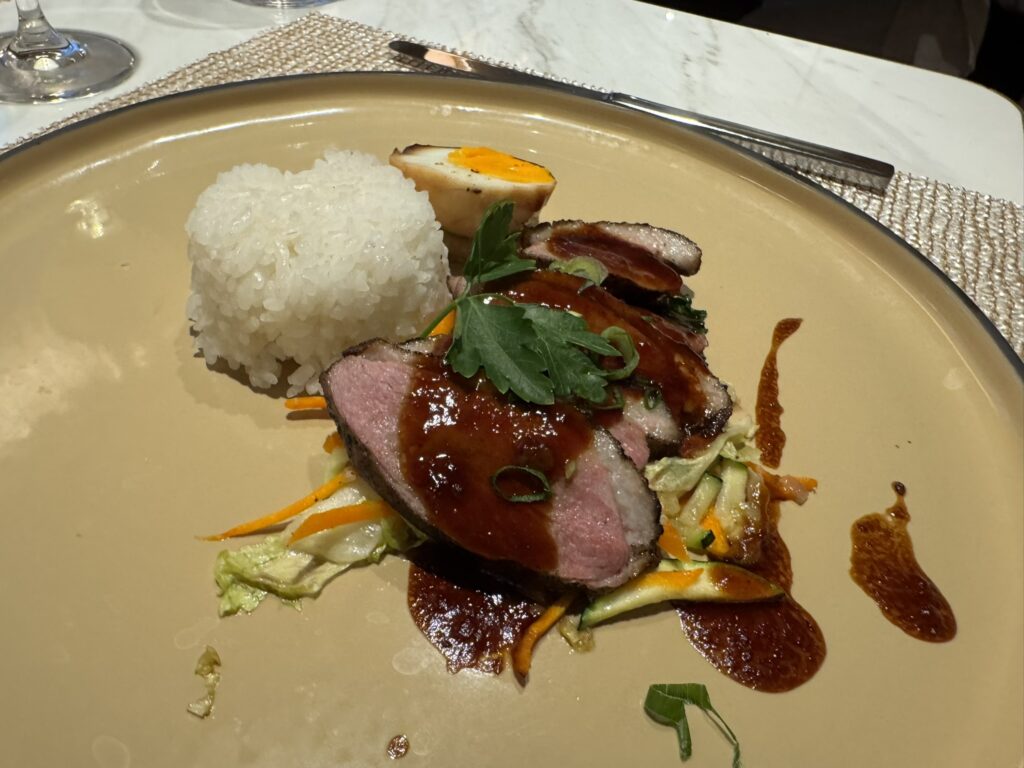
While my wife has the duck rice:
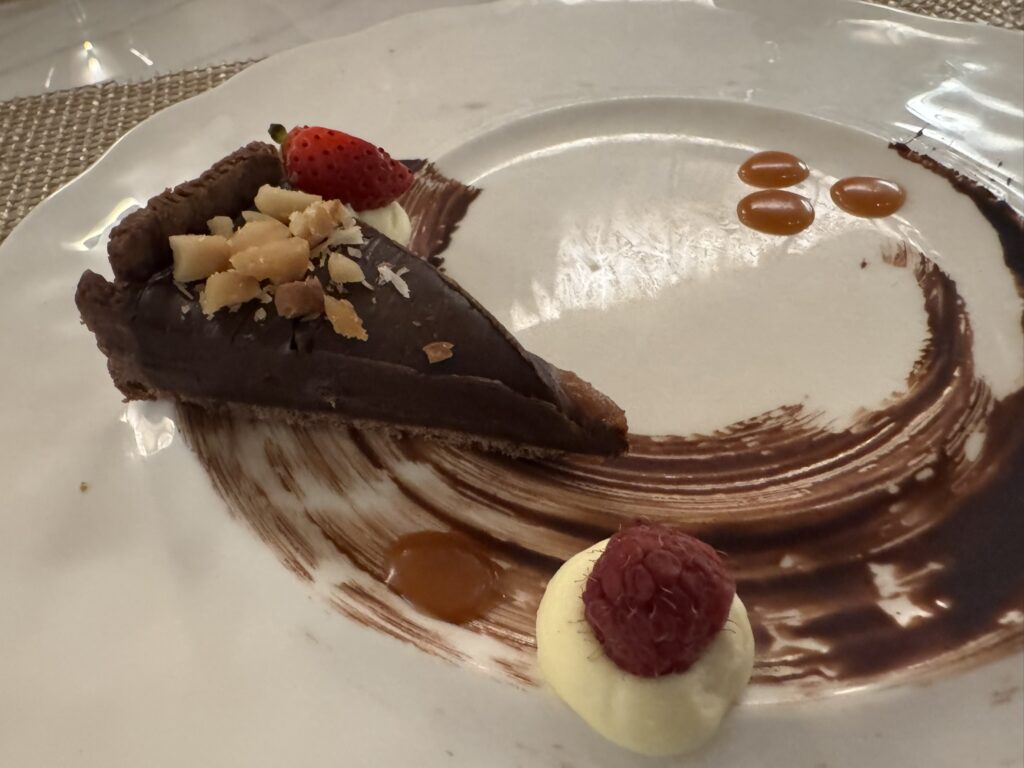
And for dessert, the parents get the chocolate tart:
While the kids have the pandan chiffon cake:
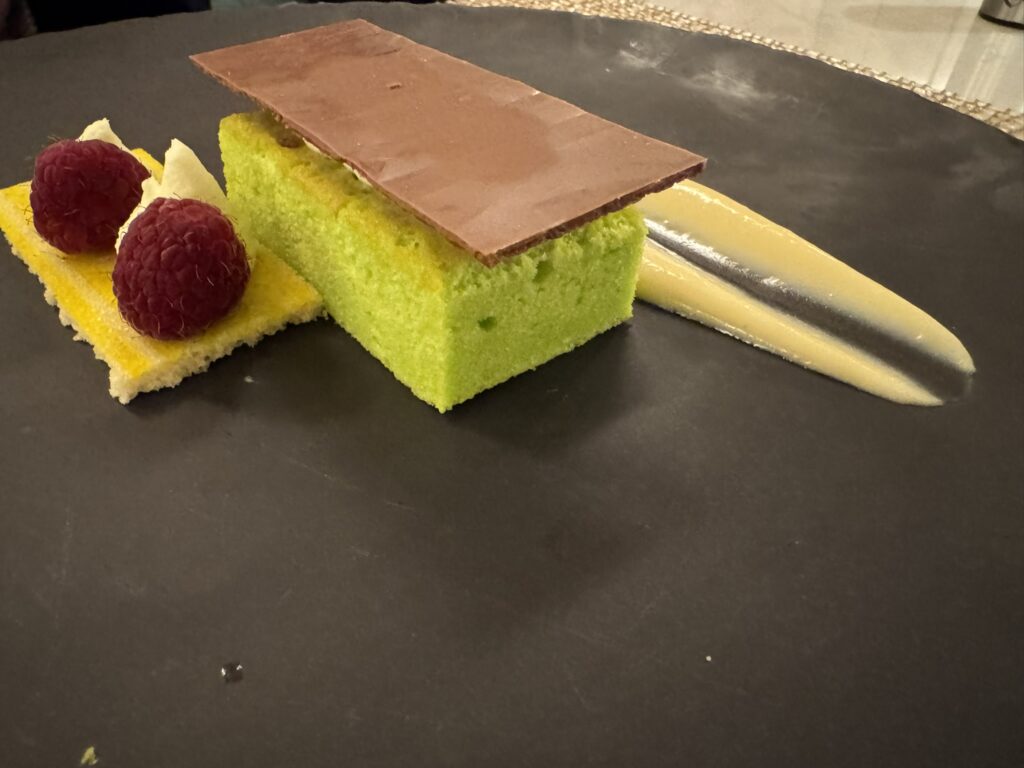
Pandan is sometimes referred to as the “vanilla of the East” and has a sweet, floral, slightly nutty flavour
All very tasty. I wasn’t sure how this was going to go, but I’m thrilled that everyone is willing to try something new. Hopefully we can return for another visit or two before the end of our cruise.
Time for bed – with a late wake-up planned on our first of three sea days.